Microdosing Psychedelics: The Hype, Hope, and Healing
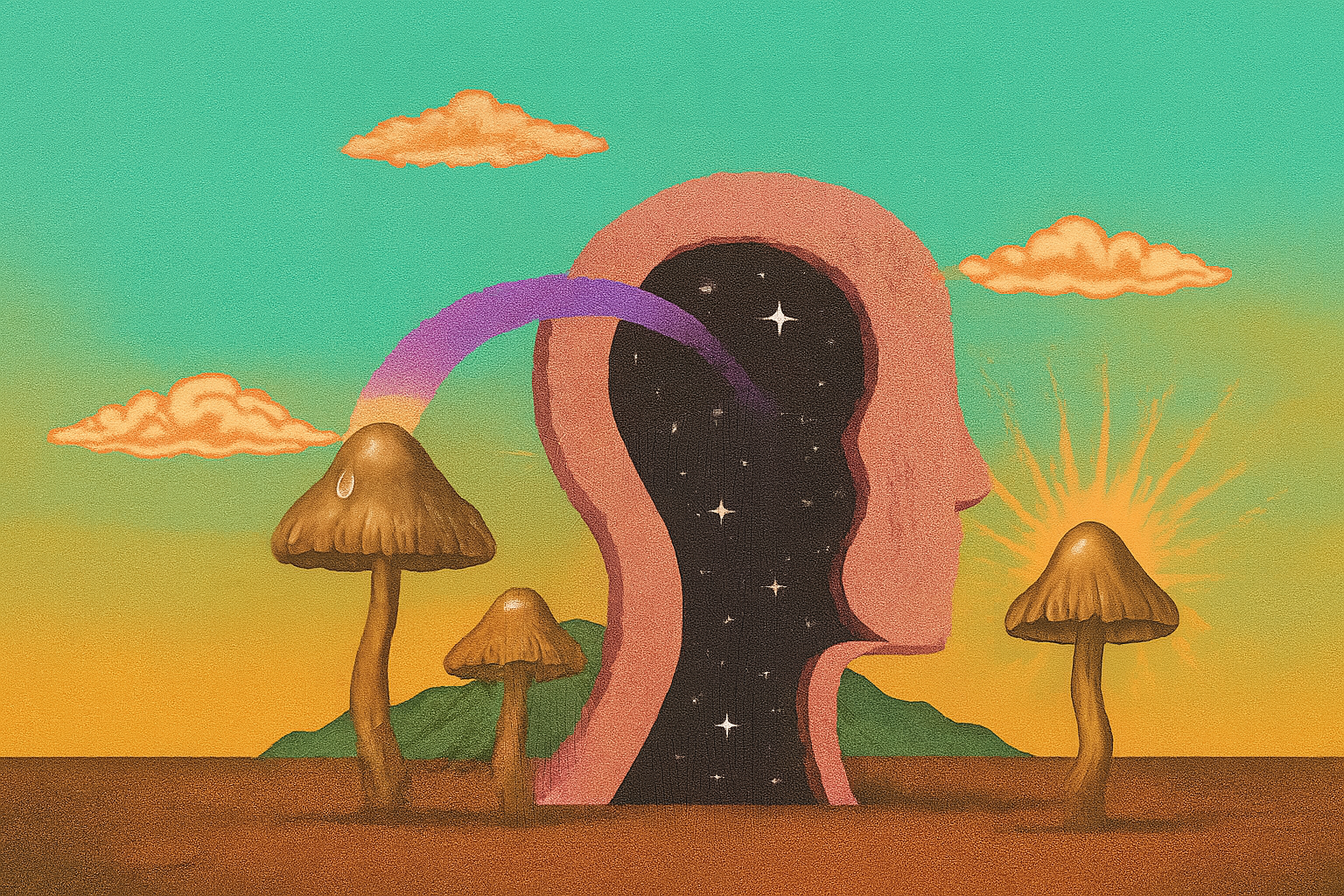
Once a niche practice among psychedelic enthusiasts and Silicon Valley entrepreneurs, microdosing psychedelics is now part of the wider cultural conversation. With growing interest from mental health professionals, research institutions, and major media publications — microdosing has officially entered the mainstream. Whether it’s artists seeking inspiration or individuals navigating anxiety and depression, people from all backgrounds are turning to microdosing mushrooms in search of clarity, connection, and healing.
We now have countless stories of microdosing’s benefits. But what’s the truth behind the trend? What can we learn from the practice and those who study it?
While many have heard about microdosing, the actual details of the practice may still be unclear for some. There’s indeed a big difference between full psychedelic journeys and the practice of microdosing, and being aware of this distinction can remove stigma and educate potential users on microdosing’s benefits.
So, what is microdosing? We take a deeper look.
Microdosing Psychedelics: An Introduction
Microdosing is the practice of taking very small, “sub-perceptual” doses of a psychedelic substance — typically about one-tenth to one-twentieth of a full psychedelic dose. Sub-perceptual means that your perception of the world isn’t visibly altered. No hallucinations, no tripping, no communicating with ancestors or supernatural beings. Using conventional language: you’re not “high”. You’re sober. You’re in full control of your faculties and can hold a conversation with your mom or your boss.
From an experiential perspective, there shouldn’t be anything out of the ordinary happening. Because the dose is so small, so micro, users can access the benefits of psychedelic medicines without the intense effects of a full dose. Microdosers report subtle shifts in mood, creativity, and emotional balance while maintaining their normal day-to-day lives.
“We found clear changes in a small set of psychological variables: decreased depression and stress; decreased mind wandering; increased absorption…”
— Vince Polito & Richard J Stevenson. A systematic study of microdosing psychedelics
Microdosing Psychedelics: From Hollywood to Your Home
Microdosing psychedelics has seen a dramatic rise in popularity over the past decade, fueled by personal stories and testimonials of how the practice has helped with mental health, focus, creativity, and overall well-being.
This increased acceptance of microdosing by the general public has been catalyzed by celebrities using their platforms to discuss microdosing on its benefits. Celebrities with huge audiences like Joe Rogan have helped de-stigmatize the use of psychedelics by sharing stories of their personal psychedelic experiences and by opening up their platforms to microdosing experts like Paul Stamets. Famous podcasters like Tim Ferris and Andrew Huberman have also advocated for the potential of psychedelics and microdosing, adding legitimacy and helping change the perception of mainstream audiences.
But it’s not just the rich and famous, people from all walks of life now share stories of how taking tiny, sub-perceptual doses of substances like LSD or psilocybin has helped ease anxiety, lift depression, or spark personal insight. Podcasts, Reddit threads, and wellness blogs are filled with testimonials describing how microdosing has improved daily life without the intensity of a full psychedelic trip.
“It was, like, the most beautiful, confirming, joyful experience I’d really ever had”, said Tracey Tee on the program Good Morning America. The mother and founder of Moms On Mushrooms, a group for mothers interested in mushrooms and microdosing, has been very public on how microdosing helped her become a more joyous and present parent.
This groundswell of interest has pushed researchers to catch up, launching clinical studies to explore what millions already suspect: that these low doses may offer therapeutic value. What was once fringe is quickly becoming mainstream.
Benefits of Microdosing: What Does the Science Say?
Challenges like measuring the subtle psychological effects of such small doses have caused the scientific literature on microdosing to lag behind the impressive results we see from full-dose psychedelic therapy. But there’s no shortage of studies and personal testimonials on the benefits of microdosing. Let’s take a look at the most common benefits of microdosing.
Creativity
Microdosing is often linked to increased creativity and cognitive flexibility. Users often report entering “flow” states more easily, gaining new insights, or finding unconventional solutions to complex problems. These effects are beneficial not only in artistic pursuits but also in therapy, where breakthroughs often require non-linear thinking and emotional openness.
A 2018 study found that microdoses of psilocybin mushrooms significantly improved divergent and convergent thinking — two key markers of creativity — without impairing normal cognition or intelligence. Participants completed two creative problem-solving tests before and after ingesting the mushrooms with both convergent and divergent thinking improving after the dose.
“Would I have invented PCR if I hadn’t taken LSD (acid)? I seriously doubt it. I learnt that partly on psychedelic drugs.”
— Nobel-Prize-winning chemist Kary Mullis on inventing a method to copy DNA. From his book Dancing Naked in the Mind Field.
Depression and Anxiety
Many users report that microdosing psychedelics helps reduce symptoms of depression and anxiety. Self-reported benefits include improved mood, decrease in negative thoughts and rumination, with increased positivity and motivation.
In 2021, a major study was published on the benefits of microdosing. The study found that microdosing was associated with lower levels of depression, anxiety, and stress compared to non-microdosers. The research was self-reported and without placebo control, but had a huge sample size, the largest of its kind gathering reports from thousands of participants.
Helping add some clinical support to these observational results, is a 2024 Phase 2 trial by MindBio Therapeutics. This study found that patients receiving at-home microdoses of LSD for depression showed statistically significant improvements in mood and emotional regulation, with minimal side effects and no hallucinogenic disruptions. Patients with Major Depressive Disorder experienced:
- 60% drop in depressive symptoms
- 53% of patients were in complete remission from their depression after 8 weeks.
Emotional Regulation
Many mental health challenges are rooted in difficulty regulating emotions. According to some research, another benefit of microdosing is to help users respond with more calm and clarity to emotional triggers. Clients often describe feeling less reactive and more able to observe emotions without being overwhelmed — crucial qualities in trauma therapy and long-term psychological healing.
This 2022 study found that participants who microdosed experienced improvements in emotional stability and mood. Psilocybin microdosers demonstrated greater improvements in mood and mental health after one month compared to non-microdosing controls.
Increased Mindfulness
One of the more subtle but important benefits of microdosing is the potential for heightened mindfulness. Users frequently describe feeling more present, more attuned to their surroundings, and more connected to their own thoughts and bodies.
This study looked at reports from adults with ADHD and the results (again self-reported) showed increased mindfulness, specifically non-judging of inner experience, and decreased neuroticism after 4 weeks of microdosing.
These effects are not only positive for their direct effects on daily life, but can lead to additional benefits by helping with more traditional therapeutic modalities like talk therapy or somatic therapies, leading to better therapeutic outcomes and emotional integration.
Positive Results, But The Science Isn’t Settled Yet
Despite widespread enthusiasm and some positive studies, measuring the true benefits of microdosing remains a challenge. Measuring the improvement to things like mental health or general wellbeing is inherently a difficult endeavor. Even in the most stringent of clinical settings, the “data” is almost always self-reported by the patient or user. It gets even more complicated when you add psychedelics to the mix, which can add extra wrinkles to traditional clinical hurdles like “expectancy bias”.
Placebo effects have also been significant — with some trials showing similar results for the both microdosing and placebo groups. For example, psychedelic drug development firm Mind Medicine dropped their microdosing trial (microdosing LSD for ADHD) because trial results were not able to show enough of a difference from the placebo group.
So while the research is indeed catching up to the personal reports, the science is far from settled. Larger, controlled clinical studies are needed to confirm whether microdosing delivers genuine pharmacological benefits.
What Do the Microdosing Experts Say?
To better understand how microdosing’s benefits are felt in real-world settings, we spoke with Kayse Gehret, microdosing coach, integration therapist, and founder of Microdosing for Healing. She’s worked with over a thousand patients and trained many microdosing guides and therapists.
“Microdosing can serve as a powerful catalyst in the healing journey,” says Gehret. “It helps clients feel more grounded and connected to themselves, which opens up space for deeper therapeutic work.”
According to Gehret, microdosing can be particularly helpful for clients to work through difficult experiences and ease themselves into deeper modes of therapy and healing. “It’s not a magic bullet,” she emphasizes, “but when combined with intentional practice and guidance, it can accelerate growth and emotional resilience in profound ways.”
Gehret also notes that microdosing is often more approachable for clients who are hesitant about full-dose psychedelic experiences. “I believe microdosing is the ideal way to introduce individuals to psychedelic practice and therapy. Its relative subtlety is an advantage as it provides people a gentler introductory experience and begins to allow some challenging or unfamiliar emotions to surface incrementally versus all at once.”
Considering the stigma around psychedelics, and the hesitation many people feel regarding a full psychedelic therapy experience, a gentle introduction could be quite useful.
“While psychedelics can bring us big truths, we must also recognize that much of the public is not appropriately prepared or ready to receive these truths in a single session. By starting with microdosing, individuals can begin to heal and discover threads and shadow material.”
Gehret has worked with over 1400 individuals in her various microdosing programs. These are the benefits she’s witnessed most consistently during her work:
- Deep and lasting nervous system healing, including a reduction or cessation of migraines, headaches, seizure disorders, concussions and TBI (traumatic brain injury)
- Strong cognitive benefits, including improved memory, reduced brain fog, and improved brain function in Alzheimer’s, stroke and dementia clients
- Better reflexes and responsiveness in the physical body and enhanced ability to respond to physical training (physical therapy, athletics, competitive sports, performance)
- Significant improvement with depression and anxiety, especially social anxiety
- Dramatic reductions in the use of alcohol
- A newfound ability to feel and hold a greater spectrum of emotion with grace, poise and awareness
- Enhanced abilities in creativity and expression (particularly in writing and speaking)
- Spiritual connection: new ability to recall and process material in dreams, more serendipities, and a feeling of connectedness to something beyond this world and time
- Greater connection with the natural world and feelings of closeness and connection with pets and animals
- A greater sensitivity, growing consciousness, and cultivation of empathy resulting in better relationships and ability to navigate choices, make life decisions, access flow and be in partnership with the world around you
“Professionally, I believe microdosing is wonderfully supportive of the therapeutic bond between the client and his/her facilitator and allows for a deeper container of trust to develop,” says Gehret. “By beginning with a microdosing protocol, a psychedelic guide can establish and deepen the bond with a client, which I believe will lead to much better outcomes and experiences for both client and guide.”
Microdosing psychedelics is no longer a fringe experiment—it’s a growing movement shaped by curiosity, self-inquiry, and unmet needs in mental health care. While research is still evolving, the personal impact for many is already clear: small doses, subtle shifts, and the possibility of meaningful change without the overwhelm of full-dose therapy.