Transcript
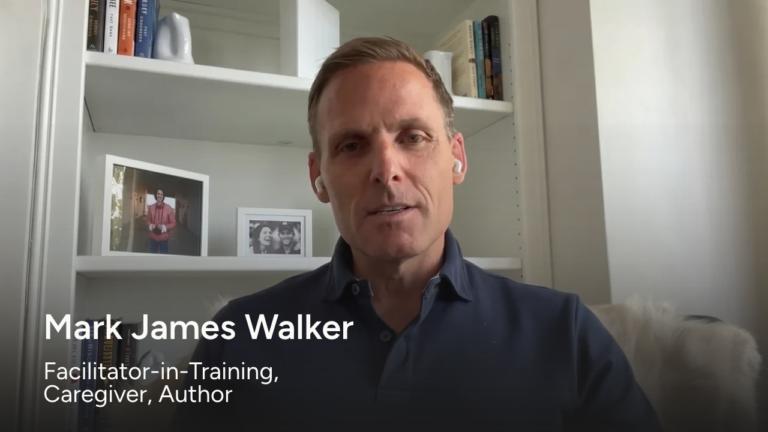
Jason Najum 01:29 Mark, welcome to the Human Journeys Podcast.
Mark Walker 01:32 Thank you. Glad to be here.
Jason Najum 01:34 Yes, nice to speak with you. Nice to speak with you. I really appreciate you sharing your story. you have a compelling one and this is one of the I think one of the first times you've gonna be sharing it in in the public with the public. So we appreciate it. And maybe just tell us how would you how would you define your your human journey?
Mark Walker 01:56 Yeah, Jason, I, you know, I think for me the this particular journey started in 2017, when I came together, got together with my beautiful wife Vanessa. and at the time she had been struggling with a rare but manageable disease. She had a what they referred to as a desmoid tumor. Which essentially is a benign soft tissue sarcoma that typically occurs in women, typically women that are athletic in nature. And her particular desmoid tumor, they they appear in the fascia on your on on your under your skin. And so at the time when we got together, she was struggling with this. And as our relationship evolved, this disease became more and more. Complicated. And what essentially started as something benign and non-threatening slowly developed into a very complicated medical situation in which I became her primary caregiver. Of course, this all happened during the time of COVID, which was particularly complicated. And it all culminated in her passing in June of 2022. And so that obviously comes with its own set of challenges and complexities. But then I guess that that event brought me really onto a journey of discovery and somewhat healing. And on that journey I, you know, came across psychedelics as a as a treatment protocol. And my journey with psychedelics continues, but it's been a profound and helpful tool. that I gladly like to share with people.
Jason Najum 03:58 Hmm. Yeah, that's quite a that's that's quite a human story you have there. the questions are endless. The the the human aspects are extraordinary. so after her I'm what led you to psychedelics, I'm guessing, is after her passing you had your own personal struggles and your own human journey, aft on your own. to deal with? Is that is that what led you to psychedelic therapy?
Mark Walker 04:20 Yeah, I mean, just maybe to give you a little bit more context. so Vanessa's, you know, the caregiving w with Vanessa was unusual in the sense that she had this soft tissue sarcoma on her back and she had surgery in twenty eighteen to remove it. the surgery left her with a significant skin graft across most of her back. The tumor unfortunately was not fully removed in during the surgical intervention and slowly started growing back. And so over a period of time, I'd say probably 2018 through to 2022, we had a progressively a situation became progressively more complicated to manage. And so my role as a caregiver, which started off just really being a supportive husband or partner at that point. developed into a real hands-on caregiving experience. because it was COVID, it also meant that as we got further as things became progressed further, we ended up spending protracted periods of time living in in in the hospital system here in San Francisco. Because of the extensive nature of her which at that point had become wounds on her body, I I had to, you know, live with her in the hospital over an extended period of time. And so I think in the last year I probably lived, I probably spent over 130 nights in the hospital between Stanford University and UCSF here in San Francisco. And so that experience obviously brought me in contact with a a lot of personal trauma, both living in an environment that is traumatic and then experiencing a number of very traumatic events you know, culminated into what eventually became PTSD. And so prior to her passing, as I was grappling with the emotions of grief and loss, I also very quickly started to realize that there was some underlying trauma that presented in in and and triggers that that that were affecting me every day. And so you what really got me to psychedelics was I, you know, immediately started
Mark Walker 06:44 focusing on all the tools that were available to to treat PTSD. I I immediately started therapy. then that also led me into flash therapy or EMDR therapy, which which is also effective in in dealing with PTSD. But after six months or so my therapist started to encourage me to consider looking at psychedelics as a potential tool to to address PTSD. so and that's really when I started getting curious about psychedelics, started doing research, listening to podcasts, reading white papers, and and really starting to understand that that when used correctly, these protocols could be very effective in the treatment of PTSD.
Jason Najum 07:30 Mm. Again, I don't know where to begin with the questions and the there's so there's so many layers to this. I guess let's start from the I mean so I guess being in San Francisco and California did give you maybe access or, you know, there was less taboo, less stigma. You know, y you mentioned that a therapist has suggested so in some ways maybe a blessing to be in a place that was a bit more open to such things. You didn't you didn't have to fight through.
Mark Walker 07:35 Ha ha.
Jason Najum 08:00 you know, environmental stigma as much as as elsewhere. yeah.
Mark Walker 08:04 Absolutely. Yeah. Yeah. I'm I'm very grateful to have had all of this experience here in San Francisco. You know, not just the the journey of being a caregiver and navigating these hospital systems, but just, you know, g being in proximity to some great medical minds, both in the care of Vanessa, in the process of of of end of life and passing, and then also in the process of healing post all of that. And certainly in the psychedelic space, you know, as I started to research, listening to podcasts, reading articles, talking to people that had had worked with psychedelics, it became very clear to me that these tools were very valuable. And I'm very grateful that I was in an environment where both the medical pro professionals as well as the the facilitators in the space were very welcoming and opening to share that information with me.
Jason Najum 09:03 Hm, yeah. I I'm glad. I'm happy you had access to the to these tools. access in general is a major theme in this world. So when we do have easier access, we should, you know, have some gratitude for that. So I'm glad you had that available for you. You know what yeah, just that's the
Mark Walker 09:18 Yeah.
Jason Najum 09:25 The end end point or not the end point, but the you know, kind of in the present and in but parts of me wants to go back and you know, you you've presented the timeline and you know, you you just your relationship was relatively new and then all of a sudden hit this dramatic reality ro you know, bump in the road is you find someone in this day and age. It's not so easy, and you you begin
Mark Walker 09:33 Mm.
Jason Najum 09:56 You begin a relationship and then this gets thrown in the road. was it was it rel was it relatively soon, early in your relationship?
Mark Walker 09:59 Mm.
Mark Walker 10:06 Well, I I originally met Vanessa in twenty thirteen. we were part of a s swin program here in San Francisco. And at the time timing just was not right, but it was very clear to me that that to both of us that that we we had a beautiful connection and we we we we wanted to be i in each other's lives in some capacity. f go forward, you know, to twenty seventeen. Circumstances brought us together in in a number of unique and and beautiful ways. And the timing was right. But I think what what ultimately really brought us together was the being able to hold space for her because she had been struggling this rare disease for a period of time. It obviously had been something that wasn't going away. again wasn't necessarily life-threatening, but was something that, you know, presented a huge amount of fear and uncertainty for her. And I think that that really became a a a theme in our early relationship. I think what, you know, what did start relatively quickly was the the role of becoming a caregiver. And so I'd say probably four or five months after we got together, Vanessa went to Ohio State to have surgery to remove this tumor, which at that point had gone through a rapid growth cycle. It was probably the shape of the the size of a a grapefruit on her back. You can imagine how uncomfortable that must be. And so, you know, and and quite painful too. And so at the time, you know, after doing a bunch of research, it it surgery seemed like a an obvious route route to go. And so she had the surgery in February of 2018. And you know, recovering from surgery is is a big process. And so post surgery, you know, relatively new relationship, we I took on the role as a caregiver too. And so Yeah, you're absolutely right. That does bring on a lot of dynamic in a in a young new relationship. But it also brings brings in a level of intimacy and trust that is profoundly beautiful. And in it's strange to say it, but I'm I'm some I'm I'm I'm grateful for for having had that opportunity.
Mark Walker 12:20 Mm-hmm.
Jason Najum 12:20 As someone who's still out in the dating world,
Jason Najum 12:26 yeah, I I I I'm only trying to imagine and yeah, gratitude is gratitude in these circumstances is is something. And I I mean I've lived through a caregiver scenario, but it it was it was with my mother and it it wasn't it it wasn't the same dynamic.
Mark Walker 12:35 Mm.
Jason Najum 12:43 Finding silver linings or perspectives that are not only colored in darkness or in sadness is something that you have to work towards. And I I'm not sure if you experienced that, but I do remember this moment after my mom's passing, which was protracted and and just, you know, you know, it was it was horrible in so many ways and
Mark Walker 12:56 Mm.
Jason Najum 13:07 looking back on it, you know, I asked myself how how can I look on it in a way that is not shaded in in sadness? And like i you know is it possible? And and being a writer, I was I was writing at the at the time and and the only way, you know, obviously the only way I could think about it and address it and write about it is was with was with a darker sadness because it's a it's it's the most
Mark Walker 13:16 Mm.
Jason Najum 13:29 traumatic experience you can exp you y one one could live through and
Mark Walker 13:30 Mm.
Jason Najum 13:33 You went through a version of that that is extremely rare as well. And I guess there was a journey to get you to this this Buddha like state, as you're looking back. It did I I'm guessing it wasn't right away.
Mark Walker 13:46 Ha ha ha Hmm. No, it wasn't, you know, J Jason, caregiving is probably the as you as you know from your experience, probably the most difficult thing you'll ever have to do, especially for a loved one, because on the one hand there's such a practical component to it, right? You you're having to do practical things to care for somebody, as a nurse or a doctor would. But then there's the personal component and it tears at the soul. When you're trying to take care of someone, keep them alive. it's it's a really complicated and like you said, probably the hardest thing I've ever had to go through. But there is such a depth of connection and beauty that comes into it. And, you know, jumping forward, I I I didn't have this perspective until I actually did my first psychedelic journey. And it's it really transformed my entire relationship with. Grief and with trauma. And it allowed me to also get a perspective on caregiving that I'd ha never had before. And I think the biggest takeout for me was that, you know, even when I was living in the hospital, when I was doing these really, really complicated things, the doctors and nurses would always say things to me like, Wow, this is amazing. You know, you never really see family members participating to this degree. And I remember thinking, Well, that's great, but you know, it's it's it's surely this is what you do. You you step into these moments. But I think after going through a period of healing and in real you know inflection, I've realized that it wasn't about me, it was about both of us. It was about me and Vanessa. The caregiving process is a two-way street and the caregiver of course is doing the caring, but the care
Mark Walker 15:43 The patient is receiving the care and the patient is and you you you get into this interesting dance as a caregiver where when you're taking care of somebody, there's a huge amount of trust that that is required. There's a huge amount of intimacy that's required. And all of that became apparent to me really after the fact. And it's it's a incredibly beautiful thing. And I'm grateful again for my psychedelic experiences that helped me unlock some of those insights.
Jason Najum 16:11 Mm. Mm. So you were you were better able to see the the depth of that relationship. I mean you were better able to see what you were able to take from it later on, which generally happens. So psychedelics were gave you that view, gave you that lens onto onto the depth of the of the beauty. I mean in the beauty in the terrible.
Mark Walker 16:36 Yeah, it absolutely did. I mean, just to, you know, to get a little bit more specific, I, you know, approximately, approximately, I would say I did my first psychedelic journey in the March of 2023. So must have been about eight months after Vanessa had passed. And what led me to that was I, you know, as I was, you know, prior to her passing, we had learnt about six weeks before she she died that.
Jason Najum 16:41 Yeah.
Mark Walker 17:07 She wasn't gonna live, mainly because there was a whole bunch of complexities that were sort of building up around her her her disease that that was the first time the doctors actually acknowledged that she wasn't gonna live and wasn't gonna go home. And so we had to live with this real existential threat and this idea that she wasn't gonna live and at the same time become curious about what happens, what happens next, both in the end of life process, but also In the continuation of life process. And Vanessa was incredibly smart and a awakened as an individual. And we spoke a lot about what is the healing process going to look like for me and who should I work with? And in fact, she reached out to six different healers to ask them to work with me in different capacities, including our primary therapist, which was quite remarkable to me. But You know, so really w when she passed she should have handed the
Jason Najum 18:05 She was she was care she was caregiving in her own way.
Mark Walker 18:10 Hundred percent. It it was remarkable. In fact, so much so when I remember when people would come and visit her to essentially say goodbye, she was the one consoling them, telling them that everything was going to be okay. She just had this remarkable, beautiful, conscious end of life, which was extraordinary to witness. And I think that was testament to all of her personal work and her spiritual journey leading through that experience. And Towards end of her life. But needless to say, she sort of handed the baton over to me and said, Well, now it's your chance. You you gotta do the work now. And so I sort of dived into it with, you know, curiosity and and also sheer necessity. And but after six months, I it was, you know, it's the emotions are and and trauma is is really, really difficult. And it felt somewhat futile, so a lot of the work that I was doing. and that's when I, you know, started turning towards psychedelics. Truthfully, as a last resort, I I after doing the research and then looking for a facilitator, I I was very lucky. I was referred to a woman who works as a facilitator here in California. She also works as a death doula. So she has a huge amount of experience. Helping patients who have elected for the California end of life program to transition, you know, take complicated medicines, pass to be with them in those moments of passing, and then to to take care of all their needs and their family needs in the immediate aftermath. And so for me, that just seemed like the ideal facilitator to take me into a psychedelic experience. And so we we discarded that the first medicine we would work with would be MDMA, just because you know, I I I'd been reading a lot of the work that MAPS had been doing and and the the the trials, and it was clear to me at the time that MDMA seemed like a a really good starting point. And so, you know, we did we essentially followed what what I referred to as the MAPS protocol, but it was a slightly modified version of the MAPS protocol. But essentially it was, you know.
Mark Walker 20:35 eight hours of prep work over a four-week period leading up to the journey, which involved really, you know, a lot of a lot of three sixty-degree analysis of my life and w what what where I'd got to to that point. And it culminated in me setting up a set of of of intentions for the journey. And then I did the journey, which was which was an eight hour exercise. And then that followed by another eight hours of integration work prior to the experience. So it was a very robust process which which appealed to me. And but going into that psychedelic experience, I essentially had three intentions. The first one was to heal the trauma and the grief that I had that I had received as a caregiver to Vanessa. The second one was to reconnect with her in spirit because I'd been so overcome with grief and trauma. I I'd lost contact with her in in many ways prior to her passing. And then thirdly, was to find meaning in the process, meaning in everything we had gone through, the pain, the suffering, the beauty and the tragedy of it all. And I remember driving out to do that journey, and I I, you know, I drove across Golden Gate Bridge. I was doing it in Marin County, in the Redwood Forest, in a little cabin there, which was Beautiful. But as I was writing out, I just remembered tears coming out of my eyes and thinking to myself, wow, if this doesn't work, I'm probably not here in six months' time. And I I say that with huge caution, but I, you know, leading up to that, I could feel the triggers were culminating to probably 30 to 40 times a day. I was having I was presenting with PTSD symptoms. They either presented in the form of Almost like a lightning strike of anxiety that would shoot through my body, or a slow build of anxiety in the form of like a wave. And so life was becoming pretty unbearable. I was isolating at home and I wasn't really getting out. And so going, you know, going to that experience, I was hopeful that it would do everything that I thought it was going to do. But I was also very cautious that this was a bit of a last resort. So
Mark Walker 22:59 You know, getting back to your question, I we went into the experience and what is so the way the protocol that I worked with worked was that it it sort of works in 60 minute cycles. So you take you take the medicine and you wait an hour for it to come on. And eventually when it is come on, you go through these 60-minute cycles where with MDMA, you are sitting in the experience with an eye mask on with ambient music in the background, and you just feeling and sensing what comes up. And then for forty five minutes after that you're sitting with your therapist talking about whatever's coming up. And then you sort of repeat that over and over, maybe eight times as you go through the the journey. So a lot of talk therapy. but I'd say less
Jason Najum 23:44 That is quite engaged. That is quite that's pretty engaged. for for yeah. Well MDMA allows you a bit more engagement. yeah, yeah, sorry, sorry to cut you off. if you want to finish describing the protocol. It's just there's there's there's there's so much there. I mean, even in just the intentions you you set going in, those are worth like waiting, taking a moment on. How like people talk about setting intentions before therapy, but
Mark Walker 23:49 Yeah.
Mark Walker 23:54 Yes.
Mark Walker 23:57 No. Sure.
Mark Walker 24:05 Mm.
Jason Najum 24:14 They're very specific and and you know that they're the correct ones. Like those were the those were the things you needed to process. I mean, you were at the end of your rope. You had done all the other traditional therapies. they weren't working, and you you felt like you need you needed to you know, you need those were the intentions that needed to be met. I mean, maybe you you can mention them. The the one that resonated with me was having a relationship with your partner.
Mark Walker 24:25 Mm.
Mark Walker 24:35 Yes.
Jason Najum 24:44 your past partner, that was not only shrouded in something. Like it it changes like it's I remember this in my own scenario is you can only see you it's almost like you can only see them in that state. You can you can't remember them before yeah, you can't remember them before that. so those that was one of them to to to have a a reconnection with her that wasn't just that sad goodbye.
Mark Walker 24:45 Mm.
Mark Walker 24:59 Mm. Yeah. The suffering state. Mm. Yeah.
Mark Walker 25:14 Yeah. Well what was you know what was so profound to me in after losing her was you know, I was with her through her transition, during her transition and the aftermath of her transition and it is such a r remarkable experience seeing someone pass from this world and at the same time I realized immediately after that that relationships don't end when people die. You know, the physicality of that relationship, the the the p having the person in your world obviously shifts immensely. But your shared values, your love, the way you connected and connect, the the all of that remains. even the way you experience life with them in a different way still exists. It sounds strange to to say that, but You know, from the aftermath I was very clear that this relationships don't die when people pass over and you can really keep them going. And so I I was determined to do that in a different way rather than what a lot of people want you to do is to forget it and move forward and and you know, not look back. But you know, getting back to the intention piece, I it's been profound to me how powerful. intention setting is in the work that I've done with psychedelics. My my therapist has always worked that with an intention sort of process where you have a past, present and future intention. And so I've always worked with up to three. But I can say I have I have not done a therapeutic psychedelic protocol and not had my intentions met. It's it's incredibly powerful. And you know certainly going into that first one, it was I was very clear what I needed to target. And, you know, I'm sure people have shared this with you. The medicine's has a has an intelligence about it where it just knows where to go. And, you know, yes, my facilitator played a role in helping me very gently discover those intentions during my psychedelic experience. But it it it felt like, you know, the medicine almost knew what it where it needed to go based on the work that I'd done leading up to the experience.
Jason Najum 27:33 Hmm. Yeah. yeah, I I mean I agree. Well, although I'll take a moment, even though I don't know you that well, to to give yourself credit. I mean, like psychedelics are, you know, what they call like n non specif. I mean, there is the spiritual way of saying that the medicine does know what you need. And I sometimes use that language, but then there's the more kind of clinical language and they're like non specific amplifiers, right? So they are
Mark Walker 27:55 Mm.
Jason Najum 27:57 amplifying what's already there and and and I think you probably deserve credit in your intention setting and the work you did before and your preparation. It wouldn't you wouldn't have got what you needed if you didn't do that work before.
Mark Walker 28:12 Yeah. I th I think thank you. And I I think you're right. You know, I've rightfully or wrongfully, Slav become a little bit of a purist in working with psychedelics in that I I I believe in the integrity of working with robust protocols. And you know, the way I always describe to people the preparation work, it's almost like tilling the soil of your subconscious mind. You you you you sort of turn it up and you you go to places and you, you know. Some of the discovery and and discussion seems like it it's not r necessarily meaningful for the journey ahead, but it does something to turn up that subconscious mind. And then when you couple that with very clear intentions and then go into the psychedelic experience, the the results are pretty remarkable.
Jason Najum 29:01 Mm. Mm-hmm. So you were able back to back to the you know, successful intentions, so you were able to r reconnect with a version of her that wasn't the end of life, only the end of life vision of her? You were able to to to remember remember her and connect with her in a way that wasn't only the kind of sad goodbye.
Mark Walker 29:03 Yeah.
Mark Walker 29:18 Yeah.
Mark Walker 29:24 A hundred percent. You know, I I you know, getting back to the journey, so I I took I took the medicine, I took, you know, we followed again the MAPS protocol. I took a little bit of a high dose. I think it was about a hundred and sixty milligrams of MDMA. I didn't elect for a booster shot. and, you know, when the medicine had come on, of course, it's a beautiful experience and you feel so open. and then, you know, I think one of the first discussions I had with my therapist was she said to me, Tell me about your origin story. Tell me about how you and Vanessa met. And I was able to go back and remember with absolute clarity the moment we'd met, the dates we'd been on, the you know, our the conversations, the way I'd felt, all of it in in a way that I I just couldn't ordinarily remember from normal memory. But it was all trapped within my subconscious, and it was. You know, after sharing the origin story for about maybe 10 minutes with my therapist, it I just felt this absolute reconnection with her in every possible way. and then throughout the remainder of the journey, she was there, you know, all those amazing feelings, all those memories. But it was more of a feeling remembering than a memory necessarily. But you know, I mean, to talk through the different intentions, the you know, the the first one I had was to really address the grief and trauma I'd experienced. And up until that point, I thought grief and trauma were the same thing. And in that journey it became so clear to me in one of my cycles that grief is just love with nowhere to go. And that this was going to be with me forever. And in fact, rather seeing it as a as a threatening force, see it as a friend. And, you know, it was very clear to me, Grief is going to be there for as long as you're alive. So make friends with it because it's a representation of all the love that you feel and have felt for Vanessa. But then when it came to trauma, it said to me, Well, trauma is actually not your friend. Trauma is something that has come about because of all these different difficult things that you've been exposed to during this experience. And if you don't deal with trauma, if you don't find a way of sort of diffusing it.
Mark Walker 31:49 It's it it it'll harm you. It'll it'll harm you, it'll you know resonate in the form of future disease, or it'll you know, harm you in the fact that you'll feel like you can't live or exist in this world in a safe way. And so that was profound for me to have that realization in the journey. And then, you know, in one of the other discussions I had with my therapist, she she said to me, you know, recall a memory that you had in the hospital. Doing a caregiving task that was particularly difficult. And so, you know, I in again, I was able to go back and remember in incredible detail an incident that was incredibly painful. but I was able to recall it in a way that was and see it in a way that was completely different to how I remember it before I took psychedelics. Instead of seeing me as this. Caregiver trying to keep Vanessa alive while she went through a medical incident in the hospital. I saw this incredible strength of our partnership in that moment, of me taking care of her, of her trusting me, of the doctors and nurses standing around in awe of our ability to navigate this very complicated moment. And it it shifted again my relationship to trauma. It made me realize this is not their. to make you suffer. It's there to demonstrate to you the power of partnership and collaboration under the most dire of situations. And that reframing didn't come from my therapist trying to convince me. It purely came from me discovering it within the psychedelic experience. it's hard to describe, but it's it it it was that powerful.
Jason Najum 33:38 Mm it's beautiful. Really. yeah. And
Mark Walker 33:41 Mm.
Jason Najum 33:48 I don't want to you you your language and your perspectives are so beautiful. I want to bring it to the to the to the self. But were you able to see yourself in a different light? Because you I mean you persisted and you grew through this terrible moment and you served someone and helped someone. I mean, you as a person. you know, progressed and maybe discovered parts of yourself that you didn't know or generosity or strength, that you know that you could you can survive the you know, the indescribable, and and you did it. And were you we is there I don't, you know, how does one take pride in such in such a horrible scenario? But y if you know there is a
Mark Walker 34:40 Mm.
Jason Najum 34:43 sense of like, you know, internal growth and self worth that can come from this as well.
Mark Walker 34:48 Yeah. Definitely. You know, and I I I I think these things, you know, I've since twenty twenty three I've done six different psychedelic experiences now. And so I I wouldn't it and now I can look back, I'd say, and say, absolutely, wow, what a remarkable human experience to have gone through. and just, you know, g h give myself a little bit more compassion and and hold some level of pride around for both of us, how we were able to navigate a really complex, difficult human experience and do it in such a beautiful way. And I think part of that last intention was to f finding meaning, was the meaning really came from being able to navigate such a painful experience and show up together in a beautiful way. And I think it it was something that we also demonstrated to our friends and family and and those that witnessed this remarkable experience that we went through, which which was partly added to the meaning of it. but but to be honest, you know, it hasn't been a linear road of healing. You know, I there have been moments after I I think every psychedelic experience that I've done has been remarkable and there's been this feeling of complete whole wholeness and and exponential healing. after the fact and and incredible insight. And then what it also does is it locks up other, you know, for example, grief as a theme has been a a theme that I've held my entire life. And so it's it, you know, this moment of grief unlocked childhood grief and other moments of grief in my life. My I I lost my mother when I was younger at the age of 30 years. So it unlocked that pocket of grief because all grief is connected, right? so is all trauma connected. and so it's sort of, you know, opening one door has opened up others. And that's what sort of encouraged me to keep doing the work. And I think yes, whilst I have a a great perspective around what has happened, it it doesn't take away there are days where I am still incapacitated with grief. It's it it doesn't disappear. And when those days come along I I ha have
Mark Walker 37:17 a trust that it's temporary and that it will pass and in some ways I don't want it to pass 'cause again it's a demonstration of the depth of love that exists and and existed. Yeah.
Jason Najum 37:27 No. Of love, yeah. The grief's still the grief is still there 'cause the love is still there.
Mark Walker 37:31 Hundred percent. And so it's a it's a beautiful thing, but it's also obviously painful. And so, you know, there's there's no hero's journey here. I I wish it it's may sound like that, you know, but it it's not. You you you learn to carry these things in a different way. some things become lighter, you you gain insight and knowledge, your relationship shifts with with some of these things, but it's it it's There's no end to it, you know. And I've sort of found comfort in where I am in this place now that maybe, you know, this is part of the soul contract. Maybe this is what I signed up for before I came into this existence. Maybe I chose all of this, which is kind of a wild idea, but I've I believe that. And and so, you know, the human experience is to is to to suffer in some ways, you know, and and so it's it's a painful and beautiful thing and I'm just so grateful for psychedelics as a tool to help me unlock some of these things and and make it a little bit easier, I guess.
Jason Najum 38:44 Mm-hmm. Mm. And I mean this I could say thank you after every sentence. now you've entered this world. Psychedelic therapy is now part your your your part of your life, part of your journey. You've seen what it's done for you. You are now where are you now?
Mark Walker 39:08 Yeah, Jason, it's a great question. I I don't really know. I'm you know, the personal journey, I'm fifty-one years old. I I went, you know, this experience happened to me. Vanessa passed at the age of 36. I was forty six at the time. The last five years have have been profound in that every aspect of my life has has shifted and and I, as an individual, have shifted in in ways that I never anticipated. What what that has meant is that even the career and the life that I had before I've had to walk away from. Not because it's not there, just because it it's no longer presents meaning for me. And so to answer your question, I'm very much in a place of rebuilding myself, rebuilding what life looks like for me going forward. I'm trying to maintain, you know, being curious as much as I can. And so what what that means for me is a couple of things. you know, for a long time I haven't really shared my story. I've shared it with friends and family, but I haven't really shared it openly. And so I'm I'm attempting to to to write a book. the the theme of it is around this notion of wounded healers, plural. And so much of my experience resonates within that narrative of Vanessa being the wounded. physically and emotionally healer to me and others, and me, you know, handing that baton over to me and me carrying it forward. I, you know, I've I've developed a deep curiosity around therap therapeutic modalities that can help specifically with grief and with PTSD. I'm very curious about PTSD in veterans in that have experienced war time situations. I was I was very fortunate last year to conduct a trip to Ukraine with a group of therapists who were essentially tr teaching a bunch of Ukrainian therapists a protocol, a PTSD protocol, prolonged exposure therapy. again, nothing to do with psychedelics, but at the time I also met with people that are looking at using and introducing psychedelics into.
Mark Walker 41:32 con conflict zones. And so I'm very, very curious about that. Of course, there's a huge amount of work that has to take place around bringing psychedelics into to any market, I guess. you know, the cultural aspects, the legal aspects, the the full gamut. so to answer your question, I I continue to do my own therapeutic work. It's it's an ongoing journey and I I think there will always be a very Firm role for psychedelics in that. Aside from that, I also recently completed a facilitation training program through the ETI group in the Netherlands. You know, working with truffle mushrooms is legalized in the Netherlands. And I know you know this. You've you've had your own experience with that. so I, you know, I I conducted the the training. I, in fact, last week I was in the Netherlands completing their four-day retreat, which involved. both sitting with somebody as well as experiencing the the experience. So you know, I I certainly wouldn't think of myself as a qualified facilitator. I don't have a therapy background, but I have life experience and my role going forward is probably gonna be to just share that perspective and and and experience with people that may have had similar experiences in the hope that it can help them. But
Jason Najum 42:47 Sure, do.
Jason Najum 42:57 Mm-hmm.
Mark Walker 42:58 You know, from a and then from a career perspective, I'm super curious about this emerging world of psychedelics and how I can maybe play a role, maybe not as a therapist or researcher, but maybe helping to bring these new technologies to to new markets. I I haven't figured that out yet.
Jason Najum 43:19 Mm-hmm. Mm-hmm. New paths ahead for Mark's human journey.
Mark Walker 43:26 Hundred percent. it's exciting and scary. But you know, I think your our experiences bring bring us into these new places and going back does not feel like an option and so we have to go forward with curiosity, I think.
Jason Najum 43:27 Yeah. Mm-hmm.
Jason Najum 43:42 Yeah, yeah. Yeah. Yeah, yeah. No, life brings us somehow. I'm here. you know, I I didn't study this in school. So I I really wish you I wish you luck going forward. your story could be you know, in so many different ways. from a from a Hollywood movie to to the book you're writing, to just sharing it, to just delivering it with
Mark Walker 43:53 Mm-hmm.
Jason Najum 44:11 as much grace as you are here, I think yeah, I think you're gonna I think you're gonna do all right.
Mark Walker 44:17 Thank you. I really appreciate that. And I think our stories matter. They the more I interact with people that have been through big life experiences, I I've just come to really understand with so much compassion that we all have stories and experiences that need to be shared. And, you know, I'm gonna figure out how to do do do mine and to, you know, honor it. And I appreciate you giving me a The opportunity to start that process. So thank you.
Jason Najum 44:49 The pleasures ours and mine. And like like we've mentioned, human journeys is about sharing the personal so that it can give people permission. And you've you've shed it you've shed a lot of light onto different ways of looking at grief and relationship and trauma and the potential therapies available for people and So yeah, this this is the this was exactly the goal of these kind of conversations. So thank you. So thank you very much.
Mark Walker 45:20 Thank you, Jason.
Jason Najum 45:21 Yeah, I really appreciate it, Mark. I'd I'd yeah, let's let's do this again somehow, some way.
Mark Walker 45:24 Me too.
Mark Walker 45:30 I would love that. Thank you.
Jason Najum 45:32 Okay. I wish I wish you luck and all the best.
Mark Walker 45:36 Thank you.