Transcript
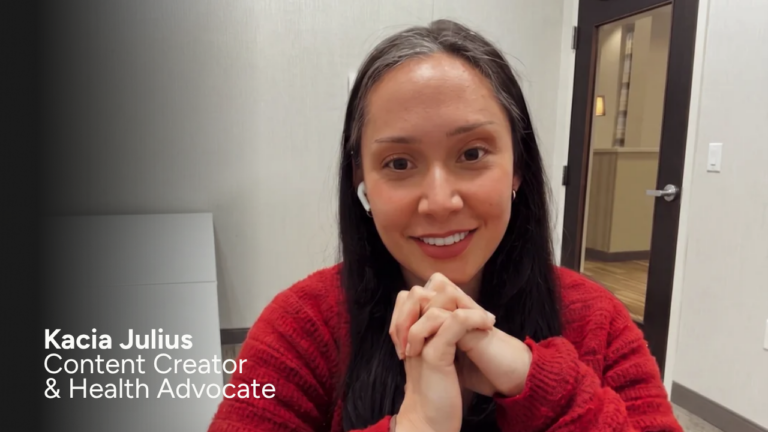
Jason Najum 00:02 Okay, we're here with Kacia Julius. Kacia, thank you for joining us.
Kacia Julius 00:07 Thank you for having me.
Jason Najum 00:08 Yeah, welcome to the Human Journeys podcast. And I I I think as far as human journeys go, you have a real interesting one. I think you're you're you were the perfect candidate. When I saw your story online, I said, That's there's a human journey going on over there. and and yeah. why don't you give a brief introduction to to your story, however you feel like.
Kacia Julius 00:26 Mm-hmm.
Kacia Julius 00:35 yeah, sure. So basically I got into a car accident that led to a spinal cord injury. And this was in November of 2024, so about a little over a year and a half ago. And I you know, it it led to me becoming paralyzed from like the chest level down and And so basically I just knew right away that I wanted to share the journey. So I was just started recording and asked for help recording. And I didn't really know what was going to come of it. I figured and I just compiled a lot of footage before I started posting. And then I was just focusing on like the healing aspect, like what what is my life now becoming, you know, being in this new body. And so it's been a long journey, but basically I'm here now because I I discovered through another podcast the like the effects of microdosing on a paralyzed body. I that was all very under under shared or under I guess talked about in the community and normalized pretty fast that that psychedelics or mushrooms, they just increase spasticity in the body. And spasticity is basically it's described as like uncontrollable muscular movements in a paralyzed body. So yes, for those who don't know, spasticity is pretty common once you become paralyzed. Like it can be initiated from just like Going from sitting to laying down, your legs will just kick straight out often. You'll have different, it'll show up differently for everybody. so I heard on a podcast on the Live to Walk Again podcast, and it was episode 179. I think everyone should check it out because it's really informative on the effects on a paralyzed body. and the reason why I want them to check it out is because there's a lot of safety.
Kacia Julius 02:54 safety that needs to be considered with it because it can be dangerous to experiment with mushrooms. And the reason why is because we can't regulate our body temperature. And so when you take mushrooms you can become hypothermic and overheat and
Jason Najum 03:03 Mm-hmm.
Kacia Julius 03:18 So basically, yeah, I'm just sharing my journey, making that discovery and being very open about what it is like, what I can do, because there's some benefits. So it helps turn on my muscles. I can stand up with some assistance because if you take a certain amount, certain potency, it'll turn my my my muscles will use their full strength.
Jason Najum 03:29 Yeah.
Jason Najum 03:45 Mm-hmm.
Kacia Julius 03:45 in their legs, at least temporarily for and that's how it shows up in spasticity. So then I use that to help with training to hopefully lead towards recovery or at least document what it does. I'm not gonna say it's promising anything miraculous, but I am just a human, like you said, like I'm just a regular person sharing the entire process and what I do with it until
Jason Najum 04:02 Yeah.
Kacia Julius 04:14 I get another, I don't know, I guess intuitive moment to try something else. so yeah.
Jason Najum 04:20 Hmm. So yeah, I guess we'll Yeah. Thanks. That's a there's so much there. I guess we'll yeah, just take like a brief moment to say that. And I'm glad you mentioned that podcast and we'll link to it. 'cause it seems like your your journey is definitely like a like a human one and and you s you say it on your on your Instagram page that you're this is this like a self experiment. You're just documenting your journey. So I guess just for mm, just to be responsible, we'll say that like
Kacia Julius 04:27 huh.
Kacia Julius 04:43 Yeah.
Jason Najum 04:49 This is just your experience. Like you're not a doctor. Like we there's and we'll just like take a moment there because States of Mind and our work is is like very like expert backed and we like to back things up with science. But this is the Human Journeys podcast. This is like these are human stories. So yeah, I guess like disclaimer, this is this is Kacia's story. And and anyone who's listening, you know, should should check things out for themselves.
Kacia Julius 04:53 Yeah, exactly.
Kacia Julius 05:12 Mm-hmm.
Jason Najum 05:18 And you know, I guess what may take a second also here to say like the research around how this could be working, how psilocybin could be working for situations like yours is still pretty like new. And you know, so it you know, double disclaimer, it hasn't been proven in trials and all like all of that. It's like and any r there is some research on how it could be working on inflammation and neuroplasticity and all those things.
Kacia Julius 05:32 Mm-hmm.
Kacia Julius 05:38 Mm-hmm.
Jason Najum 05:47 But it is still quite early level research. So got that out of the way. This is these are these are not formal meg re medical recommendations for anyone. This is Kacia's story. This is Kacia's story. And Yeah. Yeah. Yeah, exactly. You just go crazy. so yeah, I guess maybe let's let's go and like chronologically. So you had your
Kacia Julius 05:50 Mm-hmm.
Kacia Julius 05:56 Mm-hmm. Perfect. Perfect. Now I can just say whatever I want now.
Jason Najum 06:15 I don't know if you use the word accident. Like, I don't know what what's the
Kacia Julius 06:17 Yeah, I I guess I just describe it as an accident, oopsie, an oopsie daisy. I yeah, and that was I had my accident and then I so I do have prior experience, you know, microdosing and taking mushrooms beforehand. So I did have an understanding of what that was like. Yeah, so that's important to know. I knew
Jason Najum 06:22 Yeah.
Jason Najum 06:38 That was that was my next question. Mm-hmm.
Kacia Julius 06:45 I knew what it was like to take higher doses and to microdose. and so yeah, I felt very comfortable with it. I think there are some people that have spinal cord injuries that had never tried it before. and that I couldn't imagine like the first time trying it, trying it with spinal cord injury just because of the physical bodily effects. but yeah, so I had my accident in November. A few months out, it was probably about three months. I started microdosing, or at least I tried my first dose. Three months fresh from the accident. I still had like a back brace on. and things were still so sensitive, so fresh. The the way it showed up was I was still having like I had lots of tingles in my body, lots of pain. And was still, you know, trying to learn how to even move my body, like scoop from side to side and lift it up. so still getting a lot of assistance everywhere. And then we heard that podcast, me and my partner. And I was like, okay, let me give it a shot. And I tried it safely at home with you know my partner around and family around. And we kind of like took it and then you don't really think about it and it's it's pretty immediate once it hits. So once it hits about it could be anywhere from thirty minutes to an hour. I I don't know, it could be earlier. I don't know. It depends on how you metabolize it. and then all of a sudden it's just like, whoa, my legs are just like, okay, we're gonna kick out now. We're gonna we're going now. And so I And it's in, you know, because I'm paralyzed from here down, it also activates the stomach muscles. So that is what sends me backwards and could send somebody backwards. And so so yeah, I was just kind of flopping around in bed and being like, Well, this is crazy. There's something like like alive, like woke everything up in my body. And we started moving around with some.
Kacia Julius 09:07 Or messing around with some movements, like I was twisting and turning in bed, just kind of like you know, as best as I could, trying to see with my legs kind of like doing this crazy kicking out motion just to see what would happen. And I and I remember thinking I was tripping, right? I was like, okay, I think I saw my leg kick when I wanted it to.
Jason Najum 09:35 Hm. Sorry sorry to jump Yeah, sorry to jump in for a second. Were these kind of spasticity moments common before you had had microdose or was this completely new at that at that point for you? Or
Kacia Julius 09:35 And then I told myself
Kacia Julius 09:50 In the way that it shows up, it was it was new. so spasticity usually like for me it looked like before dosing, it just looked like I would kick out like extensor extensor, I think it's what's called. and so I would just kick out straight and just do completely flexed, pointed toes when I went into laying down.
Jason Najum 09:54 Mm.
Kacia Julius 10:20 And then if I was in sitting, I would grab my leg and my leg would start jumping every now and then, you know, like it wasn't all the time. And so it's pretty, it's just like it's just like tone. There's another term tone and spasticity. It just looks like I have high tone. spasticity is I think those more jolty movements, the you know, and so that's how it showed up. It was all of a sudden like my leg, my knee would come up like this and then kick out. Up, kick out based on how it was moving my body. And so and that shows up differently, but yeah.
Jason Najum 11:02 And you felt it Yeah. And and you've you felt moments of control, maybe?
Kacia Julius 11:11 I thought yeah, I remember thinking like, I'm crazy this didn't happen, and telling myself like I didn't even tell anybody that I felt that way. And so I just held on to that. And and I think with more time, just having like I had to take a a bit of a break. I think just adapting to the new life. I didn't take microdosing with a serious regiment. So I then revisited it after I got more comfortable. So about a few months ago, I'd say I got more comfortable with with you know I've already adapted to this life. I've gained independence and been able to do relearn how to do things on my own. And then I decided to take up microdosing more strictly and then I think that that's when I was like, this is amazing. I've gone through all the different kinds of therapies to like hook my muscles up to stimulation pads and paying like $200 an hour, you know, like it's it's crazy. And I just felt so I was getting burnt out from that. And then I realized I was like, I can just take a microdose and it'll send those signals back down. So then I was like, what am I doing? Like I should revisit this and try to and again, you know, it's a story of self-experimentation. So I was also frustrated with the fact how little was out there. So I decided to just put it all out there. And yeah, so far so good. I think that there's still some concerns with the fact that it's It's not quite accepted, but I am I am just still going to just keep going because I feel like that's more important is just to keep sharing as much as I can. And I know it's entirely anecdotal, but I always felt comfort in hearing at least an individual story. And you know, we go on Reddit for a reason, right? We go on these things to hear what other people experience. So so yeah, that's mine.
Jason Najum 13:32 Yeah. Yeah. Yeah. yeah, you like your the documenting of your story is I mean, it's not only like your your your posts are not only about microdose, right? It's just your your document your story in general. but that you know, are are you becoming the the microdosing poster child for the for the paralyzed community? I mean
Kacia Julius 13:35 My case.
Kacia Julius 13:47 Mm. Yeah.
Kacia Julius 13:58 I guess so. I think so. And like that's definitely, you know, credit to the people that shared it with me. Dr. David McMillan and Devin Colbert are or Colbert, I think, are the ones that they're on that podcast that did it themselves. And well, Dr. David McMillan is a neuroscientist and and then David or Devin is a a paraplegic. And so, so yeah, credit to them, but I have sort of become like the one that people are reaching out to about okay, what do I do? what are the protocols? What should I do for the, you know, kind of for advice. And so that's when I'm, you know, I am just have having to share that I am just a person with a very specific spinal cord injury. and I have my recommendations from what I've, you know, experienced personally. And I always just say like the smaller the better, because it'll say in this podcast too. but if you know somebody with a spinal cord injury or you have one, we both found like I just re-listened to it because the we both found out that at point five. which is 500 milligrams, point five grams, is when that temperature regulation, we experience the temperature regulation issues kick in. So that's when you will become really hot and hypothermic and so just imagine you know like I've I've I've received a lot of product and looked at how they dose it out and often it's like 0.1, you know, they'll be in those typically it's 0.1 is microdose, but the like median amount is like around 0.5, I've seen. And so just being careful, yeah, I'm like just be careful with just 0.5 because I realized this whole time I was taking like less than 0.1 and I was still seeing my muscles kind of activate and the spasticity sort of turn on.
Jason Najum 16:08 That's a big one.
Kacia Julius 16:24 And so I the topic was the when does it become, you know, g remove the psychoactive as aspects and
Jason Najum 16:28 Yeah.
Jason Najum 16:33 Generally Yeah, generally a point five is the is the upper upper, it's almost not even a microdose anymore. Like, you know, point one to point point one to point three, point to point two five. Like when you get to half a gram, you're starting to you're starting to flirt with you're you're out of microdose, you're starting to get out of light little out of microdosing territory. so yeah, you would start to feel maybe some other effects.
Kacia Julius 16:41 Yeah, it's like definitely
Kacia Julius 16:48 Yeah.
Kacia Julius 17:01 Mm-hmm.
Jason Najum 17:03 So yeah, it's interesting how I mean if you were you were at such a small dose at point one or under point one and you I mean you would still have I mean, did you feel that you your body was more sensitive to things after the incidents as c compared to before? you know, that there's
Kacia Julius 17:21 Mm-hmm. Like like to the just dosing in general. Or yeah, it's something that I'm still so new at experiencing, but with talking with many people and also like I did an interview with Jessica Haber, shout out Jessica, she's been paralyzed for 30 years and she microdosed.
Jason Najum 17:25 I guess. Yeah.
Kacia Julius 17:49 for six months before she and then she was able to get some movement back. So she got on video of her being able to kind of like clench and kick out her leg slightly. And but that's something that I think that, you know, she again too is pioneering her own like journey of self-experimentation. And so we can't really like define okay what it was. That did this, I just stayed consistent. So I feel like consistency was the big thing that I took from it. And so she described it as energy returning back to her legs first. So that and that sense of awareness of your legs. Cause if when you're paralyzed, you sort of lose a awareness in space. And so then so I feel that building if I were to just To describe early on what this like, I'm still within like the first couple months of the microdosing journey. so I feel energy is returning to my legs. I feel slight more sensitivity, like even pressure. Like I brushed my leg the other day, and it wasn't like that hard. I was just kind of doing this and I felt like the tingles where my hands were. So it's it's definitely a journey. I am Not making claims. I am just saying like again, it's just experimenting and seeing what happens. and often I have heard too, it's while the dose is in your system. So, you know, if it's off, I don't think you have the same amount of like core stability. Like I think all of that enhances while you're on the dose, but that's just my take on it right now.
Jason Najum 19:31 Mm-hmm.
Jason Najum 19:45 Mm-hmm. Is it I've I think I've seen so you're you'll take it sometimes while you're doing your therapy your physical your physical therapy. So you'll microdose in advance of you doing your your PT or your and and and you you find that that's giving you is like it's improving, potentially improving your physical therapy?
Kacia Julius 19:48 So yeah.
Kacia Julius 19:54 Mm-hmm.
Kacia Julius 20:02 Yeah.
Kacia Julius 20:14 yes, I think so because because of especially with getting like assistance with getting certain movements in. I think it just again it enhances that ability for you to kind of rewire your brain into focused movements or repetitive movements. And so just allowing that that I guess like extra supplement or that support of that supplement helps like again it's kind of like taking pre-workout like you're getting your it helps with kind of mood, energy and just priming yourself for the gym. So I'm not yeah like I'm not
Jason Najum 21:03 Yeah. There are some there are some athletes who've reported increased performance on psychedelics, like focus, from micro even to higher doses. I think I saw like a Joe Rogan episode where some fighters and would microdose and they felt, you know, increased focus. They could be in the moment, you know, they could they would they would be i i hyper even the experience like hyper focus,
Kacia Julius 21:12 Mm-hmm.
Kacia Julius 21:24 Mm-hmm.
Kacia Julius 21:30 Mm-hmm.
Jason Najum 21:31 psychedelics. So yeah, I mean there's so many un you know not medically confirmed reasons why right so there's like neuroplasticity and then there's anti inflammation, there's pain relief, there's like just anti anxiety relief, you know, maybe you're you're able to focus better because, you know, there's there's mental health relief from psychedelics. There's so many, you know, we don't know why it feels good for you.
Kacia Julius 21:34 Yeah.
Kacia Julius 21:57 Mm-hmm.
Jason Najum 22:00 You know, maybe like a a couple of you know more difficult questions like the placebo effect is also a thing. I don't want not discrediting what you're feeling whatsoever, but like I you know, I microdose. Are there times where and I think it's working for my own stuff? you know, could that be real? I don't know. If you have you have you thought about that?
Kacia Julius 22:07 Mm-hmm.
Kacia Julius 22:17 Mm-hmm.
Kacia Julius 22:21 Yeah. Yeah. Yeah. I think placebo is a really interesting topic with with what I'm doing because I'm also sharing like the man manifestation and belief paired with this microdosing. And so or at least it come it came about while I was sharing that journey of manifestation. So this idea of the placebo, I totally believe in. The it's kind of like, you know, again, connecting back to like Joe Dispenza's work and he had that book, You Are the Placebo. And I was, you know, recommended that book a bunch of times, like to early on in this journey. and that is really what I'm sharing. I feel like as far as experimentation goes, I am seeing what it is like. And sharing what it's like to pair the that belief system with, you know, the experience of having a spinal cord injury. because even in his book, he shares his own personal story of having a spinal cord injury himself. I think he dealt with a spinal compression of some sort, a really extreme injury. And and then you know, coming out of the hospital and being able to walk and obtaining a recovery, right? and to me, I'm like, I'm not just like following like a specific like way of doing things. I'm just you know, I'm just sharing that that that has been recommended to me a lot. But yeah, this idea of the placebo, I think two, I have to share that I was also in a clinical trial. And I I just found out that I I I have made improvements, but I was part I was in the placebo group. and I really thought I wasn't like they got me good. And so I think too that that kind of affirmed the placebo effect within myself. yeah.
Jason Najum 24:30 Yeah. Yeah.
Jason Najum 24:41 And you and you're okay with that? How do you feel about being placeboed?
Kacia Julius 24:46 I feel great. Like I think that it's I after the fact though too, they're like, okay, now you're gonna receive it. and so yeah, yeah. Double placebo'd. and so yeah, I actually I was actually relieved when I found out because I think going into it, you know.
Jason Najum 24:57 Wink wink.
Jason Najum 25:01 Yeah, yeah. Yeah.
Kacia Julius 25:15 That you could be receiving the placebo or you could not be. and it was that not knowing. wait, is everything good? Okay, sorry, I had like a Wi-Fi thing pop up. yeah, it was the not knowing that created that that sense of that unease, you know, you're just sitting there like wondering. And I feel like it they did something in the trial that made me be like, I know I got it now. Like, I'm I'm not the placebo in this trial and it switched something on and then I was like, yes, I'm receiving, I'm seeing improvements. Like it it totally worked. And so that's why it's definitely a practice to work on this whole belief aspect of things. it's also something I think we put too much practice in at times. And I am just trying to share like that side of things paired with this microdosing journey. See what it does.
Jason Najum 26:21 Mm-hmm. Yeah. You're right. Yeah. I mean, worst case scenario, you're you people you can be motivated. and even if it's placebo, I mean, if if it's if it's motivating you, if it's giving you, you know, go bringing you to physical therapy with a with a fresher mindset and a positive mindset.
Kacia Julius 26:45 Mm. Right. Like might as well achieve your dreams in the process. Like that's the side effect. Yeah. There's like really no losing. So
Jason Najum 26:50 Fake it till you make it. Yeah. yeah. right. So yeah, I guess so have you run into resistance when it comes to I mean, has there been a therapist or a doctor or a family member who's told you, Kacia, what are you doing? You know, taking drugs, taking drugs, not in your not in your state.
Kacia Julius 27:14 Hmm. No, I actually didn't have any of that. I think I I yeah, I I only recently like everyone kind of find found out, I guess, like through online that and then they were like, Okay, why you know, what are these packages? Like, why and I was like, Yeah, they're mushrooms, that's it. And they were just like immediately kind of like, huh.
Jason Najum 27:20 In your condition.
Jason Najum 27:34 Mm-hmm.
Kacia Julius 27:47 Okay, like what do you mean you know, and there was a little bit of confusion, but curiosity and I think just because they they they could just see it in me that I'm like I'm so assured with it that they're not worried, like you know, so I think maybe they're worried for themselves, you know. I think there's always that fear that like, I'm gonna lose myself, I'm gonna lose my mind or
Jason Najum 28:17 Mm.
Kacia Julius 28:17 you know, as far as like escape the escapism part of reality or this just the experiencing psychedelics in their in their like higher dosed form, right? so they I I actually think I introduced or like exposed like some of my family members to the idea of microdosing. When I thought everyone kind of knew about it, but yeah, but I I had to tell them I'm like I'm not tripping every time I take this. Like it's it's I can hardly tell. Like the point is that I can't tell, you know, mentally that it's there. So yeah.
Jason Najum 28:56 Yeah, I've had to I've had to explain that hundreds of times over this this career of mine. Yeah, I know that conversation very well. so I mean you seem to be a positive, hopeful person in general from what I could see, considering your s your your situation, you know, isn't necessarily the easiest. And so I I commend you with that anyways, but has microdosing added some hope for you?
Kacia Julius 29:13 Mm-hmm.
Kacia Julius 29:18 Mm-hmm.
Kacia Julius 29:30 Yes, for sure. I mean, the microdosing aside from the hope of the physical side effects, the thing that I think we people in the community already know this, but just to reaffirm that microdosing, it doesn't just like make you feel good daily, I think that's a misconception. yes, you feel I think. Overall, I felt I feel good most of the time. The thing that it does is it allows some things to come up too for me to work through them. So the therapeutic side of having to navigate this new life and it's it's allowed me to kind of like process things as they come up instead of you know holding them in. so I could imagine for some people they might be like, okay, I don't really want to. you know, that to happen, but that truly is one of the side effects I experienced. and that's okay. Like it's totally safe. I think that there's a sense of vulnerability that comes with it, but there's just something about microdosing that it allows you to to experience it with clarity and give yourself, you know, the whatever processing or healing you need. and it literally comes in doses like as it is in the name. So it's it's not like I'm like, my god, I'm dealing with the trauma of my injury. It's like no, it's like way more subtle than that. And I wouldn't attribute to like my microdosing itself for me getting over it. I think I did that on my own, like entirely throughout the the year. And then microdosing just allowed me to to yeah, I guess like do some extra processing that maybe on some things I wasn't quite like aware that I hadn't processed, you know. yeah, so it just it's just that a little bit of assistance in the healing journey.
Jason Najum 31:42 Mm-hmm.
Jason Najum 31:47 Yeah. Yeah, you use use subtle you use the word subtle and that's the word I often use when I'm describing it to to people. and you know, for me I've always described microdosing as it it I'll use some fancy writer English, but I g it gives me better better access to the to the present moment. So I'm better able to be here rather than like stuck in whatever in in my head, whatever it is I'm g w
Kacia Julius 32:07 Hmm.
Jason Najum 32:16 would be lost in generally my thoughts, my crazy thoughts and and psychedelics, microdosing, allow me to be like a little bit more here in the present moment. And I think for me that's the core, like that's the foundational benefits of psychedelics and microdosing is that I'm I'm more in the present moment. And then there's all those spillover effects like
Kacia Julius 32:22 Mm-hmm.
Jason Najum 32:41 If people say they're more focused with psychedelics, well, they're more focused because they're more in the present moment and they're not lost in their own stuff. And you know, if you're able to better focus during therapy, maybe it's because you're, you know, you're more here and there's all these other positive effects and you can better pro things are coming up because you're allow, you know, you're you're allowing them to. Yeah. So that's the foundational effect for me and on all the things potential positive spill.
Kacia Julius 33:01 Right. Mm-hmm.
Kacia Julius 33:10 Yeah. And that's huge. That's huge for dealing with anything. but with this navigating this injury, it is really challenging because when you go through such a life altering change, especially early on, I hear this with people in the spinal cord injury community, the say the first few years, people that are out longer, you know, that they have been in it for years. They say the first few years they were still in hyper recovery mode because they were still that version, living as that version that they were before. and so presence is huge. So this too, like I'm I'm fully aware of that too, that I could be experiencing that. You know, I am a year and a half in. And I am in recovery mode and I've just embraced that, like that I that I still just want to test it out just to see. And so basically, yeah, this what microdosing does is help with that presence because if you're thinking of the past, you're thinking of what you lost, you think you think you, you know, you lost your mobility, you know, you're just thinking as that person that used to do these things. and have all this independence that you had before. And then if you're thinking of the future, right, you're thinking of okay, how when am I gonna make more progress? When am I going to get the thing that I want? So you have to just eliminate as best as you can, eliminate both of those worlds. None of those worlds exist. Nothing exists but this moment. It's so, it's so hard. Yeah.
Jason Najum 34:53 Yeah. The present moment. Important it's important for everyone and especially important for when you're going through something big, which you are. yeah, you that was what you that was very well said. dwelling on the past and d dwelling on something that happened and then worrying about the future. That's not that's not a good place to be in general, especially when you're going through yeah. Especially when you're going through something big. So yeah, the to the pr
Kacia Julius 35:03 Mm-hmm, mm-hmm.
Kacia Julius 35:17 Mm-mm. Neither are good.
Jason Najum 35:25 The present moment. Cheers to the present moment.
Kacia Julius 35:28 Cheers. It's yeah, and I and I think like the work of it's like The Power of Now by Eckhart Toll or Eckhart Tolle, I don't know how to say his last name. Eckhart, I know. anyways, great, great book. I always recommend huge for anybody, but also yeah, if you are going through a massive injury, a massive life change,
Jason Najum 35:29 Right.
Jason Najum 35:37 Mm-hmm. Yeah, I'm always never quite sure how to pronounce it again.
Kacia Julius 35:56 And if it in in if you're curious about like how I am manifesting, you know, something that is probably deemed as like, you know, you're crazy. Why how could you manifest something like this? just being present, like that's it. Like you manifest through the present moment. and so if anyone else aligns with that, I don't know if you share like a similar interest in in those practices, but yes, microdosing does allow you to become present, but it doesn't I'm not also gonna advocate like, you need to microdose to be present because you right, right, for sure.
Jason Najum 36:38 Yeah, there's other ways. There's other ways to get there. Yeah, I always say psychedelics are like a a tool. When when I added microdosing to my life when I was going through a tough time, it was it's it's not a cure all. I when I added microdosing during this rough patch in my life, I also d went to I d increased my yoga and I went I said, Okay, I'm gonna go to yoga four times a week. when I added microdosing to my life and
Kacia Julius 36:52 Mm.
Jason Najum 37:07 I increase and I started to meditate a bit more and read about these topics that we're talking about and you know, learn about mindfulness and you know, I'm able the I'm able to better experience the effects of microdosing because I understand the concept of mindfulness and how to how to notice my own mind. And if I can if I'm noticing my own mind, I could notice the effects of microdosing because the it's subtle, like we said. And if you know, I remember I gave
Kacia Julius 37:17 Mm-hmm.
Jason Najum 37:38 I I helped someone in my life and my family. I won't mention who, but let's just say subtlety is not his strong suit. And I and I like gave him a microdose and you know, after a few minutes he's like, I don't fucking feel anything. And I'm like, Well, give him let's just say his mindfulness practice wasn't quite there. And I I was like, you know, come on, let's take a moment, let's look at it. so like one doesn't really work without the other. Like if you just like
Kacia Julius 37:44 Ha ha.
Kacia Julius 37:55 Ha ha ha
Jason Najum 38:08 Take a microdose and just like cross your arms and be like, I don't feel anything. It's not, you know, you may get some physical effects, but if if it's if it's a low enough dose, you have to have like other tools in your toolkit to to be able to notice it, the subtlety and to, you know, lean that here it is. There's something there. Let me notice it and feel into it and you know.
Kacia Julius 38:21 Mm-hmm.
Kacia Julius 38:28 Mm-hmm. Yeah, yeah. It's huge. And it's just like experiencing and just showing like how different everyone experiences the world. Because I think if you have that sense though of connectivity and spirituality too, I think pairing it with like a spiritual practice is something like if you already like are s are a spiritual person. you just see the world differently. So you're able to to detect kind of a different realm, detect like how, like, okay, even connective conversations, for example, those are my favorite things is like this person brought this thing up that led to this thing that led to that. So that's why I love this practice with spirituality because it Again, it just it just enhances that connectivity with other people. And you only get that through pre the present moment, you know, you only get that when you're paying attention to things that approach you or come your way. so yeah, just people are built differently. I think it's too it's also it's also really fun when you have like different people trying these things out and
Jason Najum 39:51 Mm-hmm.
Jason Najum 39:57 Yeah.
Kacia Julius 39:57 it's not like they're it's not like it's wrong or anything. It's just it's like I feel like there's just some people that are built to not like be hyper processing like the world in this realm. but it's like there's like an art of that. Like I always look at those people and I'm like, that's I kind of envy that a little bit. Like that's
Jason Najum 40:19 The the ones who are outer in a different dimension or they're really p p anchored anchored in this one? Which one?
Kacia Julius 40:23 they're like I guess in a different one. They're one that they're not hyper processing the connective thoughts or how things are connected. They're just there. They're just ex they feel more present sometimes. yeah, and I and I love I love being around that as well. but yeah, yeah, I'm I'm I'm rambling now on I could get into so many different like philosophical debates about this, but I need a ground, yeah, I need to ground myself.
Jason Najum 40:56 Mm-hmm. We'll save that for another podcast. right. Okay. yeah, so I get I get we could start like wrapping things up, but I guess as you go forward, I mean, have you seen an increase in people reaching out to you? I mean, I can imagine if someone has been in a situation like yours or similar. And you know, hope is a word I used before. And you know, you maybe you had hope when you started taking it. Someone sees your story and if they're in a tough place, yeah, have have you been getting stories like that? Do you do you feel the hope even in the in the messages they send you? Can you can you sense that people are looking for
Kacia Julius 41:38 Mm-hmm.
Kacia Julius 41:45 Yeah, yeah. I get a I get a ton of messages. I get messages about people like people seeking help, seeking seeking a safe place, but also I get messages of people saying, like, finally someone's talking about this. I've experienced this. and a lot of that is so affirming. I'm like, okay, now that it's kind of opened up this this pathway, I I feel like I'm just getting a lot of encouragement through those stories that are people are sharing of it working for them. And they'll say it's worked for them in a vast variety of ways. It's not just people with spinal cord injuries, people with many different ailments. and so yeah, and for that, I I'm really grateful that I like sort of built the community to. So I would like if anybody here is listening and wants like that space, a similar space where people are experimenting, people are sharing, and also supporting each other. I do have a Discord for that. So you can just reach out to me and ask for the Discord link. and so yeah, I think that that has been huge is is all of the support I've gotten. I want to do like a big thank you to everybody that you know I'm still just like catching up and I'm still so new in this journey that and just since content creation in general so so yes this that hope is there there's also people seeking hope and I am I guess hoping to inspire people to trust themselves and trust Trust in in the power that they can hold in in embarking on their own journey. I don't know, whether healing or whether that is there's always like something to to discover. And that's what I want to put out there is that every spinal cord injury is different too. So
Jason Najum 43:48 Mm-hmm.
Kacia Julius 44:03 I knew that my me putting my story out there wasn't going to like speak for everybody with a spinal cord injury. It just it's again, it's like if you don't see yourself represented in a clinical setting, I wanted to create that for myself. I am now representing myself as that experiment. And you know, a lot of people like from all different backgrounds may not be represented in clinical settings. So I just wanted to advocate for that and also being safe, you know, yada, yada, yada, yada, right? Like I'm not a medical professional, but again, there's still a lot to learn in this realm of of healing and health and and yeah, we're figuring out a lot.
Jason Najum 44:51 huh.
Jason Najum 44:55 Yeah. I mean I could Yeah. And I mean it's just similar to me with mental health. I I haven't had to go like navigate the the medical system physically that much. But having worked in the in the kind of kind of mental health world now for several years, and the stories of we keep hearing is that you know the the people would try the regular things that their doctor or therapist told them to and it just wasn't working. And the reason psychedelics are getting so mainstream when it comes to mental health is that now we're starting to show that, you know, okay, we and we have clinical results that it is giving people an option when they thought there was none. It is giving people hope and they've tried everything and now, so I mean, maybe we're we're not quite there with psychedelics in the physical, although now that psychedelics and and is getting mainstream medical acceptance and you know, the FDA is very close to approving it for mental health and
Kacia Julius 45:50 Mm-hmm.
Jason Najum 45:53 You it's in the it's in the White House now. Like the future the future of psychedelics once the men once mental health gets properly mainstreamed, like people are already talking about psychedelics for more the more physical stuff for for inflammation and for other wellness things. So maybe sometime in the future people with physical conditions will have more tools when it comes to psychedelics, maybe coming in the future. So
Kacia Julius 45:55 Mm-hmm.
Kacia Julius 46:09 Mm-hmm.
Kacia Julius 46:21 Mm-hmm. Yeah, I'm really hopeful. Thank you. Thank you. yeah, so the yeah, thanks for for I guess having me and being able to share like at least like a real human story that you know, I don't have any expertise in anything, but I do like I will share and be the first to tell you when I don't know something.
Jason Najum 46:22 You're a pioneer. Yeah. Right. Right.
Kacia Julius 46:49 so yeah, I just hope people like feel less fearful about this, what they don't know. and because you know the more I I share it, the I think it's allowed more people to be more courageous with with understanding this. And again, this is something to be to be careful with. as I described earlier, like what can happen. but yeah, it is it has it has a lot of potential. I'm really hopeful. And we've only like scratched the surface. So I know that clinical settings are picking this up. So, you know, like in places like Oregon and Colorado, they have studies going on for people with spinal cord injuries even.
Jason Najum 47:45 Hm. Nice.
Kacia Julius 47:45 experimenting with psychedelics. So I think that you know definitely advocate for clinical research, especially because it can give you access to something that you don't have access to yet. you and you can also contribute, you know, to and represent yourself, somebody who who may share a similar a background to you. So so yes, I am I am a big like clinical research junkie, I guess. Like I'm bouncing around to different clinical studies. once I'm done with this one, I'm starting another one this summer. So so yes, big I haven't started a psychedelic one yet, but that is that is hopefully in the future.
Jason Najum 48:32 Mm-hmm. Okay. The mix of the mix Mm. Okay, a mix of the spiritual and the clinical and the hopeful.
Kacia Julius 48:44 Yeah. Yeah. For sure.
Jason Najum 48:47 All right. well I really appreciate it. And we'll link to all of your links and we'll add as much information as possible so people have the full context and and maybe some cli maybe some research that's relevant and helpful for people. so yeah, thank you for sharing your story and yeah. Yeah, and I w I w I wish you luck. yeah, all the best. And let's
Kacia Julius 49:08 Of course. Thanks for having me. Yes.
Kacia Julius 49:15 Yeah,
Jason Najum 49:17 Keep it up. All right. I'll I'll keep following you.
Kacia Julius 49:18 Yeah, thank you. Awesome. Yeah. I'm gonna keep putting it out there. So you know where to find me.
Jason Najum 49:24 Yeah. All right. Thanks a lot.
Kacia Julius 49:28 Thank you.