ADHD and Personal Growth: Coaches on Turning Traits into Triumphs

Life happens in cycles. It ebbs and it flows. It delivers us both blessings and burdens. During this time we learn and we adapt — and because this adventure isn’t always easy — we also accept the imperfect and learn to cope.
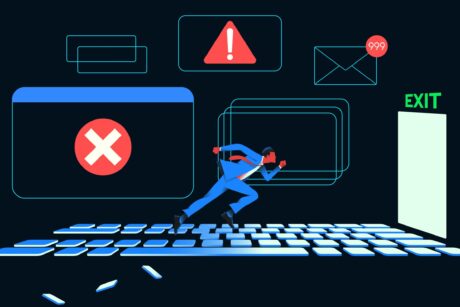
It’s normal, a part of the human experience. But there are times in our lives when it all becomes too much, and the coping mechanisms aren’t enough, and the water begins to overflow, and the balls you were juggling begin to fall.
For people with ADHD or other neurodivert realities, these tipping point moments can feel that much more overwhelming. But they can also be opportunities for change.
For Hatty Hanna, a lifelong DJ, marketing pro, mother — and now ADHD coach — that moment came in her 40s.
“My inner support systems kind of dismantled with the stress of life, children, full-time job, a parent getting ill. I had a bit of a breakdown, which was terrifying,” she recalls in a recent chat with States of Mind. “But during that time, I had a fantastic doctor who recommended that I have an assessment.”
For Sara Hannak, a neurodiversity trainer and ADHD coach, the journey began with self-realization. “I was working in a UK university as a disability advisor and realized that I met the criteria of the ADHD screenings we were giving for students. I kept that to myself and just sat with it for a couple of years and eventually went on to get my own ADHD diagnosis.”
Living With Undiagnosed ADHD
Many people seek help with ADHD when they hit a life transition: parenthood, career burnout, or menopause. “Often that can happen, when somebody has children or hits perimenopause,” Sara explains. “Suddenly it feels like this is all becoming quite hard to manage.”
It’s often during these shifts that the strategies we’ve unknowingly relied on start to break down, leading people to finally seek guidance. And in this process, the reality of living with undiagnosed ADHD is revealed, along with the internalized shame and misunderstood coping mechanisms.
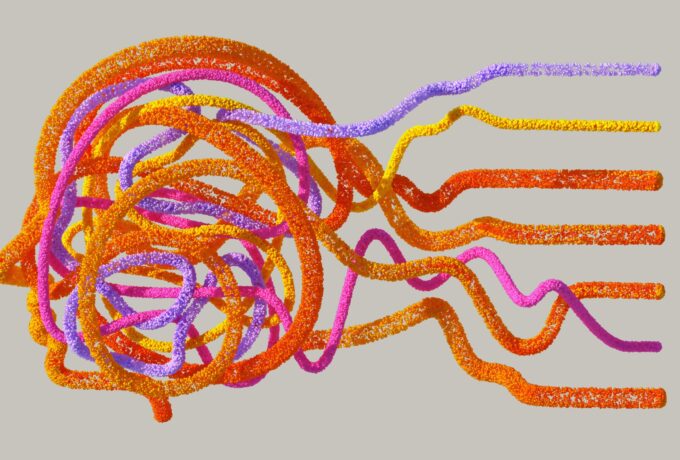
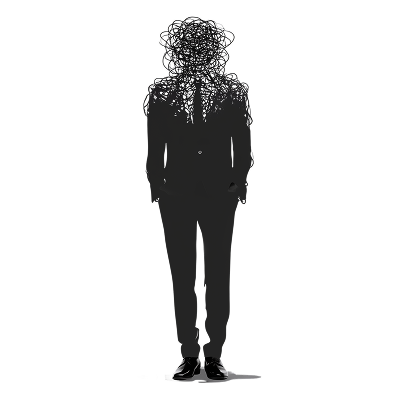
“There’s a lot of shame that comes with ADHD,” says Hatty. “You internalize that shame and you learn a script about yourself that’s not actually the truth. Yet you learn these stories, saying I’m lazy, I’m stupid, I’m no good. I can’t do numbers. But actually it’s not that at all. It’s just that your brain works differently.”
The fundamental difference with an ADHD brain is that it is wired for interest, not for importance.
Sara agrees. “It’s these little daily things, that can just chip away at that sense of, ‘Why can’t I do these basic things that everybody else seems to be able to do?’”
Hatty calls this the “script” that forms from years of struggling silently. “It’s nothing to do with intelligence. You know you’re perfectly bright, so you’re constantly battling with yourself. Why can’t I do this very simple thing?”
“But there are workarounds and ways to work with your brain, so that your brain can be absolutely brilliant. Part of what coaching does is help you learn tools to regulate and choose your responses to your environment, situation, relationships, so that you are in control of it.
“And ADHD isn’t all or nothing, it’s a spiky profile. It fluctuates up and down like a roller coaster. So on the days where you’re brilliant, you are so very brilliant. ADHD has this tremendous capacity, to be brilliant and excel in everything. Some of the most well-known entrepreneurs and business leaders have ADHD, because they have that quality.
“Yet, at times, it can be utterly crushing as well. So it’s a bumpy and exhausting ride.”
Dopamine and Achieving With an ADHD Brain
For both experts, one of the most powerful tools in coaching is providing clients with language and science to explain what’s going on in their minds.
Hatty explains: “The fundamental difference with an ADHD brain is that it is wired for interest, not for importance.”
While neurotypical people may prioritize tasks logically, ADHD brains are driven by stimulation: urgency, passion, high emotion, or danger.
“You see these apps for ADHD and most of them are absolute baloney because what they’re trying to do is make an ADHD more organized. And that’s not the problem. ADHDs can be incredibly organized if they care about it.
“And that’s the thing — we’re wired for interest. You have to have an interest in it.”
Sara agrees and emphasizes how this wiring impacts daily tasks and productivity. “If you’re not interested in that job, it will be a real uphill battle. If you find something that you’re interested in and that you love, that’s the best way to achieve as someone with ADHD.”
Another thing about ADHD is it affects your sense of self-awareness. Our head is moving faster than the body. Coaching brings the head back into alignment with the body.
But the dopamine-seeking brain also comes with risks. Hatty notes, “You can see how things can quickly go a little bit wrong, if they’re living in that area of ADHD where it’s something negative that’s getting the dopamine fix.”
Because the ADHD brain is seeking dopamine, and dopamine is fired up when there’s a sense of urgency and excitement, that can lead to potentially unhealthy habits. Arriving late or just on time, completing tasks at the last minute (and other, perhaps more detrimental habits). It’s the sense of urgency that motivates ADHD’ers.
“We try to look for healthier, more measured ways to get a steady supply of dopamine so that you’re not existing in that high drama, high conflict, flying by the seat of your pants state, because that is high stress and stress is terrible for the body.”


ADHD Coaching: Building Self-Awareness and Strength
One of the first things coaching brings is clarity — naming patterns, building awareness, and understanding personal needs.
“We start with self-awareness,” Sara explains. “What are the challenges you’re experiencing at the moment? Because those will be different for everybody.”
For clients, it’s often the first time they’re given permission to understand themselves instead of trying to fix themselves.
Hatty puts it plainly: “You can reconcile with the past better if you’re doing something useful with your future.”
Both coaches guide their clients through goal-setting, accountability, and identifying obstacles. Sara often asks: “Have you broken this down into a small enough task? Have you made this achievable? How do you know when you’ve succeeded in today’s task?”
With ADHD’s all-or-nothing tendencies, these small shifts can be transformative.
ADHD at Work: Redesigning Productivity
In the workplace, neurodivergent minds often clash with traditional expectations.
“When you’re managing people with ADHD in a workplace setting,” Hatty says, “your traditional KPIs (or goals) are just not going to work. You have to get a kind of investment in the heart, mind, and soul. Not a sort of logical progression of step-by-step process. Step-by-step process does not motivate ADHDers, nor does a to-do list or a planner or any of those things that you would assume boost productivity.”
So what does work?
“Autonomy,” she says. “An ADHD will get there in their own time. What you want is that person’s skill set and you want them to do the best job they possibly can. So why not let them choose their environment?”
Sara echoes this: “Give yourself permission to work with the way that you know you work effectively. Whether that’s 20-minute bursts, working at night, or using certain habits to get into focus mode.” She adds that redefining productivity is essential: “It’s more sustainable to be doing one small step rather than climbing the whole mountain.”
Personal Relationships, Passion, and the Need for Authenticity
The ADHD experience doesn’t stop at work — it deeply affects relationships, identity, and emotional well-being.
Hatty shares, “Another thing about ADHD is it affects your sense of self-awareness. Our head is moving faster than the body. Coaching brings the head back into alignment with the body.”
And the more subtle aspects of interactions can also be affected. “Our emotions are all over the place a lot of the time, and that will affect our relationships with other people because we misinterpret what people say, we overcompensate, we struggle to set healthy boundaries. So a lot of that is wrapped up with the regulation.”
You’re not broken. You just have a brain that works differently.
Sara touches on how relationships can be impacted by ADHD’s intense emotional landscape. “There are certainly ways in which relationships can be impacted — mental health, sex addiction, rejection sensitivity, justice sensitivity — it’s all tied in.”
Are there risks of dopamine-chasing in relationships? Should we focus more on authentic relationships that are really fulfilling?
Sara agrees. “Yes, I think that’s the key. If it’s a genuine authentic relationship that is really fulfilling, then that’s great for someone with ADHD. If it’s a surface level, then yeah, you might well get bored and move on. So I think it depends on the quality of that relationship. In a similar way to the world of work, if you find something that you’re interested in, that we’re very passionate about, then we’ll want to stick with that career or that person.”
But there are also gifts. “That passion, that enthusiasm, we really value authentic relationships. If it’s a genuine authentic relationship, that is really fulfilling.”
Getting Help: Diagnosis, Journaling, and the Power of Language
Diagnosis is not always the goal or the solution.
Hatty stresses, “Unless you want to try the drugs, you don’t really need a diagnosis. You don’t need the piece of paper in your hand to tell you what you know inside.”
Instead, she recommends self-inquiry: “Start reading about ways to manage your symptoms holistically… really understand yourself.”
Both coaches advocate journaling as a powerful tool.
“Write a journal. Write down how it shows up for you,” Hatty suggests. “Are you always late? Is your house a pigsty? Once you understand it and explain it, then you’ve got a little bit more power to make changes.”
And for those unsure whether their traits mean ADHD or just “normal life chaos”? Sara offers this perspective: “Is it doing anybody any harm for people to go, yeah, I recognize that’s me? In my view, it’s only helping us all to understand ourselves better.”

Toward Compassion and Change
Both Sara and Hatty agree: the path forward isn’t about rigid frameworks. It’s about flexibility, autonomy, and awareness — for everyone.
“Employing practices that work universally across the board, that supports people with neurodivergent conditions so that they can come to work and feel psychologically safe,” Hatty says. “But it also supports everybody because it’s just more in tune with how we are as humans.”
Sara adds, “Low self-esteem is something that a lot of neurodivergent people recognize in themselves. But giving people that ability to go, ‘No, there’s a reason you find that hard,’ is hugely beneficial.”
Ultimately, the goal is empowerment, not pathologizing.
“I’m not saying to everybody: write a journal and then you’ll discover your ADHD,” Hatty laughs. “But it’s actually a fantastic way to just compartmentalize your emotions. What went right? What went wrong?”
Whether or not a formal diagnosis ever comes, that kind of insight — and the support to explore it — might just be the most valuable step of all.
And always, we should try to end, and lead, with compassion. As Sara puts it, “You’re not broken. You just have a brain that works differently.”