ADHD Awareness Month 2025: Why Breaking the Silence Matters
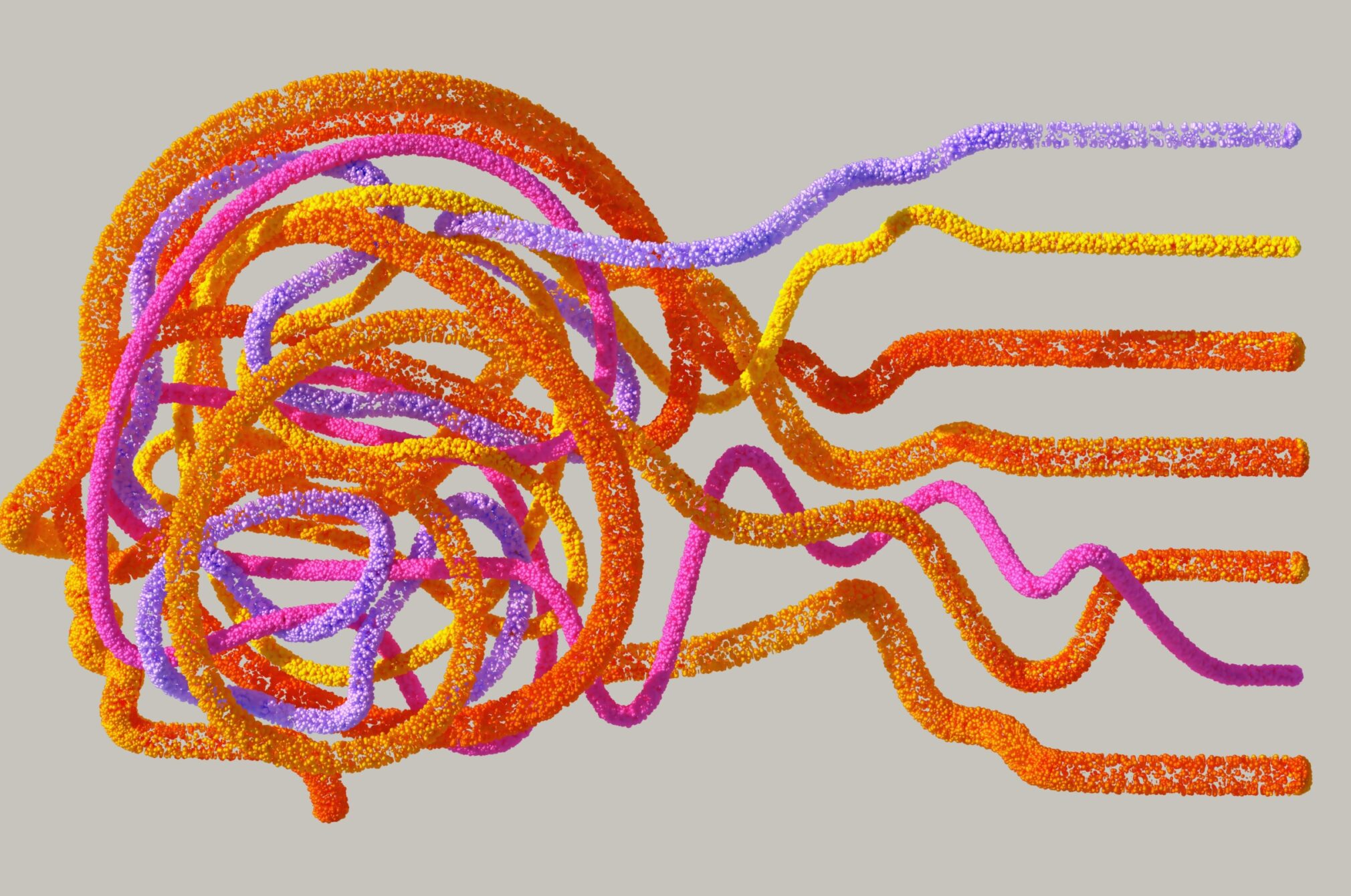
October marks more than just autumn — it’s ADHD Awareness Month, a time when the world turns a little more attention to the minds that think differently. It’s a month-long campaign dedicated to understanding attention deficit hyperactivity disorder and the people who live with it.
Recent research suggests that around 4.4 % of adults in the United States live with ADHD — many without a formal diagnosis. Yet awareness is growing: once considered a childhood condition, ADHD is now recognised as a lifelong pattern of attention, energy, and emotion that can shape how people work, relate, and rest.
Since 2004, October has served as a collective invitation — to listen, learn, and see ADHD as more than a single story. In 2025, that idea takes centre stage under the theme “The Many Faces of ADHD,” a reminder that this condition rarely presents itself in the same way twice.
At States of Mind, we’re joining the movement with a special ADHD Awareness Week that brings together everything you need to know about ADHD — the latest scientific insights, personal stories, original features, and expert interviews.
We’re also hosting an online webinar with ADHD specialists (please register!), who will answer your questions and share practical tools for better understanding the condition. Our goal is to help everyone find something meaningful: whether it’s information for yourself, about yourself, or for someone you care about.
Why October Matters for ADHD Awareness
ADHD Awareness Month takes place every October, when people around the world — from clinicians and educators to families and advocates — come together to shed light on what it really means to live with attention deficit hyperactivity disorder.
Its story began in 2004, when the U.S. Senate officially recognised ADHD Awareness Day. The initiative, led by advocacy groups like ADDA, soon grew beyond a single day. As awareness spread, so did the desire for an extended, global conversation — and by the late 2000s, the movement had evolved into a month-long observance that now spans continents.
October was chosen intentionally. It aligns with other global mental health observances, providing educators, workplaces, and public institutions with a shared opportunity to highlight neurodiversity and foster open dialogue.
Today, participation spans continents. In the United States, organisations like CHADD, ADDA, and the ADHD Coaches Organisation (ACO) publish toolkits, host webinars, and lead national outreach campaigns. In the United Kingdom, Inclusive Employers and ADHD UK focus on workplace education and inclusion initiatives. Across Europe, ADHD Europe coordinates awareness webinars and provides resources in multiple languages.
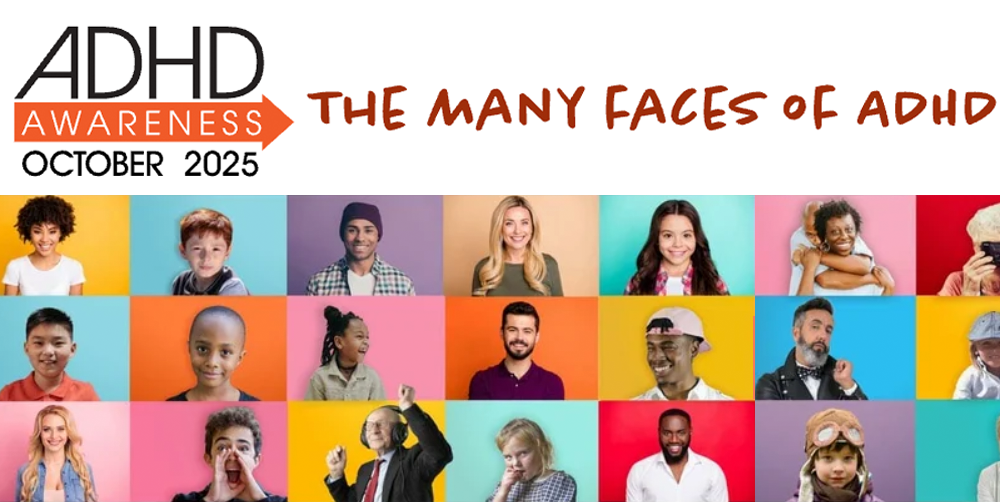
Each October carries a new theme — a unifying thread that guides storytelling and education. In 2025, that message is “The Many Faces of ADHD” — a theme that honours how differently the condition can appear across individuals and cultures.
Social media extends the movement’s reach. Through hashtags like #ADHDAwarenessMonth and #ManyFacesOfADHD, thousands of people share personal stories, art, and reflections — turning awareness into a global dialogue that continues long after October ends.

ADHD Awareness Activities in 2025
The 2025 edition of ADHD Awareness Month shifts its focus from information to collaboration. This year’s theme is being interpreted through panels, creative projects, and digital campaigns that connect researchers, clinicians, artists, and people with lived experience.
Across Europe, ADHD Europe is leading the coordination of international events. The organisation will host a series of Talking Thursdays webinars throughout October, featuring experts and individuals living with ADHD. Highlights include “Applying the Neurodiversity Approach to ADHD”, a live discussion with Professor Saskia van der Oord, and a youth-focused panel exploring ADHD in education and early adulthood. These events are open to the public.
In the United Kingdom, Inclusive Employers is focusing on workplace inclusion with training sessions and internal campaigns under the banner “Neurodiversity in Action”. Meanwhile, WeAreTheCity is curating interviews and essays highlighting professionals who are redefining what focus and creativity can look like. Both organisations emphasise one message: ADHD is not a limitation, but rather a part of human variety.
In North America, the CHADD and ADDA networks are expanding their educational toolkits with new online materials, including video series featuring clinicians and advocates. The CADDAC community in Canada is spotlighting “hidden ADHD” through webinars and social storytelling projects, addressing the gap in recognition among adults and women.
Throughout October, orange becomes more than a colour — it becomes a signal: a way for individuals, schools, and companies to say, we see you. This colour symbolises energy, visibility, and hope — qualities that reflect both the challenges and strengths of people with ADHD.
Understanding ADHD: Beyond the Stereotypes
For decades, ADHD was seen through a narrow lens — the restless child, the distracted student, the loud voice in a quiet classroom. Today, research and lived experience paint a far more complex picture. ADHD isn’t a failure of discipline or willpower; it’s a neurodevelopmental condition that shapes how the brain manages attention, emotion, and motivation.
What ADHD Really Is
ADHD affects the brain’s executive functions — the systems that regulate focus, planning, and self-control. It doesn’t mean a lack of attention; it means attention that works differently — scattered at times, but intensely focused when something truly matters.
According to Forbes Health, around 4.4 % of adults in the United States live with ADHD. Men are diagnosed more often (about 5.4 %) than women (3.2 %), mainly because female symptoms tend to appear less visibly hyperactive and more internally driven. Some estimates suggest that around 366 million adults worldwide have symptomatic ADHD. Globally, diagnosis rates vary, but researchers agree that ADHD is lifelong for many people — evolving rather than disappearing with age.
With the right mix of therapy, medication, coaching, and structure, ADHD can be managed successfully. More importantly, self-understanding allows people to work with their neurotype rather than constantly fighting against it.
Recognising the Signs
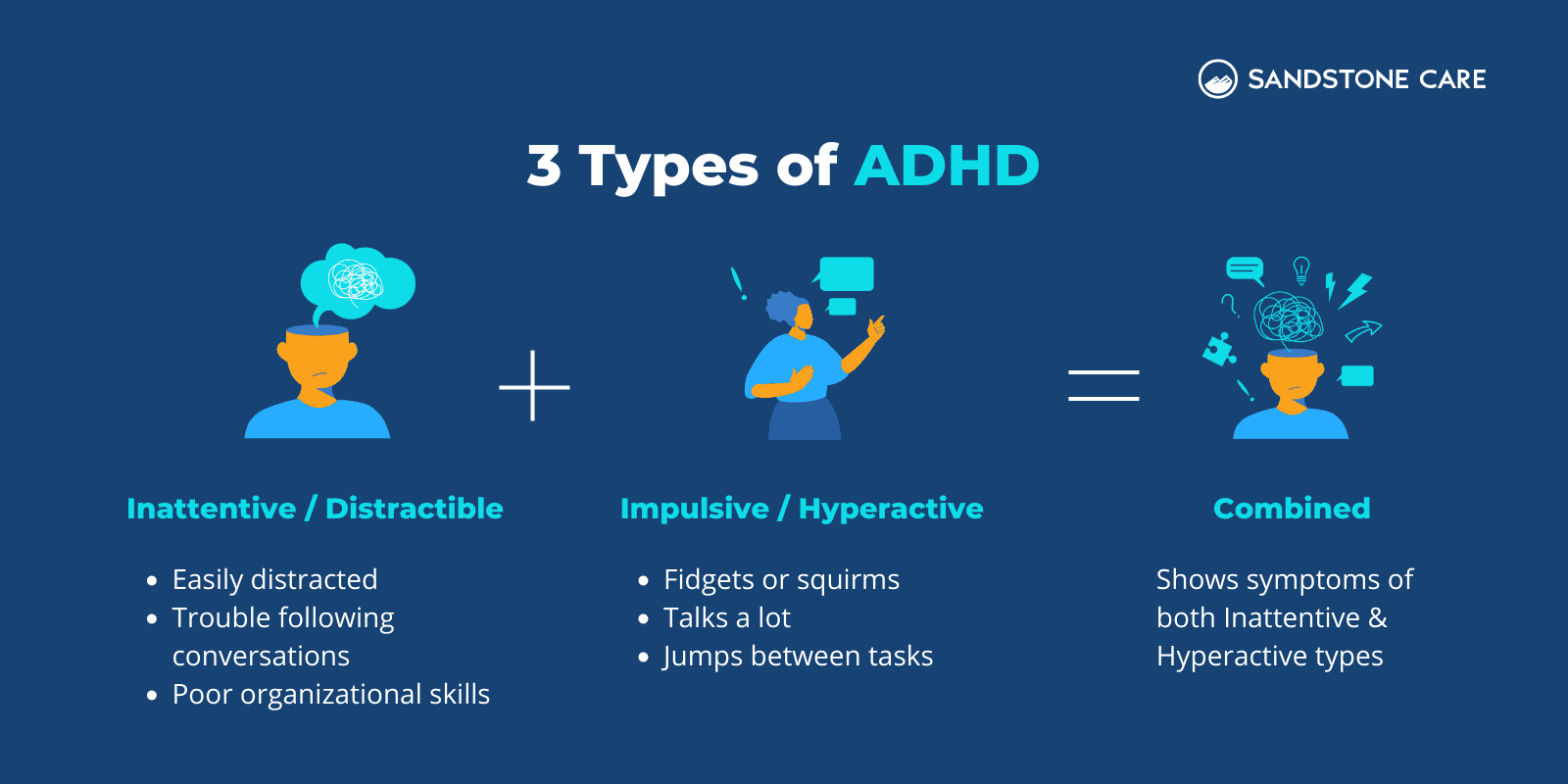
Clinicians typically categorise symptoms into inattention, hyperactivity, and impulsivity; however, most people experience a combination of all three. According to the National Institute of Mental Health, these differences stem from how the brain manages focus, emotion, and motivation.
- Inattention may appear as losing track of details, zoning out, or forgetting what you meant to do.
- Hyperactivity can be physical or internal — a mind that refuses to slow down.
- Impulsivity often manifests as interrupting, emotional reactivity, or acting without thinking.
The CDC notes that these patterns can affect work, relationships, and self-esteem if left unrecognised. And not everyone with ADHD is “hyperactive.” For many adults, it’s the quiet symptoms — disorganisation, fatigue, or emotional sensitivity — that cause the most distress.
An extensive study found that adults with ADHD experience higher emotional stress and burnout than the general population. Recognising early signs isn’t about labelling; it’s about awareness — when you understand how your attention moves, life starts to make more sense.
Prevalence and Risk Factors of ADHD
ADHD is far more common than many people think — and it affects every stage of life. According to theCentres for Disease Control and Prevention (CDC), around 11.4% of U.S. children aged 3–17 have been diagnosed with ADHD, and boys (15%) are nearly twice as likely as girls (8%) to receive a diagnosis. But the condition doesn’t end with childhood. An estimated 4.4% of adults in the United States live with ADHD, many without ever being formally identified.
Globally, researchers estimate that about 3–5% of the population experiences ADHD symptoms — a prevalence that cuts across cultures, languages, and socioeconomic backgrounds. The National Institute of Mental Health (NIMH) classifies ADHD as one of the most common neurodevelopmental conditions, meaning it originates from how the brain grows and manages attention and impulse control.
Hidden or Masked ADHD
Many people with ADHD learn to hide it — not out of denial, but survival. The Centre for ADHD Awareness describes masked ADHD as a coping pattern where individuals manage symptoms through perfectionism, over-preparation, or relentless self-control. These strategies maintain outward stability while concealing inner strain.
Data from gender studies on ADHD shows that masking is especially common among women and high-achieving adults. Instead of visible hyperactivity, they experience chronic anxiety, self-doubt, and exhaustion from trying to “keep up.” Researchers note that such long-term compensation can lead to burnout and emotional distress — understanding that the constant need to perform is itself a symptom.


The Risks of Untreated ADHD
When ADHD goes unrecognised, its effects often extend far beyond focus or productivity. Over time, people may internalise years of self-blame — mistaking symptoms for personal flaws.
According to recent studies, untreated ADHD increases the risk of anxiety, depression, and burnout. A study in the Journal of Psychiatric Research links it to sleep problems and impulsive behaviours, while the NIMH highlights challenges with relationships and self-esteem.
The longer ADHD remains hidden, the heavier its emotional toll. But treatment changes the trajectory — improving focus, emotional balance, and quality of life. Awareness, not willpower, is what turns struggle into understanding.
The Importance of ADHD Assessments
A proper evaluation of ADHD can explain lifelong patterns of distraction, stress, or emotional overwhelm, and help turn self-criticism into self-knowledge.
A complete ADHD assessment typically includes a clinical interview, standardised questionnaires like the Adult ADHD Self-Report Scale (ASRS), and observations or reports from family members, teachers, or partners. Online tools such as our online ADHD test can be a first step — but they are primarily educational tools. They help you recognise patterns and decide whether to seek a professional evaluation.
Early recognition matters. Research from Forbes Health indicates that timely diagnosis is associated with improved emotional regulation, academic and workplace performance, and overall quality of life. Many people describe the process as a relief — finally having words for something they’ve always felt but couldn’t explain. Still, barriers remain. Healthline and studies in the Journal of Attention Disorders note that stigma, limited access to specialists, and gender bias often delay diagnosis.
Reframing assessment as empowerment changes everything. It’s not about putting a label on personality — it’s about understanding the brain’s design. Recognition becomes a doorway: from confusion to clarity, from effort to self-acceptance.
How to Get Involved in ADHD Awareness Month
Awareness starts small — with stories, art, and gestures that remind people they’re not alone. This October, we here at States of Mind join ADHD Awareness Month and invite everyone to turn understanding into action, both online and offline.
There are many ways to take part:
- Join ADHD-related offline and online events: public talks, webinars, and AMAs. At States of Mind, we’re hosting an open conversation this Thursday, October 9, at 6 PM CET with two leading specialists — Dr. Amy Reichelt and Anett Vannai, who will share insights on living and working with ADHD today. Feel free to join, listen, and ask questions!
- Share your story on social media using #ADHDAwarenessMonth or #ManyFacesOfADHD. Write about your experiences, record a short video, or post an artwork that captures what focus, restlessness, or creativity feels like for you.
- Support ADHD artists and creators who use their work to express how neurodiversity shapes perception — from photographers and illustrators to musicians and digital designers. Art remains one of the most powerful ways to translate internal experience into something the world can see.
- Wear orange or add orange to your digital presence — a ribbon, an emoji 🧡, or even an accent in your feed. It’s a small symbol that says: I see you, I understand, I care.
- Start conversations — in your school, workplace, or circle of friends. Share articles, podcasts, or posts that explore ADHD from different angles: science, lived experience, and culture. Curiosity is contagious.
- Reflect quietly. Awareness isn’t only about being visible — it’s also about listening, learning, and finding empathy for the parts of ourselves or others that don’t fit neatly into expectations.
States of Mind ADHD Awareness AMA: Nutrition and Hormonal Changes
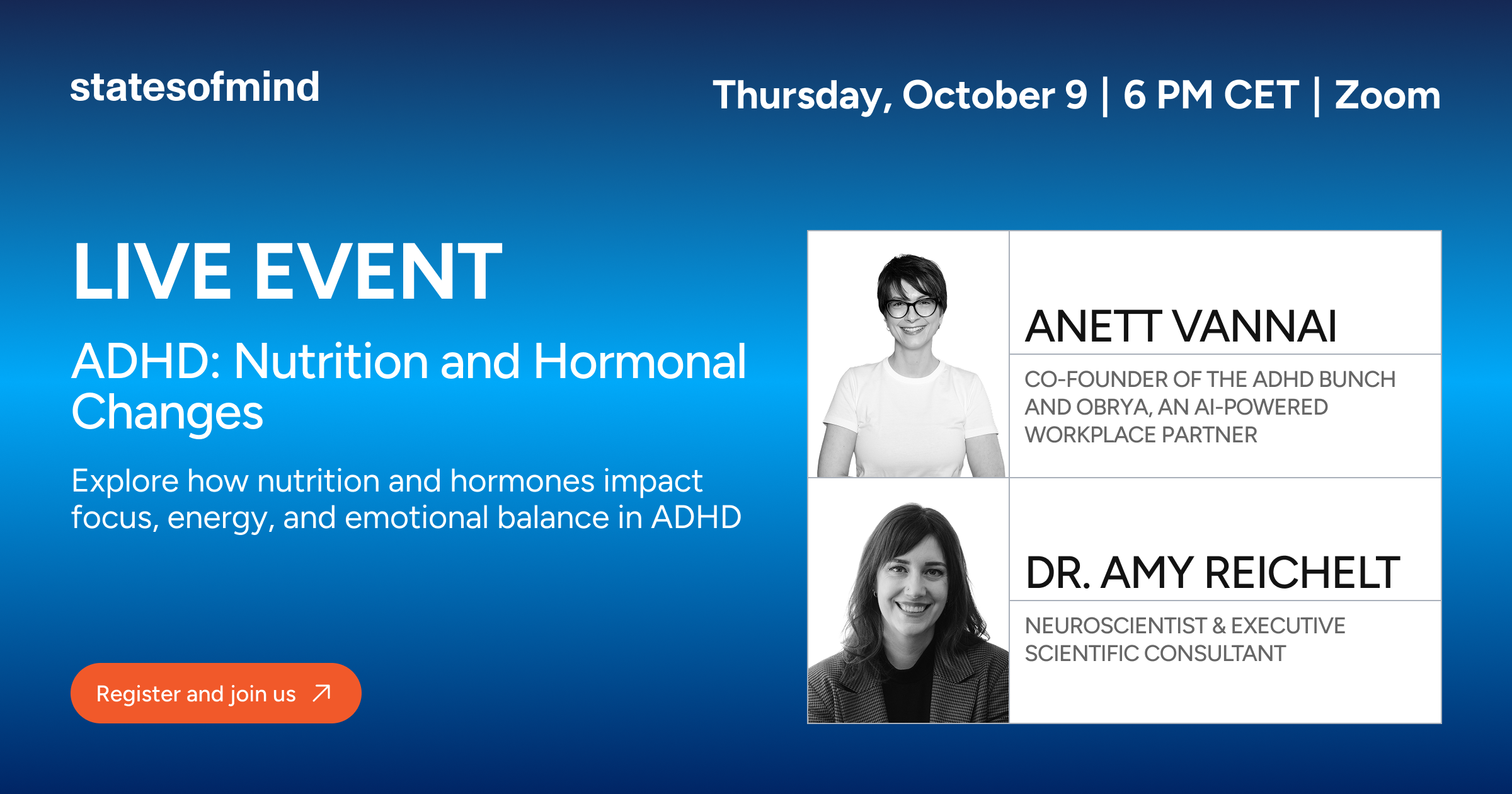
When: Thursday, October 9, 6 PM (CET)
Where: Zoom (you’ll get the link when you register)
Format: A 1-hour session with our speakers, including a live Q&A with you.
Click Here to Register for the Zoom Event
We’re bringing together two leading experts to share distinct, science-backed perspectives on how to support the ADHD brain.
Dr. Amy Reichelt, a neuroscientist with over 60 peer-reviewed studies in publications like The Lancet and Nature Communications, will break down the science of the brain on ADHD. Through her clinical practice at Cognition Nutrition, she helps people use nutritional strategies to sharpen focus, balance dopamine, and improve overall mental health.
Anett Vannai is the founder of The ADHD Bunch and Obrya, an AI-powered tool designed for the neurodivergent workplace. As a systems designer, she creates practical frameworks that help women with ADHD navigate the unique challenges of hormonal shifts. She’ll share actionable strategies for building supportive systems that work with your brain, not against it.
You can find more from our speakers on Instagram: Anett (@hllanett) and Dr. Reichelt (@nutritional_neurosci). This discussion will be guided by Tanya Levinson, a psychotherapist and States of Mind speaker with a background in developmental neuroscience.
Whether you’re newly diagnosed, just exploring, or have known for years, this conversation is for you. Bring your curiosity and your questions — we want this to be about feeling more understood, energised, and in control.
Every October, the ADHD community becomes a chorus of voices, colours, and stories. Whether through a post, a painting, or a simple conversation, each act of openness moves us closer to a world that not only knows what ADHD is but also understands it.
FAQ
- What is ADHD Awareness Month?
ADHD Awareness Month is a global campaign held every October to increase understanding of attention-deficit hyperactivity disorder. It focuses on education, reducing stigma, and sharing real-life stories that show ADHD as a spectrum — not a single type of experience.
- When is ADHD Awareness Month 2025?
It runs throughout October 2025. The theme this year, “The Many Faces of ADHD,” highlights how ADHD can manifest uniquely across different ages, genders, and cultures.
- Why is October important for ADHD awareness?
October was chosen to align with other mental health observances. Since 2004, it has been a shared space for clinicians, educators, and communities to come together, learn, and promote neurodiversity.
- Why is orange the colour of ADHD Awareness Month?
Orange represents energy, visibility, and hope — qualities that reflect both the challenges and strengths of people with ADHD. It’s also a colour associated with warmth and enthusiasm, symbolising the movement’s mission to spark open, stigma-free conversations.
- What are the signs of ADHD?
ADHD can involve inattention, hyperactivity, and impulsivity, but not everyone experiences all three. Adults often describe emotional fatigue, disorganisation, or racing thoughts rather than visible restlessness.
- Can adults be diagnosed with ADHD?
Yes. ADHD often persists into adulthood, though symptoms may look different. Many adults, especially women, are diagnosed later because their symptoms are less overt. Recognition at any age can improve emotional regulation, confidence, and quality of life.
- How can I take part in ADHD Awareness Month?
You can join by sharing your story online, supporting artists with ADHD, wearing orange to show solidarity, or attending events and talks. Awareness grows through everyday actions — both big and small.