Reading Navigation

This content is grounded in peer-reviewed research, clinical guidelines, and established best practices. Claims are reviewed for accuracy and transparency. Learn more about our evidence standards
THCA vs. THC: What’s the Difference?
What Is THCA?
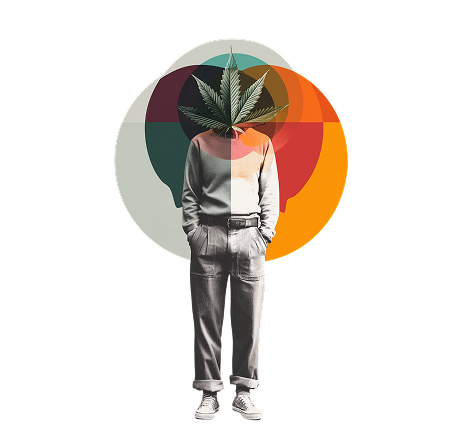
Tetrahydrocannabinolic acid (THCA) is the most abundant cannabinoid1 found in the fresh, living cannabis plant. If you were to walk through a cannabis field and pluck a raw flower, it would contain very little THC, but it would be rich in THCA.
Think of THCA as the “raw” or “precursor” form2. Chemically, it has an extra carboxyl group (a group of carbon, hydrogen, and oxygen atoms) that stops the molecule from fitting into the brain receptors that create a high. Because of this, THCA is the same as THC only in origin, not in effect — and it is completely non-psychoactive.
Common forms where THCA is present include:
- Raw Cannabis Flower: Freshly harvested or carefully cured buds that haven’t been exposed to high heat.
- Cold-Pressed Juices: Made from raw cannabis leaves and flowers, popular for getting high doses of cannabinoids without intoxication.
- Raw Tinctures: Extracts made at low temperatures to preserve the acidic structure.
- Crystalline (“Diamonds”): Highly purified solid crystals of THCA3, often used in dabbing where they are instantly converted to THC by heat.
What Is THC?
The neutral cannabinoid that causes the classic psychoactive effects of cannabis is tetrahydrocannabinol (THC), specifically Delta-9-THC4. This happens when the plant gets older or is heated.
When the extra carboxyl group is taken away from THCA, the molecule gets smaller and loves fat enough to stick tightly to the CB1 receptors in your brain and central nervous system. This binding changes the release of neurotransmitters, which is what gives marijuana users their “high.”
A look at what THC does:
- Euphoria: a feeling of happiness or well-being.
- Altered perception: Changes in how you see, hear, and feel things like time, sound, and color.
- Relaxation: a deep release of both body and mind.
- Stimulation: It can make you more aware of your senses in some strains or doses.
While recreational users chase these effects, medical patients often rely on them for severe pain management, appetite stimulation, and insomnia relief.

How THCA Turns Into THC: Decarboxylation
The chemical reaction that transforms non-intoxicating THCA weed into intoxicating THC weed is called decarboxylation.
In simple terms, decarboxylation5 is the loss of carbon dioxide. The THCA molecule is unstable, it wants to get rid of that extra carboxyl group. While this reaction happens slowly over time with exposure to light and room temperature air, heat accelerates it instantly.
What triggers decarboxylation?
- Smoking or vaping: The flame or heating element (300°F+) converts THCA to THC instantly as you inhale.
- Baking and cooking: Making edibles involves heating flower in an oven (typically around 220°F-240°F) to “activate” the THC before infusing it into butter or oil.
- Sunlight: UV light can degrade THCA into THC5 (and eventually into CBN) over long periods.
This phenomenon is why eating a raw cannabis bud won’t get you high, but smoking that same bud will. The heat changes the molecular structure, unlocking the psychoactive potential.
The Math of Potency:
TOTAL THC = THC + (THCA X 0.877)
Turn Research into Support for Your Mental Health

 Germany
 5SWAN is a telemedicine platform for personalized medical cannabis therapy through secure video consultations and continuous care.

 Malta
Malta 
THCA vs THC: Key Differences at a Glance
To visualize THCA compared to THC, here is a direct comparison of their properties.
| Attribute | THCA (Tetrahydrocannabinolic Acid) | THC (Tetrahydrocannabinol) |
| Psychoactivity | Non-psychoactive; does not produce a “high” unless heated. | Psychoactive; responsible for the euphoric “high.” |
| Chemical State | The raw, acidic “precursor” found in fresh cannabis. | The activated, neutral cannabinoid is created by applying heat. |
| Primary Source | The primary source can be fresh, undried cannabis flowers, raw leaves, or crystalline cannabis. | It also includes cannabis products that have been smoked, vaped, or cooked. |
| Receptor Binding | Does not bind to CB1 receptors2 in the brain. | High affinity for CB1 receptors6 in the brain. |
| Legal Status | Often legally complex; regulated under “Total THC” laws in many regions. | Heavily regulated; legal for adult use only in specific jurisdictions. |
Effects and Potential Benefits
While THCA is like THC in structure, their therapeutic profiles are quite distinct because they target different systems in the body.
THCA: Effects and Interest in Research
THCA doesn’t make you high because it doesn’t bind to CB1 receptors. This lets patients take much bigger doses than they could with THC. Recent research shows7 that THCA affects other receptors, such as TRP channels and PPARγ.
Anti-inflammatory Potential
Research suggests that THCA may work like ibuprofen by blocking COX-2 enzymes8 and lowering TNF-alpha, which is a sign of inflammation in the body.
Neuroprotective Properties
Studies on animals with Huntington’s and Parkinson’s disease suggest that THCA may protect brain cells7 from damage by turning on PPARγ.
Metabolic Health
Early studies suggest that THC may help control metabolism and obesity, in addition to making people hungry.
Note: A lot of this research is done in the lab, either in petri dishes or on animals.
THC: Effects and Therapeutic Use
THC is the powerhouse of palliative care. Its interaction with the Endocannabinoid System (ECS) is well-mapped.
- Pain Management: THC alters pain perception9 signaling in the central nervous system, making it effective for neuropathic pain.
- Nausea and Vomiting: Synthetic THC (Dronabinol) has been FDA-approved for decades to treat chemotherapy-induced nausea10.
- Appetite Stimulation: The “munchies” are a medically valid effect for patients suffering from cachexia or HIV/AIDS-related weight loss11.
Potential downsides: THC’s benefits come with side effects like anxiety, paranoia, short-term memory impairment, and cognitive changes, which can be limiting for some users.
Consumption Methods and Their Impact
The way you use cannabis affects which molecule gets into your blood.
THCA Consumption
- Juicing raw cannabis means putting fresh leaves into smoothies. This has the most THCA without making you high.
- Tinctures: “Raw” tinctures are made at room temperature to keep them from decarboxylating.
- Crystalline/Isolate: You can take pure THCA powder in capsules and swallow them. Warning: If you dab or smoke this powder, it quickly turns into a lot of THC.
THC Consumption
- The most common way is to smoke or vape. The heat from the flame quickly changes the effects of THCA and THC to the psychoactive side.
- When you eat THC, your liver breaks it down into 11-hydroxy-THC. This makes the effects stronger and last longer than when you smoke it.
- The distillates (oils and concentrates) in vape pens have already gone through a process called decarboxylation, which means they contain THC that is still active.
Legal Status and Regulatory Considerations
It’s hard to understand the legal side of the THCA vs. THC dispute.
USA: The “Loophole” and the 2026 Crackdown
For a few years, there was a “grey market” in the US where “THCA Flower” was sold as “hemp” since it had less than 0.3% Delta-9 THC, even though it had a lot of THCA.
But a lot has changed in the regulations and laws. President Trump signed the FY2026 Agriculture Appropriations Bill in late 2025. This bill addressed this loophole.
“Total THC,” which is THC + THCA, is now part of the legal definition of hemp. It is assumed to be marijuana if the overall amount is more than 0.3%. Hemp products that can get you high are no longer allowed because of new guidelines that impose stringent milligram limitations (for example, 0.4 mg Total THC per box). By November 2026, these rigorous rules will be in effect. This means that the time when you could buy “legal” high-THC hemp flower at gas stations is coming to an end.
International Context
- The UK follows the Psychoactive Substances Act12 and the Misuse of Drugs Act. Cannabis flowers are usually thought of as controlled substances because THCA naturally breaks down into THC.
- Canada uses a “Total THC” system to control cannabis. The fact that THCA and THC are different does not make them illegal; both are regulated in the adult-use market.
- European Union: Most EU countries control hemp by looking at Total THC levels. THCA isolates are considered “Novel Foods,” which means they need special permission to be sold. Only a few people have that permission.
Important: Always check for a Certificate of Analysis (COA). This lab report will show you the levels of Delta-9 THC and THCA. Regardless of the label, if the "Total THC" is high, law enforcement in many jurisdictions will treat it as cannabis.

Safety, Risks, and Drug Testing Considerations
Even though THCA is non-intoxicating, safety is paramount.
Accidental Decarboxylation
If you leave your raw THCA tincture in a hot car during summer, it can convert to THC. Taking your normal “non-psychoactive” dose could then result in an unexpected and overwhelming high.
Drug Testing
Does THCA show up on a drug test? Yes. Most drug tests screen for THC metabolites13 (COOH-THC). Because THCA can convert to THC in the body or during the testing process (GC/MS analysis uses heat), using THCA products can trigger a positive result for marijuana.
Bacterial Risk
Eating raw plants can put you in contact with harmful germs like E. coli and Salmonella. Unlike smoking or baking, juicing raw cannabis does not kill these bacteria. People with weak immune systems should be very careful about eating raw foods.
Contaminants
The market that isn’t regulated doesn’t usually test pesticides and heavy metals very well. Always buy from places that are regulated and require third-party testing.
Find Your Safe Space for Growth & Mental Clarity

 Netherlands
 For people with little time who want a private all-round solution to return to aliveness.
FAQ





 United Kingdom