The Quiet and Crucial Work of Trip Sitting

What does it mean to be there for someone? To hold space? To witness another’s hurt and healing?
Guides. Facilitators. Trip sitters. The emergence of modern psychedelic medicine has created the need for a new therapeutic role. Part therapist, part quiet shoulder there when you need them. They may not say much, but their presence speaks volumes.
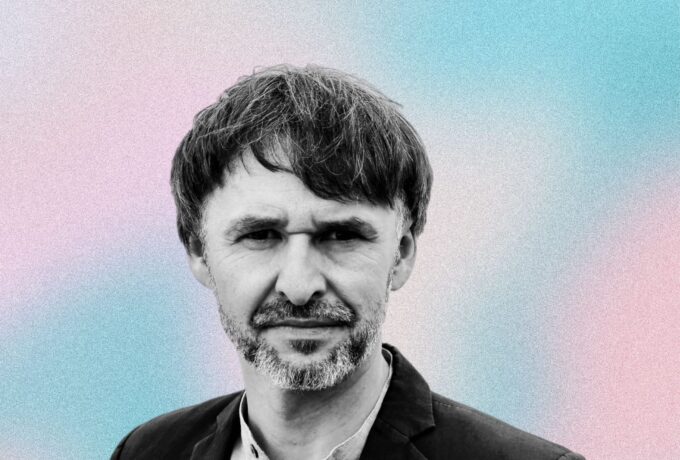
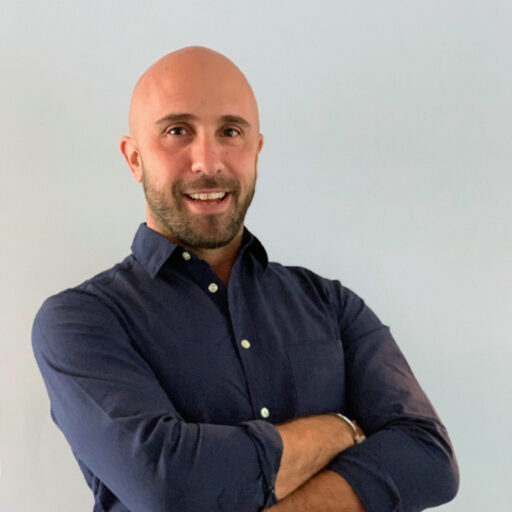
To provide some expert insight, States of Mind spoke with Steve Elfrink, psilocybin facilitator and integration therapist with decades of experience helping people navigate their healing journeys. His personal and professional work — presented here with grace and in thoughtful words — shows us what it’s like to witness transformation and guide people with care and compassion.
Facilitating and guiding others can be difficult, emotionally-demanding work. Why did you choose it?
I didn’t choose this work; my survival demanded it. From the time I was four or five years old, I would pray at night for God to kill me in my sleep. That is not a standard way for a child to live. Those early prayers led to multiple suicide attempts in my teens and twenties.
When I reached out for help, the Western psychiatric model — talk therapy and medication — never touched what was going on. No one listened when I mentioned those early suicidal prayers. No one asked the more profound questions.
Decades of trial and error followed, many missteps, and many brutal psychedelic journeys. However, through that long and painful process, I eventually found my way back to wellness in my mid-50s. A psycholytic somatic approach saved me. Psychedelics saved my life, and they almost killed me. In the end, I learned a great deal, not only what works, but more importantly, what doesn’t.
Along the way, I began supporting others. And when I finally made it through my trauma, I felt fully called, pushed, even, to devote myself full-time to this work. One of my deepest driving forces is that I don’t want anyone else to have to go through what I went through just to find healing.
This work is obviously deeply personal for you. What other insights did your experiences provide?
People with early trauma, especially pre-verbal trauma, are often misunderstood. This is not just about “trusting the medicine.” We are complicated beings, and trauma makes the path more complex. When I went through the most destabilizing experiences of my life, and no one could help me. That absence of support was as devastating as the experiences themselves. I don’t want anyone to face that kind of loneliness.
Today, I wouldn’t change any of it. My past allows me to sit with anyone, through anything, and walk with them through the darkest places. To be able to do that is a gift, and it’s why I’m here.
“To witness someone reconnect with a lost or wounded part of themselves is profoundly sacred. It’s one of the most beautiful experiences.”
What do you wish more facilitators or therapists understood about the body’s role in processing these powerful experiences?
Too often, facilitators think the body is just along for the ride. It isn’t. The body is the primary vehicle for healing. Trauma and mental health aren’t only psychological; they’re deeply somatic, rooted in the autonomic nervous system (ANS). The body carries memories, sensations, reactivity, and emotional charges that no amount of talk therapy or high-dose psychedelics can reach on their own.
A considerable part of this is dissociation. It’s rarely named, rarely understood, yet it can make or break a psychedelic experience. If someone is labeled a “non-responder,” often what’s happening is that they are quickly triggered into dissociation. The typical response is to “increase the dose”, but more medicine isn’t always the answer. Dissociation is protective: it’s a mechanism that guards against trauma that has pushed the nervous system past the fight/flight response and into a state of freeze. Forcing past that protection too fast can unleash a flood of trauma material that overwhelms the client, especially if it’s pre-verbal trauma.
This is where dosing matters: low, slow, and somatically focused. Ketamine, in particular, can be a gentle entry point, a way to “dip a toe” into the psychedelic waters without blowing the lid off dissociation. Thorough screening for dissociation and careful pacing allows the body to reveal what it has been carrying.
"Psycholytic-somatic" is the integration of two therapeutic approaches: psycholytic therapy, which uses low doses of psychoactive drugs to access psychological material and insights; and somatic therapies, which focus on the body's physical sensations and responses to emotional distress and trauma. Combining these allows patients to access embodied memories, and process them through a somatic lens to facilitate healing.
How does somatic awareness differ from more traditional approaches?
Traditional approaches tend to focus on the mind, cognitive insight, retelling the story, and reframing the past. But insight alone doesn’t heal trauma. Trauma lives in the body, and until the body is involved, the core wounds keep showing up as anxiety, depression, OCD, suicidality, eating disorders, and more.
The truth is, the mind is the newcomer here. The body is the wisdom keeper. Our autonomic nervous system — which governs breath, heartbeat, digestion, and the fight-or-flight response — has been evolving for over 500 million years. It kept our ancestors alive long before thought, language, or culture existed.
By comparison, the neocortex, the “thinking brain”, is a toddler. Symbolic thought, language, and abstract reasoning have only been around for maybe 50,000 to 100,000 years. In evolutionary time, that’s a blink.
So, when we let the mind lead, it’s like putting the toddler behind the wheel while the elder sits in the backseat. The mind is brilliant and creative, but the body has a far deeper intelligence — one that is older than words themselves.
Healing occurs when we step out of our heads and let the body speak. Psycholytic-somatic work creates the conditions for this to occur. When the body leads, trauma can finally be completed and resolved. This shift, from mind insight to the body, is what saved my life.
“On the other side of that release is freedom, liberation from something that distorts every moment of their life. To be present for that transformation is to witness a kind of rebirth.”
Some might think that Trip Sitting is a passive experience. What’s the reality?
Trip sitting is anything but passive. Too often, people assume “the medicine does the work,” but without the correct container, the medicine can overwhelm rather than heal. My job is to create a space of unwavering safety and connection: a substantial relational container that says, ‘Whatever happens, I’ve got you. You are not alone.”
That stance has to begin before the session and carry through the entire process. During the session, my whole focus is on the client. This isn’t a time to check emails or zone out; it requires deep, quiet attunement. I must remain fully present, aware of subtle shifts, and prepared to respond when intensity arises.
People in altered states are exquisitely sensitive. Their body, psyche, and nervous system can “feel the room.” If the space feels safe, they can surrender more fully into the work. If it doesn’t, they’ll contract or dissociate. That’s why presence matters so much. Safety doesn’t come from words; it comes from the facilitator’s nervous system being steady enough that the client can finally let go.
What does “holding space” mean to you?
At its core, holding space means being fully present and attuned to wherever someone is. It may sound simple, but it requires genuine discipline. To hold space well, I have to stay as empty as possible of my own trauma, because if I’m triggered, I can’t stay steady for the other person.
When someone enters that core place of terror or annihilation, my job is to reflect back calm confidence: No matter what shows up, I will walk you through it. I am right here with you. Confidence without arrogance is everything.
With classic psychedelics, things can get especially complex when pre-verbal trauma surfaces. This is where structural dissociation often appears, which simply means the psyche has split into different parts in order to cope with overwhelming experiences. In a session, that might look like a 55-year-old self and a 2-year-old self both present at once, unaware of each other, looking through the same eyes.
It can be disorienting, sometimes even feeling like insanity. I’ve named this state Psychedelic Iatrogenic Structural Dissociation, and I know firsthand how terrifying it can be.
That’s why grounding and reassurance are essential. My role is not to push or control but to respond with steadiness, to create safety for the young part that has surfaced under the influence of the medicine. When that child feels held, the whole system can begin to stabilize.
I remember a client in tears saying, “I’ve read about gratitude, but now I’m actually feeling it for the first time.”
Can you describe what it feels like to witness someone reconnecting with a lost or wounded part of themselves during a session?
To witness someone reconnect with a lost or wounded part of themselves is profoundly sacred. It’s one of the most beautiful experiences I know, and also one of the most intense. Often it means walking with them into the deepest, darkest corners of the psyche, places of abandonment, annihilation, even the felt sense of “I don’t exist.” I call this the core of the core.
When trauma happens before language, when the nervous system is still developing, those experiences are felt as annihilation, as the total destruction of being. Guiding someone into that place, and then through it, is like standing at the edge of raw creation. It is vulnerability in its purest form, a core release of something that has been carried for decades.
And the beauty is always in what comes next. On the other side of that release is freedom, liberation from something that distorted every moment of their life. To be present for that transformation is to witness a kind of rebirth. It is humanity rediscovered.
Are there moments that have stayed with you?
There have been so many. Some of the most unforgettable moments are when someone goes all the way into terror, horror, or even the felt sense of annihilation, and then emerges from it. To witness the release of something that has been locked in their body for decades is beyond words. That kind of vulnerability and courage has left a memorable imprint on me.
Other moments are quieter, but just as profound: like watching someone feel genuine joy or gratitude for the very first time. I remember a client in tears saying, “I’ve read about gratitude, but now I’m actually feeling it for the first time.”
The breakthroughs that stay with me aren’t about insights; they’re about embodiment. It’s when someone realizes, often for the first time, that it’s safe to come home to their body. Or when they meet their dissociative child, a part of themselves they never knew existed but had been crying out all along.
To witness that reunion, with both the adult and child finally feeling safe, is priceless. That’s what keeps me devoted to this work.
Steve Elfrink is a former co-founder of the Psychedelic Somatic Institute (PSI) and co-developer of Psychedelic Somatic Therapy. With over 40 years at the intersection of psychedelic exploration, somatic trauma work, psychedelic-assisted therapy, and transformational education, Steve founded OmTerra to focus on embodied psychedelic healing.