Transcript
Jason Najum 00:02 Okay, welcome to the Human Journeys Podcast, Dennis Walker. Welcome.
Dennis Walker 00:08 Hey, what's going on Jason? Hello everyone. Thanks for having me here.
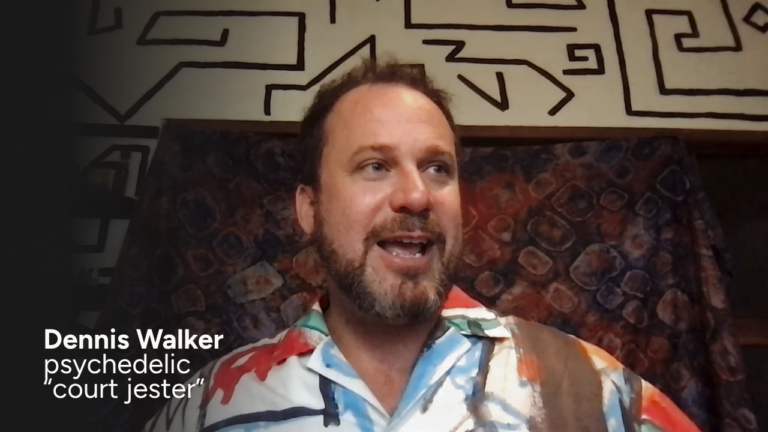
Jason Najum 00:13 Our pleasure. I've written a little intro for you, you ready? Alright, we're here with Dennis Walker, the Mycopreneur, the satirical shaman, the psilocybin George Carlin, the s the sexy court jester of psychedelics. How'd you like that?
Dennis Walker 00:16 Absolutely.
Dennis Walker 00:32 That's fantastic. Thanks. I'm gonna use some of those quotes.
Jason Najum 00:34 You g you got You got That's all the payment you're gonna get for this podcast. Welcome. Good to chat with you. Yeah. Say why don't you give us a little introduction?
Dennis Walker 00:39 I'm used to it. Yeah.
Dennis Walker 00:45 Likewise, my friend.
Dennis Walker 00:51 Happy to do so. Yeah, my name's Dennis Walker. I'm the founder of a media platform called Mycopreneur. It's a portmanteau, so that means two words smashed together: Myco for mushrooms and fungi, preneur for entrepreneur. And it's my guiding premise of the platform that mushroom entrepreneurs can have a lot of agency and a lot of influence in this next chapter of the world that we're entering. And everybody seems to be interested in mushrooms across the world in different. verticals and niches and Mycopreneur is about connecting those people and accelerating that collaboration and research.
Jason Najum 01:29 Hmm. Yeah. So I mean the there's different layers to you, I guess. Like your your public facing layer that you're most known for, I'm assuming, is your Instagram page and your and your social media presence and your I mean I I said the court jester of psychedelic the sexy court jester of psychedelics. yeah, I mean w what are you doing? What's your raison d'être? Like what's your what's your purpose here? Like how did you get here? And and where in yeah, tell us a little bit about it.
Dennis Walker 01:58 Yeah, so I started Mycopreneur in 2020. I've got almost 15 years of experience as a psychonaut before then. So I have accrued a lot of connections and experiences. And I have a background in media. I have a degree in media from a top tier university. I launched an independent firm back in 2014 that's had a lot of success. And when people started being more public facing about their advocacy for psychedelics, psilocybin, et cetera, around 2020. We have people like Michael Pollan to think for that and Paul Stamets, right? You started seeing a lot more public-facing advocacy for mushrooms and psychedelics, Wonderland Conference, all these wonderful conferences that started to take shape. I said, I'm very well positioned to throw my hat in the ring, launch the media platform. But as you say, Jason, it was really when I started to get into making satire and comedy that it really took off. And that's when I quickly identified that there's a hunger for this.
Jason Najum 02:28 We have
Dennis Walker 02:58 Self the it's not self-aggrandizing, the opposite actually, but like making fun of yourself, not taking yourself so seriously and kind of applying that in an Onion style or satirical style lens to this very serious and sober, oftentimes psychedelic renaissance, as it's been called. And that kind of inadvertently became my main calling card where people said you're the court jester of the psychedelic renaissance. So yeah, I still have All all that going on, but I'm doing my best to fuse them and run a international media property that also has a very satirical dose, the in the way I approach things.
Jason Najum 03:37 Yes. and yeah, I remember the first time you came across you. I think we're pre preparing for our first Wonderland. And then like the it in the team chat, I think you hit us. You hit the Wonderland Microdose team with something. And we know we went through it. I'm like, are we mad at this? Or you know the team was talking about it. We weren't quite sure. And maybe that was the first time I came across you. but that was years ago. And So yeah, it what what about from a personal side before you got into the into the business aspect of of psychedelics and media? You started personally with psychedelics, you started, you know, self psychonauting? What what's your origin story?
Dennis Walker 04:22 Yeah, I love this one. So I'm like any typical American Christian kid that grew up in the suburbs in a very sheltered, tight-knit community, going to church, playing baseball, and drugs were bad. All drugs were bad. The DARE program was in my elementary school. I never really had an interest. I was just from a very young age told that these substances were dangerous. The old Ronald Reagan, Nancy Reagan messaging, just say no. This is your brain on drugs. That was me. And then in high school, I started hearing stories from friends and peers. And what I couldn't really square was that these people sharing their experiences about cannabis or psilocybin mushrooms, those were the primarily available substances at the time. They were very intelligent, very charismatic. It didn't square with this image of drug use as someone who's ostracized and they they are going nowhere in life. So I remember kind of thinking, hey, I should kind of Look into this. Why are my friends telling me they had this great experience at the beach and they were laughing and they're still at school on Monday in the advanced and honors classes? And so that led me eventually to Erowid. Erowid.org was really the primary source at that time. It was 2004, 2005, around then, where you could get a lot of information that was people's trip reports, and you could see the chemical composition and more scientific information. research things that had been done in the 60s and research clinical trials and such. And that informed my lens then that I said, all right, well, I'm interested in this. But what I will qualify these statements with is I didn't just jump in blindly and start dosing myself. I talked to people, I read books at the library, I went on Erowid. It took me a while. And then I very cautiously at a very low dose experienced psilocybin mushrooms at about 1.5 gram range, which you would say is more than a microdose, but less than a Full spectrum therapeutic dose in many ways at the time. And it was a wonderful experience. That was right before I went off to University of San Francisco, which has a legacy of psychonauts and Silicon Valley and so on and so forth, the artistic revolution that took shape there. Psychedelics were baked into that culture. So at that point, I really had a chance to connect with some mentors, people who had sold companies in Silicon Valley, people who were wildly successful by any standard, and they were psychonauts. That
Dennis Walker 06:43 Community was not previously available to me where I was living in the suburbs in San Diego. And I put two and two together and I said, wait a minute, you can approach psychedelics with a lot of intentionality and you can use it for lifestyle design and you can actually be extremely successful as opposed to this image that was painted in the DARE program of you're gonna break your brain and then drop out of society. This was the opposite. I was like, I want to do what these people are doing. This guy just got a private island in the South Pacific. That's pretty cool, right?
Jason Najum 07:12 Mm-hmm. Yeah. Yeah. Thank thanks for that intro. There's a lot. Isn't this interesting you you had a responsible beginning, a an intentional beginning, you know, which you wouldn't assume a college kid trying psychedelics for the first time. but I guess is your is your is your secret background of personality, are you are you a bit more of a cautious character than your Then your f in your public character shows? Like what's what's the personality behind that? I mean, I thought you'd be taking five grams in the forest, running around naked for your first time with your buddies. I'm Yeah.
Dennis Walker 07:50 Well, that came later. Yeah, that definitely came that chapter. But I think it was just wanting to be intelligent and cautious about it. And at the time, there was no path to be able to seek this experience out in a regulated or clinical or therapeutic capacity, right? A lot of this is fairly new that we're discussing and like these regulated access programs. I went to Amsterdam, I bought mushrooms legally in two thousand eight, right before They were outlawed and replaced with truffles only. So I remember going and buying actual fresh psilocybin mushrooms. So like I really did and still am interested in seeking out the kind of safest route. But again, at that time, there was no way if I wanted to study psilocybin mushrooms, if I wanted to get involved in a academic or professional capacity. And again, I think that's why I was well positioned when all of a sudden people did start speaking publicly and these programs started launching conferences and all that. I had never heard of MAPS at the time. I know they've been going since 1986, but that this was not really a socially acceptable topic. Like I feel like psychonauts and people interested in these things kind of had their own little echo chambers, right? And it's like you had the Burning Man crowd, San Francisco is a little bit more publicly accessible. But like I didn't know anyone, and I was not publicly posting online about psychedelic advocacy because, like many people thought. I might become unemployable in the future, or I might you know have inadvertently cause distress with my family. But then at a certain point, you start seeing clinical trials and a billion-dollar IPO and Oprah talking about them, and you say, Okay, I think I can throw my hat in the ring here. So I really do tip my cap to a lot of those public figures as much as I like to satirize them, and I think they're low-hanging fruit when you're a very public, successful person. I tip my cap to them for. providing sort of a path forward of legitimacy for a lot of other people who felt like they were not able to share their experiences without jeopardizing their future in some way.
Jason Najum 09:48 Mm-hmm. Yeah. Yeah. That that is one of the questions I had when I was I was looking back at your at your content the last few days. And the low-hanging fruit. And is there like there's a paradox between a lot of s some some of your commentary is, you know, something on Elon Musk or or some some obviously popular figure speaking about psychedelics or Joe Rogan, and we can mock these people. But there is like this catch twenty-two paradox where there is some positive from these big names speaking about psychedelics. And of course everything can go too far and there could be pros and cons and negatives. like I how do you how do you how do you deal with that? like as you're satirizing someone in the back of your head you're like, well, they're actually helping the cause at the same time. How do you deal with like cutting up someone who you kind of appreciate at the same time?
Dennis Walker 10:42 Yeah, great question. Thanks for asking. So I think a great example of this is MAPS and Rick Doblin, because like with Wonderland in the group chat, there was just a period where all these people would reach out to me and say, Hey, you know, if they're a trending topic du jour, I see that MAPS is in the news and they're on the timeline. And I think, okay, that's someone I can satirize. And then they reach out to me and they say, actually, we thought this was hilarious. So I think number one is that it's a fine line with satire. To not be mean. I think there's a tendency where some people think this is just a critical attack. And we do have a lot of that. There are journalists, and some of them are very valid in their points that are very acerbic and critical in the way they approach things. I think satire can make some of the same points about needing to hold power accountable, needing to call out hypocrisy, things like that. But it's done in a funny way where it's a little bit more palatable. So, like when I did this satirical, real About the World Economic Forum Davos psychedelic meeting. And you probably knew a bunch of people there. You might have been there. And they actually reached out to me, some of the people who were in Davos, and said, This is hilarious, and we actually want you to come to our conference. So I think that's the way to do it is like you can critique because that's valid, but also the difference between being mean versus making a funny social point that people think about, it's actually more effective form of critique, I think. And beyond that. I started learning more about the role of the jester, like you said. Like the Austin Chronicle actually called me a popular psychedelic court jester. And they covered our South by Southwest panel I did a few years ago. It let me know, like, there's some real traction with approaching things this way. And you know, Rolling Stone said master satirist. Those are their words, not mine. I think that's that let me know. I'm on to something here. And I realized that this role of the jester actually is very ancient, like in medieval courts and the actual Renaissance. They had a court jester, and there's a reason for this where the court jester was the only one who's allowed to re ritualistically, symbolically mock the king. If you were a peasant or just a random person and you criticize the king, they would behead you. But the court jester, that was his court-appointed duty, was to mock the king. And actually, if you look at different cultures around the world, this same archetype or character has emerged in cultures in Africa, in Native America with the Heyoka, the trickster. So
Dennis Walker 13:04 Whatever it is, I didn't really intend to set out to be that, but people just started saying, that's what you are and that's your role here. And I thought I better learn as much as I can about this role and embody it if that's what I'm inadvertently doing and I've just kind of assumed this position. Now I have a responsibility to not just be an idiot trying to get my own attention. of course I like that too. Love attention. thanks for the podcast slot here. But like to actually take it seriously and and treat it like a craft. And I think to to circle back to answer your question. That's where people recognize they're like, he's not just targeting me and criticizing me. it's actually part of this broader scope of a role that's functional within an ecosystem and it keeps the ecosystem healthy.
Jason Najum 13:48 Yes. were the sexy undies part of the historical canon?
Dennis Walker 13:54 I have a great story about that. I'll tell as quickly as I can. So my wife was a contract worker for PlayStation, and she does a lot of production, working with very major international brands for years. So when she was doing this PlayStation gig, it was in São Paulo, Brazil, as part of Comic Con. And we didn't even know which production she'd be working with. It ended up being The Last of Us, which is you know huge show. The Cordyceps HBO show, Smash Hit. So she was directly working with them on a PR angle. With the actors with Pedro and Ellie and so on and so forth. And I just stayed at the five-star hotel with the expense account, kind of riding the coattails. They had a pool at the hotel. I didn't bring a swimsuit. They sell Speedos and actually this was in Rio after the São Paulo event. We went to Rio. I bought the Speedo, shot one video in it in front of the iconic I guess it's Copacabana or Sugarloaf, those peaks there that everybody recognizes. And again, super viral. People thought it was hilarious. And With content creation, you go with what works. If you do something and all of a sudden it goes naturally viral and people are sharing it and there's a lot of traction, well, you double down on that. And I realized there's this kind of funny juxtaposition to be talking about very serious topics while wearing a Speedo. And probably the apex of that was I got invited to this colloquium that was kind of industry invite only with a lot of very legendary people like Jonathan Ott, and you know, people from All kinds of different universities and organizations, and actually gave my speech they invited me to give in my Speedo at this thing. Because again, I thought it was very funny to have like you think of an academic conference and it's a lot of suits and like people buttoned up. Well, this was actually at the beach. It was in a beautiful house in Sayulita, Mexico for a week. And so I thought, what better place to do this? And yeah, that's been part of my shtick ever since. And now I actually got invited to do a keynote comedy show in Geneva last fall and I went out to Geneva, Switzerland, and the organizers of the conference, the ALPS conference, gave me a Swiss flag Speedo. So it's sort of become a calling card and I again just lean into it.
Jason Najum 15:57 Wow. Wow. and thus the Speedo was born. yeah, and yeah, I I I'll say I again as I was reviewing your content. do you do you see like a improvement in the satirical like you you mentioned like you felt like an obligation or a duty to take this role of yours seriously. maybe I just didn't pay attention enough to the specific details of your content.
Dennis Walker 16:03 Yeah.
Jason Najum 16:26 But I was r l like reading your most more recent posts and I was like, Yeah, this is this is some legit satire. These are points we gotta talk about. They were, you know, well delivered. do you feel yourself refining your your craft over time in this this is from the satirical aspect?
Dennis Walker 16:44 I would hope everybody does who's seriously committed to their craft. And a big part of that is to recognize that you're not gonna have a slam dunk every time you approach the basket. And I think that's natural. And so what what's tough is like if you get a viral post, and I've done that numerous times this month, and then do you stick only with that format or you try something different? And that's something I've really tried from the beginning, is to Kind of take some risks, creative risks. And I could do this same Speedo satire white shaman guru video over and over and over. And I instead I choose to try to try new topics. And that's kind of what led me to doing more of the journalism. And as a good example of finding what works, the Instagram reel format worked really well for me really early. That's kind of what took off as I made these 90-second reels and they were very shareable and organically popular. But then when I try to Try the same format on other platforms like TikTok. Well, they have different standards for content. You know, I got videos suppressed on TikTok that go viral on Instagram. I think a lot of platforms deal with this kind of stuff. Well, I found on LinkedIn that doing these kind of Onion style headlines do really well. So as an example of that, if I make a serious post, quote unquote, about something Mycopreneur is doing, I might get a 500, a thousand impression impressions there. I've had two posts in the last week get like 20,000, 30,000 impressions that are In the satirical format, and actually a bunch of executives and people follow me because everyone says the same thing. They say, Yeah, nobody's doing it like this. Like there's a hundred cold outreach DMs and a hundred self-aggrandizing, self-grandiosity posts. But then when you take this opposite tack, ironically, it actually works better for reaching a big audience. And then I ended up and still do have sponsors who want to pay me to roast them or they they want to pay to sponsor these. Satirical posts. and again, I think it's it's sort of you experiment with what works and then you find it and then you try to keep building. And and yeah, and as far as your introduction, I really appreciate that comparison or or invoking George Carlin because part of my job now is to study masters of the craft. Who are the masters of the craft of satire? How did they go about it? Where what were their pitfalls and opportunities? And he's definitely one of them.
Jason Najum 19:07 Mm. Yeah. So even on LinkedIn, it's it's it's working. Nice. Good for you. Good for you. so yeah, so a little bit like some specific ones, like maybe it's a interesting exercise here to kind of bring up a couple of points. some of your war recent content that may be interesting. Like I have I have one here that I saw of like ayahuasca retreat adds Starlink ceremony.
Dennis Walker 19:12 Big time. Yeah. Thank you.
Jason Najum 19:34 add Starlink to this ceremony space for a smoother influencer experience. And there's other similar ones about the kind of efficiencies and the integration and the kind of startup culture around psychedelics. And then that kind of these are valid points. We should watch out about the the you know corporatization and the bringing psychedelics into capitalism, and then at the same time, you're trying to make money on psychedelics. I'm working for a media company that's owned by a venture fund and an investment fund. So you know, these are valid points to bring out. So we're criticizing the thing that we are both working in. that should be fine. And it was an interesting thing I was kind of playing with. we often have this binary thing where you you see some piece of content and you're supposed to feel either A or B about it. but you could feel both about it. Yes, I work in this space. Yes, I live in this world. Is capitalism perfect? No, but I must operate within it. can I criticize capitalism whilst while I'm living in it? Can I operate in this evolving psychedelic space while noting trends that, you know, as I'm part of the trend, can I criticize the trend?
Dennis Walker 20:55 Yeah, first off, I want to say you asked great questions. So if any of the brass from Pink Elephant are listening, give this guy a raise. And second off, I want to say, I think that this is something that I've been pegged with since the start of Mycopreneur. Cause again, Mycopreneur started as a business media platform interviewing entrepreneurs and startups. And I think what happens, you mentioned this binary mindset. People say either capitalism, yes, or anti-capitalism, bring it all down. And there's just so much sweet spot in the middle to build Quality, meaningful lives where you have a lot of autonomy, a lot of influence, a lot of independence. And with with capitalism, and where I where I say it's different is I think crony capitalism is what I try to critique is this idea of like market exclusivity and all of you, it's going to be illegal to do what you're doing, and we're going to dominate the market. And I understand what is behind those aspirations. If someone's investing a lot of money in clinical trials and they want the patent, but it does leave a lot of room available for. Well, there's plenty of people who can build small boutique independent businesses and live great lifestyles and maybe they are financially successful. They're probably not going to be a billionaire. But like to me, I there's a huge difference between someone who makes a couple hundred thousand bucks and can, you know, feed their family and uplift their community and support events and things like that, or a couple million bucks, dare I say, versus someone who's trying to squash everyone else and dominate the market for a very small number of players. So Again, I think and with everything, and I learned this from going to Wonderland, is a lot of times you have these preconceived notions about what people's motivations are and how they operate. And then you meet them and you're like, wow, you're actually very intelligent and knowledgeable and kind of open-minded. So I try to get away from this siloing off and this these ideological silos, which I think are really easy to take shape with psychedelics. People get very opinion-driven and oriented. They say, This is my perspective, and I'm sticking to it. And I think. Well, well, psychedelics change people's minds generally, don't they? Isn't that like the title of the book, How to Change Your Mind? So isn't it a little ironic to get so deeply entrenched in one worldview where you can't even listen to the other one? So yeah, I think that's a really valid point and one that I'm struggling sometimes with. but yeah, I mean, if somebody wants to finance me and bring me under their fold and there's good opportunity there, like you would be a fool to say no to that, I think. So yeah, it's can you do it ethically?
Jason Najum 23:03 Mm-hmm.
Dennis Walker 23:19 It's another question, but I think so. I think the the last point I'll make on this is through Mycopreneur, I have interviewed people like hundreds and hundreds of mushroom entrepreneurs from over 60 countries, people in India, Uganda, people in Chile, et cetera, like all over the world. These people don't have this nice pie in the sky safety net where someone, I'm gonna get a cushy, stable job. They have to become an entrepreneur if they wanna eat. So it's like, are we gonna You know, they're basically a a startup and they're operating in a capitalist framework. And we're gonna say that they shouldn't be doing that. they don't have that luxury. You go to you travel enough, you see all these bootstrappers. And it's the bootstrappers and the innovators that really inspire me. And again, if you can make some money off of that, I'm not gonna stop you. In fact, I'm gonna ask you if I can collaborate with you.
Jason Najum 24:08 Mm-hmm. Yeah. Yeah. Thanks. Thanks for all that. And it it it brings me to another post I saw of yours. I think you shared it was a collaborative post about the like be beware of the acceleration of psychedelics. You remember that one?
Dennis Walker 24:28 yeah, you know what? That one was actually a post someone asked me if they could so I did not write that one, but it does illustrate that I think the individual there is Glober. He has a PhD and is based in Brazil. And I always try to collaborate internationally whenever I can. And and it to me it shows that like that's an academic making a very serious academic PhD level post internationally, but he wants Mycopreneur's mojo attached to it. I'm like, all right, for sure.
Jason Najum 24:55 Mm-hmm. Yeah. And there's some like interesting concepts there that are, you know, thought thought provoking. we, you know, we could or could not dive in. But it there there are points about that, about you know, we want to beware of of the acceleration, but the acceleration could be good. And I'm I'm I personally am a little bit the the this post was great. It wasn't too I don't know, activist. it was it was pretty measured while bringing up potentially activist points, it was it was quite measured and it was fine. I I I wonder what you think about on the other side. Like we often, you know, it's easy to roast Joe Rogan, but is it it's harder to roast the people on the opposite side of that spectrum of things? and I wonder like s something I've been thinking about lately, and I spoke about it with Zeus in our previous episode. is mmm like a spiritual bypassing that happens perhaps in the psychedelic space. And people will ev avoid the harder work that is potentially the the personal work of psychedelics by I don't know speaking about all the other dimensions, speaking about spirituality. And a lot of the conversations can float on on on these topics. And I wonder if there's an avoidance there. And when whenever I see a an outsized focus on the ephemeral, I wonder if we are losing track of like what psychedelic therapy is supposed to be about. It's supposed to be about the person coming as to as an individual, wanting to move themselves forward therapeutically. So yeah. There was a l there wasn't a specific question there. I'm just moving in I'm just moving in more in the personal direction. I you know, I I'm not saying we should s I'm not giving you targets to satirize, but they're spiritual bypassing and psychedelics, throwing it out there.
Dennis Walker 27:06 That's a really easy one to satirize, Jason. And I agree. And I also think something that came along my desk is it came across my desk is that I got criticized once upon a time by some academics who didn't like one of the videos I made. And I I was like, what I'm the one who's supposed to criticize, you're not supposed to criticize me. And I learned that a lot of academic approaches to things, like that's how they're trained to think is to criticize. And it doesn't mean that it's not valid, but you we should hold that in mind if it sounds sometimes like You know, these people or groups are being overtly critical or whatever. Like that's kind of how they're trained to think, is to in some cases. So it's not a defense of it, but and and again, it it's one reason why I love doing kind of the humor and satire, because I think you can make a lot of the same points without kind of bandwagoning in an aggressive way. And it might actually be counterintuitive. Like you might make this point against this corporate actor or this psychedelic clinician or whatever the case may be, patented psychedelics. And it actually kind of further alienates them because they say, that's very judgmental. And you know, these are just activists and they they don't have skin in the game, versus if you can do it with a little bit more of a Trojan horse approach, which is ultimately what satire can be. And they could be like a good example. I've satirized Christian Angermayer on numerous occasions. He's again kind of an easy target, he's a multi-billionaire, has all these incredible companies, big personality, just did the Enhanced Games. And I've had the family office, head of the family office and Christian Angermayer himself liking my posts. And I I, you know, I'm aware that they know at some point I've been satirizing them. So again, it's like they're not necessarily doing that if someone's just coming out being vitriolic and and pointed with the criticizing but criticism, but to me it shows like they actually maybe saw that. And are they going to take the social critique to heart? Maybe not. But I think that there's more fertile ground for diplomacy if you approach things in a certain way.
Jason Najum 29:02 Mm-hmm. Yeah. And you know, the the kind of the the white shamans, the the influencers, it's another kind of easy target for everyone for you. yeah. Are are there are there areas or groups or subjects that you avoid just out of respect or just out of you don't want to get, you know, you don't want to go there?
Dennis Walker 29:28 Well, it it's about punching down, and that's what I try to avoid. I think satire, you're supposed to kind of punch up. So again, if your target is a celebrity, a billionaire, take the South Park formula. Like you a lot of these celebrities get absolutely destroyed on South Park and they think it's a badge of honor. You know, they say I like JD Vance got destroyed on South Park and he was tweeting about it and just, you know, sharing the video and being like, It's an honor. And I I think that's part of satire, is that that's punching up. And but punching down, that's something where I talk about like avoiding trying to go be mean. And something about being mean, nobody likes it if you're mean to them. And maybe some people they they deserve to be called out. But I think there's the when you're punching down and you know, looking at these disadvantaged socioeconomic groups or whatever, that might be crossing a line. And again, I I'm not here to tell people how to go about their business, but my job primarily as a satirist is to. Try to critique power structures and not to go look at like a single mother. Like that would be a terrible target for satire. But like a wealthy guy with a yacht who is doing his first microdose and he sees faces in the guacamole, you know, and he's like, man, I'm I'm I'm him. And then he goes and launches a psychedelic company or whatever. That's a pretty easy target for satire right there. That seems fair.
Jason Najum 30:47 Yeah, yeah, that's a worthy a worthy target. so all right, so shi shifting a little bit more towards the personal, I mentioned spiritual bypassing before. you know, the the the wealthy investor can avoid the inner work by kind of doing some like cursory work with psychedelics, or the the the the influencer can go to psychedelics and kind of gloss over it and not really bother to do the harder personal work. does the does the court jester gloss over his own personal work th with his comedic shield?
Dennis Walker 31:33 Hey, I like this question too. And people ask me. I actually just did a full interview about this for High Times, and it was exactly that. And so this is this is one of the messages that I got in my own experiences was about taking on this role. And I I also think that sometimes there's a tendency to romanticize suffering and to look for depth where you might not need to be looking for depth. Just because you can go scuba diving to a hundred meters. Do you need to dive there every week? Or maybe there's some really beautiful stuff that's 10 meters down on the reef. And that was kind of one of my takeaways. It's like the humor, if you're really cultivating it and you're sharing it, it that that's what matters right there to me. Like I go around the world, I travel and I make people laugh, and vice versa, that is a really beautiful takeaway as a form of integration. Is look, life's hard. Life can often be very difficult. People have trauma, people have a lot of trauma. Well, let's take the Patch Adams approach. You know, this Robin Williams clown doctor. actually, the real character Patch Adams, that movie's based off, his son is a big Mycopreneur fan. That kind of that kind of stuff let me know. You're like, yeah, I I've been following your stuff forever. It's like, that's your dad. That guy's awesome. So this kind of idea of using humor to help alleviate some of the traumas in life and also to integrate to make sense. And then as far as like my own, do I do the bypassing? Like, Probably sometimes, but I think that's where developing a strong community really comes in. So, like, you know, in the last year, I I've I'm a new dad, I've got a kid, I've been married for a decade, I have business relationships going back longer than that. Like that kind of stuff lets me know that whatever I'm I'm doing, I think I'm on a good track. And if I start to get away from some of those anchors or like social mores, that's when I could probably come unraveled a little bit. So yeah, I mean, that's my take on it is
Jason Najum 33:26 I mean.
Dennis Walker 33:27 cultivate community, have fun with it. And it doesn't mean that I figured it all out, but like I found a pretty specific niche that's working really well. And I'm gonna explore that to the fullest extent.
Jason Najum 33:38 Mm. Mm-hmm. Yeah. I I I tend to agree. we don't always have to go super deep and it doesn't mean that you're not moving forward in a positive way. my last personally my last mm psychedelic experiences, I realized that I don't need to look for some more profound answer. I just kind of need to kind of tweak, like you mentioned, not too deep under the surface. I think I had a, you know, you I've done some work where I understand my inner landscape. And I'm like, okay, I just need to kind of fix fix the higher level stuff and keep it a bit lighter. Like for me personally, it was like, hey, lighten up. Maybe I should be watching more of your videos. But like, I would just need to like keep it lighter and I was like preparing for an intention of my last psychedelic experience. And I'm like, I my intention is really just to chill out a bit. It's there's no There was no deeper, profound. I didn't w I didn't need I didn't need to speak to my abuela. I didn't need to like I just said I just need to fucking chill out for a little bit. And that was my intention. It was like not it was not profound at all, but in some ways it was because I I examined my inner landscape and I'm like, this is what I need. I just need to like lighten lighten the burden a bit. And so yeah, that's my response, my personal response to that, that yeah it's not always needed. but then between the two of us, is there avoidance there? Like I'm am I telling myself? Are you telling yourself, yeah, this is good here. I'm good. are we are we avoiding the the deeper work that's potentially there?
Dennis Walker 35:21 Well, there's definitely a time and place for that deeper work. And I've done it a lot, and it doesn't mean that I'm not going to go back to it at a certain point. So I think for a lot of people, it's really about where you are right now. And I I noticed that years ago, where sometimes I I was one of those people who thought bigger doses, more is better. And you know, there's sort of again that almost like capitalist consumer approach to things to be like, well, if five grams was great and I had this beautiful re revelatory experience. Well then 10 grams must be better. And you know, in some cases and with appropriate framework and container and stuff like that, maybe, maybe that is better for you at that time. But also, if you've gone deep, I I've kind of feel like you have a lot to chew on after that. Like if I know you just went out to a a truffle retreat. And by the way, I do read States of Mind. Totally recommend everybody here who's listening to open States of Mind and check out the articles. Jason just had a psilocybin truffle retreat. Like there's a time and a place for that. And I also think that's where these retreats are awesome because you can go and really dive deep and then have the space to process these things. I actually just hosted a legal psilocybin mushroom retreat in Jamaica in March. And it was awesome. We had a guy who's worked for a number of years with Beckley Retreats so had already cut his teeth on doing these, you know, very high level organized retreats in Jamaica where psilocybin mushrooms are legal and there's an industry around it. And it was awesome. And I was there more in a facilitator host capacity. So I wasn't really doing the deep dives, but I got to see the process of the people who came on the retreat. And I saw a real cathartic release. I saw people dealing with real issues, right? So I think there's a time and a place for it. And I would always advise people like there's there's a lot of value, I think, and having fun with psychedelics. I think fun is a dirty word. And people say, Don't have fun, this is serious. But like fun can be serious. You can have serious fun. You can have like for example, two women who came on the retreat laughed for two to three hours during one of their deep dive ceremonies. Not kidding you, straight two to three hours. Huge release. Like laughing can make you cry, right? Like it's a very similar level you can tap into. that's one level. Well, there's also the other side where it can get real and it can get deep. And if that's happening, probably pay attention to to what's going on there and probably bring on a professional who's there to help you. Because you know, there's
Dennis Walker 37:45 There's this idea that like I can self-diagnose and I can self-medicate. And like, you know, in some cases, that might be the right choice for you. But I also would urge caution to people to, you know, consult with somebody who maybe knows more about the subject and maybe bring on a therapist. again, just to get back to it, especially in the manosphere, we call it for years. This idea of talking about a therapist or dealing with your mental health, it was that's avoidance. It's like, you know, I grew up playing baseball and I played Division I baseball. That was like alpha male. Nobody would be caught dead talking to a therapist in that culture, right? Well, I think that's the avoidance right there. It's like, all right, maybe maybe I should really peek under the hood and and be in a good position and with a supportive team who can help me process what comes up when that happens.
Jason Najum 38:30 Mm. Was what what what was the thing that psychedelics helped you get past? Was was there a big hurdle that you got that psychedelics helped you get over in your life? Was there is there something you want you you would think about sharing? was it just was it just shits and giggles, or was there something that psychedelics helped you overcome or get or feel more comfortable with?
Dennis Walker 38:56 Well, interestingly enough, Maria Sabina, the world renowned curandera from Huautla de Jiménez, right, who kinda kicked off a lot of the broader exploration into Western culture inadvertently with Gordon Wasson coming down in the fifties, taking the mushrooms, writing an article for Life magazine, etc. So she has a interesting quote where she talked about when you're younger If you have these experiences and a lot of cultures do that where there's like a rite of passage for at the you know, almost like a bar mitzvah, right? Like for a certain age, this is your I've heard Rick Doblin say he wishes that his bar mitzvah was MDMA and or maybe it was LSD, but that like this is a rite of passage, this is a powerful spiritual experience. And in some ways, if you're kind of doing it at the right time with the right support, then you tap into something without having a lot of baggage. That's what Maria Sabina was talking about. And I I was very fortuitous in that that was the case. That I primarily went in not to ever address a mental health issue. It wasn't even on my mind. I went in because I wanted to experience a visionary psychoactive mushroom that I had read about and read a lot of these famous accounts from people like Terence McKenna, etc. And so the first thing that happened was a really clear vision of perfectly formed hieroglyphics at a higher dose. And that was enough to let me know that I was. Having some kind of seance or communication with an advanced intelligence. So again, that's I think in some ways, actually limiting it to medicalization really kind of reduces the multi-dimensionality and the potential of what these substances are. And I'm not really just preaching heresy here. There's a lot of people looking at this. Like there's the UT Austin is now doing studies about psychedelics and creativity. It's completely removed from this FDA medical track. It's more looking at, Well, there's a lot of evidence of creative people coming up with breakthroughs or beautiful artistic creations or computer programmers. And like, why don't why is that not as valid? And that was sort of my track is like I again, happenstance went to college in San Francisco right after these experiences and during them, and I'm on the Haight and I'm learning about this connection between Silicon Valley and psychedelics. So again, I don't think that you know, these these people are necessarily going in
Dennis Walker 41:11 saying I want to address a mental health thing, they're going in saying, I want to have a creative breakthrough. I want to build something meaningful and profound and and kind of be able to connect with that. And so that was my track. Does it mean that I don't think that I would benefit from some more structured therapeutic psychedelic use? No. Like I think if there was the right opportunity, I would love to undergo some kind of ibogaine or ketamine treatment with a therapy protocol. Also shouting this out in case anybody owns a center and wants to invite me out. I think everybody can benefit from these things if you approach it with respect, diligence, and humility.
Jason Najum 41:41 Sure.
Jason Najum 41:47 Mm. Yeah, well said, well said. I mean I I will I will throw something out that has jumped that's it w it would be interesting that so you've never done like a ther proper therapeutic container with psychedelics? Like a
Dennis Walker 42:01 In that retreat, it kind of was I've been to a few retreats and I would say that's a whole other ball of wax because the retreat industry is notoriously hit or miss. And one reason I advocate for people to go to really reputable established retreats and such, so I I've done it like in a kind of ceremonial context, but as far as like a Western clinical medical framework, zero experience.
Jason Najum 42:26 Mm-hmm. Yeah. you brought up an interesting point. Mmm starting your psychedelic experience outside of the clinical or th or therapeutic mm view of it. It was just like exploratory for you. And so you started it lighter. And I wonder if like introducing so many people to psychedelics it with this kind of serious coloration, like you know. You you need to get better. Take this thing. It pro it could add some tension and some, you know, remove the lightness. And yeah, I wonder if we if we need to beware of that because going into a psychedelic therapy experience for many people is like there's apprehension, there's concern about it, anyways. You're a bit worried. We're deprogramming 50 years of the war on drugs, and then when then we're like and then we're putting this like it. needs to solve my mental health problems and this could put a lot of pressure on the process.
Dennis Walker 43:32 It's definitely an important part of the process to consider this therapeutic clinical potential. And I never deny that. But again, I double down on that statement that I think they are a lot of things to a lot of people. And we should look for where they create value in society. And I also want to shout out there's a really incredible center that just opened in St. Vincent and the Grenadines. It's called Eleusis. And they're currently administering DMTx protocols, one of the co-founders and the the founding team. Is Andrew Gallimore, who's been on Joe Rogan talking about DMTx. This is extended state DMT. So instead of having like five minutes where you blast off like a rocket ship, they kind of titrate the dose so you can stay in for 40 minutes and you've got a medical team there. They're monitoring your heart, things like that. And their goals, after having interviewed one of the co-founders, a good friend of mine, Charles Patti, shout out, is to be able to bring in people like world leaders, bring in people like executives who have a lot of influence and Help them maybe let's say see eye to eye on certain issues in a way they couldn't before. Kind of and why I mentioned this is part of their process with the Extended State DMT is to eliminate this nausea, discomfort, and anxiety a lot of people get where let's say you go to a more traditional framework without fast onset. You might have 45 minutes or something, like if you're doing a psilocybin session before you really get there. It might be an hour and a half. And that can really bring up a lot of anxiety, apprehension, things like that. With this protocol, you go straight into the peak, essentially. It's kind of like lemon tekking, you know, but a more sophisticated version of that. So again, I just think there are people that are and that are pioneering these incredible processes which are going to unlock untold value. And I think healing might even be a byproduct of that. Like in my case, when I found this sense of purpose and vision and inspiration, healing comes naturally from that. All of a sudden, it's not like, I'm trying to address this one issue. It's like, I'm on fire for life. My imagination is stoked. I can't wait to call my friends. Nobody who's in that state of mind is not also healing other things that are going on in their life.
Jason Najum 45:39 Mm. Well said. mm hmm. Healing through passion and life's purpose and joy.
Dennis Walker 45:48 Fully.
Jason Najum 45:49 Mm, mm. All right. I should've I should have Mycopreneured before my last ceremony. Yeah, exactly. yeah, I I do I do relate to that jumping quicker into the experience 'cause the the apprehension before the the potential for anxiety as you as you wait for the onset. Those are all interesting topics. I mean we could
Dennis Walker 45:56 Hey, there's still time.
Jason Najum 46:17 I th well I think we'll wrap up soon, but the those are those are all interesting experiences, and and I think I want to go in that direction as well. but that's another topic for another day. yeah, maybe let's like r wrap things up of where where you want to see psychedelics going, where you want to go, anything you feel like you wanna get from the space from psychedelics. Or you're just you're happy, you're you're riding this joyous high, and let's just let's just keep let's just keep going.
Dennis Walker 46:53 I think psychedelics are worldwide and they're gonna go even more fully worldwide. And there's no putting the cat back in the bag. So now what we can do is figure out how to be diplomatic, maximize value, create guardrails that are safety oriented for people and to have compassion for each other. And as far as where else I'd like to see psychedelics go, yeah, I'd like to see people who need them or who feel like they could benefit from them have Pathways to access. I think that's kind of the common goal a lot of people have. And how do we maximize value there? So there's a lot I could say on this subject. And as far as where I am personally, I had a wonderful session with mushrooms years ago where two complete phrases were gifted to me. And they're sort of mantras and north stars for me. One of them, which is a little bit more humorous, is lose the loser attitude. At the time I was kind of mopey, you know, everything is everybody else's fault, and I'm the victim here. And these mushrooms just told me, just lose the loser attitude, dude. And I was like, that was a fun way for me to realize, like, I have a lot of agency and control over how I go about my life and so on and so forth. And then the other one is create answers, not expectations. And that's where I think a lot of people get bogged down because you have this wonderful vision and then you expect things to be a certain way. Well, reality is under no obligation to conform to your expectations. So If you can put your head down and focus on creating answers, connections, value for people, those other things down the road are going to take care of themselves.
Jason Najum 48:25 The Tony Robbins of Psychedelics.
Dennis Walker 48:27 I'm in. I like it.
Jason Najum 48:30 All right. we'll end on that. Good stuff, man. Yeah, I appreciate it. I appreciate it. let's let's do this again and I recommend everyone to check in with your work. I'm gonna pay closer attention. I'm gonna I'm gonna
Dennis Walker 48:37 Wonderful.
Dennis Walker 48:51 Hey, it's been an honor to be on this. Thank you very much for the invite and also to everyone listening. Keep doing your thing. I believe in you. So even if we haven't met yet, hit me up. Let's work. Let's build together.
Jason Najum 49:01 Mm-hmm. This is great. let's talk again. Speak again soon, Dennis. I appreciate this.
Dennis Walker 49:08 Thank you very much, Jason.
Jason Najum 49:09 All right.