Transcript
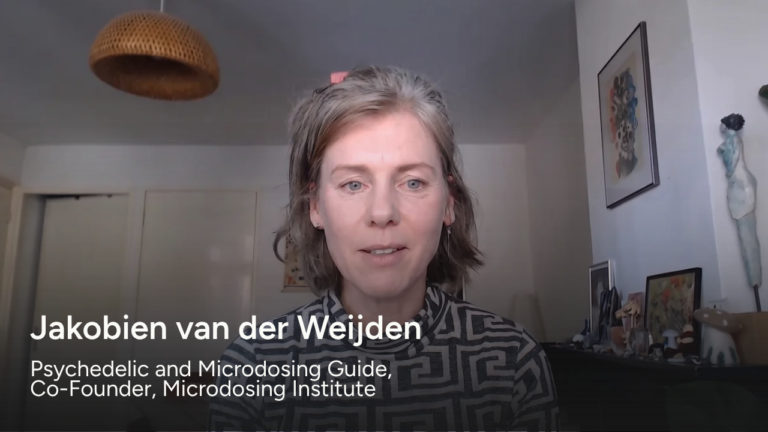
Sophie J. Spitzer 01:34 Hi Jakobien. I am very excited to be speaking to you today and I would love to dive right in. Take me to the moment when you knew that psychedelics were gonna be your work and not just your healing.
Jakobien van der Weijden 01:42 Yeah.
Jakobien van der Weijden 01:46 Hmm. Yeah, I I have to say for me it's been a super, super gradual process that went through many phases because actually psychedelics came on my path sort of professionally before I even realised it could be a tool for healing. when I was 18 I moved to Amsterdam to study and I found myself a really cool student job. Which was at one of the smart shops that sells magic mushrooms and you know hundreds of other psychoactive herbs, plants, and seeds. And I really dove in into all this material to learn as much as I could about these yeah, wonderful tools of nature. And that's also where I started having my first psychedelic experiences, literally with my colleagues, like trying out the mushrooms. So, but at that time, this was we're talking about the year 2000. there was really not so much knowledge here in the West about the therapeutic potential, about shamanic work, all of that was very, yeah, sort of still deeply buried, and it was still very much, yeah, in development, but not outside. It was so niche that. Nobody had even, not even me and my colleagues had heard of it. so yeah, I I I I got the chance to to experiment and really, really over time as and we're talking about 10 years later, I think, I was in a situation where I felt really, really burned out. I was at a point where my marriage was stuck. I realized that the work I was doing back then I worked in marketing, communication, copywriting, all of that wasn't fulfilling and I felt like it was not really who I was. I was like doing a persona and I was
Jakobien van der Weijden 04:04 putting a lot of effort into it and I was trying to be this person that I thought I had to be in the world. then I realized I cannot keep doing this for another 10 years. I that that's just gonna be, you know, straight down a path downhill. So I need to find something else. And this is here where psychedelics were much more on my radar at that time. And I had done some ceremonial work. I had Already traveled to the Amazon and got in contact there with people from the Quechua tribe, drinking ayahuasca with them. I had drank ayahuasca in other places, and also the mushrooms were sort of my companions for every now and then doing a journey. So I I think at that time I realized I need something more, I need something powerful, I need to do something. but I don't know what. I was I didn't have the courage to dream big, to think about something else, to really, you know, think outside of my own box. And there was this very pivotal journey that happened with ayahuasca. and that showed me literally that I am powerful creator and I'm the powerful creator of my own life. Nobody else can create my life for me. Nobody else knows how I am supposed to live. And it's totally up to me. I can create what I want. I can be true to who I am and true to how I feel and start living from that place. And that was such a powerful message and it literally came out of nowhere. Because I just mentioned I had already done some other journeys with ayahuasca, but it was the most mystical medicine for me. It was the one that I didn't understand, the the one that I couldn't really pinpoint what my relationship was with it. And I actually had quite a few journeys with with you know almost no definitely no visible visual effects, but also not that full psychedelic mystical.
Jakobien van der Weijden 06:16 you know, soul searching potential, like none of that came out of those journeys. Those journeys were very mild or even almost nothing happens. I just felt very peaceful afterwards. So and then came this journey out of nowhere, to really like show me like, hey, but this is this is your path. This is your way. So from that moment on I realized I want to work with people. I want to
Sophie J. Spitzer 06:38 Mm.
Jakobien van der Weijden 06:38 And actually, I want to work with people, so let me look into things like coaching. I want to work holistically, I want to go one step deeper than you know, the sort of standard options, a doctor, psychologist, and whatnot that are available. I want to be able to really connect the different dimensions in which a person lives, like physically, emotionally, mentally, spiritually.
Sophie J. Spitzer 06:56 Mm-hmm.
Jakobien van der Weijden 07:00 And this was a really big step for me, because also in my whole life personal journey, the theme was always that I felt very yeah, disconnected from other people. quite I'm I'm looking for the word. I I I think it was a feeling of not belonging, not belonging here in this
Sophie J. Spitzer 07:14 Mm-hmm.
Sophie J. Spitzer 07:15 Hmm. Yeah.
Jakobien van der Weijden 07:21 society and humanity and all of my life I felt like the others have been given some kind of operating manual for how to be a person, how to be a human here on the planet. And I don't have that manual. I'm really just trying to figure it out. I'm just copying how other people communicate, relate, make friends, all these sorts of things. And I really felt that I was not
Sophie J. Spitzer 07:30 Hmm.
Jakobien van der Weijden 07:46 I I was not in the know of how these things work. And it it took me many, many f f years, but also many psychedelic journeys to come closer and closer to that point of where I realized actually we're all the same. There is no like you are being a human, you are doing it already. You don't have to pretend you don't have to be that persona, or you don't have to, you know. please others or live life in some sort of way that's being prescribed by some sort of mysterious manual that you didn't get. It's like you you have your own manual. So yeah that pivotal journey and then everything leading up to that all came to this really surprising point for me. It's like, I actually felt like I was such a you know I was so incapable of working with people and relating to other people, but I actually do want to work with people. So my biggest struggle became my my profession and my mission and still one of the sources of happiness in my life today.
Sophie J. Spitzer 08:32 Mm.
Sophie J. Spitzer 08:46 I love that. It's it's yeah, it's so it's so interesting because I I know since we're friends, you know that also my my journey was to psychedelics was very much related to my biggest fear in life. And on the up other side of my biggest fear in life, I found my profession. So yeah, I always think it's such a such a beautiful pointer if you if you can or if you are willing to
Jakobien van der Weijden 08:47 Yeah, yeah.
Sophie J. Spitzer 09:13 to look towards what's actually hurting or where it's a little little uncomfortable. Yeah. Yeah.
Jakobien van der Weijden 09:18 Yeah, yeah, yeah, yeah. Where your your wounds become your talents or your your yeah, your wounds become your strengths. And it is yeah, and thankfully these plant medicines are out there because you know, I'm alwa also someone who really lives quite a lot in their head, who's quite like thinking about things, analytical, yeah, intellectualizing things and
Sophie J. Spitzer 09:24 Yeah.
Jakobien van der Weijden 09:40 Then people can tell you these things but they don't quite land, you know, and you don't really open your heart to these kind of this kind of knowing. But psychedelics, they they go straight in, they they work with your heart, they work in your body and you start to feel it. And then I knew it was true. So on top of that came also that understanding that yeah, we have this other, you know, layer of our being that's more than just in the head. We yeah. from where a lot of knowing comes, from where really our inner compass lives. So yeah.
Sophie J. Spitzer 10:12 Body is a beautiful vessel, as we know. so you've said that this pivotal psychedelic journey, ayahuasca journey was round about two thousand and ten, fifteen? What what was the time frame?
Jakobien van der Weijden 10:15 Mm-hmm.
Jakobien van der Weijden 10:27 it's a good question. I think it was in two thousand sixteen or early seventeen. Yeah.
Sophie J. Spitzer 10:32 okay. Yeah, because before we now before we go into what you're doing now, I wanted to scroll back to 2017, Microdosing Institute. It's now or we know now it's one of the organizations in the psychedelic sector that is really standard defining when it comes to microdosing, and you co-founded that. So can you take us back into the initial days? How was it? How why? Why did you even start?
Jakobien van der Weijden 10:59 Yeah, yeah, funny question. It's also so around that time, yes, I I felt already more and more of a I felt like I was a steward of the psychedelic renaissance in the West. and so I was really having this radar on for initiatives that were creating things that weren't there yet and all around like the the value that psychedelics can have. So there was the OPEN Foundation here in the Netherlands that do the the big ICPR conference and that connect researchers from all over the world with one another and promote psychedelic science. So I started volunteering with them. And then also there came the Psychedelic Society of the Netherlands which was another initiative of bringing people together. Having them interact, like basically offering a safe space where experiences and knowledge can be shared in a much more informal way. so I joined them and started co-organizing and and and doing all that sort of thing. So, and of course, that brought so many people into my field that were all doing such interesting work with psychedelics. that yeah, I got more and more and more inspired. And This is also how I met Hein. And Hein was literally the most passionate person I have ever met about psychedelics, about microdosing. except for maybe Dr. James Fadiman, who became our mentor. So the the Harvard psychologist and author who has been doing research and who's been collecting people's stories from microdosers for
Sophie J. Spitzer 12:23 Mm-hmm.
Jakobien van der Weijden 12:36 Yeah, I think since 2011 he's been doing that. So Hein told me that same day that we met, yeah, I've been in contact with Dr. Fadiman. I wanted him to know that here in Europe we're doing this and we're even, you know, creating events where people come together and talk about microdosing and even take a legal microdose together. and there were some researchers coming to do research on that particular event. So we both got very, very enthusiastic and we say, we said, it's funny here in the Netherlands we can microdose legally with the truffles that contain psilocybin. but all the information it comes from the US and it comes from maybe some online platforms like Reddit or so, and we actually should create a community for people who are actually microdosing or interested in microdosing to learn how they do it. what are the best practices? what benefits do they get out of it? Because the benefits that we were hearing about were so wildly varied. So, you know, there were people who said, I started microdosing and suddenly my migraines became so much less. there were other people who said, I have ADHD, but the days that I microdose, it's so much easier to focus and I'm so much easier on myself going through my day. And then there was actually one of Hein's best friends. he used to suffer from cluster headaches, and they already knew they worked with higher doses of psilocybin to actually prevent new cluster episodes from happening. And the tragic story is that that friend had ended his life because he couldn't bear it anymore, he was not always.
Sophie J. Spitzer 14:16 Yeah.
Jakobien van der Weijden 14:18 you know, on time with doing another journey and you know just busy with life and then these attacks kept coming. and Hein always felt like if I knew earlier on that microdosing could also be a solution here, then my friend still would be alive probably. So so it's it came from that mission of making more knowledge available and mapping out these benefits and
Sophie J. Spitzer 14:33 Mm.
Jakobien van der Weijden 14:43 Yeah, just forwarding this yeah, like pushing this field of microdosing, which was still so completely novel, and there was no research being done other than Dr. Fadiman's research at the time, that we also said, Okay, if we know any scientists, we should just let them know that we have this growing community here and we're all microdosing and they can come and sit with us and yeah, do research on microdosing. So slowly over time that started happening as well. And yeah, nowadays research into microdosing has has drastically you know, increased with varying results. As some people probably know, there's still a lot of debate about the role of the placebo effect. But yeah, this is the story of Microdosing Institute. Yeah.
Sophie J. Spitzer 15:15 Exactly.
Sophie J. Spitzer 15:30 Wha w on a more operational side, like really, you know, you had that idea with Hein, you brought people together, more and more people started coming. How were the first session looking like? And what was your role in in building this?
Jakobien van der Weijden 15:44 Yeah, so we created a website, a platform with a a big, big knowledge base. So people could literally go there and see, okay, I have access to mushrooms. How do I microdose with them? I have access to LSD. Nobody has to know how you came with you know, how that LSD landed on your on your doormat, but let's let's explain how to microdose with LSD without taking too much. so we really like from a harm reduction standpoint we wanted to inform people in a very you know accessible way so without any sort of paywall or any sort of barriers, people could just find that information on our website. then we started doing monthly meetups in the Netherlands. when COVID became, when COVID came around, we started doing monthly meetups online. And we started to create programs. So because we already saw like people benefit so much from having an exchange with each other and going through this journey of finding the right dose for you, like calibrating your dose to your needs, working with an intention, seeing how the microdose experience unfolds for you. Are you having Only positive effects, or are you noticing some negative effects perhaps? Or do some unexpected things happen? and and of course, questions come with that, like I get a headache when I microdose, or I actually suddenly feel really tired, or I feel actually very emotional when I do it. what does that mean? So in these six week programs that we created, we could address all of those experiences and people could learn from each other. So
Sophie J. Spitzer 17:03 Yeah.
Jakobien van der Weijden 17:20 And I don't actually remember how many of these programs we've done together. I'm no longer part of the Microdosing Institute now, but I think I've done them for two and a half years. so yeah, that was that was a big thing of what we did. And then we also invited yeah, experts, researchers, all sorts of people to come and host workshops with us. And we did we also started a training, so a training program to be a microdosing coach for any kind of practitioner in this field or in adjacent fields. because we truly see that for instance, if people are doing therapy or coaching or any sort of form of inner work, it often works better when they microdose. Microdosing can often just give them that extra, yeah, deeper connection to themselves where the doors are opening a little bit more easily. And with a lot of gentleness and kindness, you can then yeah, see what's happening with yourself and be present, stay present also when you're going through things. So also when you're, you know, processing some difficulties or challenges. This allows you to stay more present instead of going into distractions or, you know, taking taking out in other people. It's like you keep returning to yourself and yeah, this medicine seems to be very yeah, helpful for that.
Sophie J. Spitzer 18:52 For anyone who wants to build a six week course or wants to create a training, an education, a training program in the psychedelics field, as somebody who's built that, what would you recommend them or what was like a a big, big learning for you?
Jakobien van der Weijden 19:09 yeah, there were many learnings. Yeah, there were many learnings. The first thing that comes to mind is that two things come to mind first. So we had really good skillful people on our team. So and because of that we could move quite fast and do it in a quite high pace.
Sophie J. Spitzer 19:09 Ha ha ha.
Jakobien van der Weijden 19:31 but I would recommend to pace it down a bit to find a pace that's comfortable because yeah, with each step you take, there are a lot of learnings. And in order to integrate those learnings and also to sort of stay steady within yourself, I I very strongly feel that. Doing it at a good pace that works for you, which may not be what the world is dictating or what your business consultant is telling you, or what you know, what life is dictating, it might be actually slower than that. So I would say, like not doing it by yourself, but getting expertise, building a team, and find a a way to work together that that feels good, that feels nourishing, that feels like safe and open that you can also speak speak out to each other how you feel about things. So yeah s a supportive and collaborative teamwork. I would say that's the number one and pacing yourself the number two. Yeah. But there's many more things I could talk about this entire afternoon for sure. Yeah. And maybe I should add, sorry, maybe I should just add because I know that, you know, we are
Sophie J. Spitzer 20:41 Mm. Yeah. This is also yeah.
Jakobien van der Weijden 20:49 We are talking here from the Netherlands, so we have quite a privileged standpoint when it comes to legality. So I would say the third thing is always like know your boundaries in terms of what's legal. We've had so many, we had to reject many people who say, like, I'm a therapist in this and this country, and I want to add this, I want to include this in my in my work with my clients. how does it work? And I first of all. I don't know exactly how in every country in Europe or in the world what the legislation looks like. In many cases, it may actually look like you cannot do it. You may risk your license, or you would recommend that your clients find that they source their own psychedelic substance and that you are only, you know, providing the the guidance, the advice, the counseling at a distance. so this is what we've done with Microdosing Institute. We were never providing substances to people. but yeah, the the the the the point of legality, I think I should mention that here too. Yeah.
Sophie J. Spitzer 21:53 Hmm. Yeah. What I wanted to comment is that I yeah, I think especially when it comes to building something in a highly highly stigmatized and legally fragmented industry, community and having a support system is so important. So important. I I I am trying to build my own thing. I also almost burned out because I was trying to do it alone. And that is clearly, clearly not
Jakobien van der Weijden 22:11 Yeah.
Sophie J. Spitzer 22:22 Not the not the path for many, I would say. I wouldn't say it's impossible, but it's it's extremely hard and not recommended.
Jakobien van der Weijden 22:28 Yeah, and this work is so layered, huh? There's so many layers to it. Like there's the business side, there's working with people with all of its complexity. We're working in a space of mental health, but there's also medical health, physical health that we should always take into account. there's there's people with trauma, like there's and and and so both like the contents of your work and the containers you provide, but also everything around it.
Sophie J. Spitzer 22:32 Yeah.
Jakobien van der Weijden 22:57 legality communications business, it is a lot for one person to even, you know, understand and know what you're doing and then let alone do all of that by yourself and and and be kind of a leader in that. So yeah, I do think we absolutely need people who are specialized in business, who can supervise your work, who have dealt with certain things before. So you don't have to reinvent the wheel for everything.
Sophie J. Spitzer 23:22 I guess the message here for everyone listening would be if you're doing this alone, don't worry, it is tough. And seek for support. Yeah, yeah, very complex, very complex. another complex or complicated question I'd be curious to hear is as as a as somebody as a microdosing expert, right? If somebody comes to you and asks, Well, there's The scientific evidence is not that conclusive about the workings of microdosing and it's just placebo. What do you personally usually answer to that?
Jakobien van der Weijden 23:57 Yeah, it to be honest, it depends a little bit who I'm talking to. I've had some discussions with scientists, mainly that was a few years ago, when the research was really, really inconclusive. And and I would say it still is, because the the number of studies done on people where they microdose more than once, you know, so let's say for two weeks or for a month. Are still just a handful. So that is in terms of research for any sort of treatment or medication. It should be replicated multiple times in order for the community, the scientific community to say, like, this is only only placebo, or this is only the placebo effect. So I think we still need to look deeper into it. but of course it shows that the placebo effect is very powerful and that it is an integral part of the experience when you microdose. And also when you macrodose or also when you take vitamins. I I I think the placebo effect is is an inherent part of our lives, and our expectations are always here to you know, our expectations can reinforce or recreate, also these these neural pathways that that that might help us, you know, or go against it if you're very critical, if you're very, you know, skeptical. Yeah. So that's that's for sure. then another thing that two other elements I have seen and of course this is anecdotally but I have seen it in so many of the the people in our community and so many of our clients is that
Sophie J. Spitzer 25:29 Yeah.
Jakobien van der Weijden 25:47 The set and setting in which you take it. So taking a microdose inside a lab where you're being studied and where you're sitting the whole day in that lab waiting for the next test to happen or waiting for the researcher to arrive, or which is not your life, versus microdosing in your own life where you're interacting with the people you love, where you're going to the places you normally go, where you're doing all your endeavors, your hobbies, your work. And see how it impacts the yeah, the good things you experience there, but also the challenges that you may experience. to see how it impacts your sleep quality, for instance, to see if it may change certain cravings or certain habits that you have throughout the day, whether that's to to eat or to smoke or to drink alcohol, whether it's helps you get up more earlier in the morning and feel more refreshed, like none of this has been studied.
Jakobien van der Weijden 26:43 but it it it's it interacts with you. It it it is really you know, it works with you alongside of you. We used to say it works a little bit like an electrical bike, like you still have to do your pedaling, it doesn't go off on its own, but it assists you with that, so it makes a lot of things just a bit more smooth, a bit more easy, a bit more connected. So, yeah, the set and setting. And the other thing is the intention, like knowing why you do it, as with many drugs, I would say, with many drugs, medicines, whatever it is that we take. if we have really clear for ourselves what is it that that makes us want to do this, what is the transformation that we're seeking? and yeah, we we go into this trajectory Also, want to say here that taking one microdose can give you a really good day, but it's not going to do more than that. It's it's just gonna be just that, just one experiment or just one really good day. But if you start having multiple really good days a week and for let's say six to ten weeks, and you have an intention of like the direction in which you want to take your life and in which you want to take yourself,
Sophie J. Spitzer 27:58 Yeah. Yeah.
Jakobien van der Weijden 28:03 Really a lot can change in that period of time. And I think we should, yeah, hopefully there will be some sort of chance to research that. but I I'm actually a little bit skeptical about what what what research is is doing. but yeah, in particular for people who let's say are depressed, I think depression could be a a good condition because research wants to look at conditions and see if this could help or if it helps better than an antidepressant or another type of intervention. yeah, I would still love to see that happen. Yeah. And I would be pretty positive that the outcome would be would be really amazing. Yeah. Better than placebo.
Sophie J. Spitzer 28:45 In your current practice I know you're you're working also a lot with or core integral part of it is is intention. And I would love to know how as a as a psychedelic practitioner, how does a regular day for you look like now?
Jakobien van der Weijden 28:59 Hmm. yeah, well a a regular day, I it it it really depends. I would say it would I would perhaps be better able to describe a regular week with with like what are the ingredients in that week. but usually there is I could be preparing for a retreat. I am a retreat facilitator. So I could be talking to people who are in their preparation progress process for this retreat, both either one-on-one, but we also do group preparation. I could be speaking with microdosing clients. I may have a so and microdosing clients usually do a trajectory of yeah, usually around eight weeks with me. And I also offer a one-on-one trajectory with a high dose journey, which is 12 weeks in total. So yeah, I might speak with people for their preparation or their integration. And yeah, intention setting is part of that. I also work yeah I work with somatics a little bit. I'm a trauma counselor and As many of you probably know, the state of the nervous system, the window of tolerance, just working with people and see how they can land deeper into themselves and feel that inner safety just by using the breath or just by becoming aware of how their body feels in that moment. So we spend time with that. we spend time Doing some parts work, so looking at the different parts of yourself, the different parts that you know show up in different moments of the day. We probably know our own inner critic or our own inner perfectionist or our own inner caretaker or our inner parent, inner child for that matter, like all these different parts that can be different for everyone. I believe there is no
Jakobien van der Weijden 31:15 fixed set of these just really again depending on what the intention of a client is and also where you know we we dive deep into the root of their suffering because most people come because there is some form of suffering that they are trying to overcome and they may have already tried other therapies, other ways, other methods. and so for this work I I like to be, you know, I like to get as close as possible to what might be the root of that suffering. based on either what has happened to them in this life, what did they have to deal with, what did they have to cope with, what was overwhelming at times where maybe that overwhelm couldn't be properly, you know, processed, especially during our childhood.
Sophie J. Spitzer 31:58 Mm.
Jakobien van der Weijden 32:03 We can live very stressful moments that are just too overwhelming and then they sort of stay with us, you know, they stay with us like a unsolved puzzle all floating around. and to really understand what yeah, what is the the suffering and what are the the conditioning that was created to to to deal with that suffering from those earlier moments, then we can trace it back. So Yeah, this is this is very an important part of what I do and what I spend the time with when I am with my clients.
Sophie J. Spitzer 32:31 Yeah.
Sophie J. Spitzer 32:36 And as somebody if somebody's listening who maybe just finished a psychedelic practitioner training and they aspire to become a professional psychedelic practitioner, what would you recommend them?
Jakobien van der Weijden 32:47 Yeah. Based on my journey, I think it's yeah, I want to keep it as close as possible to my myself and my own experiences. one thing that comes to mind is Don't wait until you're ready with don't wait until you're ready or don't think that you need to have done all these trainings or all this like for many of us we always keep moving the bar and we don't feel ready until we've done another training or until we've attended another retreat for ourselves or until we've done shadow work or until we've done this or this. And it might be that in the many aspects that are important that you've already yeah, that you don't believe you're ready, but you will get ready by getting experience. it doesn't mean you should immediately launch your own practice and start doing doing and practicing this on your own. I I actually believe in taking small but very deliberate steps towards getting into this work and towards doing more and more of it. and this is one thing I I I have to say, I'm a bit skeptical about the the many training programs that are out there that either they are fully online or they don't offer any practical experience, of course, due to legality and due to many practical issues as well. and oftentimes they offer some of they do offer it and then it's one retreat. And yeah, I I mean I I cannot count the number of retreats and ceremonies I sat in, the number of parties and festivals I've been at where I have seen people, you know, taking cocktails of drugs, and I've also done some psy care, some assisting on those parties and festivals. and so my
Sophie J. Spitzer 34:32 Hm.
Jakobien van der Weijden 34:38 Yeah, my recommendation is all those things really count, all those things really matter. So having your own experiences, assisting others where it's friends or small ceremonies that you can hold together with someone or volunteering in these parties and these projects like the Zendo Project, and some of them we have in Europe. and see it all as taking small but deliberate steps and And and and many other things that you might be doing. like I I also worked in customer service and customer care. I felt like communicating there on a daily basis with people about their problems and trying to, you know, meet them where where they're at and and yeah, help them with their needs. All of those things have have been contributing. So yeah. Small but deliberate steps and pacing yourself also, this is not something that I think everything we are doing here, most of us practitioners in this field, it's not something you can learn in in one year with one, you know, super good course. I think it's really like the accumulation of experience. And here I would say so I would also say don't Think about your age or where you're supposed to be at this point in life. Like if you arrive at this being fifty-five or sixty or forty-five, it it doesn't matter. That's probably only for the better. This is not an the the standard career that, you know, we launch ourselves after university and we go out and do it. a lot of your life experience will be relevant.
Sophie J. Spitzer 36:16 Yeah.
Jakobien van der Weijden 36:23 and it's it all gets really embedded. So it's it's all one big integration process where all of that experiential knowledge, you will benefit from that. Yeah. And I think I come back again also for the last one to this other one of don't do it alone, don't operate in a silo, seek others with whom you can exchange, with whom you can work directly together with, especially if you're gonna work. Yeah, with groups, but also if you're not working with groups, I I do feel that I have learned more from being directly with my colleagues in the room and being able to, you know, review w what what happened, what didn't happen, what we were expecting, what kind of different types of care people need, from just directly from working with my colleagues. Yeah.
Sophie J. Spitzer 37:21 Yeah. Yeah, I I so wholeheartedly echo that. I I also just recently finished my psychedelic practitioner training and it also had practical components in the Netherlands and I can tell you it was absolutely fantastic. Like just the being in the room with very, very, very skilled people and being able to observe them just made all the difference. And seeing how they hold the field, how you really like you can just observe everything and really immerse yourself in that experiential feeling of having held a space together as a group. And yeah, I I mean we're just starting this podcast, right? But I I have the feeling that we will never really get a clear answer to what is the path to becoming a psychedelic practitioner, because you know, you also have, depending on what your needs are, what your intentions are to To seek out a psychedelic treatment. Maybe you need somebody who can resonate with PTSD who has self-experienced that, or maybe somebody with, I don't know, eating disorders, or somebody who was divorced, right? I mean, there's so many different facets of it and your own, but I think the one common denominator that we can agree on is that if you have personal life experience in that specific domain. That is usually beneficial if you don't do transference, but it usually is is beneficial to to holding somebody in that situation.
Jakobien van der Weijden 38:50 Yeah, yeah. And and one thing I I would also like to see happening more in this field, it's already happening, but I really think the the future is gonna be somewhat more specialized care offerings. And like a really good example is a friend of mine, she hosts retreats for cancer survivors. You know, there's now so it's it's and it's of course it's invaluable to have those people together in one retreat as opposed to being the only cancer survivor in a retreat where others are you know coming for different reasons. I can see there is also retreats in the Netherlands that I know of for people who are adopted. and then I can see
Sophie J. Spitzer 39:27 Mm.
Sophie J. Spitzer 39:36 Mm.
Jakobien van der Weijden 39:43 Probably also neurodivergence being together in one retreat or at least having specialized care and specialized offerings for neurodiverse or autistic people, which is something I'm passionate about, and will offer more and more of. yeah, so I I really think here we have yeah, we have a great opportunity to to to meet people more where they are at and have them benefit from specialized care and also from peers who also go through the same experience. Yeah.
Sophie J. Spitzer 40:18 Mm. Yeah, the power of belonging or feeling like you belong. Yeah, that's it.
Jakobien van der Weijden 40:22 Yeah, yeah, yeah. That's the thing. It's it's the power of belonging. That's something we've all I I I most of us have been missing at some point who are still missing in their lives. And it's this big quest of yeah, feeling that belonging. yeah, and as you know as well, psychedelics are very powerful to to help us feel more belonging here to the earth and to one another and to yeah, this This this human experience that we're all sharing. So yeah.
Sophie J. Spitzer 40:55 On your on your LinkedIn you say what I'm about and the last point is normalizing hypersensitivity and neurodivergency. You just touched on it also yourself. Would you tell us how that point got on the list?
Jakobien van der Weijden 41:11 Yeah, yeah, I mean also actually from personal experience, of course, I I like I spent so much of my life, so much of my energy. And I could say also I lost so much of my, let's say, life force and positivity to due to trying to fit in. And trying to, you know, find out what that operating manual says, and constantly like questioning if I was doing it good enough, or if people would think I was too awkward, or you know, constantly overanalyzing the whole thing. And I realized that this was yeah, and and then also this this not wanting to be different, but I had to acknowledge that in some ways I was different from others. That we all have our own levels of tolerance for certain things and in my case certain stimuli. That I really noticed how sensitive I can be to especially sounds, smells, other people's energies, other people's emotions, and that just processing that all on a daily basis can be so exhausting. And I discover that this is also the case for many autistic people. It can go hand in hand with with high highly being highly sensitive. then later on I also discover that I have about half of the autistic traits, and that my partner has about the other half. He's the one who's diagnosed, but I'm not, and that's totally fine.
Sophie J. Spitzer 42:55 Yeah.
Jakobien van der Weijden 42:58 And I started to see this and started to learn more and more about it based on what I'd seen in my environment and also in my family and also in some of my clients. so it became, yeah, it became a bit of you know one of one of my fields of of interest. And some years ago I also interviewed Aaron Orsini. He was initially the founder of Autistic Psychedelic, a community, an online peer community. And he wrote, I think, three books about psychedelics and autism. and he also said, like, the world is just not society is not built for people with high sensitivity and with autism. So we are constantly the ones who have to adapt ourselves and make other people known what our needs are, what works for us. And we haven't even figured it out for ourselves often because many people also they get diagnosed at a very late age and all this time they're just kind of trying to figure it all out while being overwhelmed and exhausted. So yeah, he is a big advocate for creating spaces and places everywhere in society that are, you know, good for people with high sensitivity, so low sensory places and places with also where you don't have to fit in where you don't have to be a certain way where basically you are being met just the way you are and that the way your brain works is just being taken as as a fact, as like okay, this can be the norm for for now in this interaction that we're having or in this process that we're doing together. as as opposed to that the neurodivergent has to adjust to the the whatever we call normal. so and if all of society was built for highly sensitive people, everybody would benefit from that because everybody would feel actually much more calm. Everybody would would have a calmer nervous system, would have more space to process in their heads, you know, whatever they want to process or whatever they want to focus on. So we yeah.
Sophie J. Spitzer 44:55 Mm.
Jakobien van der Weijden 45:12 It would be just a a more yeah, what is it? A more equal and more safe place for for everyone. And I think especially the neurodivergents, they they deserve that. Yeah. And and and it comes back again to yeah, a lot of the work that I've done before, especially the workplace for me was always a challenge, but yeah, just And and being able to do things on your own terms that made such a huge difference. being able to take pauses whenever you need to take a pause, whenever you feel like, okay, this is now it was a bit much. I had just had two meetings, now I I I need an hour of a break and do something else. and it makes all the difference, and it it really helps with your self-worth and I feel very strongly that then when you can live on your own terms, you can also discover more who you really are and accept who you really are. And this is also where psychedelics, you know, can help us maybe accelerate that process a bit more of like, hey, it shows you who you really are. It it is a reminder, it is a coming back to that place, it is a knowing of that belonging that we just talked about. That psychedelics have very beautiful ways of making us feel that way. And yeah, that's that's something I I wish for anyone to you know to have those experiences and then take those experiences out into your day-to-day life and just keep building on them. Yeah. Yeah. Does that make sense? Or I I I'm also testing this out a bit, wondering if Or does it spark more questions or yeah.
Sophie J. Spitzer 47:04 Yeah. I mean I I I have ADHD myself and I'm hypersensitive. So everything you said really, really resonates and yeah, I can totally relate with just being so overstimulated, like sounds, smells, when you then feel so trapped in that moment. And if you don't know how to regulate, if you don't have tools for that, it just can really be a nightmare oftentimes. And I can also really resonate with the not feeling of belonging and like I'm odd, I'm weird, you know, somehow. I I think they especially for for autism, there's this term for called masking, right? Where you you where you almost like adapt so much that you don't you don't seem off, but internally you're off and you're hiding that. Yeah.
Jakobien van der Weijden 47:57 Yeah. Yeah. Yeah, exactly. This masking and then I I what what I what I was always doing, I was just pushing through because I didn't want to be the weak one or I didn't want to be I wanted to prove to myself and the world that I could do anything I would set my mind on and and anything that I saw other people do, I was like, I there's no reason why I should why I cannot do that. but in that I was
Sophie J. Spitzer 48:09 Mm.
Jakobien van der Weijden 48:25 Yeah, like setting really, really high standards. I was setting different standards, let's say. That was you know, when when that was just like eating eating myself up, basically. It was eating me up, always pushing through. And this this I mean these things I I'm sure there is this burnout, that there's autistic burnout, I'm sure there's also ADHD.
Sophie J. Spitzer 48:39 Mm.
Jakobien van der Weijden 48:50 burnout specifically related to the masking. And it's it's something especially in the way society is at the moment, we yeah, we have to be aware of that. And yeah, I I I believe in working with psychedelics we can choose a different pathway. And we can choose a pathway that is you know much closer to who we really are and also yeah dare to live and embody that way of living.
Sophie J. Spitzer 48:55 Mm.
Jakobien van der Weijden 49:19 without apologizing or without having to go back and forth between the masking and the unmasking. Yeah.
Sophie J. Spitzer 49:25 Do you think that being neurodivergent makes you a better psychedelic practitioner?
Jakobien van der Weijden 49:32 That's a good question. I never thought of that. Of I never thought about that. I I I I don't know. I only know what it's like to be me, right? So I cannot ask I cannot answer this. in terms of what would be the better or the worse psychedelic practitioner. I I do think sensitivity and being able to use both the brain and the heart and the gut feeling, like to be able to use all of that is is very important, is essential. And I think this is also why previously, so you know, this before 2017, I definitely wasn't ready. Because I was only living from my head and I was I I I ignored my own gut feeling all the time. So at that point it would have been a worse psychedelic practitioner if I was, you know, practicing then. So but so I I think it's more about the life journey and the the self-discovery and the integration of your psychedelic journeys and also everything you do. besides taking psychedelics. So, you know, for me also Kundalini yoga has been like tremendously helpful. like resetting my system, resetting my me myself emotionally, like recharging it it it really felt like a practice that helped me recharge my batteries. But it also you know there's there's quite a lot of mantra singing involved with Kundalini yoga. So it like
Sophie J. Spitzer 50:53 Mm.
Jakobien van der Weijden 51:15 Help me to use my voice more and be more articulate. And so I think there's so many other things we can do as well that help us becoming this more wholesome human and coming into that wholeness gradually over time. So yeah, that's what I would say about. Becoming a psychedelic practitioner, it's it probably has more to do with this kind of maturation process than with whether you're neurodivergent or not.
Sophie J. Spitzer 51:46 And last question on that. If now a client comes to you, and I know you've had hundreds of clients at this point, how do you prepare differently or how does the session look differently if a person is neurodivergent, if there's a the difference in the session at all? Also preparation, integration.
Jakobien van der Weijden 52:03 Yeah, there it it yeah, but I don't have a very specific I don't have a specific protocolized way because it it it depends, you know. but what I what I would say is creating safety and predictability are probably the most important ones. So knowing what we're gonna do in which order, knowing what to expect, having the chance to discuss discuss it or for them giving them the chance to feel into it, flag anything that doesn't feel right or that doesn't feel complete or that, you know, maybe just doesn't complete hasn't completely landed, just giving space to go over those things. I feel that's a very important one. in the psychedelic journey itself, and also with microdosing, yeah, one thing that I I find quite curious, and we we need more research on this. Whatever way that research is being done, but we need more information on this because Some people seem to need a higher dose, sometimes a quite a lot more, in order to have the same have the same yeah effect or get to the same place. But there's also neurodivergent people who need much less. And who as soon as there's a little bit of a hint of a microdose, it already it's as if their brain already goes like, yeah.
Sophie J. Spitzer 53:24 Hmm.
Jakobien van der Weijden 53:28 We know that place. We will can we can just go there, you know, immediately. Yeah, you're pointing at yourself. So so I think this just this awareness around dosing for practitioners is is very important. so I therefore I work with titrated doses on the high dose journeys as well. but those are the th the first things that that really come to mind. But as we speak, I'm Developing an approach that really encompasses as much as possible all these different aspects. and just alone, just when just taking autism, there is already so much diversity within this community. So there's this famous saying if if you met an autistic person, you've met one autistic person. So I'm a bit Yeah. Yeah.
Sophie J. Spitzer 54:08 Mm.
Sophie J. Spitzer 54:12 I love this.
Jakobien van der Weijden 54:19 Yeah. And and and people sometimes think that that they could all be like like Tom Hanks in what's the name of the movie again? The w the walking movie.
Sophie J. Spitzer 54:26 yeah, I know, I know. What is it? it will come to mind, yeah. This one.
Jakobien van der Weijden 54:33 Yeah. Yeah. Yeah. Anyways, the the the nerdy like people person who has difficulties communicating and can only take things literally and first, exactly. and and that's absolutely not the case. So it's this is why I was a little bit reluctant because on the one hand, like a lot of things are just normal, are just like any other session, there wouldn't be any difference, but in s certain nuances,
Sophie J. Spitzer 54:39 Forrest Gump, sorry.
Jakobien van der Weijden 54:59 Yeah, there is this understanding that helps and yeah, I would like to make that more concrete in the coming six months or so. That's my project that I'm currently working on. Yeah.
Sophie J. Spitzer 55:11 So we're slowly coming to a close, but I would love to still have two more questions for you. You were just referring to Kundalini Yoga as being a resource for you, right? And that becoming a practitioner is so much about becoming yourself, really. What are other things that you as a practitioner found for yourself? useful to not only resource yourself and maybe I'm diverging now into three questions, but I think it's just so so interesting. Resource yourself, but also to boundary yourself. Because those two those two things I think are very essential to being to being a practitioner.
Jakobien van der Weijden 55:55 Yeah, being resourced on the one hand and having boundaries, knowing your boundaries on the other hand. Yeah. Yeah, it's Yeah, I feel like we we have we do have a lot of access, almost infinite access nowadays, to resources. You know, there are so many training programs, there are also so many cool add-ons or techniques that you can learn from the world of therapy. And actually I I learned a lot from talking and working with other people who are therapists and also just I find that the the field of therapy really fascinating because they yeah they have on the one hand you know there's like now the nervous system is all the rage so I want to learn everything about the nervous system and all my clients are talking about attachment styles and they're really you know they're suffering in their relationships they want to make it better and they learn about so every therapist needs to learn about attachment styles and then there's neurodiversity and then there's you know there's always there's IFS all the rage too you know so a lot of therapists feel this sort of pressure to keep learning keep investing in themselves to be more resourced to be able to apply all those things and some of these things are actually like old knowledge just in a new you know in a new package with a new sort of educational system around it And I think for some therapists, psychedelics are also like, yeah, there's another thing that we can, you know, train ourselves in. And so the question is also a bit, where's the limit? When is it enough? When are you just saying like, hey, I'm a practitioner, I really know what I'm doing, I can work with these and these and these groups of people, clients, and just, you know, trust that all the years of work that I've done, I really know what I'm doing. I don't need another training. and that's a
Jakobien van der Weijden 57:47 That's also where you get to the boundaries part, right? Because it's yeah. But but I I I get it from both sides because it's so nice to always be inspired, to always learn something new. But I have yeah burned out I don't know, three times I would say.
Sophie J. Spitzer 58:03 Mm.
Jakobien van der Weijden 58:09 At least three times that I got to the point of where I needed to, you know, turn the page and say, I have to, you know, make changes to my life now. I cannot keep going the way I'm doing. and it was always from the lack of boundaries. It was always from being so inspired, so mission driven, so you know, enjoying collaborating with other people and making things move and being a driving force, but then It was like at the cost of myself as my own energy, my own battery. And so I feel like I'm quite a bit of a bad learner, a bit of a bad student who has let that happen many times. And I honestly don't know if it's not gonna happen again. being completely honest, having boundaries is is is like an ongoing work. And now is the time in my life that I've I'm working more than more independent than I've ever done. So it allows me to set more boundaries, block my calendar, set set set a limit in how many meetings a day I can do. like all these things I really think about and I try them and I test them and I also notice that on some days I can do more than I actually expected I would be able to do, and on other days I can do less. And then I'm just noticing that I'm just taking note, like, look, today, huh, I already reached my limit. Okay, so what shall I do now? So for me, setting boundaries also is a lot about checking in with yourself over and over again, because it's very easy to lose yourself in all the activity and in everything you want to do and especially when you're serving others, right? You're it's it is a bit of a boundlessness or a boundless or limitless space that you you know throw yourself in. And so yes I think that's where we have probably many practitioners that I speak with
Jakobien van der Weijden 1:00:19 Yeah, that there's this this danger of a burnout not being far away and sensing into it and knowing when to set your limits. And yeah, it's ongoing work. And yeah, as as being a psychedelic practitioner, I think there's of course there's also other kinds of limits. There's also the notion that we cannot be everyone's best facilitator. So You know, perhaps referring someone to another practitioner or to another type of modality even can happen. knowing sometimes when the work with a client is over, when you've completed what you are able to do for that client and say this is what I can offer, but now it ends here. so Yeah, there's there's all sorts of limits that and and I think it's important to notice those limits when you meet them for the first time and then they sort of get into your system like you pro you keep programming yourself and yeah.
Sophie J. Spitzer 1:01:25 Yeah. I guess also compassion, right? Practicing compassion with yourself in these moments when you overstep once again and then next time gonna do it better.
Jakobien van der Weijden 1:01:30 Yeah.
Jakobien van der Weijden 1:01:35 Yeah, yeah. And not seeking your validation in that, right? It's like it's it's I often tell myself, what you're doing now is already good enough. You're you've you've already earned that badge, whatever, you know in through your own inner valuation system. Here, you've already earned it. Great, fantastic. Now if you want if you choose to do something more, that's that's on you, but you don't need to do it to, you know, feel worthy. Or to feel like you you're you have to do a certain amount or you have to be better or you have to be able to work with that client. If that client's it's doesn't sit well with you or you're not a match, then let it go. So yeah. We haven't talked about the aspect of you know, letting go, but I do feel that psychedelics are also massive teachers in what to let go of. And And and it's such an essential part of being able to set boundaries in the first place. If you cannot let go, you you probably won't do it. Yeah.
Sophie J. Spitzer 1:02:37 We could that's such a good point. I've never thought about it this way, Jakobien. Wow. Yes, we could talk about this, I think, for a whole yeah, day. I very re interesting that you brought it up because my most recent journey, which was only two weeks ago, it was all about letting go. All about letting go. And I realized I'm really not good at it. Well I still need to practice. let's put it that way. And yeah, but also in that in that process of during my journey of just to share briefly, I I I had a the first time I I for the first time in my many journeys that I've done now in my life it was psilocybin truffles. I had the feeling of dying. And I understood I'm gonna die now and I need to let go. And I really felt how my how something separated from my body and that I
Jakobien van der Weijden 1:03:13 Yeah, please.
Sophie J. Spitzer 1:03:31 Died in this moment and it was so painful to let go. I was weeping, it was really physically painful. And then I had to die two times more. So it came back. But the other two times were so much easier already. And since that, like the main topic of my integration now is really this notion of letting go. And then I've realized there's so many things in life that you're just attached to, right? It's not just, you know, the big things about pressuring yourself about a certain standard. You wanna not standard but like career goal you have or salary you earn or prick clients you have, something like obvious, but like also the the the really little things of being able to let go an anger holding a grudge. In a moment that's like super unnecessary, you know. Do I hold that in also? Like that is also letting go. And yeah, I feel like this is something that I'm I'm diving in more and more. And I felt like I've I've really freed up quite a bit through that process of of very viscerally getting the feeling of what it feels like to have the final let go, if you will, of of dying. Yeah.
Jakobien van der Weijden 1:04:47 Yeah, yeah, yeah. It's such an interesting one, right? I I think also in the tarot cards, you know, there's the the death card. And people sometimes think, that's all wrong, I got this card, like it's but it's actually the card of like the ultimate letting go so that that new chapter that you were actually working towards can actually start, that it can unfold because we need to make space and
Sophie J. Spitzer 1:05:04 Mm.
Sophie J. Spitzer 1:05:13 Correct. Correct. Yeah. Yeah.
Jakobien van der Weijden 1:05:16 Yeah. Yeah. And and for me also the hardest changes in my life. Like I I used to also think if I want this change then I just need to push more, I need to just make it happen. But sometimes you don't even need to do that. You just need to let go of that one thing that you couldn't and actually I I had this with Microdosing Institute, like Hein and me, we were Microdosing Institute. But then there came a moment where I realized I have to let it go. It is actually standing in the way of most of the things that I want for my future. But it felt like such a huge thing that for you know it was probably a process of let's say a year or so that I just wasn't even ready to think about it. And then when the thought crossed my mind I was crying and I was like, I it felt horrible. But I knew
Sophie J. Spitzer 1:05:50 Mm.
Sophie J. Spitzer 1:06:03 Mm.
Sophie J. Spitzer 1:06:12 Mm.
Jakobien van der Weijden 1:06:12 from all the emotion and everything that that that came, that that that something really I I reached the core. I touched the core of the essence of the issue. And then and then I realized okay, letting go is the only option. It's the only way. But yeah, it's so yeah, like very interesting that you literally had that happen in your journey. And and that it's such a felt experience, right? So it's
Sophie J. Spitzer 1:06:27 Yeah.
Sophie J. Spitzer 1:06:32 Mm.
Jakobien van der Weijden 1:06:37 I'm sure that it it prepared you very well for yeah. That it was a a a good practice round for doing it in real life.
Sophie J. Spitzer 1:06:47 Yeah, yeah, yeah. We're coming to an end, unfortunately. We could talk for hours and hours and hours, as we usually do.
Jakobien van der Weijden 1:06:54 Yep. Yep. Yeah. Yeah. Bring it on.
Sophie J. Spitzer 1:06:59 a closing question for you. Which yeah I would love your your very personal lens on this. what's happening in the field right now that not enough people are paying attention to?
Jakobien van der Weijden 1:07:12 yeah, actually what's coming to mind is that the field of actually I I people are paying attention to this. I think people are paying attention to this, but I pro we probably don't realize how complex it really is. And I looked a bit at the FDA hearing on, you know. regulating, legalizing and regulating psychedelic therapies in the US. And it was four hours of speakers who all got two minutes to share what what is important when we're gonna legalize this stuff. and it was such a wild variety of needs coming from the field. And it made me realize that when it comes to mental health and then now we found this really amazing breakthrough kind of therapy that could help people in ways that almost no other medicine or or modality can. But of course it needs to be done with so much care. most of these people were advocating for the relationship is very important. It's a relational medicine. It's not just giving someone the drug. it's not just saying like preparation, dosing session, inter integration, like that has to be the protocol. It was like, no, it's so much more than that. And it's really in the relationship, it's really around seeing people, it's around making them feel safe, it's about building trust. and it's about understanding what these people have gone through, you know. They have PTSD or or something else. and then there's medical safety, you know, there's psychological disorders that we don't even know, we don't even understand them. Even on the like, you know, the highest level of psychiatry, they don't understand very well what some psychiatrical disorders are all about. They don't still quite fully understand how antidepressants even work.
Jakobien van der Weijden 1:09:28 And now we're going to regulate and integrate this new therapy that has psychedelic compounds but also therapy. So I think, and of course, we know that the US is a few years ahead of Europe with everything, and so in Europe we are also gonna face this massive, massive challenge. and yeah, personally I think I think it requires an even Deeper and more intensified collaboration between all these different parties, between all these people who have a lot of experience with offering these experiences, guiding them, facilitating them, with people from the medical and the psychiatrical field, who are likely the ones who are more authorized to offer these experiences. But also with medics, with Patients, you know, groups with of course the the whole yeah the authorities it it it has so many angles that I really feel like we're massively globally underestimating this whole challenge. and one thing I would like to say about this as well, and this is what we saw with Microdosing Institute, that The potential of psychedelics goes really far beyond, you know, being this great tool for mental health and for transformation in your, you know, mental, psychological, emotional way of being. it can help people also on the on the medical level. And this is something that still has a this massively under-researched. But I spoke about these cluster headaches, for instance, which is a medical condition, that it can potentially help a lot of women with all sorts of hormonal imbalances and hormonal conditions. that yeah, it it it we the the the headaches, things like shingles, there are so many.
Jakobien van der Weijden 1:11:42 Medical conditions that we actually should look into whether psychedelics could be could be a medicine. yeah, I forget like the aging brains, so trauma, yeah, traumatic brain injuries and aging brains that are no longer working the way they should. So Parkinson's disease, Alzheimer's, yeah, psychedelics may have like a preventative you know function there. So how can we make sure that This becomes also available for those people where tripping and journeying and doing ceremonies might not be part of the treatment, but that they would be able to have access. That would be it, yeah, it would be very, very it would be such a shame if we would have to throw out all these other uses for psychedelics. Yeah, so that's where my my my head goes a little bit into and and I think this is also rooted in that in the Netherlands we've had now for so long we've had we've had legal access and very sort of easy and open access to to psilocybin and a couple of other compounds as well by the way but yeah so it gave us this sort of freedom of the mind and knowing that The education and the knowledge is the real power. And yeah, I I just really hope that people all over the world will have this opportunity to to gain some experience with psychedelics in small doses and that they have the opportunity to try it and see if it works for them and have access to expertise that is available about that. and then yeah, yeah. And then I think we can also of course focus on doing all the beautiful work for for mental health. Yeah.
Sophie J. Spitzer 1:13:41 If you, as a psychedelic practitioner, could spread one message that aspiring psychedelic practitioners should know, what would it be?
Jakobien van der Weijden 1:13:50 My message would be that psychedelics are relational medicine and that we we practitioners, let's keep working from the heart, let's keep prioritizing that relationship and all the relationships that we sit in and that this work sits in together with your clients and together with also on the outer. circles of those relationships, all the relationships that are connected to, because the ripple effect of this work is also real. So it will impact others' relations as well. and I I yeah, I just really hope that will never be forgotten, that that will always be at the forefront of what we do.
Sophie J. Spitzer 1:14:38 Thank you, Jakobien. It was a huge pleasure to have you. before we close, can you just let people know where to find you? Do you have a website?
Jakobien van der Weijden 1:14:51 yeah, yeah, it's easy to find me on my website. So that's jakobien.nl, J A K O B I E N. I'm also on LinkedIn, Jakobien van der Weijden, and yeah, that's probably it.
Sophie J. Spitzer 1:15:05 Yeah. so thank you so much, Jakobien. This was really absolutely wonderful. And for everyone who is listening or watching, it would mean the world to us if you could give us a like or a subscribe to our channel. We're just starting off. And if you feel like sharing this episode with an aspiring psychedelic practitioner or have somebody where you think, we should. definitely talk with that person at Progress in Process. Please let us know as well in the comments. We read all of them and we're very, very excited to see you very soon in our next episode. Thank you and have a wonderful day.