Transcript
Jason Najum 00:31 Stanislav, welcome to the Human Journeys Podcast.
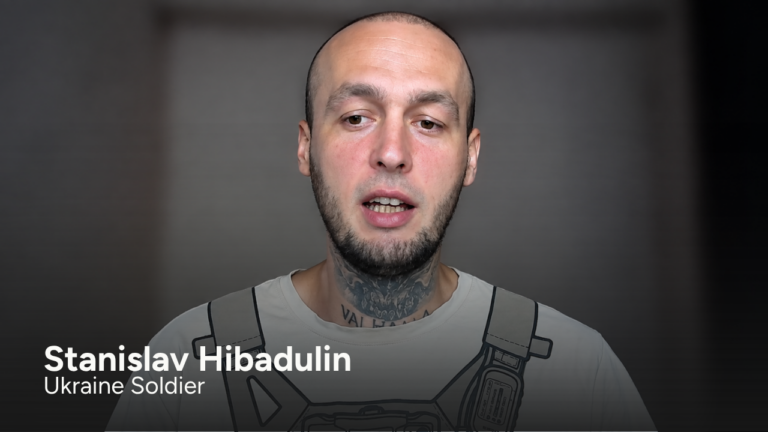
Stan Hibadulin 00:35 Hello human journeys podcast, my name is Stan. I'm a Ukrainian soldier who fought in the war against the Russian Federation. I got four bones, critical wounds. One of them was PTSD and I got healed. And today's story is about my healing.
Jason Najum 00:59 Hmm, your human journey story. Well, thank you. Thank you for sharing with us. And just for now, we will we can switch to Ukrainian so you can feel more comfortable and tell your story in a more natural and and complete way. So we have an interpreter here, so thank you everyone. So Stan or Stanislav? What do you prefer? Stan. Okay, Stan.
Stan Hibadulin 01:24 It's okay, Stan.
Jason Najum 01:28 Your your human journey. Did your human journey begin with the war specifically? I mean w how would you describe your state of mind, your mental health before the war started?
Stan Hibadulin 01:53 [speaking Ukrainian]
Stan Hibadulin 01:56 [speaking Ukrainian — interpretation follows]
Andriy (translator) 02:15 Mm.
Andriy (translator) 03:13 Mm-hmm. So I can say with certainty that my my journey started before the the the war and so I I always felt like defending people and so people who are who are weaker and and I wanted to to protect Ukraine because I love Ukraine and
Stan Hibadulin 03:14 Yeah.
Stan Hibadulin 03:20 Okay.
Andriy (translator) 03:43 I vountiert ez a fiter to protect Ukrain in the world sorry. [speaking Ukrainian]
Andriy (translator) 04:18 Mm so when the war in Ukraine started, I realized that Ukrainians are very very similar to myself because they are free people.
Stan Hibadulin 04:19 Yeah.
Andriy (translator) 04:34 And I felt the need to protect those people.
Jason Najum 04:38 Mm-hmm. Yeah. I can I guess I so do you even before the war started or maybe before you even started fighting, could you feel b the the pressure, the stress, maybe the the mental maybe even some trauma before you entered the battlefield, before you actually physically entered the war, like this kind of you know, does the does the PTSD start early? Does it you know some?
Stan Hibadulin 04:59 Yeah.
Jason Najum 05:10 How do you how do you feel about that?
Stan Hibadulin 05:14 I can try answer in English if you want. So definitely in my childhood I had traumas and those was revealed in my psychedelic experience in my psychedelic trip and I realized that my childhood trauma are linked to the thing that I fought in the war that they made me to to do a decision, to make a decision to go to the war. And for example, one of them what I said is what I love to protect people. And in my childhood I had some traumas that made me
Stan Hibadulin 06:09 to choose the the path of the warrior, to choose the path of the war. And I definitely can say right now that I feel the that that connection of the something more sub something spiritual of my path.
Jason Najum 06:32 Mm. Yeah. And hmm. And often I've spoken to other soldiers and war veterans and the the experience of war, the experience of PTSD and trauma can bring up the past traumas we didn't realize. I and maybe we can talk about that later when we speak about your therapy, that you know, intense situations like war or just serving in the army can
Stan Hibadulin 06:45 That'll
Stan Hibadulin 06:57 Let's see.
Jason Najum 07:02 bring up the traumas that were hidden and military life and especially war can be like an accelerant, can boost, can increase the things that were, you know, behind the under under the surface.
Stan Hibadulin 07:13 Absolutely.
Stan Hibadulin 07:17 Absolutely. I know that that's the w that's the reality, that's what's happened to me and I understand that the that affected me to to join the war to to find myself there.
Jason Najum 07:37 Mm-hmm. A sense a sense of protection. You want to be a protector. This is a nice feeling to have. That's a good one. so maybe a little bit of just detail. you volunteered, you started to you were involved. if you want whatever details you'd like to share about the actual, you know, reality of of the war, I mean you were
Stan Hibadulin 07:41 Yes.
Jason Najum 08:07 eventually injured, you had you lost part of your leg. Is this correct? Yeah. So anything you want to amputea. Hmm.
Stan Hibadulin 08:14 Yeah, that's correct. I got an amputation with the left leg and and other critical injuries in my abs.
Jason Najum 08:26 Mm. I mean, anything anything you like to share about this, whatever details you feel comfortable is
Stan Hibadulin 08:27 Last injury.
Stan Hibadulin 08:34 Yes. I will tell a story which is also linked to my healing and my PTSD. So firstly it was PTSD and the reason why it happened because I lost my soulmate in the war in the battlefield so F my first injury I got in twenty eighteen before the full scale invasion. And me and my friend we got a critical injuries. He got a critical injury in the
Stan Hibadulin 09:24 Fraud. Fraud. Yeah, he got an injury in the in yeah.
Jason Najum 09:26 Uh-huh. I mean w we have we have a translator at your disposal if you like.
Andriy (translator) 09:31 Yeah, yeah, just jumping in, like i if you're looking for a word, just feel free to ask me. So like I I I see that your English is very good, but if you're looking for a word, just feel free to ask me.
Stan Hibadulin 09:37 Okay.
Stan Hibadulin 09:42 Thank you, thank you. So he got an injury in in the front and I got an injury in my right leg so my artery was injured and the other shrapnel got into my stomach and I got amputee of the spleen so I lost roughly three liters of blood and my friend
Stan Hibadulin 10:17 died because of the critical injury. At this time when we got e evacuated from the battlefield and I was losing my consciousness. In this state of mind, in this
Stan Hibadulin 10:36 I realized after that nobody is willing or it's not possible to
Andriy (translator) 10:54 Should I just
Stan Hibadulin 10:55 But it hard to be? Yeah. So nobody can lie to yours to yourself when you're you're critically injured and in this state
Andriy (translator) 10:56 Light yourself.
Stan Hibadulin 11:12 when I was losing consciousness and I understood that probably it could be the last seconds in my life I was praying to the God to leave my friend alive and take my soul. So that's how strong the love was and how I honored him and how I respected him. So after I lost my soulmate in the battlefield and main reason of my PTSD was losing a friend, blaming myself of being
Stan Hibadulin 12:05 [speaking Ukrainian — interpretation follows]
Stan Hibadulin 12:10 [speaking Ukrainian]
Andriy (translator) 12:13 That I was guilty for his death.
Stan Hibadulin 12:15 Yeah. I was blaming myself or guilty of his death. So that was the reason of my PTSD.
Jason Najum 12:17 Well.
Jason Najum 12:22 Mm.
Jason Najum 12:26 Yeah. I mean, I have to tell you I'm feeling this very deeply and thank you for sharing this. You know, I'm just imagining you know, I have a couple of soulmates in my life also friends, and I I can't imagine and just to imagine it, even just imagining it, I felt it very seriously, so I can emp empat I have the empathy for you and Yeah, and so this is a a traumatic event that is very you know, almost impossible and but you continued you you physically physically had some healing and then you continued back as a soldier?
Stan Hibadulin 13:16 Yes. After eight months of rehabilitation, I got back to the front line and I was fighting and one day I got injured by anti tank anti tank missile. So the enemies striking the missile and it exploded nearby so like roughly twenty centimeters for me and that was the second injury at that time I was taking a pills of blood like
Andriy (translator) 14:11 And blood thinners.
Stan Hibadulin 14:13 blood thinners and other pills and I got also critical loss of the blood and
Stan Hibadulin 14:27 after b after that why I was coming back and to the war because I was willing to
Andriy (translator) 14:42 Revenge.
Stan Hibadulin 14:43 revenge I was willing to revenge for my soulmate Ilia so that was why I was coming back always to to to have a revenge. And my third injury was amputee of the left le left leg I stepped on the landmine So that's my stories of the injuries. And after that, after everything, I had a PTSD.
Jason Najum 15:18 Hm. Okay. thank you for sharing this. And you know, I'm I'm not I'm not Ukrainian and but I I just to say thank you anyways, just as a human being for for what you give. You know, I I I don't know the details and I don't know what it's like to live it, but I guess I just say thank you.
Stan Hibadulin 15:38 Okay.
Jason Najum 15:47 A general thank you. Yeah. yeah, okay. So I guess we can move from the physical. You had enough physical things happen to you for many lifetimes. I think it's enough. We can yeah. And after these last injuries, maybe just tell me where you were.
Stan Hibadulin 15:47 Thank you I really appreciate that. People does all
Stan Hibadulin 16:14 Yeah.
Jason Najum 16:16 I'm I'm assuming you stopped being physically in the war. So I guess you left the battlefield and you kind of tried to go back to to normal life. And is this when the the PTSD became obvious to you? Maybe just tell me. We'll maybe now transition to the story of of psychedelic therapy and and healing. So maybe let's talk about where you were as a person. what you were feeling, you what how it was affecting your life and your relationships and you know, and then we can take this to how you made the the step to actually go for some therapy. And please please and you and you to make it if you want to go in Ukrainian, please as you like.
Stan Hibadulin 17:02 Yeah, sure.
Stan Hibadulin 17:09 Well. What is comfortable for you because I I think it's it's okay to try to practice my English. Yeah. So
Jason Najum 17:20 Sure. It's very good. It's very good.
Stan Hibadulin 17:27 My first time when I when I felt that I have something non physical, I mean like a PTSD. It was after six months when I left the army
Stan Hibadulin 17:49 I didn't know and and I I didn't felt before something like that. Firstly it was my panic attacks. So it was really strange for me. I didn't know what is that and I started to visit the doctors and try to find w what is happening to me because also I had a feeling [speaking Ukrainian — interpretation follows]
Andriy (translator) 18:25 I was suffocating.
Stan Hibadulin 18:27 I was so I I I I I had a feeling that I I was suffocating and I don't have the air to breathe and s like something bad should happen. And I went to the doctors and tried to find what is happening to me and they said that that's not a physical thing, everything what you are telling to us is mostly about mental health. Yeah and they suggested me to go to visit a psychiatrist. So next days I visited a psychiatrist and we started the healing like in a normal procedure, how it looks like in a right now. And I I had antidepressants for one year and a half and I was speaking to different veterans even from the United States who fought in Afghanistan and I was wondering like what do you do with your PTSD, how you cope with that? And they told me I do I don't do anything so I I'm living with my PTSD mostly fifteen years and nothing helps me. And at that time when I started to take antidepressants, somehow they helped me but inside of me I I felt that panic attacks happens. They happen, but they are priglosing.
Andriy (translator) 20:28 They're like muffled, muffled.
Stan Hibadulin 20:30 They're yeah, they're like muffled. And when I stopped taking antidepressants, we decided with my doctor to to stop taking them. Like two months I felt alright. And after that I I got new panic attacks and everything was following like like it is was not just panic attacks, I had a depression and an anxieties. Sometimes I didn't have like strength to wake wake up and go to the shop and do my my groceries. Yeah, so
Stan Hibadulin 21:21 And you asked about the relationships. It definitely affected my relationships. So
Stan Hibadulin 21:33 I was in a relationship with one girl, we will live together, but PTSD Also affected my relationship and we
Stan Hibadulin 21:54 [speaking Ukrainian] Yeah, we broke up. Yeah, because she didn't have the power to resist everything was was happening to me like
Andriy (translator) 21:58 Yeah, we broke up. We broke up.
Jason Najum 22:00 Mm-hmm. Mm-hmm.
Stan Hibadulin 22:14 And one day even I I will I will try to explain my feelings at that state how how it was. So one day I went to the balcony and I was just thinking to what what I love more, like potential like family children like children family or war and child and family didn't have any benefits, any like it all my life it was about the war, so s how strong I was loving that and I was thinking every day to come back to the war. and my experience of in my life of smoking cigarettes, alcohol, sugar or other substances, I realised that the war is the strongest strongest drug in the world.
Jason Najum 23:30 Mm-hmm. Mm-hmm. Yes. and there I mean this is happening and once when you're living inside it, it's it's kind of difficult to s to see it from a distance because it's it's happening to you. But I guess there was a moment where you had a realization, okay, mm maybe the antidepressants are kind of working a little bit, but not enough. I need to I need to do some I need to do something else. Like This is not the right place for me. I need to, I need to move forward. There was a moment where you had this realization that you have to.
Stan Hibadulin 24:09 Yes, yes, yes, definitely. So when when I stopped taking antidepressants in two months I was two months I was feeling all right, all right. And it was b was beginning of the autumn of the fall and I had new panic attacks and I I called my doctor and asked what's happening, like I got a panic attacks. And he said, that's That's completely right, li like now it's autumn and it can be. And I asked what I have to do and he told me like you have to take antidepressants antidepressants again. At this time I realize they will not hail help me. They'll they will not help me. And that was the first thing that I think mm made me found the path to find to find the healing because firstly you have to realize that you have a problem and secondly to to find a solution. So that was after I was trying to find a solution and accidentally
Stan Hibadulin 25:36 I was visiting a tango dancing club with one girl. We were dancing and one day I texted I texted to her that like I'll stop visiting dancing because I'm I was I registered for hospital for mental health hospital. I was ready to do everything w at that time, like to take every pill what they will subscribe and everything to to heal myself. And she said like a don't like don't rush because today I met my friend and he's working with guys with PTSD. and I accepted to meet him. I was thinking I was thinking it's just an simple psychiatrist or psychotherapist and we met and we were talking about live things and all of that stuff. And the problem is not the problem but interesting thing was that my in my Before the war I was a leader of the gang who was fighting against drug dealers and pedophiles. So my vision about the drugs was completely against that. So strict against that. And we were talking and we started to talk about the method, how he heals, and he said he treat
Jason Najum 27:27 Yeah.
Stan Hibadulin 27:37 streets and heals people with psychedelic psychotherapy and I got shocked instantly after that. And I was wondering there are any science research, clinical research or something like that. And he said yes, like confident. He said, hey yes, there are, you can Google and try to find And at that time it was the second clinical research on MDMA in US. First phase with South Ivan. And I saw the results and I decided to to try psychedelic assistance.
Jason Najum 28:31 Mm-hmm. very interesting. I also dance tango, so maybe one day we can go to Milonga and we'll see. interesting. So you had this chance, lucky encounter with someone, and this opened the path for you to try this to try this therapy. so specifically, so this person helped you get involved and and and plan
Stan Hibadulin 28:40 Yeah.
Jason Najum 29:01 The therapy for you?
Stan Hibadulin 29:05 Yeah, he told me what to do to how to prepare myself to to the session. So I had a couple of days of dietary and thinking about intention.
Jason Najum 29:24 Intention, yes.
Stan Hibadulin 29:25 Yes.
Jason Najum 29:29 And your first your first therapy was where where did where did it take place? Or you don't have to tell me details if it's if you don't want to. But it lets maybe or you can tell me which which was it's it was psilocybin mushrooms, correct?
Stan Hibadulin 29:42 Yeah, it was psilocybin mushrooms. Yeah, and
Stan Hibadulin 29:51 When I came we started the session. also one thing what I w wanted to tell you. I I visited my doctor and asked about psychedelic assisted therapy what sh he knows about that. And he told me like he was present in Mexico in Mexico at one session. like ceremony and he saw how it looks like but he said like be careful because there is a chance that you won't come back so that's a very dangerous thing and yeah and he frightened frightened me about that and when I came to
Jason Najum 30:39 Yeah.
Stan Hibadulin 30:48 that guy who healed me who who was providing therapy I asked him about about that and he said he said like that's a myth that's not not true I don't know how people are sharing those
Jason Najum 31:14 It's stigma or myths or yes. Yes.
Stan Hibadulin 31:15 Migma, yeah, mix. Yeah. And he said like
Stan Hibadulin 31:23 There isn't any story of any accident that no somebody didn't came back from the psychedelic assisted therapy like from the trip. And Yeah I'm here I I'm alive.
Jason Najum 31:35 Yes. Did you come back? Are you here? You are you came, you're back? Okay. so maybe maybe you can just I mean we could talk about the the actual trip, but I I actually prefer since this is the kind of the human journeys story, we want to make these conversations to give like access and it education and permission. So like for example, someone like you who never tried it before, imagine a few years ago, So, you know, we you can talk about what you experienced during the trip, if you like, if this was important for your journey. I I like to focus more on, you know, the change that happened within you, how you felt after, how this improved your PTSD and how it improved your relationships. But also if it happened during the trip, share whatever you feel you think is important for the for the story.
Stan Hibadulin 32:34 Also
Stan Hibadulin 32:42 Yeah absolutely. I will tell that shortly. So in my trip I met my soulmate and he was teaching me and trying to convince that it's not a good thing to blame myself. So like he feels better there in in that world. And also in my psychedelic trip I met the God and I fail and I felt a massive love, the love that I didn't felt before and that that life love absolutely changed my life. So what I got after this session I definitely got healed and I didn't have panic attacks from that day. So now it's roughly yeah five year and a half. I didn't I didn't have any panic attack and I didn't take any antidepressant pill or something like that. So The life completely changed. I feel more connected to the God. I feel myself more spiritual awareness. Self-awareness and
Stan Hibadulin 34:21 I can definitely say I had a post post-traumatic growth because it was like the interesting thing happened that I I started to read and learn about post traumatic growth after it happened to me. So I started to learn new musical instruments how to how to make music. I started to believe in God. I in every every day and every step in my life, everything what I'm doing, I'm doing with the love and God. That's how it changed me. So what else?
Jason Najum 35:24 Yeah.
Jason Najum 35:28 I mean that's that's a lot. yeah. so I I guess mm we can go back to to what you were saying.
Stan Hibadulin 35:30 Yeah.
Jason Najum 35:42 Seeing or feeling your old friend during the during the trip, I can imagine that this feeling like a relief, like removing removing the burden, the weight from you, because I guess you felt guilty or you know, and him kind of telling you that it's it's that it's okay.
Stan Hibadulin 36:04 Yeah. Yeah. Thanks.
Jason Najum 36:11 So I guess th coming out of of your of that ceremony immediately you felt much lighter, much much easier, like they took the took the weight off your shoulders.
Stan Hibadulin 36:27 Yes, yes, absolutely. So if you don't mind, will have a second here.
Jason Najum 36:36 Yeah, please.
Jason Najum 36:49 Some technical problem?
Stan Hibadulin 36:52 okay.
Stan Hibadulin 37:20 Okay, yes. So.
Jason Najum 37:22 Okay. Yeah, from my side it shows you're still connected and no problem. I see it here. why don't we why don't we do one this answer in Ukrainian because maybe we'd like to even have maybe some clips that we can share with maybe a Ukrainian audience later. So maybe if you don't mind you can you could answer that to explain
Stan Hibadulin 37:28 Okay.
Andriy (translator) 37:34 Okay.
Stan Hibadulin 37:37 Yeah.
Stan Hibadulin 37:42 and we'll
Stan Hibadulin 37:48 Yeah.
Jason Najum 37:51 the again, like the benefits that you had from the therapy, the relief, you've seen your friend, the the love. Maybe just repeat a a a a version of that in in your own voice in Ukrainian. This would be nice. Yeah.
Stan Hibadulin 38:14 after a psychological therapy Yeah.
Jason Najum 38:22 Sorry, it could you bring the mic the microphone kind of closer to you? Let's see. Yeah, yeah.
Stan Hibadulin 38:22 See you later.
Stan Hibadulin 38:26 Yeah.
Stan Hibadulin 38:31 Can you hear better right now?
Jason Najum 38:33 I think so. Yeah, I think so.
Stan Hibadulin 38:37 [speaking Ukrainian — interpretation follows]
Stan Hibadulin 39:59 [speaking Ukrainian]
Jason Najum 41:14 Mm, Andriy, maybe a a quick translation since
Andriy (translator) 41:15 Sure, sure, sure. So yeah, so after psychedelic assisted therapy, I felt completely healed. In four hours, it did for me what antidepressant hadn't been able to do in years. And from that that day on, I stopped having panic attacks. So for five and a half years, I haven't taken any pills, I haven't experienced any symptoms of PTSD. And during my psychedelic experience, I saw a friend who died in the war. I realized that there was no no point. Well, he told me that there was no point in beating myself up over his death, that he felt very good there. And I saw God and I experienced a kind of love I'd never received before in my life. So and afterward, I experienced what I could call a post-traumatic growth. I started learning musical instruments. planting flowers near my house and I believe that that veterans need to to have access to this kind of medicine. the healing and and the love I experience cannot be kept hidden. my so my friends, soldiers, and even civilians who are suffering from depression, PTSD, need to to have knowledge about it. And I cannot continue walking the earth without spreading that knowledge. I feel that I need to share this. I feel like I'm a Prometheus who needs to carry the knowledge to the world about the possibility of such healing.
Jason Najum 43:05 Mm. Thank you for that. That's that's beautiful. And and maybe in some way you are continuing your protector mentality, but now in a different way.
Stan Hibadulin 43:12 So.
Stan Hibadulin 43:19 Yes, yes. Thank you. Yeah. Could be.
Jason Najum 43:21 Right? Yes. Mm-hmm. Yeah. Дякую! so and I guess this is a a moment to talk about you believe inhered States of Mind, we believe in the potential of these therapies to help people. We'd like to increase the access. And maybe we can talk about in your part of the world.
Stan Hibadulin 43:28 Thank you.
Jason Najum 43:51 Is it still you know, I use the word taboo, like it still has a a negative thinking or a stigma and the the myths around it are still is it quite strong in in your part of the world? We have to fight against these old thinking. How have you experienced this?
Stan Hibadulin 44:11 Yes, I would say it's quite strong so our stigma is Stronger than in Europe I wasn't I never was in US or other countries, but I was in Europe and I can say it Confident that in Ukraine stigma is really strong and but I think from what I see, how the war affects everything in our country right now. Even though the war is horrible, Ukraine got a few sore increases in different ways, like in tech, in drones and other things. And I can see that Ukraine could be a country who can... can learn how to heal trauma in such a specific way with so many patients who really need treatment. And I believe Ukraine can be a... country who will lead the world and show how to manage and cope the problems with mental health. But the only thing what we need, we need a
Stan Hibadulin 45:54 Such a same confidence and strength in a power, in a government, same how the Ukrainian soldiers and people have. So we don't have it. Actually, I think, I mean, in a mental health, who are in a mental health, I don't see any changes. to try to change somehow, to solve the problem. But I think we are the people who will change that.
Jason Najum 46:35 Mm-hmm. Yeah. maybe maybe that's a nice thing to express in Ukrainian, maybe to an Ukrainian audience. What do you think is the is the future, the potential? I mean, your country and your people have have suffered and are still continuing to go through this this this terrible moment and maybe speak about the the opportunity to grow, to heal. You know, whatever you think is the potential in the future for for you, your people, for Ukraine in this subject.
Stan Hibadulin 47:14 [speaking Ukrainian — interpretation follows]
Andriy (translator) 49:16 Mm-hmm. So I think that Ukraine can become a world leader in understanding how to deal with trauma, depression, PTSD, and other mental health disorders. So n right now Ukraine is fa facing a mental health crisis. According to the Ministry of Health survey, around six million may be experiencing mental health problems. So We need to convince people that changes to mental health and laws are necessary. Well in particular convince the the government who is definitely not not doing enough because right now we are not seeing the results we need. So I want to see the same determination that we have from our soldiers, the warriors, I want the same determination to come from from the government. So so the same determination that our soldiers and warriors showed in twenty twenty-two and twenty and even before in twenty fourteen, protecting the motherland, protecting Ukraine. So our soldiers have protected Ukraine and and have changed the way the modern war warfare is fought. So we want the same determination from the government when it comes to mental health. And it's not it's not only about Ukraine, it's about healing humanity. And Ukraine has gained an enormous amount of experience dealing with with trauma, PTSD, and now we can learn how to heal people and share this knowledge with the world.
Jason Najum 51:02 Hm Bravo. Yes. it's it's amazing that, you know, even from such difficult moments and you had a very difficult journey that we can stay focused on the on the future and and the positive. So I will I will give you you know my congratulations to to that you're able to maintain this positive view. And it seems like just by your personal story and your personal courage, you know you can be a inspiration and hopefully people can follow this and and I'm happy we're we're happy to help this also. yeah. Maybe just a s a small comment, we should just talk about you know this is quite a positive story. Do you think that there is any people should be careful. We should tell potential
Stan Hibadulin 51:47 Okay.
Jason Najum 52:02 soldiers or veterans or anyone with PTSD, you know, let's let's make sure you do it properly. Let's make sure we do it with a guide. Like any any words of I will say caution or any from your experience. You had a positive one, but anything like this?
Stan Hibadulin 52:25 I will try to tell that in Ukraine because I think that part is really crucial.
Stan Hibadulin 52:36 I'll tell in English and after in Ukrainian. So I think people should be aware that's not a magic pill. You won't get healed just taking those substances. Treatment and healing is more about taking substances. It's about... philosophical things, social things, economical things and also how How the... session looks like, both the set and setting, being in a safe place, and it definitely should be provided by a professional, people who knows how to provide psychedelic assisted therapy.
Jason Najum 53:37 Yes. Yeah. I mean, especially for the the kind of mm military veteran in and the PTSD group. I mean PTSD can be severe for certain people and if it's not in the right if it's not in the right container, then it can be quite stressful for someone if they don't have the right support and and preparation. So yeah, I think that that's an important point. is there is there anything else we'd like to share? I mean, we're coming to the to the hour. time here. I feel I mean you I'd like to say how how do you feel now as a person? how has it how has it changed? But you've already kind of you already've mentioned this. You you feel that you've left many of these traumas behind you. I mean the traumas stay with us always. We have it, I have it, we all have it. It's somehow always a a part of us and it makes us who we are. You know, I mean, somehow we don't want to forget our traumas, but we want to move past them or be have a more healthy relationship with them. how do you do you feel now in in some weird way that are you a more complete person even with the trauma, even with the injuries? and now you you put this healing. Do you feel like a more complete person even with the human journey that was quite, you know, difficult.
Stan Hibadulin 55:12 answer in such way here in Ukraine like I have many interviews and quite
Stan Hibadulin 55:30 Quite usual question what I had in interviews. If you knew that you'll have the same injuries in the war, let's imagine that you come back in 2014, will you join the war? And I definitely say yes. I definitely say yes. And that's the answer to your question because psychedelic assisted therapy gave me what I said like a spiritual things and feeling that I'm in the right place. That's the one crucial part of post-traumatic growth. Feeling that you're in the right place in the right time. And right now I'm feeling that I'm doing everything right.
Jason Najum 56:26 Great. Thank you. maybe you wanna say this in in Ukrainian just to close it off in in your mother language.
Stan Hibadulin 56:34 Okay.
Stan Hibadulin 56:39 [speaking Ukrainian — interpretation follows]
Stan Hibadulin 57:30 Yes, that's everything. Yeah, there... Yeah.
Jason Najum 57:32 Everything? Okay.
Andriy (translator) 57:33 Mm-hmm. So So I'm often asked by by journalists, though if you had known about all the injuries you would suffer, coming back to imagine you have a time machine, you can come back to twenty twelve to twenty fourteen, would you still have gone to the war? And I say yes, I would still have gone. Even knowing everything I had to go through, I would still do it. So psychedelic assisted therapy gave me spirituality and spiritual understanding that I'm in the right place at the right time and all of this is part of my destiny.
Jason Najum 58:18 Hmm. Thank you so much, Stan. And I really appreciate you sharing your story. And we'll continue to work together on other things on this subject. And we'd love to help you and help your organization and and all the people who need it as much as we can. And I think I'm going to go and make a telephone call to all my soulmates now and tell and tell them that I love them.
Stan Hibadulin 58:46 Yeah, that's the right thing to do. Yes.
Jason Najum 58:47 Because you were reminding me too. So That's the right thing to do. Thank you for that. Andriy, sorry you didn't work so much. Stan's English was so good that you barely had to work. So but I really again thank you. And I I look forward to continuing this conversation and and and the future and your future and the future of Ukraine. yeah. Thank you again.
Andriy (translator) 58:58 Yeah.
Stan Hibadulin 59:19 Thank you. Bye bye.