Transcript
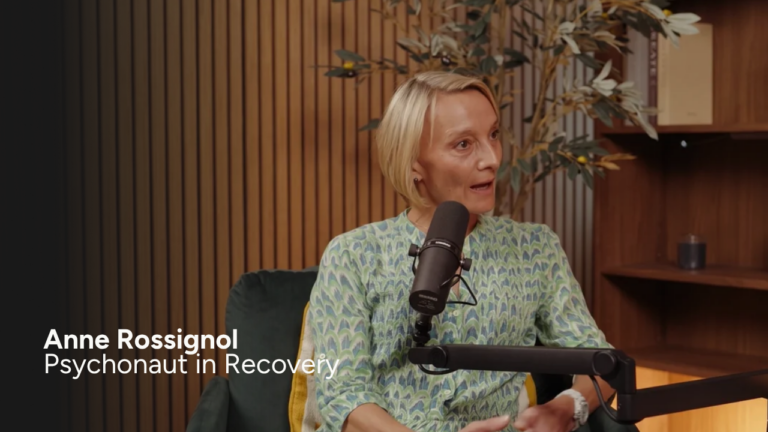
Anne Rossignol 00:00 I realized I couldn't stop drinking. I had deleted all my numbers, I was not doing drugs anymore. I wanted to see my shadow and I got love, beauty, and joy. And these are your shadows. These are the parts of your life you're not accepting. Where I really truly experienced self-love for the first time in my life.
Jason Najum 00:20 Today's guest is Anne Rossignol, researcher and addiction specialist whose personal journey with psychedelics led to healing and recovery. She now works with major institutions, helping to bridge personal experience and psychedelic research. In the treatments of addiction. Welcome to the Human Journeys Podcast by States of Mind. Real people, real stories, life-changing conversations of personal growth and healing.
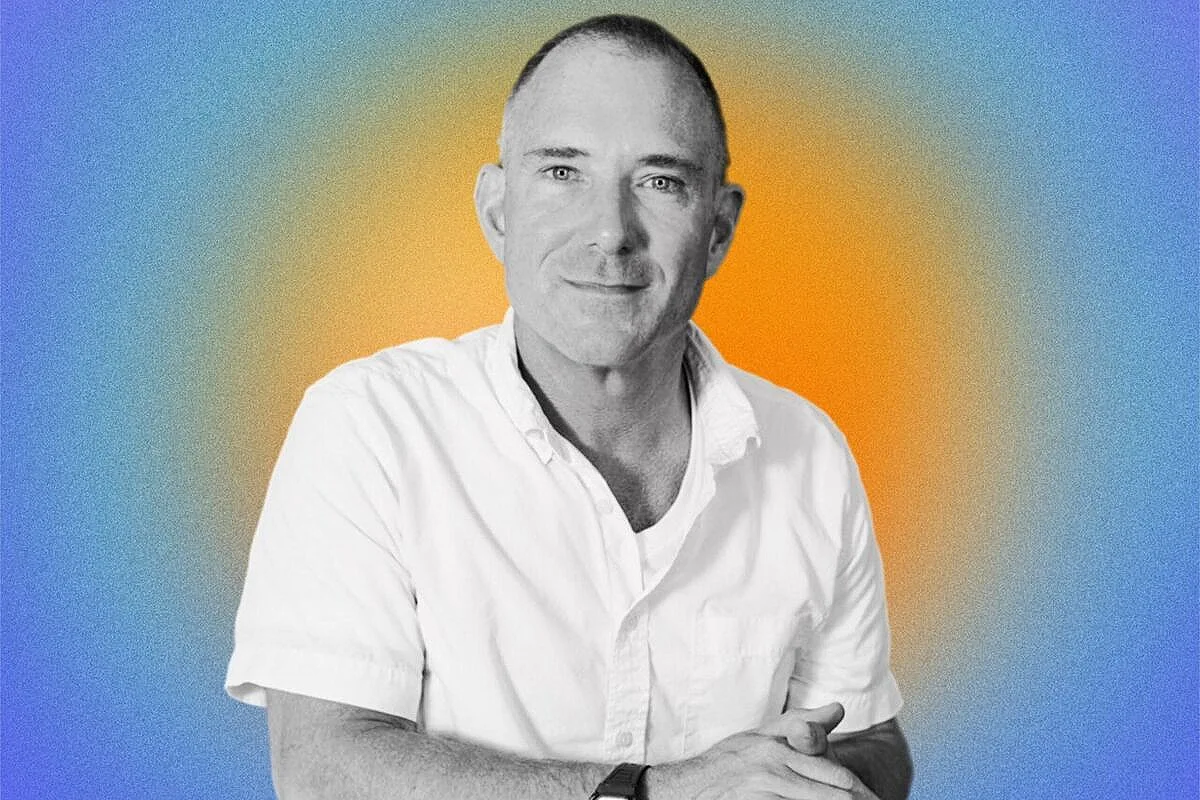
Max de Rosnay 00:41 Anne Rossignol, welcome to the Human Journeys podcast.
Anne Rossignol 00:44 Thank you very much for having me. It's a pleasure.
Max de Rosnay 00:46 Yeah, it's, so just for context, the listeners, so we were put in touch via mutual friends who we both know quite well. And actually, it three people who mentioned you and they all said you have to talk to Anne. So I'm very grateful that you're here. It's a sunny, warm London day. And today we're going to be talking about a topic that's close to both of our hearts, but it will be from your perspective. And it's the topic of addiction, psychedelics, recovery, which is, yeah, I would argue a sort of growing phenomenon within recovery cycles, the sort of intentional use of psychedelics, complementing perhaps 12-step based recovery frameworks. So this will be your story. From your perspective, what it's psychedelics mean to you, what recovery means to you, and anything and everything in between. So maybe, yeah, before we start getting into that, can you introduce yourself? Who is Anne? Where are you from? What's your story? Yeah, I mean, sort of lay the land for us, for our listeners.
Anne Rossignol 01:58 Sure. So my name is Anne. I'm fifty two years old. I was born in France, but came to England about thirty odd years ago and made a home here. I was having a pretty normal, successful life as a London entrepreneur. I was thriving compared to my pals in France. And I embarked on a entrepreneur journey that took me all sorts of places, weird and wonderful adventures, loads of travel, the setting up, you know, offices in in Sydney, in Barcelona. I was I was on the mission and my mission was to be successful in business. And along the way, I got lost. And about seven, eight years ago. The wheels came off, and I found myself in recovery in an AA meeting, and I thought my life was over. In retrospect, it was the beginning of a wonderful new chapter, but at the time I didn't quite see it th that way. and I think we'll we'll go into more details on the second chapter. But the first chapter was really about taking a revenge on life. You know, I had so much to prove to A lot of people. and I I was on a mission. A mission to make money, a mission to impress people, to be on the front cover of Marketing Week. That that was my goal. And I take a lot of those boxes boxes. but everything I gained I lost very quickly. so that that's that's me in a nutshell.
Max de Rosnay 03:47 So where do you think that sort of revenge for life came from? Like if we go back to Anne as a child, as a teenager in France growing up, yeah, where do you think this sort of drive came from?
Anne Rossignol 04:04 I think it was, and I know, I it's not, I think, is I know it was from that constant rhetoric of you're not enough. And a lot of things I've discovered in the recent years bring me to a fellowship that I'm a member of, which is called ACA, Adult Children of Alcoholics and Dysfunctional Families, where I realized that my undiagnosed ADHD as a child led to a form of bad treatment from my parents, from the teachers, the school, where no one could quite understand me. And being told constantly, I'm either too much or not enough. I don't fit in. Why can't you just be like this? Why can't you just be like everybody else? And I wasn't. And there was a really strong part of me that knew that I was different and there was nothing wrong with being different. But the rest of the world was telling me otherwise. So I think that's where that rebellious streak, that determination came from, is I am not like you, and I will prove you that it still works. I was not far off in terms of understanding the difference. I didn't know how to capitalize on that difference. I never was given any guidance. So I went in blind by myself with a lot of discipline, and I have to credit my ballet years for that, to have in you know, in in given me that notion of discipline and doing things whether I like them or not. and and being self reliant. That that served me well for years and years and then didn't. But that comes I I would say that comes from there.
Max de Rosnay 05:53 And so when did that self-reliance or that sort strong-willed nature of yours come to an end? So when did you say to yourself enough is enough and why? So what brought you to your knees essentially?
Anne Rossignol 06:10 What brought me to my knees r truly was my first relapse. I got into recovery for the first time in twenty eighteen with the idea of saving my marriage. And I was really not convinced. I was doing it because I'd asked my ex-husband to go to rehab. I thought I was married to an alcoholic and a drug addict. And ironically, my first fellowship was actually Al-Anon, which is a fellowship for the the wives of and members of the family. and then when my ex husband came out of rehab, I realized I couldn't stop drinking. I had deleted all my numbers, I was not doing drugs anymore, but the alcohol consumption was through the roof. So I had to admit I had an issue with alcohol and and went into AA. I did that for eleven months. And then my marriage collapsed. And then I thought, well, I was only doing that to save my marriage. I don't need to be here. I can go out there and, you know, enjoy my life. And enjoy my life I didn't. All the yet's happened and I landed in rehab. It was Thanksgiving 2019. And that's when self-reliant self-reliance truly failed me. And that's where for the first time in my life I understood where humility was. And I was on my knees. I surrendered and I followed every single advice I was given or suggestions.
Max de Rosnay 07:41 That's quite a big shift. And before we get to the sort of the new and the end of self-reliance and self-will and all of that, can you maybe describe to listeners what it's like to be addicted to alcohol, what it's like to feel powerless over a drink or substance? I mean, I know that you also had a problematic relationship with cocaine, which is, as we know in London, a... A common theme, cocaine and alcohol, it's rife in this city and in most of the UK. yeah, can you maybe just talk to us, like, what's it like living in it, inside addiction with cocaine and alcohol?
Anne Rossignol 08:19 in in in complete denial as well. living in it in complete denial is thinking I don't need it. I'm just doing it because I want to. And that was my thinking for years. specifically for alcohol. My my alcohol addiction is something that it took me a long, long time to admit to it. My cocaine addiction was far more obvious. And also I had a moral issue. with cocaine, it was of course illegal. and I didn't feel right about it. I was doing it behind closed doors, I was not talking about it. My biggest concern was that no one should find out. I had a secret ingredient that made me feel powerful and allowed me to do all sorts of things I wouldn't normally do, particularly for work. And it came to a point where I realized I couldn't do anything without cocaine. I couldn't pack a suitcase without cocaine. I didn't know how to do anything anymore. I I remember the first time I did my first line of cocaine, I must have been twenty-three, with my first business partner, and it was love at first sight. It was like Where have you been all my life? And now in r retrospect, now that I know I am severe ADHD, I understand why. Because that gave me the boost of dopamine and everything I needed to get things going. My head was full of wonderful ideas, although I thought, but there was a traffic jam of them there. And as soon as I was taking cocaine, I could produce stuff. It was not just ideas, they became realities. I could write business plan overnight. I was on the mission. And I I'm hyperactive in in the type of ADHD. And so I would burn out. And I went through several failures of businesses because I was overdoing it, never resting, never pausing. And I tried to find a way to manage that cocaine consumption so it would serve me without tripping me over. But I never did. I never found that happy medium, that happy balance. I don't think you can, actually. I not not with that substance, for sure not.
Anne Rossignol 10:43 And then yes, I I realised there there were points of my life where I was incapable of doing anything without it.
Max de Rosnay 10:49 Yeah, when I hear of people talking about functioning cocaine addicts or functioning heroin addicts, I just don't believe it. I really don't believe it. Yeah, it's mostly that. And while you were in denial, yes, I mean, clearly must have affected your relationships with your family. I know you have kids and you had a husband at the time. How did that manifest in a sort of family dynamic? Were they...
Anne Rossignol 10:56 I think it's a huge amount of denial.
Max de Rosnay 11:16 I mean, your husband, I assume, was aware because he was also getting into recovery, or at least exploring that path. Your kids would have been younger at the time, but were they affected by it or were they exposed to it?
Anne Rossignol 11:30 Th my initial reaction is to say no, they were not affected by it, but I think it again is denial. They would have been affected by it by the fact that I was present, but I wasn't emotionally present. My children never knew that I was an alcoholic or a cocaine addict. I kept that really hidden from everybody. Even some of my friends didn't know the extent of of the of the addiction. I think it's more on an emotional level. My children were always at school, on time. I was looking after them to the best of my ability. The clothes were pressed, they you know, dinner on the table, etc. etcetera. But I was in my head all the time, or off my head rather, all the time, going from extreme to extreme and and I was an alcoholic but not a drunk. And I would probably be if I was drunk, it was when they were in bed. So they've never seen me pissed, making a a fool of myself. It it was very yeah, very hidden or managed. but I think the the real yeah, the real answer is would be to ask them. I I've I've I've been in denial for a long time. I I'm sure that it has impacted them.
Max de Rosnay 12:58 Yeah, think, yeah, I I can speak. I haven't got parents who are addicts, but I can speak from the experience of the kid and obviously you can too. I think kids are more perceptive than we give them credit. It's, know, a parent might be, you know, giving food on a table or providing in certain ways, but the emotional needs might not be there. And I think kids really pick up on that. And so, yeah, it's, but thank you for sharing that. And so, okay, so you have this. this life, this previous version of Anne, then you find recovery. So you get clean through rehab, you come into contact, start working the steps, 12-step based fellowships. Can you talk to us a bit about that process, that shift from addict to recovery, 12 steps, and then we'll get to the other parts.
Anne Rossignol 13:51 So the the second recovery, the one post rehab, it was a day hab actually, which I think was a very good model. So I would go in the morning, have workshops, see my therapist, work with in a group, and then I would go home at night. I was not tucked away in a lovely mansion away from triggers. I would have to walk past cashpoint, I would have to walk past the pub on my way home. So sl slowly but surely I integrated abstinence into my day to day life. and it was my second time round. I'd already worked the steps during my first attempt, so I had a bird's eye view.
Max de Rosnay 14:28 Can you describe what the steps are actually? Simple layman terms.
Anne Rossignol 14:33 The tw 12-step program of most fellowship anonymous, whether it's AA or NA, are really twelve spiritual principles that are underpinning a recovered life. And you practice them with or you work them with a sponsor. You follow a book called The Big Book of Alcoholics Anonymous, and they help me understand my powerlessness and my unmanageability. Towards alcohol and drugs and life in general. And it really helped me understand that no human power could relieve me from my addiction. And that I had to open up to spirituality. And and then it it takes you to step four and five, where you make the list of all the resentments, all the things that are rattling in in my brain. And resentments. They say in AA is the number one offender. And I had a lot of those, stemming from childhood, stemming from all sorts of encounters. And another sentence I like from the Big Book, he says, we step on the toes of our fellows and they retaliate. And I did step on the toes of a lot of people. My arrogance, my drive to succeed at the time made me do things that I regret. But initially I resented a lot of people and that was festering inside of me. I had to get rid of that. And then we moved on to st step six and seven, which look at your defects of character, that I prefer looking at a defense mechanism. Things that I had developed like self-reliance, like being terribly impatient, like thinking I'm clairvoyant, that I know what's gonna happen and therefore I am going to prepare myself for the worst possible outcome. and all these things I got to see how I had developed them. I had to understand that they had served me, but they no longer did, and to let them go. And then came the step eight and nine, where I made the list of the people I needed to make amends to. That was quite scary, but incredibly liberating and again big lesson in humility when I practice those. And then step ten, eleven and twelve are what we call the maintenance steps.
Anne Rossignol 16:58 where step ten, every night constructively review my day, what I've done well, what I could have done better, what tripped me over today, what sort of fears are still inside of me motivating my every move. Step eleven is prayer and meditation, which is something that I had done a lot of growing up in a Catholic school and was quite reluctant to go back to. So it took me a while to find my higher power. And to practice meditation, because that's not easy when you're an hyperactive cocaine addict in recovery. Sitting still in silence was just not feasible. So I had to work at this and find my own version of meditation, which is very often in movement actually. And step twelve is to try and practice all these principles in all areas of my life and help someone else get into recovery. And that's a bit that I really enjoy.
Max de Rosnay 17:59 I think we'll be talking, yeah, in the next iteration of this conversation, probably about step 11. Given that you got clean through, let's say, quote unquote, traditional recovery methods. But then you found psychedelics. Can you explain how this came about? Why it happened? What was the thinking? Why psychedelics in a recovery setting? Like, because For most people who might know about recovery, or at least from the perspective of 12 Steps, these are abstinence-based programs, meaning that it's taboo, it's not encouraged to use any mood or mind-altering substances. As we know, psychedelics are highly potent, mood or mind-altering substances. So how did that land in your kind of thinking? And yeah, let me take us through that journey.
Anne Rossignol 18:56 For me, it was purely accidental. I had never taken psychedelics in active addiction. They scared me. I had read all sorts of horror stories about LSD like everybody else. And i I discovered psychedelics through a podcast. I was a co-host on Clubhouse during lockdown. And it was purely from an investment perspective. I was looking at disruptive ris disruptive industries to invest in, and discovered psychedelics company, quoted on the Nasdaq. And I was talking about them every week, reading their press release, looking at their charts, and reading the clinical trials and finding it fascinating that we could use psychedelics to treat addiction, treatment-resistant depression, anorexia, OCD. And someone on the podcast in the chat said, Ask me, have you taken psychedelics? And I said, no, I'm in I'm in recovery, one is too many, a thousand never enough. And someone said to me, Have you heard of PIR, Psychedelics in Recovery, and the concept of microdosing? And I hadn't. so I did my research, went to a few PIR meetings, and that's when I started contemplating contemplating it. And it probably took me f four or five months before I actually approached a therapist based in Canada to ask me to to ask her, sorry, to take me through a microdose cycle. because at the time I was two and a bit years in this recovery and three years in my attempt of recovery and I'd done my steps. I was feeling a whole lot better. But I felt stuck. I felt like there was a glass ceiling above my head. That it's all very well left on the twelve steps. I don't think I had a spiritual awakening. I could s feel something was different. I could put my finger on it, but I couldn't really get it. And so that that's that's why I I decided to take the plunge. Initially through microdosing, I I was I
Anne Rossignol 21:16 was not ready to go and take a full dose and to go into a ceremony. I I found that too scary at the time. And I was petrified at the idea of losing my sobriety. I had a lot of people around me in AA who were saying, No, no, no, no, if you do that, you relapse. My sponsor, when I mentioned it to her, dropped me and said, I I'm afraid I cannot sponsor you. you wouldn't be sober and you wouldn't be able to sponsor anyone. You would need to put your time back at zero, etc, etc. But you know what, the calling then was so strong that I thought it doesn't matter, I'm doing it anyway.
Max de Rosnay 21:53 So can you take us through that first time you... So it's a microdose, so not a full-blown experience, but can you take us through that first time you microdosed LSD, psilocybin or what?
Anne Rossignol 22:05 Yeah. I was very anxious. I remember my therapist sent me the capsules from Canada and they sat on the shelf of my dresser in the kitchen and I opened the jar, I smelt it, put it back on the put it back on the shelf, and we had a date she wanted us to start. I think it was Valentine's Day, 14th of February 2022. And the days leading to this, I was worried that I may take too much, that I may like it too much. And but she prepped me really well. And we did an exercise called the Wheel of Life, where you have a s like a pie chart and you divide each segment depending on areas of your life that you want to focus on. And that gave me a bird's eye view of my life as it was before the microdose. And off I went, and I took my first capsules. And the disappointment that day. I was expecting something and nothing. and it's it's a tense of a dose you would take during a ceremony and it is subperceptual. They say it's like a painkiller. You know it's worked because you don't feel pain anymore, but you don't feel anything. And it's the first cycle was interesting because I didn't notice anything. I was being a good student, I was journaling every day, like she said. I was noticing very, very minor things, like my senses. I my hearing got better. The colours were a little bit brighter. My sense of smell, which is already very good, was even better. Not always a good thing when you live in London and take the tube. and that's what I noticed during the first microdose cycle. And then we paused for a couple of weeks and went for another microdose cycle of another six weeks. And this particular microdocycle just connected me with plants. And I didn't have green fingers, I couldn't keep a cactus alive. And then all of a sudden I had green plants in every room in my house. And it was an attraction. And that was very vivid. You know, there was every time I was going to a garden center I would come out with a new plant. And I had a need to surround myself with plants.
Anne Rossignol 24:30 and the contact with nature really happened during that second micro cycle. And the third one was emotional and the softening of a lot of part of me that I was surprised by. This is when I started to have tears that I had not had for years. not floods, but tears. and and the softening, the softening of the armour that I had developed. over years and years of self reliance and, you know, beatings metaphorically. And s so those three microdose cycles was w were done with with her. And then I carried on microdosing on my own until November where I did my first ceremony, I felt ready. and and I went in England with a group and did that first ceremony then In in November of that year.
Max de Rosnay 25:32 Can you take us through that?
Anne Rossignol 25:34 It was incredible. absolutely incredible. Very well held very well held ceremony, which was a good mixture of being with a therapist and also with a shaman and group of musicians from Colombia. And I think there were 19 of us. And the intention I had for that ceremony was to do some shadow work. I felt I was held back by myself. Part of me was holding me back in my recovery. And I wanted to find out what that part was. So that's what I did. I I remember saying the step three prayer, I offer myself to thee to do with me as thou will, relieve me of the bondage of self, that I may better do thy will. Drinking my my cup, and three hours of bliss, the most beautiful I want to say show. the most beautiful experience I'd ever I ever seen in terms of visual and it was a rebirthing experience for me too, where I really truly experienced self-love for the first time in my life. And it was all, if I have to summarize it, it was love, beauty and joy. my teeth were hurting for greening for three hours. And the next day at Integration Circle, I explained what had happened with a as best as I could, because it's very difficult to explain psychedelic experience. And I said, I'm I'm a bit I'm a bit confused because I wanted to see my shadow and I got love, beauty and joy. And the therapist said, These are your shadows. These are the parts of your life you're not accepting. you're not letting that in because you'll probably think you're not worth it. And that hit me like a ton of brick. Took me two years to integrate that message. And it also took me to ACA, where I still am today, working on childhood wound. you know, and going back to what Gabor Maté said, don't, you know, don't ask why the addiction, ask why the pain. And within one ceremony, I I got signposted to where the pain was. And that's where the the following two years was really about.
Anne Rossignol 27:57 digging and healing that wound.
Max de Rosnay 28:01 Firstly, thanks for sharing that. I feel actually bit emotional hearing you share that because my first experience with psychedelics, I got a very similar message to you, was really experiencing love, self-love for the very first time in my life. And I really want to hone in on that point because I think for people like me and you, the concept of love and self-love is very foreign. In childhoods, adolescence, through addiction, Yeah, I speak for myself, but I was crippled by shame and guilt and to really have that experience of self-love, I felt I could give it to other people finally for the first time, like truly. So no, thank you for sharing that. And so you had that ceremony. Did you share these experiences with people in recovery? So like, what was the process or your life? After the ceremony, so you go back into normal civilian life or did you explore other ceremonies or?
Anne Rossignol 29:05 N not straight away. I microdose straight away afterwards on the advice of the therapist to help integration. and and to keep that neuroplasticity because as you said, self love, when you would have said to me self love a few days before that ceremony, I would have cringed. And there was still an element of that afterwards. And so microdosing, having that neuroplasticity to be able to integrate that message without fringing and with conviction was super helpful. But no, I I didn't do another ceremony for another year after that. and even that second ceremony the year after was nowhere near as powerful. I felt it was more of a consolidation rather than a revelation on and I think also the mushrooms were telling me this the message is still the same. You haven't finished integrating what we showed you last year. and the the ceremony that came after that was also completely unplanned. Like most of my psychedelic experiences have been, if not accidental, have be have been brought to me. I didn't seek them. And it was in during that expedition in the Amazon with Mother Ayahuasca. initially I was invited to that expedition. And I was keen to go, it was ethnobotanical, it was in support of some wonderful projects that the El Puente Foundation was doing there. I was not called to ayahuasca and I thought I'll I'll see when I get there. and once I got there I did partake in several ceremonies of ayahuasca and it was very different to psilocybin. And I have to say I was not really prepared for it, so I didn't have real intentions. It was really revealed to me. I came back from from that month away with answers to questions I didn't know I had, with information about myself I had been in denial for years, including, for example, the fact that I was suffering from anorexia. You know, when I first landed in rehab, they wanted me to go into the eating disorder clinic.
Anne Rossignol 31:26 And I told them in no uncertain terms that I wouldn't, and that I was just slim and going through a divorce, that's why I was a bit thin at that time. But I could not recognize that I had an issue with food, that I was starving myself. I just I was never hungry and I didn't see where the problem is. Well the problem was until I drank ayahuasca, and after the second ceremony. I remember waking up at breakfast, being hungry. And the first thought that came to my head was, What the fuck's wrong with me? Why am I hungry at breakfast? And then realizing I'm just normal. That's what normal people do. They eat in the morning. That hadn't happened to me in years. And that shocked me. That's when I realized, whoa. and and the message carried on during the time in the Amazon and the food was Gorgeous, we ate everything that was coming out of the forest or the river. And it was it was delicious. And it's been a battle ever since. I came back and as soon as fears is is fears are triggered, as soon as a bit of stress comes into my life, that's the first thing that goes, my appetite. But now I know this is something I need to work on. That's part of the self love. Nurturing, giving myself food, good food.
Max de Rosnay 32:51 And so how did you? How did you sort of come to terms with the fact that you are a recovering addict, also have an eating disorder? How did you come to terms with going back to meetings and sort of complementing 12-step programs with psychedelics? Like, because that must have been, I don't know, maybe confusing at first or because it's not something that can be shared really in normal meetings, as we know.
Anne Rossignol 33:22 That's why from the beginning of my microdose I was going to PIR meetings where PIR Psychedelics in Recovery is a twelve step fellowship where people integrate psychedelics mindfully in their recovery. It would not be possible to talk about my experiences in a in an AA meeting or in an NA meeting and I never tried. I kept on going to AA meetings for a while. But whilst I was away in in the Amazon, someone from a London from my home group, whom I'd confided in, told everybody that I was not sober. I was in Brazil drinking ayahuasca. And I got the cold shoulder treatment when I got back. and so I I stopped going. and I focused exclusively on the PIR meetings and the ACA meetings.
Max de Rosnay 34:22 So yeah, there's this, I think the notion of a, yes, so when I first came into recovery, the idea of a spiritual solution to my disease was very foreign to me. And I think similar to what you're saying, at least pre-psychedelics, it sounds like you weren't able to have that spiritual awakening or maybe you weren't able to access maybe the spiritual promises that are promised by AA and NA. And you kind of found that with psychedelics. So the question is, what do you think, and maybe I'm not going answer this, but what do you think 12-step programs kind of get wrong? So why do you think some people might be stuck in meetings or in NAA, whatever it might be? Is it a person, is it a personal thing, or do you think it's a problem with how the program's designed? And just for full preface, like... I think we agree on this, think 12-step based programs are the best thing that's available out there for addicts. I believe that at least. It's free, anyone can do it, it's a God of your own understanding. think we complicate it sometimes, but of course it doesn't work for everyone.
Anne Rossignol 35:38 I I think the twelve step programmes and and the and the fellowship meetings are wonderful for newcomers. It's a fantastic container to help someone get clean and sober. they happen every day, especially in London, every day of the week. You've got several meetings. The the the problem with those fellowships is they're not trauma aware or trauma informed. And a lot of people think that all their problems in life will be solved by practicing the 12 steps. And if they're struggling, it's because they're not going to enough meetings, or they're not helping enough newcomers or they're not doing enough of the things that are prescribed within the 12-step fellowship. I think once people will get sober and clean thanks to those programs, it's the right time for them to look outside for additional help. B because we very often go back to the trauma. Addictions, in my view, is caused by trauma. Yes, it is very often inherited, so is trauma. And I don't think step four and five are enough to be able to deal with the trauma. And this is where using psychedelic assisted therapy is a very good way of digging. And there are other form of therapies like also very potent, like EMDR, for example, or breathwork. That can help you touch on the thing that you're closely guarding. And I don't think n conventional talking therapy has ever been able to touch that. I've done that for years, before AA, before NA. And I think the fact that we are not talking about trauma enough b because because most members are not qualified to do that. is is what's lacking. And and the dogmatic approach that this works a hundred percent of the time and rarely have we seen someone fail who hasn't thoroughly f followed our steps. Yes, but to get you to sobriety, not necessarily to recovery. And for me these these are two big distinctions. And I know plenty of people who are twenty, thirty years sober but are not emotionally recovered.
Anne Rossignol 37:59 They're still carrying trauma, they're still ca k carrying all sorts of fears that are robbing them of their serenity. And the notion for me to get sober and clean was to be happy.
Max de Rosnay 38:17 Yeah, no, I agree with that. And I think this idea of being sober, but not being in recovery, I think it's a poor distinction to make because I had that experience too, actually. When I first got clean, I was sort of going to meetings and doing what my sponsor told me to do, but my thinking and my emotional wellbeing was still completely fucked up. word Mike and I'd look for things outside myself to kind of soothe that emotional pain whether it's sex, gambling, sort of political beliefs, whatever it might be. yeah, psychedelics for me really helped me find equilibrium inside myself. I saw, I read a really good quote from a study recently, was, what was it? was, yeah, psychedelics can be the engine. but then the 12 steps is the transmission. And I think that's why sometimes complementing psychedelics with 12-step based programs, like the meetings, the community can be really good sort of integration mechanism, because as we know, these experiences with psychedelics can be so overwhelmingly powerful. They can be, they might not be, but they can be in certain cases. If you haven't got that container to process that, then I've seen it with people in recovery. go the complete opposite way. Like, so I don't think we're saying like, everyone recovery, you if you're stuck, take psychedelics, like it's, it's not for everyone. Like, at least that's not what I think. I think we have to come from a position of also harm reduction and say, yeah, like this, this worked for us too. It's there if people want it, but it's ultimately up to the person and it might not be the right choice, for other addicts.
Anne Rossignol 40:09 Yes, and also I think it's important to be guided and and not going there on one's own. Because psychedelics is is a big field. There's loads of different psychedelics for different something might work for you and not for me. you know, for some people mightn't find MDMA beneficial if if they have PTSD. other people might not. resonate very well with MDMA or find this way too attractive and addictive. So it's really important to not put all all the psychedelics in one basket. and and I think it's also important to do the research and and go slow. Yeah. so that's why microdosing to start with is is for me worked really well. I don't think I would have benefited from going straight into a ceremony and having my my mind open so wide so quickly. I would have I would have freaked out, I think.
Max de Rosnay 41:16 And has your sort of definition of sobriety changed? So as we mentioned earlier, the sobriety in most recovery circles would be don't take any mood or mind altering substances. And like to an extent, I've heard of members, like I have friends who've been on methadone or buprenorphine for many, many years and that's helped them. For me, like they're clean, like, you know, they're recovered. They just need that container to help them live. But Some school of thoughts might say no, they're not clean. Same with psychedelics. So like what does being sober mean to you? Like has your definition of sobriety changed as a result of your
Anne Rossignol 41:57 Psychedelics? I I think sobriety for me is not needing anything to perform my day to day activities. For some people, even being an antidepressant is not being sober. I disagree with that. I think it's not sobriety for me is not using anything to escape or avoid. And when I ingest psychedelics as a microdose or macrodose is with a firm intention. and And accountability and a timeline. It's not forever, it's not when I feel like it. When I microdose, I follow a protocol. Depending on what I microdose, there will be different protocols. So if it's psilocybin or LSD, I will do a Fadiman protocol for six weeks every three days. If I microdose Iboga, it will be once a week for a month, and then a pause and then reflecting on what I've learned and what I've been taught. And where the work needs to take place. It's not yes, it's it's about not using self will. It's it's about being guided intentionally.
Max de Rosnay 43:08 And one question I didn't ask you actually, but I wanted to ask it beforehand, but how would you compare the experience of taking a lot of cocaine with drinking a cup of ayahuasca, both a potent substances? What is the distinction in your opinion?
Anne Rossignol 43:27 firstly the line of cocaine will last twenty minutes and then will be over and does not bring anything for me to hold on to afterwards. It really is in the moment and having that massive rush. A cup of ayahuasca i and and the cocaine would be rather pleasant. A cup of ayahuasca is unpleasant, doesn't taste very well, very good, will probably create a reaction from my body, but what I take from it afterwards will last forever. and it for me there isn't it doesn't compare. really doesn't. and one is sacred and the other one is very dangerous.
Max de Rosnay 44:05 Hmm.
Max de Rosnay 44:21 I mean, yeah, some might, yeah, I guess some might argue that I guess the powder cocaine that we receive on UK streets is not sacred, but the original plant form of the coca leaf is obviously a sacred plant in the Andes and South America and other parts, but yeah, it's a completely different experience that from the actual coca leaf that they chew naturally. So I know that you've been involved post psychedelics very much in sort of research, clinical, applications of psychedelics. know you've done some work with Imperial. I've been doing some PPI work. Maybe can you talk about that and like what do you do? How do you help inform clinical trials? Yeah. Sure.
Anne Rossignol 45:04 I've been invited to be the PPI lead, so public and patient involvement lead for the PsilOpioid trial at Imperial College, which is a clinical trial measuring the impact of a single dose of psilocybin on relapse prevention for opiate use disorder. As you know, it's very difficult to detox from opiates and not go back to them. The relapse rate is in the nineties of percent. So I was fortunate to be invited to take part at the very, very beginning of this trial being put together. So putting together the protocol, looking at how to design the clinical trial. and I conducted a few focus group with people who have recovered from opioid use disorder with or without psychedelics. And we invited them and asked them questions about their experience, their fears, the pitfall, and showed them what we intended to do and and took their feedback and it was taken on board. And the initial design was for three therapy session post dosing. And the team at Cl at Imperial College understood that this was not sufficient and we now have nine therapy sessions. And it's it's randomized blinded trial with half of the participant will receive a macro dose and half will receive a micro dose. But I really feel that regardless of the dose the participant are going to receive, they are going to receive the best possible care in terms of the therapeutic approach. And even the microdose patient will hugely benefit from being part of the trial. because of those therapy sessions designed by Sarah Reed, who is the the lead therapist, who also took on board a lot of the concept of the twelve steps. Although it's not a twelve step trial at all. She understood and appreciated how PIR has used those spiritual principles and how they can really help people outside of a fellowship to try and maintain their recovery, even if it's not you know, binary and
Anne Rossignol 47:26 Even if people go back to use, they will have a lot more compassion for themselves and understanding of what they're doing.
Max de Rosnay 47:35 Yeah, that's fascinating work. And a question I have for you, because your psychedelic experiences have happened mostly in sort of non-medical settings, in group ceremonial settings. Do you believe clinical trials can really capture that? Like the sort of group ceremonial setting that was a huge catalyst for your healing journey? Can that be captured in a clinical trial or not? What's your perspective on that?
Anne Rossignol 48:05 I think it could be if the clinical trial was designed around a group setting. This is something that we discussed with David Erritzoe, who is a PI at Imperial College, and this is something they want to bear in mind for future trials. This one was not designed that way initially. no, sadly, they wouldn't be able to capture that. And I think part of the the community is part of the medicine. You know, psilocybin is a catalyst. But I really do believe that psilocybin on its own is is not sufficient. And that's why after the trial is over, the participants are signposted to peer support group, PIR being one of them. There's all other fellowships, SMART Recovery, SIPAN. Because I think that's where the longevity of a recovery stands. It's not a single dose of psilocybin is not the panacea, it's not going to fix you. It might help with not relapsing within three months, and that is to be seen. We've dosed seven participants out of fifty-six, so it's too early to tell. But sadly, no, clinical trials are not going to capture the the the rituals and the environment of of a community support and peer support and shared suffering. There is something that is indescribable about being in meetings, being surrounded by people who nod when you speak. They know exactly what I'm going through. that cognitive dysfunction, that madness, you know, that every single addict has. We can laugh about it amongst ourselves, not outside. And there are a lot of things that I curate when when I speak to non addicts for fear of of being misunderstood or or scaring people. but there are clinical trials being designed at Exeter University and Edinburgh University where the format is a group. And that I'm really looking forward to seeing those trials coming off the ground and seeing what they will produce.
Max de Rosnay 50:16 That's beautiful. So you have this life in recovery. You do a lot of work advising researchers and PIs on clinical trials from the patient perspective. But then you also, you're now a trader. So you're in that industry. I'd say they're a set of very different values as the way I would see it. So being a trader, obviously high risk volatility. I think you need high conviction, make decisions fast, whereas recovery is more about, at least from my experience, it's taking things a day at a time, slow, considered. Yeah, how do you balance? to me, they seem like very different lives. How do you balance both?
Anne Rossignol 51:01 I thought initially I've I've been a trader since my first recovery, since my divorce actually. I I went back to university to learn financial analysis and trading. Initially I felt conflicted and I thought one was capitalistic, immoral, particularly trading commodities, etc. But I don't have reconciled with that now. and I think there is a lot of spirituality in trading and the best traders I know are all in recovery. There's a a book called Trading for a Living by Dr. Alexander Elder, where it's a book from the 70s where he explains the concept of trading, the attitude, etc. And in chapter two he says, if you haven't understood what I said in chapter one, go to a few AA meetings. And and as far as the high volatility and being able to to be reactive, I agree, but the key to successful trading for me is been in the waiting. I've got a post-it note on my screen, it says waiting is trading and trading is waiting. And impatience is my chief defect of character and it's cost me a few thousand dollars. and I think humility plays a big part. If you're an arrogant trader, you're not going to go very far. If you want to prove everybody wrong, you're not going to go very far. And there's a lot of things I've learned in recovery that I apply in trading. And meditation before I trade, journal after I trade. those practice of understanding that I am a tiny little grain of sand when I trade and that I'm dealing against whales and I'm a tiny little snail, if not a grain of sand, and putting things at the right size and count counter countering FOMO, all sorts of things like this. I I think they actually converge far more than we think.
Max de Rosnay 53:18 And yeah, do you have safeguards? Because at least to me, I've never been a trader. I've said I've gambled in cryptocurrencies and shitcoins and that kind of thing. Like these are sort of dopamine heavy activities, I would say. Do you feel like trading in some ways also manifestation of your addiction coming out or not at all? Like what's the...
Anne Rossignol 53:44 It was in the early days when I was not profitable. and when I was still an adrenaline junkie. And from the moment I understood actually good trading is boring and it doesn't give me that boost of dopamine, I became profitable. And being hyperactive, I also understood that I can't do trading all day, every day. So I mark my charts in the morning, I put some alerts, and unless and until my alert rings, I do something else. So I work on activities for PIR, I do quite a lot of service. I I'm working on a business in Africa. I've got all sorts of things, fingers in all sorts of pies, to keep me busy, so I don't trade for the sake of trading. And some days I don't trade at all. you know, some weeks I don't trade. If there's nothing going on, I'm not manufacturing opportunities. But that's taken years and thousands of pounds or dollars of losses for me to understand. Because there's something else I understood in recovery is I'm a slow learner. I thought I was quite sharp and I I need to I need to take time and repeat and repeat and repeat until I I get it right. And I've accepted that. Acceptance is the answer to all my problems in trading and in life.
Max de Rosnay 55:13 and also before ceremony as well. So yeah, like, what's your kind of, I don't want to say grand vision of psychedelics or but like, what do you hope via your work via your own experience of psychedelics, your own personal work with psychedelics, what do you hope to bring into society with psychedelics?
Anne Rossignol 55:33 Community. I think psychedelics is in society misrepresented a lot of the time, either as something very dangerous that shouldn't be touched, Nixon's rhetoric, or like the magic bullet. And neither are true. I think what's important is find if if people are in recovery, people listening and are struggling with their addictions of substance or behaviour because we don't
Max de Rosnay 55:34 community.
Anne Rossignol 56:03 talk about the behavior addiction enough, is understanding that you're not on your own and find people who will understand you without judgment. And then being able to share that experience with like minded people is number one. And working on oneself and my my my advice to a lot of people who come in first in PIR with eyes wide open and thinking, great, this is going to sort me out is you still need to do the work. but instead of bearing that cross on your own, you can ask for help from your fellowship and from the plants that can help you and guide you, but no silver bullet. And I think the most important part is the community, not the psychedelics.
Max de Rosnay 56:55 think we can we can end on that's bang on the hour and that's gone really fast really really fast I think well and you know thanks a lot for sharing your story being here
Anne Rossignol 57:00 Very