Transcript
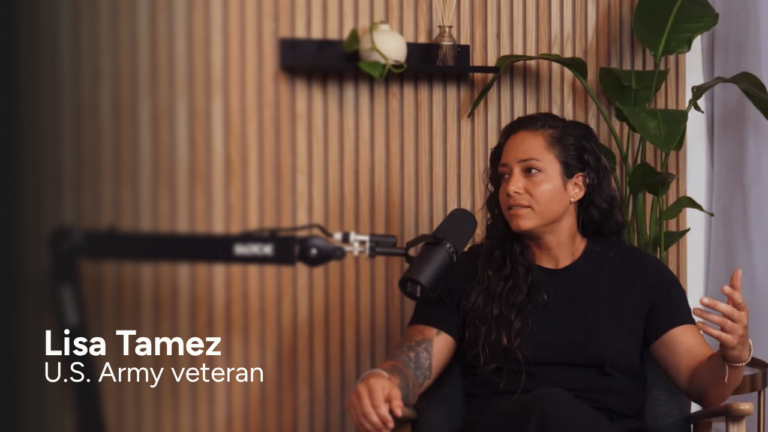
Jason Najum 00:00 Lisa.
Lisa Tamez 00:00 Hello, Jason.
Jason Najum 00:01 Welcome to the Human Journeys podcast.
Lisa Tamez 00:03 Thank you for having me.
Jason Najum 00:05 Thank you for coming. You made the trip especially for this podcast and really appreciate it.
Lisa Tamez 00:11 Yeah.
Jason Najum 00:11 So we met at the ICPR conference, and Amelia had a nice connection and and it seemed like you had a story you wanted to tell. And it seems like you have a human journey to share.
Jason Najum 00:25 If you had to summarize, we'll get we'll get a bit deeper. If you had to summarize your human journey. How would you. How would you describe it?
Lisa Tamez 00:36 Yeah. I think just like anyone, we we all kind of face our own trials and tribulations in life. I, I think I'm no different than other people other than maybe insert different things that have happened.
Lisa Tamez 00:50 For me, the journey has just been, you know, I'm. I'm a military brat. I come from a military family. I, I was raised in Germany. I moved to the United States. I lived there for my adolescent years. I, joined the military in, in my later teens. And from there, you know, I started, you know, growing and coming of age in the military system.
Lisa Tamez 01:25 A lot of firsts happened there. Some traumas, obviously, just life stuff has happened and my journey has just been, you know, moving, moving forward from certain events and trying to to grow from them.
Jason Najum 01:39 And we met at a psychedelic conference. So the psychedelics have entered your life now in the later part and helped you. That's been part of your journey, part of your healing journey.
Lisa Tamez 01:53 Yeah 100%. I mean there's been things in my, in my life that I've been trying to grow and heal from and, you know, I was just at a, at a point in my life where it was, you know, I felt like there was nothing that I could do more other than, you know, take the medications and do all the programs and the treatments and nothing else was working.
Lisa Tamez 02:16 And, when when I was sitting with, you know what? What are my next steps? What do I do? I, you know, I was feeling at a loss. I had these suicidal ideation. I was just completely lost not thinking I had any more options. And I don't particularly remember how I stumbled upon psychedelics in reference to healing for veterans.
Lisa Tamez 02:42 But I do know that I was I was watching this video, and I think it was a bit that Anderson Cooper had done, and they were, showing what the Heroic Hearts Project does is the organization that I got involved with that that helped me with this, with my healing. And, yeah, it was just something. It piqued my interest, but it also at the same time scared me.
Lisa Tamez 03:10 Yeah. Because, you know, psychedelics, the first thing we think we have all these stigmas and, you know, am I going to go crazy? And I think at the end of the day. Excuse me. People are just a little bit scared of, you know, their own mind and and sitting with themselves. So for me, you know, I had the same fears.
Lisa Tamez 03:29 But at this point, I was I was really at such a place to where it was like, you know, I got to give it a shot because I had I had no other option left.
Jason Najum 03:40 Yeah. I, I hear that a lot. I, I've interviewed other veterans and they are at the end of their rope, and they'd gone through the system and they've been to the VA and they've been on the meds and they've done the therapies, and they felt as if they had no other options.
Jason Najum 03:57 And the systems that they were in were, you know, limited in the options provided them. And I don't know, especially maybe if they come from a military background, do you hesitate to go to these alternative routes to to take a drug, to take something that's still a legal in most places. So. Okay. So that's where you were sorta reaching the end of your options, or you were starting to feel desperate for for something
Lisa Tamez 04:28 100%.
Lisa Tamez 04:29 I mean, I was in complete desperation mode, as I stated before, being, you know, having these suicidal ideation is very prominent on a daily basis. I knew I had to do something a little bit more drastic in order to get some sort of result. And I think, when we look at the grand scheme of things, you see a lot of veterans going towards these psychedelic medicines because, I mean, if you look at the research, it's hard to ignore.
Lisa Tamez 05:00 A lot of healing is being been done through these medicines. And I think it just speaks volumes to to show, you know, that the system that they're keeping us in is obviously not working there, you know, giving us a tremendous amount of pills to take these SSRIs that are just, you know, making us sick on some level with perhaps even more suicidal ideation or so on and so forth, making you feel like a zombie.
Jason Najum 05:29 There's limits to their they can help, but they don't. The efficacy rates aren't great, and it shouldn't be the only option.
Lisa Tamez 05:39 100%. Yeah.
Jason Najum 05:40 All right. So maybe like a little bit into the story. So a military life and I mean, I guess it what moments. What cause I mean, sure. Share a little bit. How, you know, how do we get to where you were?
Jason Najum 05:59 What what caused it? What were you going through? Share whatever you feel comfortable sharing.
Lisa Tamez 06:04 Yeah. You know, when I. When I look back. So right now I can see everything a little bit differently, especially since I've been out a couple of years now. And looking at it through the lens that I have now, I know that there were things in my childhood that, that needed to be dealt with that I wasn't aware of at a certain point in my life.
Lisa Tamez 06:28 And, you know, the things that I was going through in the military kind of exacerbated those, those, experiences. And they were coming up and I wasn't able to really identify and recognize in what ways those were. So that showed up as in things like substance abuse, depression, you know, the list goes on. And so I recognize that now.
Lisa Tamez 06:53 And so there was just a lot of things in my life that had led up to, yeah, to to a deep state of depression that I ended up being in right before I'd gotten out of the military. And some of those things were, you know, I was a military police officer. And the things that we dealt with on a daily basis, you know, whether it was a sexual assault case or you have domestic violence cases, suicidal ideation cases or whatever else you can insert.
Lisa Tamez 07:24 You know, I don't think we realize sometimes how those things can affect our processes and how that can really bring up these old things that we've dealt with. Maybe they're not so obvious. So I recognize that these were some of the things that I was dealing with, and it was very hard to pinpoint exactly what, what it was that was causing all me, all this distress.
Jason Najum 07:47 Yeah. Yeah. I mean, life accumulates on on everyone for everyone in any way. Childhood stuff, family stuff. Life. Our own, our own chemistry. And then you, you know, insert, potentially traumatic profession in that, you know, if we haven't resolved our things, that could add a little and, you know, extra salt and you're adding stuff there to to make the mix a little bit more, dynamic.
Jason Najum 08:17 So, Do you feel as if the military experience and those and those kind of, your traumatic, I'll say, traumatic data life, but things were brought to the surface. You know, you had things you witnessed there.
Jason Najum 08:38 Was that what brought it up, or would it have come out anyway? Like, was there unresolved things that would have come to the surface anyways? And perhaps like a your military life just kind of boiled it to the surface a little bit quicker,
Lisa Tamez 08:54 100%. And I have more of an awareness around this. So there's actually something called adverse childhood experiences, which a lot of people who are doing the research for, for veterans who have PTSD, they're finding that, many people who join the military have adverse childhood experiences and that these are the cases.
Lisa Tamez 09:14 So somebody diagnosed with PTSD at a later stage do through military service, more often than not have all these old traumas and things that haven't been dealt with, which makes the PTSD, you know, the symptomology of it arise even more. And so I was sitting essentially in the same place.
Jason Najum 09:41 And I mean, you would describe it.
Jason Najum 09:45 However you feel comfortable like how would you describe. I mean let's, let's talk about the journey like you were fell into a depression or you were experiencing depression. Like how was, what was the experience of it for you.
Lisa Tamez 09:58 You know, early on for me, in my military career, I think the reason why I was joining was also to kind of run away from things.
Lisa Tamez 10:07 So initially, you know, I saw the military as a way to, to provide a better life for myself. And throughout that, you know, when I first joined, it was exciting. I was stationed in Germany. I, you know, I have family there as well. I'm half German. And so it was it was giving me all the things that I had ever dreamed and wished for.
Lisa Tamez 10:30 And I was very starry eyed and excited about everything. And I had new family, you know, the, the brotherhood and the sisterhood that come through military is unlike anything I could really compare to. And, you know, I had this and at the same time, you know, things happen throughout my career that, you know, have just happened to kind of, you know, have me see things differently.
Lisa Tamez 10:58 I had such a good experience in the beginning. But, you know, things like my sexuality had come up and it had been questioned and me feeling unsafe and noticing that, you know, me sharing those kinds of things with people would, you know, put me in some sort of danger. And the best example to what I shared with you before about, you know, old things coming up was I had a situation in my teens where, you know, I was being observed all the time.
Lisa Tamez 11:30 I come from a small town. So it's it's where everybody kind of knows everybody. And, and that feeling of safety, had had suddenly just kind of left when I was in the military because people were starting to find out things about me. Although inherently not bad for me, I saw this as a form of danger. And this this very much started to alter my perception of the people around me and, you know, people's intentions and so on and so forth.
Lisa Tamez 12:00 So this this was the beginning stages of,
Jason Najum 12:03 you feel vulnerable by people discovering things about you.
Lisa Tamez 12:07 Yes.
Jason Najum 12:07 And I guess the military and there's like, there's, you know, there's a certain politics with the military around, I don't know, around women, around sexuality. And, you know, there's a cultural and political dynamic there that you probably had to deal with that added some insecurity about yourself.
Lisa Tamez 12:27 Yeah, 100%. I mean, you said it best, stating it in that way. I mean, it it it is it is that way. Being a woman for one in the military, it's not the easiest. Also sexual orientation, if you're somebody who identifies as lesbian, gay or whatever else you might identify as that can, that can definitely harm you in some ways.
Lisa Tamez 12:51 And that's, that's just being frank, because to some degree, the military is also quite you know, I'm trying to phrase this correctly, but depending on who you meet, who your leadership is, who the guy is gal is. So you're left and right. It can go any way depending on, you know, they might be your supervisor and not like this aspect about you.
Jason Najum 13:17 Yeah. We're humans dealing with humans. So yeah it's never perfect. And and I guess. Yeah that's an intense environment. I mean everyone has to deal with insecurities and vulnerabilities and everyone brings their own stuff to their next stages in life. But and then you bring into that environment which is quite intense. Everything feels the dials are turned up.
Jason Najum 13:47 You know, that environment is. I haven't lived it. I've lived some environments where, you know, everything is taken seriously. I'm guessing every every step, every action of yours, every presentation of yourself, I'm guessing, is that much more scrutinized, or you feel like it's scrutinized in that environment
Lisa Tamez 14:11 to a degree. But I think the lens kind of shifts to things.
Lisa Tamez 14:17 Things have to go right, or they can fail incredibly bad because in the military, we're thinking most of the time in life or death scenarios. So this also translates over into how you're saying about just being monitored and making sure things are on par and everything is like smooth and correct. And that even kind of translates down to who are you as a person and how people perceive you.
Lisa Tamez 14:42 Are you you know, what is your demeanor? Does does this aspect about you make you weaker as a person? People, people really do think like this. And that's where the danger felt like it came up for me.
Jason Najum 15:00 Okay. So.
Jason Najum 15:01 Do we talk about like a the what did the rock bottom feel like for you.
Lisa Tamez 15:08 Yeah. As a. As time had had gone on there was a few other things that had happened that led me to a deep dark depression right before I gotten out. So there was, you know, dealing with things as as a military police officer.
Lisa Tamez 15:27 I also had an ex-girlfriend in the middle of I think I was 23 years old. My girlfriend at the time, I had tried to end this relationship, and she had attempted suicide and had ended up being in a coma. But it wasn't even the event itself. I just really didn't receive that support that I needed for my leadership.
Lisa Tamez 15:54 You know, I remember contacting my first line and I was on leave at the time, which is our vacation time that we take. And it was just kind of like, you know, are you going to be at work on Monday? And, you know, I'm on the phone with my, staff sergeant and he's like, yeah, when are you going to be at work and not asking?
Lisa Tamez 16:18 I'm in the hospital with my girlfriend in a coma and not knowing what to do as a 23 year old kid. And it was this coupled with other things. And later on, I also, you know, I had to deal with a sexual assault case as well. And, you know, the
Jason Najum 16:39 against you, sorry, a sexual assault that you had to deal with.
Lisa Tamez 16:43 I, I did, and, you know, I decided to make a, unrestricted report in the military, which means, you know, everybody gets involved and it opens up, to potentially going to trial. And in my case that, this did and so this is where things had had very much shifted for me. So I was still not processing all these other, you know, things that happened to me.
Lisa Tamez 17:12 I'm dealing with stuff from my childhood coming up. And then, you know, just being a military police officer, having this other event and, you know, really not knowing what to do to do about it. At that point, I wasn't really seeking help professionally. And I thought that I would be kicked out of the military. I had anticipated doing 20 years.
Lisa Tamez 17:35 And I thought, you know, if I go to mental behavioral health, if I tell them how I really feel, I'm going to get kicked out of the military and my life's over because it had as much as it had caused me some burdens. It had also, you know, been my my safety. It gave me stability. It gave me a place it, you know, it took care of me to a degree.
Lisa Tamez 17:59 So for me that that contrast of that was, you know, a little bit hard to sit with, but as, yeah, as a, as a time went on, it was Yeah. More difficult.
Jason Najum 18:14 Yeah. So again we have life accumulates anyways. We have our burdens and the things we bring from childhood and just life. And then you add these.
Jason Najum 18:26 I'm going to say peak moments. But you add these dramatic moments that kind of really pilot I mean in my experience that's kind of what pushed me to moments where I'm like, okay, now I've reached a moment where this doesn't feel like I and it's, it's I don't know if it's for some people there's a clear demarcation, okay, this happened and that caused that.
Jason Najum 18:49 But in my case, and maybe similar to you, is that you just try to go on with life and you're dealing with your stuff probably not as well as you should. And then there's these big moments that happen in life and you had yours and that probably accelerates things. And I don't know, a human gets to a overspill, it gets to a tipping point.
Jason Najum 19:13 And that's how somehow I describe my experience with with mental health. And what eventually led me to psychedelics is like a slow accumulation with these probably these big moments that were, like much more traumatic, that kind of just accelerated things. And then you still try to, but you still go to work the next day and you still try to process and maybe you talk about it, but you don't process it enough.
Jason Najum 19:36 You just keep moving forward and moving forward. But it's still accumulating and communicating. Does that how it was. And it got to a point where you're like, and then you're in it. That's it. I'm you're in a, you're in a depression, you're in a pit, you're in an anxiety. You're in a panic attack. Me that's generally what happens.
Jason Najum 19:55 It just spills over and then you're in it.
Lisa Tamez 19:58 Yeah, 100%. I was just, in the the deepest, darkest pit, darkest pit of it that, I had ever been in. And, yeah, that's why, you know, my reach for psychedelics was, was very obvious to me at that point. You know, it was it's a last resort. I never imagined that I would be somebody that would, you know, some years ago, thinking that I would think psychedelics would be something to heal myself.
Lisa Tamez 20:24 But yeah, it was out of desperation and getting to this point that exactly you're mentioning.
Jason Najum 20:30 So you're, you're in, you're in the like I for some reason I like it's going to sound sadomasochism but the rock bottoms are interesting moments for me because there's, I mean assuming we, we're lucky enough to get out of them. But they are like moments of hope and ascension, like we're ascending out of something.
Jason Najum 20:52 And, so it was just you stumbling upon something on the news which led you to Heroic Hearts as a veterans organization for, giving access for general US veterans for access to psychedelic therapies. Right?
Lisa Tamez 21:08 100%. Yeah.
Jason Najum 21:08 So you saw something on CNN, you saw legit, and then you reached out to Heroic Hearts?
Lisa Tamez 21:16 Yeah. It was just a matter of like, you know, oh my goodness.
Lisa Tamez 21:22 Like this. This could be something that I've been looking for, because up until that point I was looking into alternative methods of doing things. Not psychedelics yet, but just, anything at that point, because I was so desperate. And I signed up and, you know, the process happened rather quickly. I received an intake, and they they gave me the whole spiel.
Lisa Tamez 21:46 I was still having my anxieties about it, but I think it's only normal to have that. And I think if you're not having, you know, a little bit of anxiety about doing something like this and you're a little bit too carefree about it, I think it can also be, yeah, maybe a little bit concerning, but, yeah, I, I, I got approved rather quickly and,
Lisa Tamez 22:12 Yeah, there I was, deep in Mexico sitting with the medicine.
Jason Najum 22:16 Right. Okay. So, yeah, let's, let's take the, let's take the switch to Mexico in a moment. But like, let's, let's describe maybe your state. We've spoken about it in kind of general terms, like you mentioned in depression. Do you feel like it was, was there also like an anxiety mixed in there or it was just depression?
Jason Najum 22:36 You're not getting out of bed. You're like, it was.
Lisa Tamez 22:40 Yeah, yeah. You know, Jason, I'll paint a picture for you on how that looked. You know, I, I had this apartment and I was living in Stuttgart, Germany at the time. And I had this apartment, and I just remember, like, there's certain moments that stick out to me.
Lisa Tamez 22:56 And some of them were, you know, I was alone in this apartment, I think because you've lived in Germany also, that, you know, we have these rolling blinds that, like, can shut out all the light from the outside.
Jason Najum 23:08 It's great for late night partying, but but not for depression.
Lisa Tamez 23:11 No. Definitely not
Jason Najum 23:12 okay.
Lisa Tamez 23:13 And so, you know, I was I was just in my apartment and I would have these blinds closed all the way, every single one super dark in there.
Lisa Tamez 23:21 And I would just drink and drink and drink. And there were moments where sometimes the goal was just to end up on the floor. And so I would get home. And that was the first thing I would do, was the first thing I thought of when I woke up. And sometimes there were there were times where I was just, you know, I'd wake up on my floor and not remember how I got there or, you know, they were giving me medications, benzodiazepines or also muscle relaxers was a big one.
Lisa Tamez 23:53 And I would get so inebriated that I was taking these medications, I guess, in my inebriated state, hoping to feel feel more intoxicated to some degree. But I was doing it so much and I wouldn't remember that I was almost taking sometimes half the bottle. And I remember one day in particular that really sits with me, that that still kind of haunts me.
Lisa Tamez 24:24 And I remember I was with my, it was my then girlfriend and her, her grandfather had just passed away, and I was really dealing with like, a lot of stuff. And it was, it was I was having one of these nights, and I woke up in the morning and it was probably the most I had taken of these pills and drank at the same time, and I was just so out of it.
Lisa Tamez 24:47 I couldn't even function. I had never been in such a state. And, you know, she she had tried to call me all morning. She had tried to text me all morning. And I just remember, like, I could barely hold my phone. And I was looking at the phone and I was like, I cannot I could not even respond.
Lisa Tamez 25:07 I couldn't even get myself to send a voice message, because even I knew, like, I couldn't even move my mouth. That's that's how you know how much damage I did to myself. And I and and then the worst part of it all is that I could not be there for her when her grandfather had passed. And she was wondering, you know, why I'm not answering or why I'm not responding.
Lisa Tamez 25:31 And at that point, I wasn't okay with myself enough to to just say, you know, I'm hurting like, I, I'm really hurting. And at that point in my life, nobody knew, like, how bad it had gotten. But that was that's just one of the moments of how that looked. And these kinds of things just carried on for months and months and months and months.
Lisa Tamez 25:54 And I was just. Yeah, just hurting.
Jason Najum 25:59 Okay. Thanks for sharing that. You're gonna make me cry on camera.
Jason Najum 26:08 And you were able to step away and say, okay, I need to do something here.
Lisa Tamez 26:13 It it took a very long time. I think, you know, if I'm going to give you a better picture. Jason, it was about 2 or 3 years I was in this really deep depression and and things like this were happening often. So it was a lot of self-sabotage, I think, in my opinion, which I was just I was beating myself up nightly.
Lisa Tamez 26:35 It was it looked like sometimes two bottles of wine a night, sometimes more, and then adding these medications, sometimes I was, you know, going downtown because I live downtown at the time by myself and just getting in stupid situations that that could have ended up way, way worse. And, you know, this went on and on and on and nobody had a clue.
Lisa Tamez 26:57 And I, I didn't have the best support back then at the time either. So it was just not knowing until later on when the actually when the sexual assault had happened that had I was forced and prompted to go to therapy. And that's actually what yeah. Sent me on this kind of journey of self-healing. So although it was very painful for me to go through that, it was also a little bit of a blessing in disguise to, you know, start unpacking all the childhood stuff, you know, the event itself and all this other stuff I was carrying with me.
Jason Najum 27:36 Blessing in disguise. Yeah. Life a yeah, like me crazy life has a dark humor for us. So you start to see yourself with like, I don't know, some self-analysis, some self. I mean you obviously knew some stuff wasn't great, but you started to see it through a little bit more of a therapeutic lens through I need to like take actions here.
Jason Najum 28:08 Like I don't know, was there like once you start going to therapy, you're able to like have some somehow have some distance from just the actions taking you along. And you sit and you talk about it. Then you can like create some distance and like see your actions a little bit more and be like, okay, now I see what's happening rather than being taken away along with what's happening.
Jason Najum 28:30 And I need to now maybe implement some changes here. I don't know if. Did you see that kind of
Lisa Tamez 28:36 yeah, I, I did see that. I think, most people anticipate when they're going into therapy that it's just going to happen right away though. And for me it was, you know, it did not happen right away. It was more of like, okay, talking and, you know, getting myself to talk.
Lisa Tamez 28:54 So in the beginning it was hard because for me, I, I've never been asked things. I've always, you know, kept things inside and dealt with things on my own. So it was very difficult in the beginning to just, you know, tell this person that's sitting in front of me that, that actually wants to hear what's going on, actually, what's going on.
Lisa Tamez 29:13 And so I had a hard time, you know, articulating exactly what it was going on. And then on the same at the same time, I was trying to figure out what is what is going on with me. So in the beginning, it was more of a, you know, where do I stand with with my emotions and what's going on internally.
Lisa Tamez 29:36 And so that took some figuring out. And then after some time, I finally did get to a place. Once I had gone to a rehab facility.
Jason Najum 29:47 Rehab?
Lisa Tamez 29:48 Yeah, it was a once, once I started doing a little bit worse. It was right before the trial had happened. I was sent to a rehab facility in the Netherlands. It's called the U-Center. And, you know, that was my first inpatient program where I received such treatment. So they did things like EMDR and also they were they were open to other forms of, of therapy that I had newly been introduced to.
Lisa Tamez 30:21 So there were things like somatic dance therapy, which it's not it's not really my vibe, to be honest. But I will say that these kinds of therapies I've been able to implement in my daily life in terms of like just doing them for myself, and the purpose of it essentially is to just feel and to be be more in tune with your body and feel things and to connect.
Lisa Tamez 30:46 So it was it was good. So, you know, that also brings a light to everything else I was trying prior to psychedelics.
Jason Najum 30:58 Yeah. Okay. So you're starting to explore options and then you reach out to Heroic Hearts. And they organized a retreat in Mexico.
Lisa Tamez 31:10 They did. Yeah.
Jason Najum 31:11 For with ayahuasca.
Lisa Tamez 31:13 They did. Yeah. This this was also a LGBTQIA+ retreat.
Jason Najum 31:18 For veterans.
Lisa Tamez 31:19 Yes, specifically. And, you know, initially I, I saw the opportunity, I signed up for a few different ones, and I had gotten that one. And it was also like I had to recognize later on that because in my mind, I was like, you know, I, I should why am I choosing this one and why am I going on this should treat maybe I should have picked another one, but it was exactly the one that I needed.
Lisa Tamez 31:42 And that was because I. I didn't realize I was carrying all this, internalized homophobia for for myself. And these were also things that needed to be processed. So that was also another layer added on top that I had no idea that I had been dealing with.
Jason Najum 32:02 So I mean a set and setting is important in psychedelics and that setting of a communal, a group that you felt comfortable with or accepted and helped your mindset, I guess
Lisa Tamez 32:15 100%.
Lisa Tamez 32:16 It was exactly what I needed. And I'm glad that that's where I ended up.
Jason Najum 32:21 Yeah. The setting helped your mindset going in. So maybe did you get to meet, did you know the other group participants before.
Lisa Tamez 32:30 So we, we had some video calls before kind of getting to know the group. And you know, we had prompts on thinking about, intention settings or breathing practices and just going over these things and discussing things in our daily lives.
Lisa Tamez 32:46 So that was about the extent of it. So I think we had three, three phone calls prior. And then we obviously we met once we had gotten to Mexico.
Jason Najum 32:57 Okay. So there's some preparation in advance which helps because psychedelics can be daunting and cause apprehension before going in. And ayahuasca has this extra reputation as something that's bigger and more difficult and scary.
Jason Najum 33:11 So preparation helps.
Lisa Tamez 33:12 Definitely.
Jason Najum 33:13 So you get to Mexico and, was it out in a small town?
Lisa Tamez 33:17 It was in the middle of nowhere, and it was exactly where I needed to be. I remember once I was a last to arrive at the airport, and, you know, it was scary because we're we're driving for two hours to get to our location, and it's the middle of the night, mind you, and all you're seeing, you know, it's pitch black outside because the lights where we're going.
Lisa Tamez 33:43 The more deeper you go to this place, the less lights you see. And I'm looking out the window. It's pitch black and we're just driving on these, these roads that are hardly roads as well. And we finally get to our location and it's once, once the sun had come out in the morning, it was just the most magical and the most beautiful place I, I could have been.
Jason Najum 34:05 And was it, was it very ceremonial or was it more of a. Medically was, was the environment for the ceremony.
Lisa Tamez 34:15 So it was, it was very traditional in the sense like the, the people who held the ceremony for us, they used the teachings of the Shipibo tribe to do the ceremony. And as well we did the temazcal and, and these, these types of things.
Jason Najum 34:36 The temazcal before.
Lisa Tamez 34:37 Yes. Before the ceremonies.
Jason Najum 34:39 And, that's a Mexican sweat. Sweat lodge.
Lisa Tamez 34:42 Yeah. And, you know, the, the experience of that, I think if it were ever done in a clinical setting or, or if it was done in a clinical setting, it wouldn't have been the same experience. I think there's a huge benefit to, you know, the ritualistic and ceremonial aspect of, of, you know, intertwining with these medicines and, and just feeling it and seeing it, it's just completely different clinical setting.
Lisa Tamez 35:14 Couldn't give that. And I believe that because of that I got much more healing out of it.
Jason Najum 35:21 Yeah. Yeah. There's I mean there's just been studies that the results are better in ceremonial or even just in group environments. Even there's been a recent kind of survey, even in party environments, just as long as it's communal, as long as there's like the intention setting, be it ceremonial or communal, or traditional, it really adds something.
Jason Najum 35:45 So. Okay, I'm glad you had that. And so was it a overnight ayahuasca?
Lisa Tamez 35:50 It was, I think we were there for around 7 or 8 days, and every other day we had a ceremony. So we had three ceremonies in total.
Jason Najum 35:59 Okay. You got the real deal.
Lisa Tamez 36:01 Yeah.
Jason Najum 36:02 All right. I've never done in one that long. I only did I just did a one night or.
Lisa Tamez 36:08 Oh, really? Okay. Yeah.
Jason Najum 36:10 All right. So you did it for real? Did you go through the whole cycle? Was there was there a difficult sometimes you generally when there's multiple ceremonies, you know, there's, there's one that's softer then there's one that's like there's a difficult one like you. Did you. What was your experience.
Lisa Tamez 36:37 I think yeah.
Lisa Tamez 36:39 The, the, the very first ceremony for me, I, I remember was just like, wow. I had no idea what to expect, obviously.
Jason Najum 36:51 Sorry. Previous psychedelic experience.
Lisa Tamez 36:54 Yes, but it was many, many years before. It wasn't anything close to what I experienced.
Jason Najum 37:00 So basically a version.
Lisa Tamez 37:01 Yeah. Yeah.
Jason Najum 37:02 Okay. So, so not much psychedelic experience before that.
Lisa Tamez 37:05 So I really didn't know what to expect, nor could I really remember what it was like when I had taken it back then. But for ceremony, I, I just remember, you know, the, the main thing was, you know, with ayahuasca, you, you purge, or you can, more than likely if you're sitting with ayahuasca, you are going to.
Lisa Tamez 37:27 I did. And, Yeah. And I'm sure you you can attest that to some degree, it also feels like the medicine is getting these things or whatever it is out of you and I that's I felt a lot of people explain it this way.
Jason Najum 37:42 Yeah. The base my I thought to I was experiences and it was basically just I just it was just purging and and somehow it ended up being what I needed and I don't I try to avoid speaking and kind of spiritual woo terms and like, you know, the medicine gives you what you needed.
Jason Najum 38:00 Well, it kind of did because I guess I was just holding things on the inside and I just needed to get the shit out. And I got almost couldn't have any sort of other experience, spiritual experience because I was so tight on the inside. So the I've done it twice and both times was just release. And which is basically what I needed I think.
Jason Najum 38:31 So I was, I felt more open to receive whatever else, maybe not in that ceremony, but just to receive whatever else I was doing in my life. I mean, I do other forms of trying to, you know, personal growth, and I'm better able to receive it just from the opening up and releasing that I got from my ayahuasca experiences.
Jason Najum 38:52 So I was basically just ended up naked in the forest, purging and and loving it. And I was just like feeling into it, you know, I'll tell you the story after what was done recording, but I was basically so I'm like, yes, get everything out. Once you finally allow the release, the release felt so freaking good.
Lisa Tamez 39:10 I'm I'm so glad that you had that experience, because I know I can feel it when you say it.
Lisa Tamez 39:17 Now that that's exactly how I felt. And, it it's kind of bizarre to say, obviously, because we're purging and, you know, saying like, oh, I felt so great. But truthfully, like, there was just this energetic cleanse and like this releasing of these almost like burdens instantly of of just, you know, getting rid of whatever it was. I know when I sat with, with it and I initially started to purge, I was seeing things.
Lisa Tamez 39:43 I was seeing like skull and crossbones, imagery, and I was seeing things from, like, my German lineage. I was seeing beer and I was seeing so many different things. And as I was purging, I just thought there was just an unspoken to it, but it was telling me, hey, you're getting rid of all this stuff and it needs to come out in order for us to get you to the place where you want to go.
Lisa Tamez 40:07 And that's that's why, for me, the first ceremony was rather powerful, because I really felt that that all these things were just being lifted and just coming out of me. So it was rather powerful.
Jason Najum 40:24 Yeah. Yeah. Yeah. And did like you followed up and did you feel more empty and able to receive later once you were you had released.
Lisa Tamez 40:37 I think after the whole experience itself, not immediately after, I think, I think once I had left. The the retreat, those things, yeah. Everything coupled together enabled me to to be more open and, Yeah, receive, receive things or insights or whatever it may be. So at the retreat itself, it was more of a releasing experience.
Lisa Tamez 41:02 It was it was, are you asking in terms of, like, what I experienced during my.
Jason Najum 41:07 Yeah. I mean, you know, like, for example, like my ayahuasca was basically it was basically just release.
Lisa Tamez 41:14 Okay. I see,
Jason Najum 41:15 and it wasn't released. And then I sat longer and then I got some more insights. For me, it was just like my experience could be described as just getting all the shit out.
Jason Najum 41:27 And later on, again, I it opened me up to receive after the experience. After the ceremony.
Lisa Tamez 41:33 I see okay, I understand now. I think for me to some degree there was release, but something that interesting that happened was I expected to reach a state of, you know, true emotional like release. And that was something that didn't happen. That really surprised me.
Lisa Tamez 41:52 And it just felt like I was I was holding on, but also being released through, you know, through the purging and seeing all this imagery. But for some reason, I could not reach this emotional state to where my body would just, you know, purge emotions through crying or, just, yeah, just being emotional. And, throughout ceremony, my release, I think, came through the form of, like, shakes.
Lisa Tamez 42:15 I don't know if you've also had that experience during yours, but I had these extreme intense shakes, which I think were kind of to make up for the emotional release because I was a type of person that, you know, I don't get very emotional very often. It's changed now since the ayahuasca, experience, but prior to that, like shedding tears was very rare for me because it was also it also felt like a danger and I think my body had no other choice.
Lisa Tamez 42:45 But okay. If you can't, if you've trained yourself not to do it this way, I got to get it out somehow. And so I sat. I sat in some ceremonies where I was just like in complete, like shakes, and I couldn't do anything about it. So. Yeah.
Jason Najum 42:59 And your body was telling you, let me let me release.
Lisa Tamez 43:02 I think so. Yeah.
Jason Najum 43:03 Yeah, I mean that. So that kind of makes sense. So I've done two ayahuasca ceremonies, and the first time nothing basically happened and I just like, purged once. And I think that was just me, you know, I was I was probably really apprehensive and I was holding on and I just then I just had like a physical purge and there wasn't really an emotional release, but it was kind of my body learning to just like, let go.
Jason Najum 43:31 And and then I felt good afterwards. There was like a slow progression. And then I remembered how I felt after the release. My mind felt clear. I was able to see the world in the brief moments after my first purge. During the ceremony, I was quiet. My mind was quiet because the purge was quite like. For those who don't know.
Jason Najum 43:54 an ayahuasca purge is your body. You know, your vomiting. It's you know, it's coming out of everywhere, it's coming. And, you're quite clear afterwards. For me, it's this ultimate reset button, and it's not pleasant to get there. But once you get there and I think it set the stage for me. So then two years later, I did another ceremony, and then I felt more comfortable.
Jason Najum 44:22 I wasn't scared of what would happen in the ayahuasca ceremony. I knew a purge may happen and I survived. And actually I actually ended up enjoying the feeling after the first purge, so I knew, okay. It may feel it may feel shitty for a second, literally, but afterwards it's going to feel, you know. So I had the emotional release the second time.
Jason Najum 44:42 So it was like, you know, this comes in stages. You feel. So, for you, the emotional release didn't happen immediately.
Lisa Tamez 44:50 No it didn't. And so the interesting about that thing about that is that, you know, after the experience and the most important part in my opinion, opinion is the the integration of it all. And during this period, you know, I wrote everything down what, what I went through in each ceremony, because not everything made sense to me yet.
Lisa Tamez 45:13 And as time had gone on, you know, I, I don't know if you relate to this. I've talked to a couple of people about this, but I had this new sense of, of an inner knowing that was kind of my driving force and how I like, you know, went about my daily life there. It was kind of just like another intuitive voice and feeling that if I wasn't going towards a certain direction in my life, that it was making me physically sick.
Lisa Tamez 45:42 And I think I've kind of skipped over why a little bit of, of, of the context to that, because there was a part of my ceremony as well, where the medicine showed me who, who I could actually be without the alcohol, without the substance. And it showed me like this much successful, much more successful person who was fit and healthy and happy.
Lisa Tamez 46:06 And I knew it somehow. It was like I couldn't go back and I couldn't unsee that, that if I wasn't living that truth or I didn't start living that truth, that it was going to make me physically ill. And so as time had progressed, these things were happening. And it was also, you know, this is where the emotions come in.
Lisa Tamez 46:29 I was being prompted, you know, check, check your ego, listen to your emotions, feel them, you know, and it was becoming very obvious to me. Whereas in the past, I think I was just so stuck in my in my opinion, it was because, you know, the PTSD that that, I was dealing with, these symptoms had me so entrapped in this physiological, you know, survival and somehow the mechanisms of the ayahuasca I don't know exactly what that was.
Lisa Tamez 47:01 Just released and unlocked it and gave me this gift of, you know, you have this voice now to, you know, do the things that you want. And, you know, a lot of my social anxieties went away. A lot of, my overthinking had gone away. Things just kind of did one of these, and I and it was so profound to me that that something that could happen with this medicine.
Lisa Tamez 47:25 And, you know, I'm still I'm still in or even hearing myself say it now, you know, realizing the power of this medicine is, it's incredible. And I know you can attest to it as well. You've seen it in many different spaces or in different talks.
Jason Najum 47:43 Yeah. Okay. I'm happy. Would you say you said a a felt knowledge?
Lisa Tamez 47:48 Yeah. It's it's the closest thing I can relate that to is, like, our intuition. I still have my intuition. It feels like. But it feels like another conscious voice is there. That is there with my intuition there. There's no other way for me to explain that. But it it really. It's telling me exactly what I need to do.
Lisa Tamez 48:12 If I'm not saying things and need to be said, it will. It will tell me and it will bite me if I don't. And so, like I said, if I if I'm not doing things, I'm just getting sick and I know what I need to do at the end of the day.
Jason Najum 48:27 Well, good for you for listening because we can ignore and fall back.
Jason Najum 48:31 And it's not, I'll say like it's not just the medicine that brought you here. It's you listening and doing the work and wanting to get better. So it's so it's like it's you that got yourself here. The medicine just kind of helps us break some cycles and gives us like opportunities to see clearly to, to cut up for have our minds and our bad habits be a bit more quiet for a few moments, and then we're able to see what we what we knew we needed.
Jason Najum 49:15 We needed to see. But our brains and our histories keep us in these cycles, and psychedelics just present like an opportunity for us to take action, to see clearly. So, I'll credit the I'll credit the ayahuasca with like, presenting us with opportunities, but it's like it's you that brought yourself here so
Lisa Tamez 49:41 100%. Oh, yeah.
Jason Najum 49:43 So good for you.
Jason Najum 49:45 And, Noetic is my one of my favorite words. It's it's that felt knowledge. We use this in psychedelic spaces.
Lisa Tamez 49:52 Okay. Yeah. Noetic knowledge. Okay. I'm taking note of that one.
Jason Najum 49:57 Yeah. It's great. And it's kind of, it's kind of that like, like you could know intellectually that you should stop drinking, you know, the person that you should be.
Jason Najum 50:09 And then often people will have a psychedelic experience, and then they feel the knowledge and it becomes integrated. And it can integrated felt knowledge rather than an intellectual one. And then for humans, sometimes that's what you really need.
Lisa Tamez 50:24 And so yeah, the word feels like what I was describing.
Jason Najum 50:29 Yeah. The word of the day is no, no, no good one.
Jason Najum 50:33 Right. So so you're out of it. You come back home. And the work continued.
Lisa Tamez 50:41 It did, I, yeah, there was some, some time where I was struggling with this new version of myself, because obviously, after this experience, we're going back to our everyday lives and the rat race of of our lives. And how do we integrate this experience and, you know, help us reach the next step.
Lisa Tamez 51:08 So I was very much struggling with this person coming back to, you know, alcohol still in the house and bad habits and, you know, sleeping too long throughout the day and not being able to get up out of bed. These, these habits that were habitual and now having this new perception of, yeah, of of my reality, I guess I felt like I should have been a healthier version of who I was looking at in the mirror.
Lisa Tamez 51:38 So for me, it was it was hard to integrate that, I guess. I hope it's making sense what I'm saying, but perhaps, if I share a quote that I, that I heard recently, I can't remember verbatim, but it goes something like be gentle with yourself as you're not the person, as you're still becoming the person. You've never been something along this line.
Lisa Tamez 52:03 And, I think that that's that's a perfect quote to describe this, because in that time I was trying to do all these things, and I was so grateful the medicine had given me so many different gifts and perceptions of things and tools that I could use, and I wasn't sure like how to use them, even though I was feeling like a different version of myself, healthier.
Lisa Tamez 52:26 But I was still, you know, going through the motions of my life, still making these other decisions that weren't aligning with how I was feeling.
Jason Najum 52:35 And that's fine. Like, it's not an instant cure at all. And we shouldn't be worried that it's not or we shouldn't feel bad that it's not like I after a a psychedelic experience, a really intentional.
Jason Najum 52:48 When I did an amazing program like the next day, I did a behavior that was not ideal for, you know, that was not proper integration. Right? And I felt bad for a minute. Like I basically it was the next day and I felt really good and I just like went out drinking and I shouldn't have. Right. Wasn't supposed to.
Jason Najum 53:13 It's not proper integration after a psychedelic ceremony. But I was feeling like this lust for life. And I was in a new town, and I'm like, I'm, you know, I'm just going to go out and enjoy it. And I felt bad afterwards because that wasn't what I was supposed to be doing. That's not the ideal way to integrate posts, as I could experience a therapy experience.
Jason Najum 53:39 And then I had some kindness for myself, and I said, this is the process of me unraveling some behaviors. And it's not you're not going to get completely better the next day, but as long as you keep at it, I don't know. Be kinder and be more forgiving as long as you're on the right path, in the right direction, and you're continuing to do the work and learning.
Jason Najum 54:02 I even learned from that. So, yeah, gentle gentleness with ourselves.
Lisa Tamez 54:06 Yeah, I think it's it's great that you just brought that up because this was these experience. I, I was having the same thing, you know, I would I would make these stupid mistakes and I would be like, okay, instead of, you know, self-sabotaging, reaching for the bottle, doing these other things.
Lisa Tamez 54:25 I was being gentle with myself and, you know, coming from military background and, and the way that we did things, I totally had to just like, throw out everything I knew, and start from the beginning and just essentially baby myself really get down to the root and, you know, in terms of being gentle, it was something that I really practice was inner child work, that that's something that clicked for me.
Lisa Tamez 54:51 And that helped because during ceremony as well, I was I was gifted the, the gift of seeing myself as a child again and having this experience of just like, I'm in my room again. And, you know, I remember just watching The Proud Family and eating these snacks, even though it's just so simple. That moment really brought me back to who I was as a child.
Lisa Tamez 55:15 It wasn't just the image itself. I felt who I was as little Lisa. I think it must have been around six, 5 or 6 years old. And because I could tap into that, I used that and I used a gentleness with that to, you know, understand when I needed to be gentle with myself to connect with that inner child.
Lisa Tamez 55:36 And I think, honestly, that that's what prompted me into, you know, doing much better. And the version of myself that's sitting here was really connecting to the inner child. And yeah, just just being gentle and asking her what she needed. And I think that that's honestly what she just needed all these years. And I think that that's really what helped.
Jason Najum 55:58 Yeah. That's nice. I've had some people mention the kind of speaking to yourself, speaking to your inner child and having some empathy and protection for that person, for that kid, that child inside you. And yeah, maybe I haven't done enough of that, but I the essence is there and I like, I, I do like that. And I think as long as we mix it with because it can't just be all coddling the inner child, because we also know if we're not doing the work and if we're not moving our files forward and we're we're still humans that need to, you know.
Jason Najum 56:30 Progress and do things. So I think if we can balance those two things of, of empathy towards ourselves, but yet still waking up and you know hitting the gym and moving things forward, then maybe that's the right mix I think. So it's always about balance right.
Lisa Tamez 56:46 Yeah. And so that was me finding that balance of, you know, this tough military mindset mixed with, okay, I have I have this inner child I can tap into now.
Jason Najum 56:57 Okay. What's the name of the episode going to be? Right. The the the baby warrior or the the baby soldier? Something I'm going to come up with a good episode title for you.
Lisa Tamez 57:08 All right. Yeah.
Jason Najum 57:09 The clock saying that was that was that was a fast hour.
Lisa Tamez 57:13 Wow. Yeah. You're right.
Jason Najum 57:15 Okay. We did it. Yeah. How do you feel?
Lisa Tamez 57:18 I feel great. I, I really appreciate again you having me on here. It it's it's very it's not every day somebody asks you to sit down to to share your story. I've already told you this, but I, I'm very grateful for that. So thank you. Jason.
Jason Najum 57:35 Yeah. Well, I'm, I'm. Thank you for coming. You you made the trip out here and your story hopefully will give people permission.
Jason Najum 57:44 Someone else permission to do the same thing. That's the idea
Lisa Tamez 57:55 I hope so
Jason Najum 57:57 okay. This is great. Thank you.
Lisa Tamez 58:03 All right. Thank you.