Reading Navigation


This content is grounded in peer-reviewed research, clinical guidelines, and established best practices. Claims are reviewed for accuracy and transparency. Learn more about our evidence standards
Can Health Tech Help Support Mental Wellness?
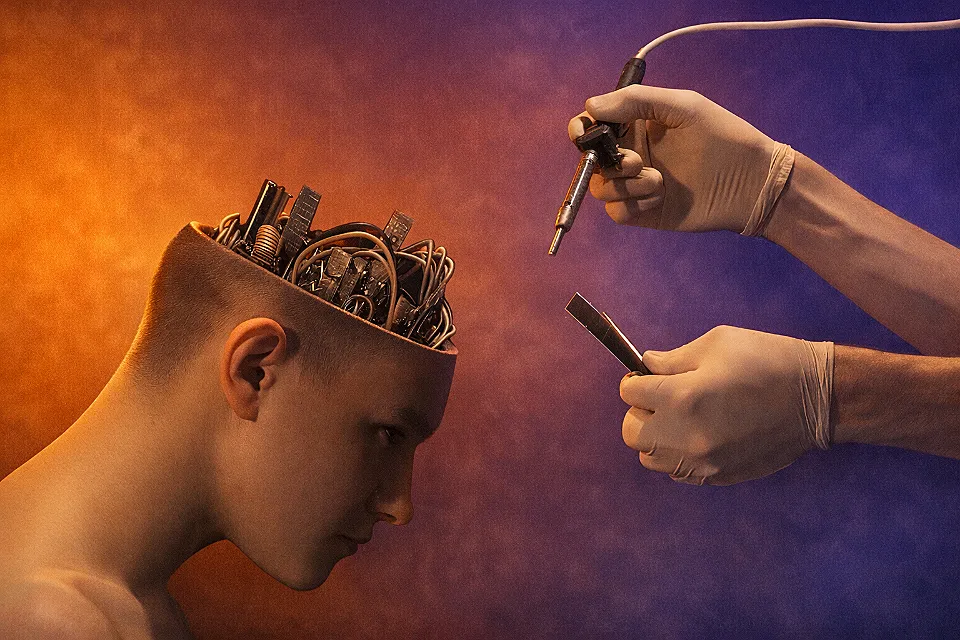
With over one billion people across the world living with a mental health condition1, there is an urgent need for innovative mental health treatments and increased services.
While healthcare systems struggle to keep up with demand, and with 20% to 60% of people not responding2 to traditional therapies, technology and digital tools are increasingly being utilized to increase access to health services and support wellbeing.
From telehealth appointments and mobile phone apps to wearables, VR and AI, technology is transforming how we take care of mental health.

Improving Access to Mental Health Care
Across the world, millions of people face barriers in accessing healthcare. From financial constraints3, lack of available services, and difficulty travelling4 to services, many are excluded from receiving vital mental health support.
For example, the World Health Organization highlights that three out of four people in the poorest segment of populations faced financial hardship from health costs, “compared with fewer than 1 in 25 among the richest5.”
Sebastian Kloster, founder of Mindly, an online mental health therapy platform in Latin America, explains that through building mental health technology in an under-served market he has learned that tech helps to lower some of the biggest barriers to care, including financial barriers.
“In Latin America, a single therapy session can cost a day’s wages, and rural areas have almost no access to psychologists,” explains Kloster.
Kloster’s own platform, for example, has facilitated thousands of therapy sessions by making it possible for people to connect with verified health professionals remotely, at a much lower cost.
Trauma therapist Elva Medina emphasizes that telehealth technology can also improve access to mental health support for those who face transportation struggles.
“Working in the Kansas City area, I have been able to witness the ongoing barriers that have resulted from lack of transportation or support system to seek mental health services,” explains Medina.
“After the Covid-19 pandemic, mental health services exploded in the telehealth world.
“Therapists began to adapt and shift to provide care during a very difficult time for a lot of individuals. Now, in 2026 individuals are more open to telemedicine appointments for mental wellbeing, whether they login during their lunch break or access treatment when it’s convenient for them.”
Support Is Just a Click Away

 Ireland
Noel Comer is an integrative psychotherapist based in Galway, Ireland, offering psychotherapy and specialised support for the preparation and integration of psychedelic experiences.

 United Kingdom
 Patricia Taddei is a psychotherapist offering Core Process Psychotherapy.
Apps, Wearables, and AI
As well as improving access to healthcare services, technology is helping to bring healthcare into the home through our smart phones, watches and computers.
There are troves of wellbeing apps today that have been designed to support mental health through mindfulness, meditation, breathing, journaling and exercising, for example.
Krista Walker, Clinical Director at The Ohana Addiction Treatment Center, highlights that research has shown that mental health apps and technology can support mental health when they are used with guidance and support from a therapist or professional.
“Some of the most helpful technologies include mood tracking apps, meditation apps, and similar apps,” says Walker.
In a recent systematic review of studies investigating the benefits of mobile phone apps for mental wellbeing6, researchers suggest these apps show promise in addressing the “global mental health crisis” and offer “scalable, accessible interventions”.
The review found that a variety of apps showed positive results in reducing mental health symptoms such as depression and anxiety through different techniques such as cognitive or attention change techniques.


Likewise, wearable technology is transforming how we can monitor our health including our mental wellbeing.
Devices can track vital physiological signs such as sleep and activity levels to detect real time changes that may contribute to symptoms such as anxiety and depression.
Evidence is, however, only based on early-phase or pilot studies, therefore the generalizability of findings and adoption into mainstream healthcare is still pending evidence from late phase clinical investigations. Further, a recent systematic review7 concluded that among randomized controlled trials (RCT), digital interventions for mental health were not more effective than traditional interventions from control groups (at least with respect to depression and anxiety disorders), highlighting the need for further RCTs and research.
In a further review of studies, researchers suggest that through the continual monitoring of physiological and behavioral indicators, “wearables offer valuable insights8 that can lead to more personalized and effective treatment plans”, adding that integrating this technology in clinical practice “enhances patient engagement, adherence to treatment, and overall outcomes”.
“These apps can reduce isolation by connecting us with others. They can also allow us to track our mood and sleep which can improve wellbeing,” says Walker.
The review does highlight, however, a considerable variability in the performance of wearable devices, emphasising the need for further research to improve reliability and validate findings, along with a reluctance from patients to adopt wearables due to concerns over privacy.
Find Support to Match Your Needs

 Prague, Czech Republic
 First European clinic to offer ketamine‑assisted psychotherapy (KAP) along with classical psychotherapy and psychiatric care.
The past decade has also seen a huge boom in AI, and healthcare systems across the globe are utilizing it to improve services and innovate care.
While apps and wearables are helping us manage mental wellbeing, AI is being harnessed to help improve diagnosis, treatment and understanding of mental health conditions.
For example, AI is supporting cognitive assessments and screenings in mental health as well as contributing to early detection and diagnosis.
In a review of the use of AI in mental health care, researchers suggest that the advent of “Emotional AI9” — AI which has been designed to “comprehend and interact with emotional states by analyzing a spectrum of data” — provides a more nuanced detection of emotional signals through wearables and apps.
The researchers say that by providing users with insights into their emotional patterns, this technology enables them to “cultivate a deeper understanding of their emotions and triggers, equipping individuals with valuable skills for effectively managing emotions and fostering healthier responses to challenges.”
Similar to wearable technology, the researchers also highlight potential drawbacks of AI in mental healthcare applications.
They note that using AI in mental healthcare raises important concerns around privacy, informed consent, transparency and human oversight, for example, emphasizing the need for collaboration between AI developers, mental health professionals, ethicists and policy makers to ensure patient wellbeing and ethical standards.
Technology As A Bridge, Not a Replacement
Like any double edged sword, while technology can improve access to mental health services and help support mental health, it can also come with potential risks for mental wellbeing.
For example, data shows10 that an increasing number of people are turning to large language models in place of therapists, with further research showing that this can sometimes lead to disastrous results11.
Kloster says that tech alone isn’t enough to support people’s mental wellbeing, and that it should provide a bridge to expert support rather than replacing it.
“The platforms that work pair technology with real human expertise. AI chatbots and self-help apps have their place, but for meaningful mental health support, people need licensed professionals,” says Kloster.
“Technology should remove friction, such as scheduling, cost, and stigma, not replace the therapist.”
Kloster also emphasizes that “the data tells a story”, noting that among his platform’s users, anxiety and work-related stress are the top concerns.


“We’ve seen a notable rise in first-time therapy patients who say they wouldn’t have sought help if it required an in-person visit,” he says.
Social media can also play a negative role in our health, and Walker highlights that research has linked problematic app use to increased levels of anxiety and depression.
“Heavy social media use is associated with depression and anxiety in some people,” says Walker.
“When using social media, it’s important to curate feeds to be positive, avoid doomscrolling, and limit use, especially around bedtime.”
While technology can help support our wellbeing, its potential to have a negative impact on our wellbeing underscore the importance of maintaining healthy use and ensuring technology helps rather than hinders our mental health.
Likewise, while technology has the potential to transform mental healthcare, researchers emphasize that its implementation presents unique challenges12.
To overcome these challenges they recommend actions such as creative approaches in the clinical implementation of digital tools and interventions, designing appropriate studies to measure the effectiveness of implementation, and improved digital education for clinicians and patients.
Find Support to Match Your Needs
 United Kingdom
 Psychedelic integration and psychosynthesis coach in London offering trauma-informed preparation and integration sessions to translate psychedelic experiences into lasting change.
 London, United Kingdom
 London-based psychotherapist offering integrative psychodynamic and DBT-informed therapy for anxiety, depression and life transitions; sessions from £60.
 Expert Board Member
The exponentially growing technological advancement of recent years prompted the development and democratization of telehealth avenues. To understand the current impact technology has on mental health in the large population, the experience of health care providers and innovators is discussed in the context of scientific evidence in this rapidly-evolving field.






 Netherlands