Transcript
Jason Najum 01:21 Hello, Clara. Welcome to the Human Journeys Podcast.
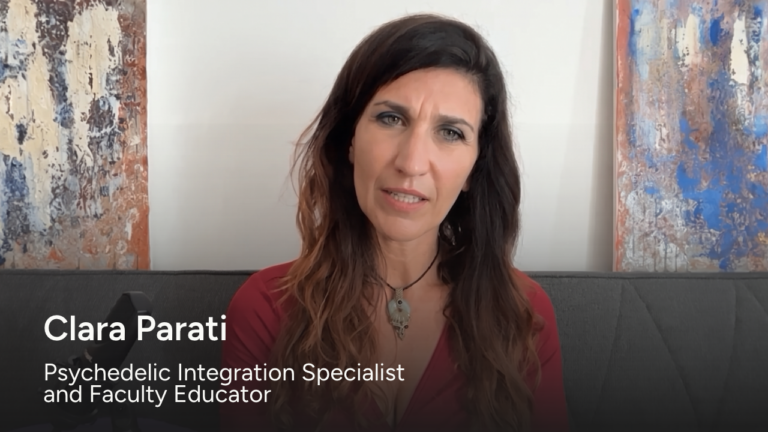
Clara Parati 01:24 Hi, Jason. It's great to be here. Thanks for having me.
Jason Najum 01:27 Great to have you. Great to have you. So we'll jump right into it. How would you describe your human journey?
Clara Parati 01:33 My human journey, deep journey of transformation has been, thanks to also psychedelic medicine and integration, a shift in how I see myself, how I relate to myself. And a big shift from really being quite identified with external factors like career and potentially also c you know, looks and and and you know, success or status. shifting into a more kind of a deeper sense of self and identity and and belonging. So that's been the journey in a nutshell.
Jason Najum 02:08 Hmm. Yeah. Yeah. Tough it's tough to summarize a life's journey in in one sentence, but so h how have psychedelics played a part in your journey, in your in your in your healing journey? You work as an integration specialist, is that right?
Clara Parati 02:22 That's right. I'm a psychedelic integration specialist and a psychosynthesis coach. I use psychosynthesis for integration. So and integration has been a really big part of it. The journey has started with me. gone.
Jason Najum 02:31 No, go ahead.
Clara Parati 02:32 I'm sorry, do you wanna do you wanna ask me? Okay. So the journey has started with me going to psychedelic medicine retreats, and psychedelic retreats in general, because I felt really quite disconnected from myself and that involved several aspects, the physical aspects of having had an autoimmune condition for twenty plus years.
Jason Najum 02:34 No, no, go ahead. No, yeah. Yeah.
Clara Parati 02:52 been feeling disconnected in my everyday life, even if on the surface it looked like I was, you know, successful and had a career and had a circle of friends. there was a a deeper sense of things not being okay. So I started going to these retreats and then after a while I've realized that a lot was coming up and I wasn't processing it and although there was some there were some changes on the surface, a lot of the bigger things were not looked at. So I looked for an integration specialist and that's how I started my journey into also psychedelic integration integration from a personal healing journey.
Jason Najum 03:28 Okay, so you had your own personal healing journey with psychedelics. You said you went to the Amazon for some ceremonies?
Clara Parati 03:36 I did, but I should have started here in Europe, underground, as a lot of people do. I did a a bunch of work with ayahuasca specifically here and then I also went to the Amazon eventually to do some work there as well. I've also been working with psilocybin, those are the two main medicines that I've been using. Yeah.
Jason Najum 03:40 Mm-hmm. Yes.
Jason Najum 03:59 Mm-hmm. So what was happening under the surface that you felt you need to personally mm seek some healing with psychedelics? You said you you touched on it briefly, but maybe let's talk about it a bit more in a in a deeper way. What was, you know, d what didn't feel right that you felt you needed to work through?
Clara Parati 04:20 Yeah, I would say that sense of being disconnected. I found myself very much an autopilot, you know, I for example I had a I used to work in film and TV, which is a a very demanding environment. You do a lot of overtime. And I do have a tendency, you know, it's one of the things that I've been working with to be over functioning, maybe over workaholic, which is probably a way for numbing other things out and and getting validation again from from the outside, from the external. there was that. I found myself a little bit in a bit of a kind of vicious circle where you know, I was probably craving validation that I wasn't able to get in in healthier ways and really throw myself into work. And in these environments, you know, they can be really great environments to work in, but a lot is demanding of you and And the body having also, as I said, you know, a condition for a long time I was not listening to my needs. I think I was very disconnected to my needs from my needs. Sorry. That was the main thing that although I wasn't aware of it at the time, I think that's what pushed me to look for, you know, some ways of of reconnecting. And and it would really show in my life in general because then you know, in terms of also relationship, I had probably 'cause I was disconnected from myself, I also had relationships that were not really right for me because I wasn't showing up as myself 'cause I was this I was disconnected from that. And I would say that thing of working a lot, as definitely an overfunctioning has definitely been a pattern of mine and it's a way of creating safety somehow, overfunctioning, trying to create and control the situation.
Jason Najum 05:52 Mm-hmm.
Clara Parati 06:05 You know, I all only found all this out afterwards.
Jason Najum 06:10 Mm, mm-hmm, mm hmm. Hmm. So disconnected. And part of it was, I mean, the job and career you were in was not the path that felt right for you. I mean, you've switched careers and now you're working in psychedelics and integration and healing. And so did psychedelics reveal what was making you feel disconnected?
Clara Parati 06:31 Yes. And but it was a long process. It took me it took me a while. I they revealed well first of all and it's really fun to admit to this, i they revealed how unconsciously I was also in very much in victimhood a lot of the time. So I remember this particular journey that I did, it was a an ayahuasca retreat.
Jason Najum 06:36 Mm-hmm.
Clara Parati 06:58 where I went in, it was the very beginning of my of my experience with psychedelics in a you know intentional way. Where I went in with this intention of yeah, I wanted to really kind of develop deep acceptance. And without realizing it, I think unconsciously what I probably meant in my mind was accepting what happened to me, right? That's I guess in my mind that's what it was. And you know Can think about kind of a bringing and and various things. And it was very interesting because halfway half an hour in, the man medicine switched it and started showing me all the mistakes that I made in my life in 4D, you know, for hours. I was revisiting them and really feeling how I made other people feel the consequences of my actions. And basically, that was such a big lesson because you want to learn about deep acceptance, it starts with what you've done rather than what happened, you know, from actions from other people. that is just an example of how psychedelics have really kind of helped in switching that relationship that I've had with myself as well. And so it was quite tough and I couldn't wait for it to be over, but I did ask for it going in.
Jason Najum 08:16 Mm-hmm.
Clara Parati 08:21 Right. And I had enough, enough kind of I was held enough in in a really good space that I could actually be with it. I was like, okay, I can look at all the ways in which I've messed up and I've I've created problems for other people as well. And that it's tough love, but was one of the the things I really started shifting. Okay, I can start relating to myself in a different way as well. If that makes sense.
Jason Najum 08:36 Mm-hmm. Yeah.
Jason Najum 08:46 Mm, mhm. Yeah, it does. would would you mind getting a little bit more mm like specific on like a pattern or behavior or something that you left behind or that you saw that was like light light was you shine some light on it and how how you've changed. Yeah.
Clara Parati 09:04 Yeah. Yeah. And I think it's actually work in progress because some of these buttons are really deep. yeah, so
Jason Najum 09:08 Course.
Clara Parati 09:11 One of the bigger things is becoming over responsible. So I had in childhood to I had a situation where I had to kind of grow up quite quickly and probably quite a lot of people that are listening to this can can, you know, relate to this. And so I got into this pattern of becoming really kind of over responsible and and taking if anything would happen, making it I wouldn't say my fault, but thinking, what could be my responsibility of that? What can I do to change that? What can I do to make the situation okay? And that was very much the case in relationships as well, for example, in in personal relationships, in mostly romantic relationships to or to take things, you know, become the one responsible to make things okay. that's a you know, that comes from childhood. If you know, from of course when we are little, you know, we we we're very kids are very egocentric in the way they look at the world. And if something, you know doesn't is not provided in the the responsible is because of them. So I think he really comes from there. And so that's been one of the patterns that I wouldn't say I I completely left it. Sometimes I fall into it again, but it's is the one that's shifted the most, really.
Jason Najum 10:29 Mm-hmm. Yeah, I can relate I can relate to that. I was had some burdens of responsibility from a young age, and that really mm sh shapes the adult you become and the and the patterns you have. And mm-hmm. So you've spent spent some time, you went through therapy on your on your own, and then you had some personal healings, some personal growth. You began to feel The d the disconnection did you begin to feel more grounded after the after some of this work?
Clara Parati 11:04 What's really interesting, and I think it's different for everybody, and so just talking about my personal journey that initially I would say the first few months that I started working with the medicine, I felt great. And then I actually hit like a a went start going down because a lot of things were opened up as I was saying, and I wasn't quite equipped to process them or, you know, really kind of work through them. So actually I got a little bit worse after a few months because there was such a difference as well between the retreats at the weekend and then my everyday life when I went back. Right. It was too much, the the difference was becoming too big somehow. So yeah. So I that's when I I I went and kind of looked for an integration coach, you know, and and it happened to be a psychosynthesis coach. That's how I got to know psychosynthesis.
Jason Najum 11:47 Right.
Clara Parati 12:01 I went through it for years as a client myself and I found that approach really, really helpful. and I just learned how to from the journeys. first of all, that I don't need to understand everything, I don't need to have, you know, attribute meaning to everything, but it is very much about my relationship to the experience. So again, I see that the element of relationship with things and
Jason Najum 12:08 Mm-hmm.
Clara Parati 12:28 One thing that I've really kind of learned eventually, you know, and I did have a another relapse with Crohn, for example, after a few years that I'd taken. So the way I was managing it, because it's really connected to high functioning and boundaries as well. after a few years, I was managing it with medications. So I stopped taking medications a few times in my life. And then after maybe maybe one year, two years, I would relapse again. So it happened once again, but I caught it in time. And then, you know, as I was doing this work and and how I related to myself shifted, I I just started seeing the things that could work and and and not work. And I actually realized as well, for example, the job that I was in, I was never gonna have a really healthy lifestyle with it. So I slowly kind of left it behind. Don't know if I asked answered your question now. I got a little bit derailed with the story. What was the question?
Jason Najum 13:21 Mm-hmm.
Jason Najum 13:25 Yeah, it's okay. It's okay. You were flowing. You were flowing. yeah, so so yeah, so there's there's a lot there. I wanted to go back to how you got worse for a moment because we often these conversations are often about the positive aspects of psychedelics and the benefits and and they are there and I think we all believe in them. And of course they need to we always disclaim that they should be done responsibly and and with knowledge and and then with guidance if that's needed. So in your case
Clara Parati 13:27 Yeah. Yeah.
Jason Najum 13:50 things were going well, but then you said you hit a wall and started to feel worse. And you think this is because you did not you were doing a lot of work with psychedelics, but maybe not enough integration, and then things use there was a disconnect between how you were feeling when you were in ceremony or around ceremony, and then back to your normal life. there was a big contrast. So is is that this maybe let's go back to that to that. while you hit and we can use that to flag that that like it, you know, it's not always such an easy road to jump in with psychedelics.
Clara Parati 14:22 Yeah, it's not. And
Jason Najum 14:23 Yeah.
Clara Parati 14:26 There is basically what I've realized was that I needed this to kind of do some work in connection with someone, not just taking the medicine. And I noticed this in people that actually come to me as clients. Actually, most of my clients are not people that are starting with psychedelics, are just starting with psychedelics. A lot of the clients that I have, they have been taking them for a while and they just feel stuck and it can be quite difficult to deal with because you might get into even into the idea that not even the psychedelics are really helping me going deeper into this, you know, more kind of root causes of why sometimes I act in a certain way or why I feel disconnected. So there's actually that's actually quite common for people to start taking them and then feeling after a while, having that moment where you feel, my God, okay. This is actually not helping as much as I thought at the beginning. And I think that's where the integration part comes in when you realize it's not enough to just be taking the medicine and going to retreats. I need to kind of put some work in of my own. You know, it needs it needs to become not just the retreat and relying on that or on the on the psychedelic medicine. It needs to become something that I'm doing all the time here, you know, like in an awareness almost practice where.
Jason Najum 15:26 Mm.
Jason Najum 15:38 Mm-hmm.
Clara Parati 15:51 either on my own or with someone and there's a there's a real value in having a container with someone else. I I I actually start exploring this in more depth. and it comes as often through I wouldn't say a crisis, but through actually getting a little bit worse, like he was saying, because it kind of propels you to go and look for for you know, what is it that I need to be doing here to become more curious about it.
Jason Najum 16:00 Mm-hmm.
Jason Najum 16:17 Yeah.
Clara Parati 16:18 it's actually very common and these medicines can do a lot but the way I see them is that they're connected, they don't do the work for you. And even if you keep going to retreats, it hits a sample and hits a you know, a a moment where it really needs to come really totally from you. And even looking for a an integration integration support or some ways of integrating, that's a healing act in itself, I think, you know.
Jason Najum 16:46 Yes. Mm, yeah. And but you did you did mention that there was a contrast between how you felt in ceremony and while you were healing and then normal life. So was there I must say like a like a like a hangover, like a down effect, like the your your daily life was not as bright as your time in retreat. Was there a kind of contrast there?
Clara Parati 17:11 There was such a contrast there because also people that go to retreats, if you go to good spaces, you have beautiful, expansive conversations that are not just about, you know, achievements and status and and what needs to get done. And then you're projected back into a work environment where it's chop chop, you know, get things done. And the work environment that I was in as well, you know, it Visual effects can be quite competitive, you know, there are n lovely people everywhere. So not to say that everyone is in a certain way, but it's a very different environment where you go from, you know, an environment where you can be vulnerable and open to people and everyone is there for quite similar reasons. And they're really there's somehow because you're so vulnerable sometimes in retreats like that, there can be a level of connection even with people that you don't know that well. that is quite deep. You know, and you can also make friends in retreats like that. And then you project it back at work where it's a very you have very different kinds of dynamics going on. And especially if it's a job where it's very much about productivity and you know yeah, productivity really. And it's quite competitive as well. It's a very different is it's very it can be quite jarring.
Jason Najum 18:36 Yeah, no, definitely. So I mean that's hm. a moment of learning that if your daily life is not as fulfilling as your time the the you know in in retreat you said it's holistic, you're sharing, we're going deep. So it maybe it it gave you a a signal that you needed to change what you were doing in your daily life and change your career. And that was a subconscious signal that you needed to make your daily life a bit more profound.
Clara Parati 19:01 Totally, yeah. I think that you really hit the point there. And that it's gave me a a tangible proof that more is possible. You know, that a different kind of life is possible. And not necessarily just the life of the retreat, 'cause of course you're in a bubble and you know, you can't think my life is gonna be always like it is in retreats and you know, and some retreats go well and some others maybe less. It depends you always have a different group of people turning up. but it just gave me a glimpse of what is possible and definitely that more is possible and it gave me a glimpse of more into myself. You know, that I I'm much more than I was much more than what I I I was used to seeing myself as. You know, it gave me a glimpse of the infinite. It gave me a glimpse of being part of something much bigger and belonging. So and this is through the medicine but also through the connection with people that, you know, in those spaces.
Jason Najum 19:43 Mm-hmm.
Jason Najum 20:01 So i and there's a mm physical side. You you said you have been what's the term? Suffering. you have a is is it Crohn's?
Clara Parati 20:11 Yeah, I've got an auto condition called Crohn's disease. Yeah, I've got it I've had it since two thousand. So it's quite a long time. It's been twenty plus years, yeah. And
Jason Najum 20:22 Okay, twenty plus here. So an auto aut autoimmune condition. And you believe that psychedelics, healing, like your whole holistic journey has really helped you with this?
Clara Parati 20:37 Yes, so much. Yeah. And and psychedelic healing is yes, the retreats but very much integration afterwards as well, the whole package. It really has. Because just going back a little bit to what I was saying at the beginning, you know, autoimmune conditions are very much if you go deeper than just the physical side of it, and I say just but it's a big side of it, it's very much about boundaries, especially in in in the one that I have. And so I wasn't very good at you know, really knowing what's mine and what's not mine, for example. And with the work with psychedelics, I've realized okay, even just the example that I gave you about acceptance, you know, what's mine, what's not mine, mistakes that are made, everyone makes them, right? And so yeah, it's really helped in
Jason Najum 21:27 Mm-hmm. Right.
Clara Parati 21:34 Again, because healing I've realized through psychedelics. First I started seeing Crohn as not as an enemy, but as a teacher, very much, because now I'm much more aware of how I nourish myself, not just with food, but with situations, with relationships, with everything, what I surround myself with. So it's been a really big, big teacher. And in shamanic traditions, that's how they see disease as well. Just a completely different way of looking at it. And also I don't see healing as the absence of illness, I or challenges, I see it as learning how to relate to it in a different way and and looking at it in terms of how what can I learn from this rather than I want to get rid of it.
Jason Najum 22:21 Mm-hmm. Yes. Well, that definitely would help your daily. I mean, you have to live with it. So this would the acceptance that more that wider perspective could definitely help. Yeah. So you think it's I mean, we can't and maybe we shouldn't theorize on how it's psychedelics may have helped physically, but like psychologically, psychosomatically. You believe this whole healing process has helped your immune your nervous system, your immune system. It's just allowed you to to settle in. You said it's given you a a perspective of more of acceptance, which probably makes the day-to-day existence of it a bit better. so you you just feel I mean, do you do you you think psychedelics had a physical tangible effect, or is it more of like a A holistic lightening of the load that probably helped your nervous system and your body all around.
Clara Parati 23:17 I think the it's the all-around holistic boss has had definitely a physical kind of effect. So I've been in remission for seven years now. I've been off medications for the first time in my life since I've had it for five years. It's a long time. And at the moment I don't have any signs of it. Having said that, it's not like I'm cured because it's like a blueprint. Once you have it.
Jason Najum 23:35 Yeah.
Clara Parati 23:42 It can always be activated. So it keeps me on my toes. You know, if I get a little bit symptomatic a few days, I'm like, what am I doing? Just makes me look at what I'm doing, you know, and I and I know that it's not just about food. It would be about stress. It would be about what's happening. And that awareness that is more holistic that I got through psychedelics and psychedelic integration to really become aware of what.
Jason Najum 24:05 Mm-hmm.
Clara Parati 24:07 all are all the aspects of my life that are contributing to me potentially being s a little bit symptomatic one day. And I don't mean having a full on flare, but I catch it before now. As as soon as I feel maybe there are some symptoms of like, what's happening? And just step back with compassion again, not going, I don't want to have this right now, even if I might not want to somehow. But what what is this telling me? What is this telling me? And where is it in my body, for example, become somatically much more aware? You know, where is it in my body? can I become curious about it? How am I feeling? You know, and what is this telling me? That I need to maybe slow down in certain areas or that I need to kind of shift something and you know sh make different choices somehow? Or that I just go back into that pattern of high functioning and workaholic, which is really one of the things that I do a lot.
Jason Najum 24:41 Yeah.
Clara Parati 25:03 Which happens still sometimes and I just catch myself and like, that's what I'm doing. And I just wanted to say one more thing about what they've helped shift, 'cause you talked about acceptance, but there's another big element. It's about safety. And it's about creating inner safety and it's connected to the nervous system and how the nervous system finds safety. That's changed.
Jason Najum 25:08 Hm.
Clara Parati 25:27 'Cause I think I start kind of assigning safety and feeling safe to different things, not to maybe overworking, but to other things, for example. You know, so there is that big element of how my sense of safety and how I create it has shifted.
Jason Najum 25:36 Mm, mm.
Jason Najum 25:44 Mm. Yes. yeah, thanks for that. I do find that psychedelics do help me be more in the present moment. and awareness and yeah, the holistic view is important because psychedelics can increase presence and mindfulness, especially if you put it together with integration where you know you're reminded to look inwards. think about what's happening. So yeah, I could see how psychedelics and the practice, the holistic practice around psychedelics could allow you to check in with yourself a bit better and then implement these life changes that are better for you physically. So you know, you know, maybe psych we won't make any medical claims that psychedelics are are healing you physically, but they are maybe producing the the overall conditions in your life and lifestyle and and in your presence to like you said, notice, to catch yourself, to break to break some patterns, patterns that are maybe hurting you physically. So yeah.
Clara Parati 26:45 And and to look at yourself with more compassion, you know. So going back again to the whole journey that I had about mistakes, I think that's what they they they give you an opportunity, there's potential, then it's up to you what you're gonna do with it. So I think they give you the opportunity to look at yourself more honestly and with a more compassionate approach, because someone could look at themselves honestly and be really judgmental of themselves and that doesn't help.
Jason Najum 26:45 Mm.
Jason Najum 26:58 Mm-hmm.
Clara Parati 27:13 Okay, you know, it's it's good to be honest, but th there's a quality to that honesty, there's a quality to that awareness that I think psychedelic medicine can really help people with, which is this kind of more c unconditional sense of love that we can feel often when taking them, which reminds us that inside of us we have the ability to look at ourselves that way.
Jason Najum 27:34 Mm-hmm.
Clara Parati 27:40 doesn't need to be lost after the the journey or after the ceremony. Something that we can reconnect to through integration, you know, however you wanna do the integration, but something you can reconnect to and build upon as well.
Jason Najum 27:52 Yeah, yeah, definitely. And I mean, you've been off medication for so many years and you haven't had serious flare-ups. I mean, how has that changed? I mean, psychedelics have helped your life in many different ways and changed your career path and and changed your personal path and your healing path, but now you have this kind of physical change and it must really have be, you know, h helping your life in in in so many ways, l lightening your load, lightening your daily burden. like maybe Talk about the difference between you know today and yesterday.
Clara Parati 28:24 Yeah, sure. So the thing with me, I've been very lucky in the way I've experienced Crohn because when I was on medication, I barely had any symptoms. However, the the medications for it, they suppressed the immune system. So I used to catch colds more often. I used to be a little bit more at the mercy of what virus was out there. Right. So actually on a daily basis I it's not that different from when I used to take medications, but what I know is that I'm not suppressing my immune system. And as time goes on, I'm happy that I'm not suppressing it because I want it to be strong. So I feel like the difference is that I feel like I've returned to myself. It's interesting. To myself before, even if I know the blueprint is in my body and it could be activated, I could get a trigger, I could get a flare-up. I feel like I've returned to the to the real me a little bit more, where I might actually be a little bit more sensitive to some foods now that I don't take medications anymore because my body's more delicate. At the same time, it's actually has a natural process of telling me what's good for me and what's not. Whereas when I was taking medication because it was numbing it, I might maybe I was eating things that were not great for me. and then
Jason Najum 29:43 Mm.
Jason Najum 29:50 Mm-hmm.
Clara Parati 29:51 I would f feel sick and I wouldn't know why, but would even if I didn't have the symptoms and I didn't have to go to hospital. So it's just a a return to a a more natural way of living and I'm listening to my body a lot more. So the moment I get maybe some pain or something, I'm so much more aware of it and I I make the changes a lot sooner. So it's now again, it's not about never messing up or making mistakes. It's about
Jason Najum 29:57 Mm-hmm.
Jason Najum 30:16 Mm. Yeah.
Clara Parati 30:20 I feel like the difference is that I'm returning to what's good for me much faster now. I'm returning to myself much faster than before. And I think that's the key change of it.
Jason Najum 30:31 Yeah, yeah. And I mean that's you're speaking of a a physical situation for you, but I I find that that's the the lesson and what I've learned from psychedelics in general is the ability to come back to yourself quicker, like you say, come back to the present moment a bit quicker to where you're not gonna be completely cured from something, just from from psychedelic therapy, but you can maybe break the habit a bit sooner, catch yourself from going back to old pattern. You know, it's like a learning, it's like a learning process, I find, with psychedelic therapies. And so yeah, it resonates when when you mention that, because I'm able to come back to me a little bit quicker and not get caught and lost in wherever, you know, I I I might my hab my bad habits wanna take me. I'm able to come back to the to the present moment and to the to the present Jason a little bit quicker. And part of that is because psychedelics help a little bit. Yeah.
Clara Parati 31:39 Yeah. And I think that coming back to yourself and coming back to the the present that intrinsically like connected is the same thing, right? You're just here in the present moment. Yeah.
Jason Najum 31:50 Yeah. Mm. And you've so maybe we'll just switch a little bit to to some of your work. I mean you you've probab you have like human journeys are also kind of part of your of your work as well, not only your own. You see other people's human journeys. maybe talk a little bit about that.
Clara Parati 32:05 okay. About in particular
Jason Najum 32:06 Yeah, I mean not sp no, I mean we don't have to s speak about anyone in specifically, but you're you're witnessing people's journeys as well. And I don't know, anything you feel like sharing when it comes to that?
Clara Parati 32:22 Yeah, because obviously I can talk about specifics of clients and I wouldn't, but you know, no of course not. yeah. So I would say
Jason Najum 32:24 No, of course not. Yeah. Yeah. Yeah.
Clara Parati 32:33 What I found, and this is why podcasts like this are really important and and and kind of sharing journeys is so important that and that's been also from my personal journey that one of the most healing things that can happen in those journeys is like to be witnessed. And what I'm finding with the clients that have come to me is that yes, the psychedelic journey has opened a lot for them and there might even love the retreat environment, the circle environments. but it's finally when they feel vulnerable enough to be witnessed fully that things really start shifting and it's really that simple, you know. So and I I can recognise myself on that too. I've realized actually I never realized the depth of that until I then started working with people and then recognizing my own journey that has been the most healing thing the most supportive thing is to just have someone fully really fully listening to me without you know even saying anything just fully and that is it really like the container has been one of the most important things that's why I'm such an advocate of integration and that can happen on many levels I just want to say Community is very important. Some people find that actually community helps them integrate more than one to one. Personally, I think a combination of the two probably is really has really helped me because there are some things in community, personal things that maybe I wouldn't want to share, wouldn't wanna I wouldn't feel comfortable to share. Also, community means that you have kind of relationships with people and it's not as as objective, if although it's not 100% objective with anybody really, but as it would be with a specialist that is not your friend, is not your family, and they won they would say things to you that are are different from from the community. But that that element of being witnessed is such an important element in this type of journey. So that's what I wanted to mention, you know, just on a zooming out and
Jason Najum 34:47 Yeah, yeah. W witnessing someone's human journey can give it validation. You know, when when someone's on a path of, you know, trying to get better, trying to move them themselves forward, you know, you can know it. You can know it and you can feel it. And you can feel that sometimes it's abstract and sometimes, yeah. having someone bearing witness can make it feel a bit more real. It can can solidify what you've been feeling. so okay. It's it's nice to know that you don't what you needed, you're now providing for others.
Clara Parati 35:23 Yeah, it's it's and there's kind of like an it's such a neutral exchange really, even if I am the person then holding space for someone else. There's always some kind of deeper kind of healing going on at the same time when when I'm in containers and when I'm in in sessions with people. And I feel so privileged to listen to their life's journey and what they're bringing to the table and to have people being so vulnerable. you know, with me, 'cause it takes a lot of of courage to open up. Even if you are in a you know, you with a profession, it still takes courage because you have to kind of be then honest with yourself when you're saying sharing certain things as well. But yeah, I would say that the the witnessing element has been one of the the best. You know, it's it's about being seen. And to be seen you need to be willing to be vulnerable as well. And that's a very key element in this work.
Jason Najum 36:05 Mm-hmm.
Jason Najum 36:19 Mm-hmm. Yeah, and being there for others, you know, it's not a one way, it's not a one way healing path. You we I mean, I'm I'm getting benefits from listening to your story. And I'm re I'm being reminded of my own human journey by listening to your journey. I'm sure when you sit with when you sit with others, you are in some ways continuing your own work just by you know, providing a container for someone else, you're you know. the you're in the container as well. So yeah. We we we can all have our own human journey even if it's someone else's journey. So it's n it's nice to know.
Jason Najum 36:53 Let's so let's let's wind things down. I really, I really appreciate this conversation. Right. So the internet gods are telling us we should close things up. So I really I really appreciate this. There's there's some there's some great things here, some nice insights, and I really appreciate you. I really appreciate you sharing your story and
Jason Najum 37:19 I think it hopefully it will inspire others to be open to their to their own journey.
Clara Parati 37:24 Thank you so much for having me. It's been a pleasure to talk to you and yes, hopefully that can be inspiring for others too. Thank you.
Jason Najum 37:31 Great, Clara. Thank you very much.