This content is grounded in peer-reviewed research, clinical guidelines, and established best practices. Claims are reviewed for accuracy and transparency. Learn more about our evidence standards

CBD vs THC Guide: Three Letters, Two Different Experiences
The cannabis alphabet just keeps getting longer. First came THC, the notorious molecule behind the “high”. Then CBD stormed wellness shelves in the form of oils, teas, and gummies, promising calm without intoxication. And now there’s HHC (hexahydrocannabinol), a hydrogenated THC analogue with psychoactive effects similar to THC, whose potency and safety are not well-studied. Early reports note anxiety and withdrawal symptoms, so it should not be assumed to be a gentler alternative, as some users mistakenly refer to it as “THC-lite”.
It’s no wonder people are confused. Global sales of medical cannabis (most often used for anxiety, PTSD, depression, and insomnia) doubled in the last 3 years, projected to hit 444 billion dollars by 2030, while Google searches for “CBD vs THC” keep climbing. Everyone wants to know: which of these cannabinoids actually fits their body, their mood, and, sometimes, their weekend plans? This guide breaks it down — what each compound is, what the effects, benefits, and side effects are, and the legal labels you should know about.
CBD — Calm Without the High
When people talk about cannabis without the “high,” they usually mean CBD — short for cannabidiol. It’s one of more than a hundred natural compounds called cannabinoids, found in the cannabis plant. Unlike its famous cousin THC, CBD is generally non-intoxicating. It boosts endocannabinoid tone by inhibiting FAAH, activates serotonin 5-HT₁A and TRPV1 receptors, which may contribute to its reported anxiolytic and anti-inflammatory effects. However, human trials focused on CBD’s calming properties and its impact on sleep or stress perception remain limited.
CBD became widely popular in the late 2010s, especially after the FDA approved a purified CBD medicine for certain forms of childhood epilepsy. From there, it spilt over into the wellness world. Today, you’ll find it in CBD oil, CBD gummies, CBD tea, and even CBD vapes — all marketed as ways to ease stress, improve sleep, or simply help people relax.
From a scientific perspective, CBD modulates endocannabinoid tone — essentially helping the body utilise its own natural cannabinoids more effectively. These “natural cannabinoids” are crucial for regulating mood, sleep, pain, and immune balance, acting as the body’s built-in stabilisers. At the same time, CBD influences serotonin 5-HT1A receptors, TRPV1 “capsaicin” channels involved in pain signalling, GABA pathways linked to relaxation, and indirectly raises anandamide. This “multi-target” action could explain why CBD feels soothing.
As a legal compound, CBD must contain 0.3% THC or less. However, in one analysis, 46 of 67 tested CBD products (69%) exceeded legal THC limits. Due to frequent mislabelling, clinicians should warn patients that commercially sold “CBD” supplements may often lead to intoxication or a failed drug screen. For drivers and athletes, for instance, this can be a serious concern.
Put simply, CBD is best understood as a “gentle cannabinoid”: it may help with relaxation, sleep, or easing everyday stress. Many people find CBD oil, CBD gummies, or CBD tea beneficial in their wellness routines. The most significant risks here stem not from the molecule itself, but from mislabeled or substandard products.
THC — The Psychoactive Core
If CBD is the calm, grounded sibling in the cannabis family, THC — short for tetrahydrocannabinol — is the wild one. It’s the primary psychoactive ingredient in cannabis, responsible for the “high” that made marijuana famous.
THC was first isolated in the 1960s and has since become the most studied cannabinoid. Today, it’s found in countless forms: THC oil, THC gummies, THC vape oil and vape pens, THC edibles — even concentrates with extremely high potency. Modern cannabis extracts often reach 70–80% THC, far stronger than the plant flowers people used decades ago.
From a scientific point of view, THC binds directly to CB1 receptors in the brain, overstimulating the internal cannabinoid system — “locks” that control mood, memory, pain, and appetite — acting like a master key. This intense connection explains its powerful psychoactive effects — euphoria, sensory enhancement, time distortion, and appetite stimulation. The exact pathway, though, also increases the risk of paranoia or memory lapses when doses are high.
At first glance, THC looks purely recreational — but it also plays a role in therapy. In medical cannabis programs worldwide, it’s prescribed for chronic pain, nausea, multiple sclerosis, and appetite loss. Systematic reviews show THC can bring small but meaningful relief for neuropathic pain — though side effects like dizziness, sedation, and nausea are common. Another research shows that low doses of THC may reduce anxiety and help extinguish traumatic memories in PTSD, especially when combined with CBD to soften the edge.
In short, THC is the cannabinoid most likely to change how you feel in the moment — for better or for worse. It can elevate music, food, or social time, but it also carries a real risk of overdoing it. Whether in THC gummies, edibles, or vape pens, dose and context matter more than anything else.
CBD vs THC: Physical Effects
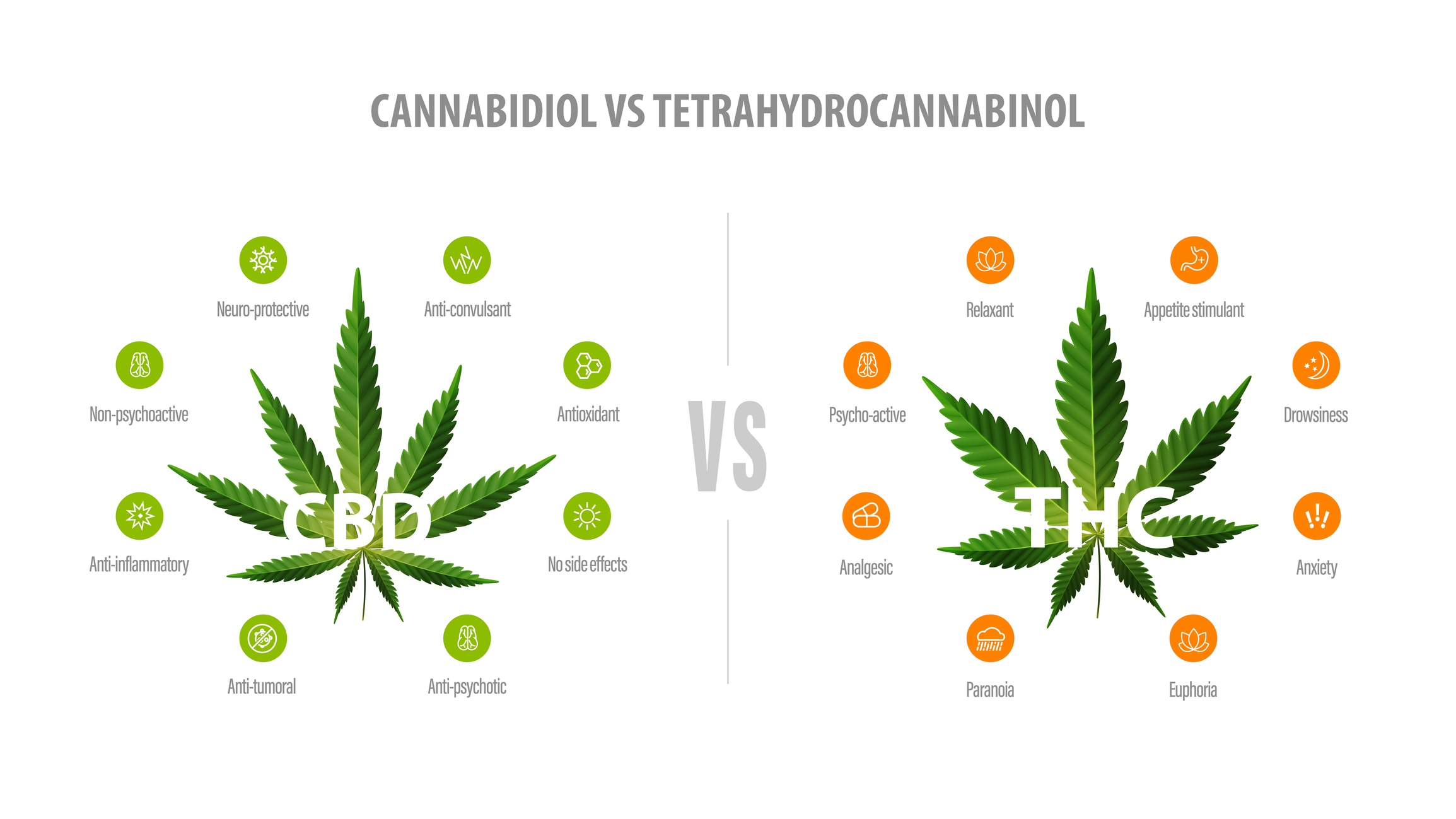
CBD works more like a background regulator than an instant switch. Instead of directly triggering receptors, it helps the body’s own cannabinoids last longer and also interacts with serotonin and pain pathways. CBD users sometimes report eased discomfort or improved sleep, but a systematic review of randomised trials has shown only modest or no benefit from CBD alone. In fact, it found only moderate evidence for pain relief using smoked THC or THC/CBD products, and little clinical data supporting pure CBD for pain. So it’s worth noting that in most clinical studies on CBD, THC or mixed cannabis extracts affect the results.
THC takes a much more direct route. It switches appetite on almost instantly, suppresses nausea because of the substance’s antiemetic properties, and can bring relief in pain conditions. For pain management, THC has shown modest benefit for neuropathic or cancer pain in some trials, but effects are generally minor and must be balanced against side effects. And, because the physical effects are typically stronger and faster, these adverse effects are also more common.
In short, CBD can bring subtle support for stress, sleep, and everyday aches, though some of these effects have not been demonstrated in clinical settings. Contrarily, THC produces stronger physical shifts like appetite changes and nausea control, but causes more pronounced side effects at the same time.
CBD vs THC: Mental Effects
CBD is known for its calm clarity. People often describe it as taking the edge off stress or anxiety without dulling awareness. It may support focus and sleep, but it doesn’t distort perception or cause altered states of consciousness.
THC changes how the mind processes time, mood, and sensory input. For some, that means experiencing euphoria, creativity, or a heightened sense of music and food. For others, especially at higher doses, it can trigger anxiety, paranoia, or short-term memory lapses. Moreover, regular THC use can lead to cannabis use disorder (CUD) or may exacerbate psychosis over time; therefore, caution is essential.
In short, CBD steadies the mind, while THC reshapes it — sometimes delightfully, sometimes uncomfortably.

CBD vs THC: Risks and Side Effects
CBD is usually well-tolerated, and commonly reported downsides are mild, including fatigue, changes in appetite, or digestive discomfort. But at higher doses, the substance may cause sedation, drowsiness, changes in mood, or even liver enzyme elevations. CBD also inhibits CYP2C19/CYP3A4, so it can amplify other medications (such as clobazam, warfarin, or certain chemotherapies) and significantly raise their levels. Another noticeable risk comes from mislabeled products that may secretly contain a high amount of THC.
THC brings stronger baggage. Common THC side effects include dizziness, drowsiness, impaired coordination, dry mouth, red eyes, increased heart rate, in addition to the cognitive impacts — slower reaction time and impaired short-time memory. Many patients discontinue medical cannabis treatment due to these adverse effects. But the effect that deserves additional attention is the risk of substance abuse: approximately 10-30% of cannabis users develop dependence over time. High-THC products also correlate with increased psychosis risk in vulnerable individuals. It’s recommended to note these clinical cautions and monitor for cannabis use disorder in long-term users.
In short, CBD’s side effects are mostly mild and linked to product quality or co-administered medication. At the same time, THC’s effects are more noticeable, shaping both body and mind, and potentially leading to drug dependence.
CBD vs THC: Legal Status
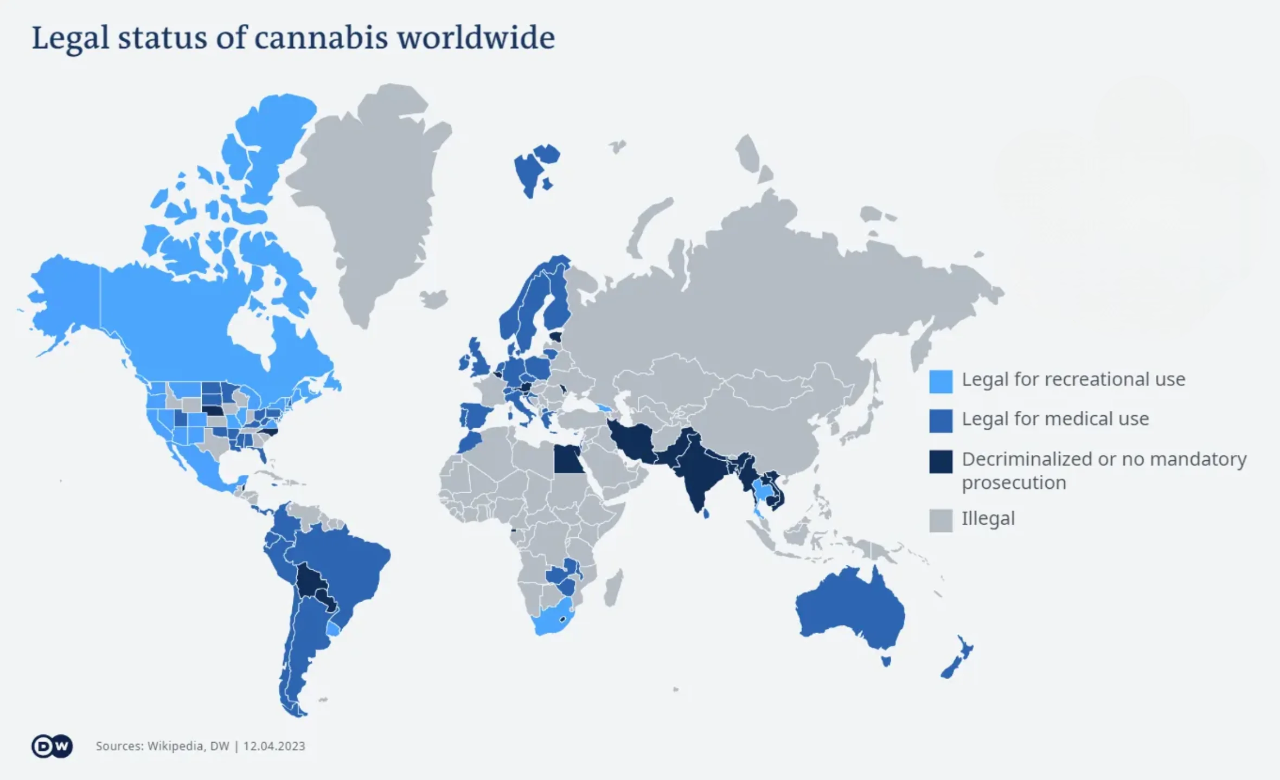
CBD is the more accessible one. In most countries, it’s legal as long as the product comes from hemp and contains only trace amounts of THC. That means CBD oil, gummies, or teas are widely available across Europe and North America. In the United States, hemp-derived CBD is federally legal; Canada allows it as part of full cannabis legalisation; and Switzerland sells CBD products openly as long as THC is ≤1%. Many EU countries, including Germany, France, Italy, Luxembourg, Greece, Finland, and Croatia, permit CBD under similar low-THC rules.
THC is far more restricted, but medical legalisation is spreading. Canada and Uruguay were the first to fully open the door. Germany legalised recreational use and home cultivation in 2024, followed by Luxembourg and Malta with their own regulated models. Mexico has legalised cannabis broadly, while South Africa allows private personal use. In the U.S., THC remains federally illegal — meanwhile, in 38 states it’s legal for medical use, and 24 states legalised the substance for recreational use.
All in all, CBD has gone mainstream worldwide, while THC lives in a patchwork of laws — fully legal in some countries, tightly controlled in others.

FAQ
 Expert Board Member
The article provides an accessible and informative comparison of CBD and THC, clearly outlining their effects, uses, and differences in a way that’s engaging for a broad audience. It successfully balances scientific concepts with practical insights, helping readers understand how these cannabinoids may impact mood, sleep, and discomfort. With minor additions on safety considerations, it serves as a strong foundation for those exploring cannabinoid-based wellness or therapy.