Reading Navigation


This content is grounded in peer-reviewed research, clinical guidelines, and established best practices. Claims are reviewed for accuracy and transparency. Learn more about our evidence standards
Does CBD Help With Sleep? What Science Says

- Cannabidiol (CBD) is a prominent cannabinoid derived from the hemp plant. It’s non-intoxicating and does not produce a euphoric 'high.' However, it is classified as psychoactive because it interacts with the central nervous system.
- Research suggests that low to moderate doses of CBD may modestly improve sleep quality. Other research suggests that CBD has no effect on sleep quality.
- Studies around CBD for sleep are limited. Many use small sample sizes, are conducted over short time periods, don’t use standardized doses of CBD, and administer different forms of CBD.
- CBD may indirectly benefit sleep by reducing anxiety.
- CBD should be considered as treatment for sleep disorders only after evidence-based solutions.
Poor sleep affects more than 35% of the world’s population at any one point in time. Meanwhile, more than 16% of people have insomnia — a sleep disorder where people regularly struggle to fall, or stay, asleep. No matter how severe, poor sleep can impact mental health and negatively affect overall quality of life.
An increasingly popular option for sleep support is Cannabidiol, commonly known as CBD, which is an active ingredient in cannabis, derived from the hemp plant. A number of studies suggest that CBD may be effective for improving sleep quality. Other trials show that CBD may extend non-REM sleep.
Nowadays, CBD is readily available in locations worldwide, and is often marketed as a sleep aid. However, scientific evidence is still emerging around the relationship between CBD and sleep. Below is a science-backed breakdown of how CBD can influence sleep and potentially help with sleep disruption.
What Is CBD? Understanding the Compound
CBD is Cannabidiol, which is a cannabinoid (compound) found in hemp plants called ‘Cannabis sativa’. This plant contains trace amounts of intoxicating compounds (typically 0.3 percent or less by dry weight). Unlike its intoxicating counterparts (THC), CBD is generally non-intoxicating because it does not produce a euphoric ‘high’.
CBD is psychoactive though, because it interacts with the central nervous system and produces calming, anti-anxiety, and anti-inflammatory effects.
CBD vs THC: Key Differences
CBD and THC for sleep are talked about interchangeably, but they are different compounds and have a number of key differences.
| Point | CBD | THC |
| Full name | Cannabidiol | Tetrahydrocannabinol |
| Intoxication and psychoactivity | CBD is non-intoxicating – it doesn’t alter brain activity nor cause a ‘high’. It is psychoactive because it interacts with the central nervous system. | THC is both intoxicating and psychoactive – it changes brain activity causing a ‘high’ that can alter mood and perception. |
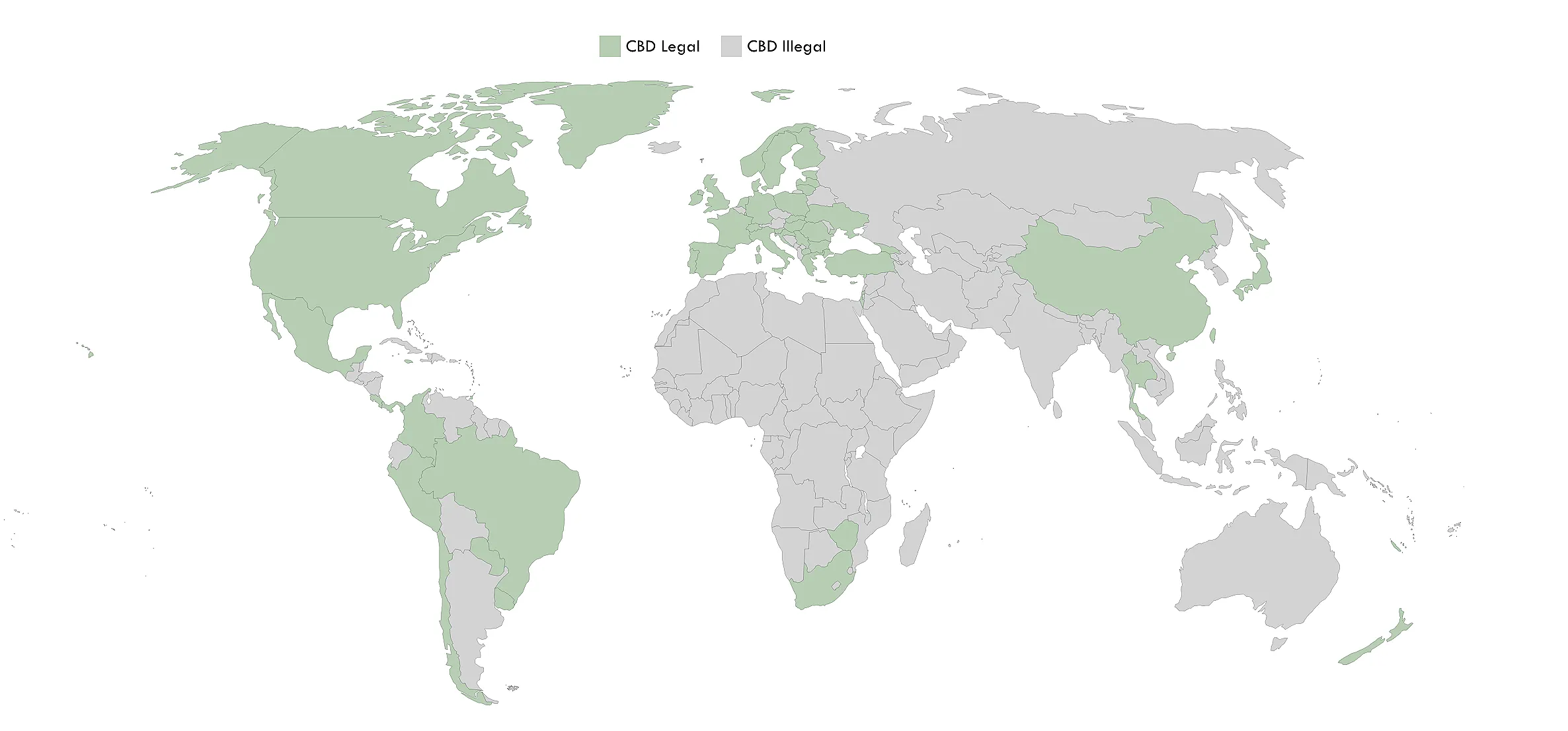
| Legality | CBD is legal (to varying degrees) in the US, Canada, most of Europe, parts of South America, Australia, New Zealand, and South Africa. | The legality of THC depends on the location. Some places allow medicinal use, while others have concentration limits that determine whether it’s legal. |
| Method of consumption | CBD can be smoked but is most commonly available as oils, capsules, and creams for sleep disorders. | THC typically comes in the form of herbs or flowers, hash/hashish, and hash oil. |
| Potential wellness properties | CBD has been shown to reduce anxiety behaviors in disorders like PTSD and OCD. Studies highlight that CBD can reduce stress in people suffering from stress and depression. CBD has anti-inflammatory and antioxidant properties. It also belongs to a group of compounds with antidepressant, antipsychotic, and anticonvulsant properties. | Research suggests that THC decreases anxiety at lower doses and increases anxiety at higher doses. THC is linked to reduced perceptions of stress, but also alters multiple stress response systems. Long-term use can lead to significant changes that promote dependency and have an overall adverse effect on the stress response system. THC has anti-inflammatory effects. |
| Market scope | CBD is increasingly used in commercial wellness products. The global CBD market size was $16.52 billion in 2025 and is projected to be $382.04 billion in 2034. In the US, 60% of adults say they have tried a CBD product and believe CBD is safe to use. | Statistics show that 21% of all Americans between the ages of 18-64 use THC flower/buds. |
| Top reported reasons for use | Self-reported stress Sleep problems Overall improvement in well-being Improved mood Anxiety relief Source | Relaxation Enjoyment Social reasons Coping Medical reasons Sleep Source |


Legal Status and Regulation
The legal status of CBD differs depending on the location and other factors.
Generally speaking, CBD products are legal and can be bought over the counter in the US. Across the majority of Europe, CBD products are legal but the percentage allowance limits vary greatly per country. In the UK, CBD is available in medical cannabis facilities and clinics as part of cannabis-based therapies.
CBD is legal in Australia, New Zealand, South Africa, and some nations in South America.
While CBD products are legal in these places and more, it’s important to check the regulations around CBD in each country, as the amount, concentration, and usage of products may vary. For example, the FDA in the US has stated that neither THC nor CBD products can be sold as dietary supplements.
CBD is strictly prohibited in Russia, China, the UAE, Singapore, and Belarus.
There’s a lack of standardized regulation for CBD products around the world, which can affect safety testing, ingredient transparency, and health claims. Research shows that inconsistent labeling across CBD products means products can have lower amounts of CBD than advertised and contain elements of THC, resulting in unpredictable dosing for consumers.
To use commercial CBD products in the safest way, look for products that have a Certificate Of Analysis (COA) from an accredited laboratory, clearly list ingredients in milligrams, and have easily-accessible information about where the hemp is sourced. Always read the customer reviews before buying.
Types of CBD Products Used for Sleep
A range of CBD products are available to support sleep. The most common include:
- CBD oils/extracts
- Gummies and edibles
- Capsules
- Sublingual (under the tongue) sprays
CBD vapes and topicals (creams) are also available but these aren’t recommended to help improve sleep.
The time for CBD to take effect depends on the type of delivery method, as well as other factors. The table below lists the average onset time and duration for different methods.
| Delivery method | Typical onset time | Average duration |
| Pulmonary inhalation (smoking/vaping) | 5 – 10 minutes | 2 – 4 hours |
| Sublingual mucosal (sprays) | 15 – 45 minutes | 4 – 6 hours |
| Oral gastrointestinal (edibles) | 1 – 3 hours | 6 – 8 hours |
Explore Progressive Treatments for Mental Health
 London , United Kingdom
Clinic and information portal describing mental‑health conditions treatable with medical cannabis.

 Munich, Germany
 5SWAN is a telemedicine platform for personalized medical cannabis therapy through secure video consultations and continuous care.
What Research Says About CBD and Sleep
Research around CBD and sleep draws different conclusions.
Some studies report a significant improvement in sleep quality when patients use CBD.
Others have found a positive correlation between CBD and a reduction in the symptoms of insomnia.
A 2022 trial demonstrated that a specific prescription of medicinal cannabis oil effectively improved subjective sleep metrics among adults with chronic insomnia. After two weeks of nightly administration, 60% of participants no longer met the clinical criteria for insomnia. However, it is critical to note that the study utilized a combination of 10mg/mL THC and 15mg/mL CBD. In such pharmaceutical formulations, the intoxicating THC acts as the primary sedative to initiate sleep, while the CBD is included to modulate psychoactive side effects.
Elsewhere, this systematic review of sleep studies using CBD to manage insomnia found that CBD alone or with equal quantities of THC may be beneficial in alleviating insomnia symptoms.
On the other hand, one study found that a single combined oral dose of 10mg of intoxicating cannabinoids and 200 mg of non-intoxicating cannabinoids significantly reduced total sleep time and heavily suppressed rapid eye movement (REM) sleep. This suppression of the REM stage is a widely recognized pharmacological response to intoxicating cannabinoids like THC, demonstrating that combined formulations can yield mixed or detrimental outcomes on objective sleep architecture.
A systematic review concluded that non-CBD cannabinoids can improve sleep quality. And this study showed that nightly supplementations of CBD did not benefit daytime cognitive performance in people with insomnia.
Long-term use of CBD for sleep disorders and insomnia remains unclear. Research shows that sleep scores improved for patients with sleep complaints within the first month of CBD use but fluctuated afterward. At the same time, other research suggests that chronic use of a low dose of CBD is safe and could improve sleep quality.


CBD and Anxiety-Related Sleep Problems
CBD may aid better sleep by reducing anxiety. Research demonstrates that CBD can alleviate anxiety in patients with anxiety disorders as well as in healthy individuals.
Anxiety and sleep are closely connected. High levels of anxiety can influence poor quality sleep, and poor quality sleep can worsen anxiety. CBD can potentially break this cycle by having a calming effect on the central nervous system and improve sleep indirectly by lowering anxiety.
In this instance, any improvement in sleep comes from reduced anxiety, not direct effects of CBD.
Limitations of Current Research
Research for CBD and sleep is ongoing. Currently, many studies use small sample sizes, are conducted over short time periods, don’t use standardized doses of CBD, and administer different forms of CBD. There’s also the challenge of measuring sleep quality in an objective way.
Similarly, much of the research examines the effects of CBD in tandem with THC or other therapies, so there’s no definitive evidence about the singular impact of CBD on sleep.
Not to mention, there remains a gap around the long-term use of CBD for sleep purposes. Possible adverse effects and dependency of continued use are yet to be clarified in trials.
How CBD Might Improve Sleep
Sleep is regulated by the brain, and cannabinoids like CBD can influence the frequency and phases of chemical activities that happen in the brain.
While intoxicating cannabinoids initiate sleep by directly binding to and activating the brain’s primary cannabinoid receptors, non-intoxicating variants like CBD work through an entirely different and highly indirect set of neuropharmacological pathways.
CBD actually has a very low binding affinity for primary cannabinoid receptors. Instead, it interacts with the broader central nervous system by activating serotonin receptors and positively modulating GABA receptors, which are the brain’s primary inhibitory pathways. By enhancing these calming neurotransmitter systems, central nervous system hyperarousal is reduced, the stress hormone cortisol is lowered, and pre-sleep rumination is mitigated, thereby indirectly facilitating a physiological state highly conducive to natural sleep onset.
One study reveals that CBD may cause mental sedation, helping reduce anxiety, racing thoughts, stress, and pre-sleep rumination. It may also support nervous system regulation – this study found that CBD contributed to normalizing abnormal stress responses in patients.
Plus, CBD has anti-inflammatory properties, which may not only reduce the sensation of pain, but also influence how pain is signaled to the brain. People with chronic pain have indicated pain reduction ranging from 42% – 66% with CBD alone. The more calm and in control people feel, the more likely they are to fall asleep easily and deeply.
Dosage and Safety Considerations
There is currently no universally standardized dose for CBD as a treatment for sleep disorders. Clinical trials investigating applications for sleep and anxiety typically administer oral doses ranging from 15-300mg per day.
Low doses (e.g. 15-50 mg) can sometimes have a mild alerting or wake-promoting effect, while significantly higher doses (e.g. 150-300 mg) are more consistently associated with central nervous system sedation and the promotion of sleep.
Factors that can impact the effects of CBD include:
- Body weight
- Metabolism
- Severity of sleep condition
- CBD administration method (e.g. oil, edible, spray)
Possible Side Effects
CBD is generally well-tolerated among people using it for sleep disorders but it does have possible side effects. Possible side effects of short-term CBD use include:
- Fatigue
- Dry mouth
- Diarrhea
- Reduced appetite
- Drowsiness
Possible side effects of long-term CBD use are generally mild and may include:
- Excessive daytime sleepiness (somnolence)
- Gastrointestinal distress (such as diarrhea)
- Reduced appetite
- Potential elevations in liver enzymes, particularly when interacting with other medications
Safety First — Get Matched with Trusted Providers
 Birmingham, United Kingdom
 Maruleaf Clinic is a UK-based medical-cannabis clinic that offers online and in-person consultations with licensed clinicians to provide prescriptions for medicinal cannabis, focused on patients with pain-related conditions.
 London , United Kingdom
 Lyphe Clinic provides medical cannabis consultations and prescriptions through a digitally driven patient platform, making treatments convenient and accessible
Is CBD Worth Trying for Sleep?
There is some research that indicates CBD might be a useful aid for sleep, especially among people with insomnia and sleep disorders related to anxiety, pain, and stress. But, there’s no definitive evidence that CBD improves sleep. At the same time, the dose and quality of CBD products are big variables in the possible impact that CBD may have on sleep.
Further research is needed to wholly state that CBD helps with sleep.
Before using CBD to help with sleep problems, it’s best to speak with a healthcare professional and try sleep strategies with stronger evidence of success.
FAQ
 Expert Board Member
This article addresses the highly relevant topic of CBD as a sleep aid, offering an accessible overview for consumers. While it rightly cautions patients to prioritize evidence-based treatments, the text requires critical scientific revisions. Specifically, it must correct inaccuracies regarding CBD pharmacokinetics, receptor mechanisms, and the conflation of pure CBD with THC-combination therapies in clinical trials to ensure patient safety and maintain clinical integrity.






 Gozo, Malta