Reading Navigation


This content is grounded in peer-reviewed research, clinical guidelines, and established best practices. Claims are reviewed for accuracy and transparency. Learn more about our evidence standards
Healing Through Kink: The Power of Male Submission
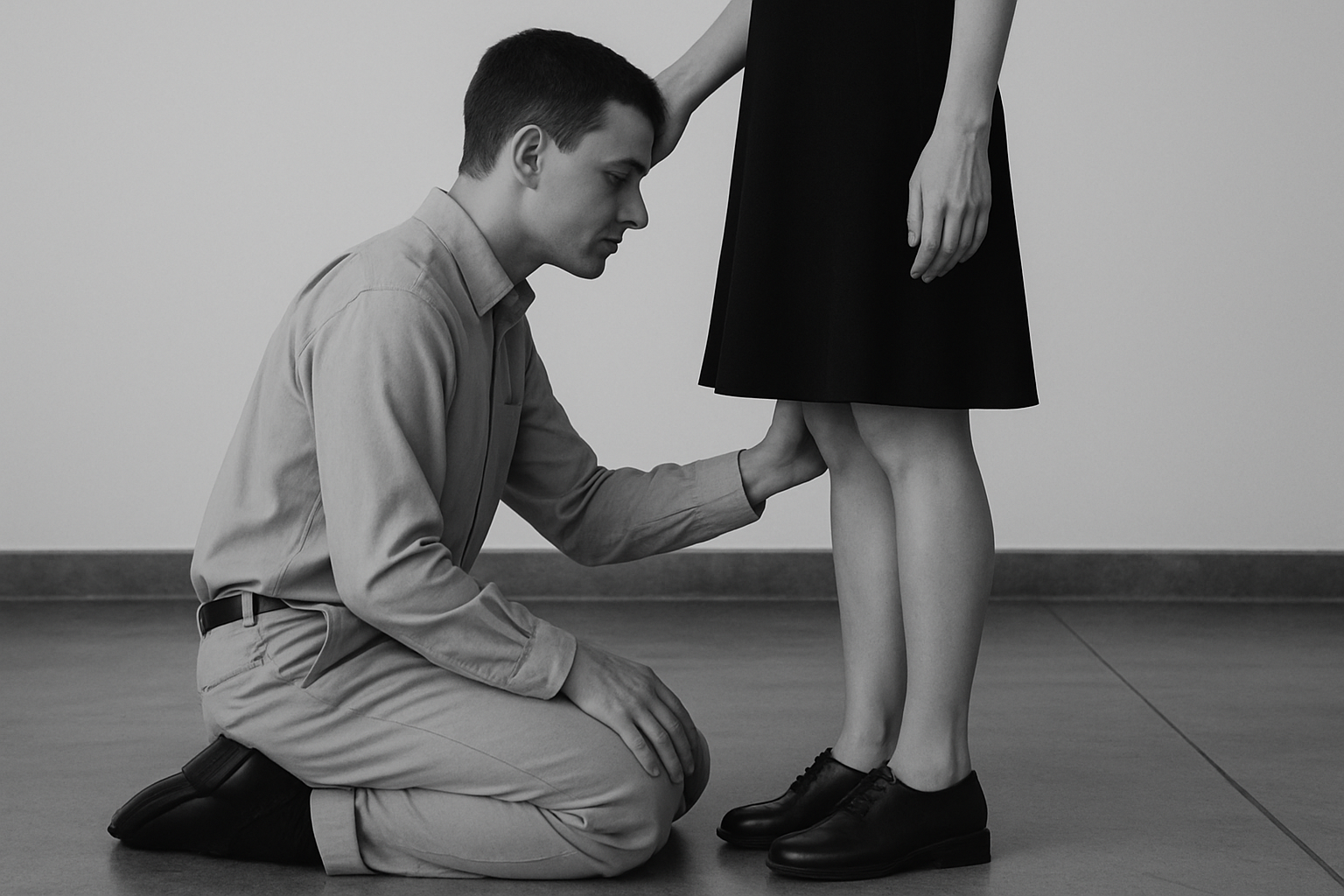
He did not expect to cry. On his knees, wrists bound, cheek pressed to the floor, my hand rested firmly on the back of his neck as if I were holding down a disobedient dog.
The scene had already peaked: the sting of impact from a flogger, the rush of adrenaline, the reassuring whisper of “good boy” in his ear. Now the room was quiet.
Years of holding it together: telling his friends he was “fine” and swallowing grief to keep his face straight. A dull ache of loneliness had given way to comfortable numbness and apathy. His life had become a shrug of indifference. Until he met me.
In that moment of surrender, something in his body finally believed it was safe enough to let go. That is often my role: giving men permission to feel. Afterward, he said submission felt like relief. It wasn’t humiliation, nor weakness, as is often assumed.
To deny men the right to submit is to deny him the right to access another version of himself beyond the roles he typically plays.
We often hear of male dominance as a powerful position to hold in the bedroom or aspire to in their career. Often conflated is the difference between being dominant and being a Dom — one about imposing your will and the other being of service. Both are culturally acceptable. Instead, I want to talk about one of the most culturally taboo, yet psychologically healing spaces modern men have access to: male submission.
To understand why it matters, we have to start with what is happening to men in the first place.

The Crisis of Modern Masculinity
Scott Galloway, a business professor and cultural commentator, calls the data on young men’s struggle “overwhelming.” In his new book Notes on Being a Man, he writes that “seldom in recent memory has there been a cohort that’s fallen farther, faster.” Boys fall behind early in school, in systems not designed for their later-developing male brains. Fewer men teach, fewer men mentor, and so many boys grow up without reliable models of healthy masculinity, instead relying on outdated gender norms.
Economically, things are just as bleak. Young men face soaring housing costs and student debt, the disappearance of well-paid blue-collar jobs, and wages that have not kept pace with productivity. About 60 percent of men aged 18 to 24 live with their parents, and 1 in 5 are still at home at 30.
There is also what Galloway calls a crisis of connection. Virtual interactions have replaced the messy work of real relationships. Fewer men have the economic or emotional stability that many women understandably want in a partner. “45 percent of men ages 18 to 25 have never approached a woman in person,” Galloway notes.
Pause and take that in: Forty-five percent of men have never approached a woman in person. By twenty-five years old. And without real relationships, many drift into pornography, gaming, or extremist online communities.
Giving men permission to feel. Afterward, he said submission felt like relief.
Kink, and specifically submission, is rarely on that list of what might actually help men nurture a connection to themselves and others. Yet it offers something men are starved for: a structured place to feel. Beyond that: a place to experience an interaction with a woman in real life.
I’d like to clarify that I am not promoting that young men turn to paid sex to fill the void in their hearts or lure them off their screens. It’s a fine line to walk because I am not against the rights of sex workers. However, for the sake of my argument, I want to make it clear that most Dominatrices don’t consider themselves sex workers, and most kinksters who are involved in BDSM communities would argue that BDSM has very little, if anything, to do with sex. In actuality, the de-essentialization of sex is what makes it feel so healing, especially for those who have experienced sexual assault. For the marginalized, it’s about belonging. For many, it’s a hell of a lot of fun.
I hope this is enough context for us to continue.

Why Male Submission Is Taboo
Catherine Scott, in Thinking Kink, points out that part of the discomfort around male submission lies in how little we understand the exchange in a Dominant/submissive relationship. In its truest form, it’s more of an exchange of energy, where “both parties aim to derive pleasure from the other.” It is not a one-way street where the Dominant “gets their way” and the submissive suffers. For many, the appeal is as much about intimacy as it is about an intense physical experience.
A “scene” as it is referred to, is a consensual container where the dynamic of dominance and submission, or any other kinky act, is played out. It is particularly powerful because it can be framed as a place to exist outside of one’s regular life. It is generally built in three parts: You negotiate desires and limits. The kinky activities take place. Afterward, you receive aftercare and return to your “regular self.” Life goes on. It is a complex role play where you experience the temporary suspension from the burden of selfhood.
To deny men the right to submit is to deny him the right to access another version of himself beyond the roles he typically plays.
Submission gives permission to cry, to shake, to ask to be held. It replaces the performance of invincibility with the practice of being human.
A man’s submission might be viewed as acceptable if he is a high-powered leader who needs to counterbalance. A regular man who submits simply because he finds it pleasurable, or emotionally meaningful, could be considered a nuance too far.
To put it bluntly: why would a man lower himself to submission, that is, to behave “like a woman”, unless he needs a break from the power he naturally possesses?
Margot Weiss, in Techniques of Pleasure: BDSM and the Circuits of Sexuality, captures this perfectly: “A submissive man risks his masculinity.” The risk is social, not physical. The male submissive is unsettling because he occupies a position our culture still codes as feminine: receptive, yielding, emotional. The submissive is either in a state of worship or servitude — often, both.
The belief that “boys do not cry” still shapes many men’s lives, and that there are very few spaces where a man is truly permitted to break down. We cheer for men who endure pain in sports. Yet when a man asks to have his backside flogged in a dungeon, as one male submissive describes it in Scott’s Thinking Kink, men who enjoy pain are often seen as “a bitch, a pussy, a gimp, pathetic, freaky, sick, and most of all, unmanly.”
The problem is not the submission. The problem is a story that says surrender threatens the patriarchy.
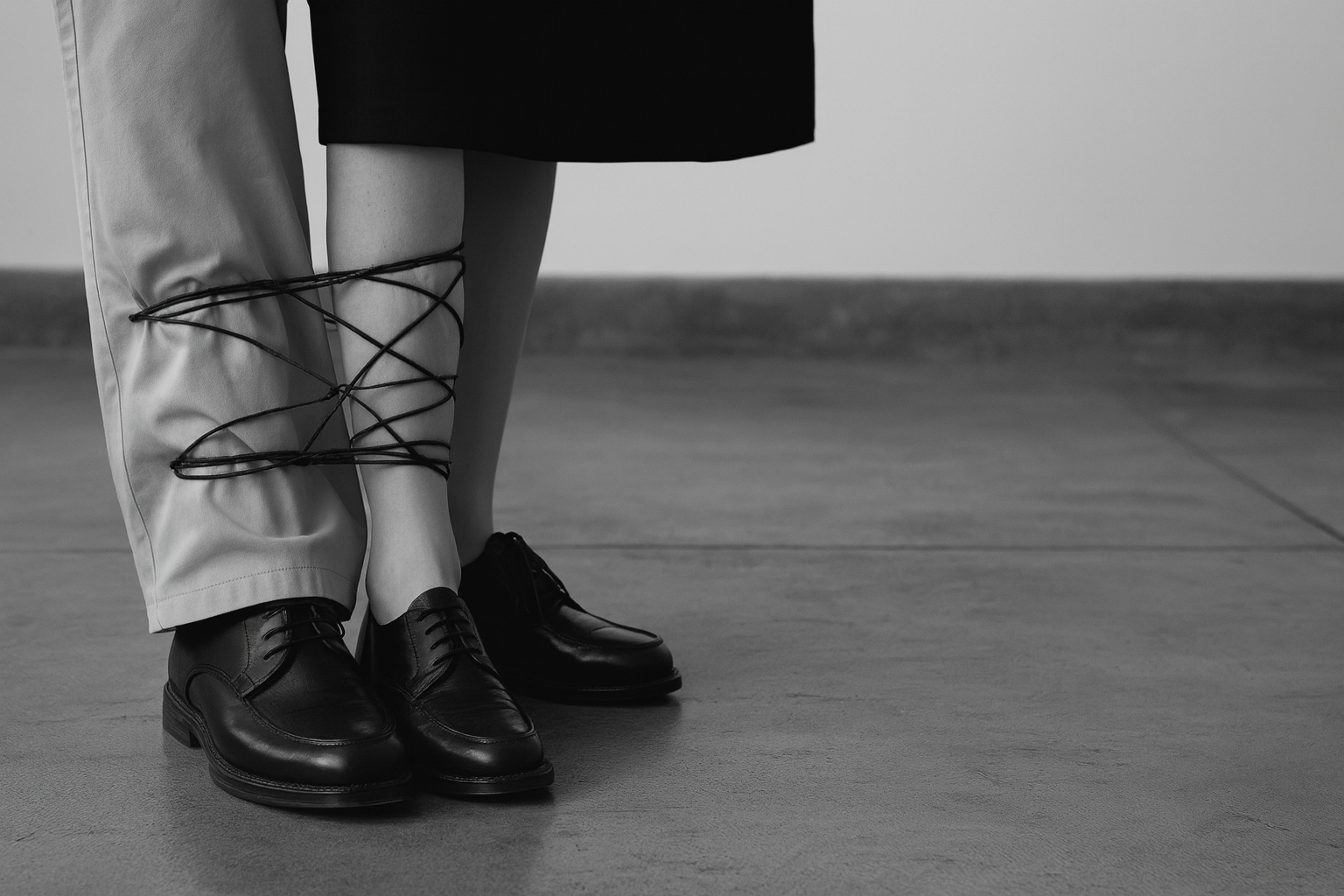
What does submission give men?
During intense BDSM play, many subs enter a state known as subspace, a trance-like altered consciousness often described as floaty, light, or euphoric. This is linked to transient hypofrontality, a temporary quieting of the brain’s executive functions. Time blurs. Self–criticism dims. The thinking mind steps back and sensation moves forward. It is similar to a runner’s high or deep meditation: for a little while, the noise of life shuts off.
Biologically, BDSM scenes trigger the stress and reward systems in ways that can benefit mood and regulation. A 2020 study measuring hormone levels in BDSM participants found that submissive partners showed increased cortisol after scenes, a sign of temporary “fight or flight” arousal. That spike is followed by a rise in endocannabinoids and (likely) endorphins, the body’s own pain-relieving, pleasure-inducing chemicals. A systematic review concluded that these patterns implicate both the physiological stress system and the brain’s reward circuits. In simple terms, the body responds to consensual intensity with its own homegrown cocktail of painkillers and euphoria.
He tells me that submission has helped him realize that he wants to be a father.
After the peak comes aftercare. This could look like cuddling, affirmations, and snacks. Oxytocin, the so-called “cuddle hormone”, surges during this stage, deepening feelings of connection and calm. BDSM practitioners describe an afterglow that leaves them less stressed, more grounded, and more bonded with their partners.
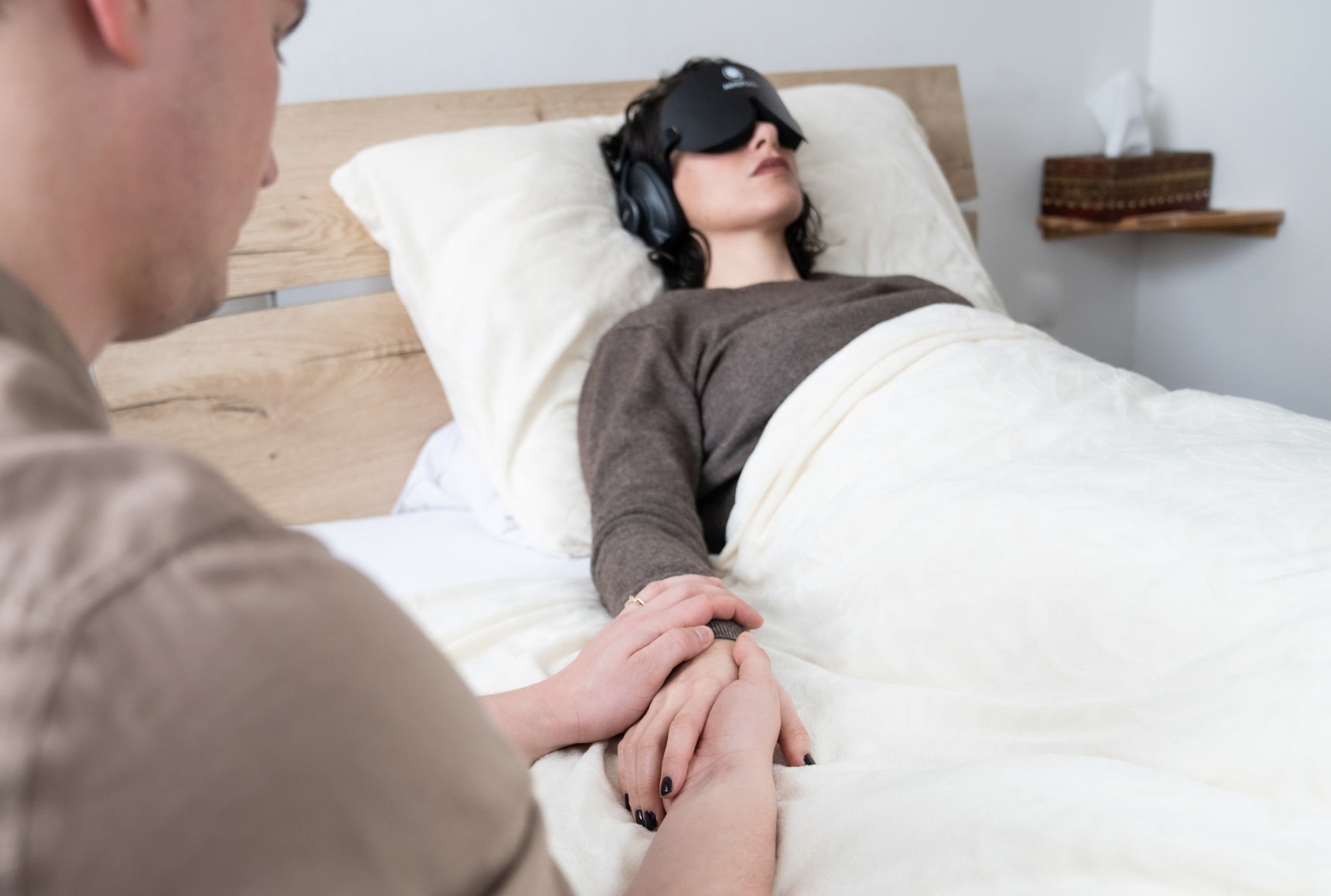
Submission gives permission to cry, to shake, to ask to be held. It replaces the performance of invincibility with the practice of being human.
Submission also disrupts isolation. Kink is rarely practiced alone. It happens in relationships, communities, and friendships that are often founded on trust, and explicit about consent, communication, and care. For a man who spends most of his time with screens and strangers, entering a subculture where people talk frankly about feelings and boundaries can be transformative. At the very least, it’s worth leaving the house for.
Over time, integrating a submissive identity can soften the split many men feel between who they are and who they are supposed to be. Instead of a secret kink that contradicts his masculinity, submission becomes one of the ways he lives it.
Why Male Submission Matters
Normalizing male submission is not about telling every man he should get tied up for the greater good. It is about widening the repertoire of how men are allowed to seek relief.
When we treat submission as inherently emasculating, we cut men off from one of the few culturally accessible rituals that combines intensity, embodiment, vulnerability, and care.
On the other hand, when we recognize that many men already find healing in consensual surrender, we loosen the grip of shame. We make it more likely that a man will talk to his partner about his fantasies rather than disappearing; or encourage young men afraid of rejection to gain confidence interacting with a woman through the controlled role-play that BDSM allows.
Choose Your Path to Mental Clarity

 Portugal
My business is building the next-generation healing ecosystem — powered by the BioPsyche Renewal Protocol — combining neuroscience, psychology, biohacking and spiritual intelligence to redefine how people heal and evolve.

 United Kingdom
 Integrative counselling and psychotherapy offering online and in-person sessions in Exeter for anxiety, depression, stress, and relationship issues.
Now let’s return to the man on the floor who began our story.
I wiped the tears from his face. I reminded him of how proud I am of the way he communicated his needs. His body, flooded with endorphins and oxytocin, feels both exhausted and cleansed, as if a backlog of emotions had been wrung out.
Months later, chatting over beers in a London pub, he tells me that submission has helped him realize that he wants to be a father.
“How so?” I ask.
“It’s taught me that submitting to someone or something could feel good and not that I’m losing a part of myself. I see fatherhood as sacrificing your own wants for your children. The idea that doing whatever it is for someone else can feel really, really good, makes me feel ready to be a father.”
The healing power of male submission is that it gives them back something they were never supposed to lose: the right to feel themselves fully and without apology in the presence of another human being who has the capacity to accept them.
In many ways, submission can make stronger men, if only we believed ourselves when we ask them to be vulnerable.
 Expert Board Member
The stigma surrounding male submission in a BDSM context often reflects cultural concerns about gender hierarchy. Research suggests that such experiences can engage both stress-response and reward systems, leading to the release of endorphins and oxytocin that support emotional bonding. When practiced with clear communication, informed consent, and appropriate safety measures, consensual submission may facilitate emotional authenticity, embodied connection, and support the integration of aspects of the self that are often discouraged within traditional masculinity frameworks.



 Prague, Czech Republic
 Spain
Spain