Reading Navigation


This content is grounded in peer-reviewed research, clinical guidelines, and established best practices. Claims are reviewed for accuracy and transparency. Learn more about our evidence standards
Eulas Clinics: Bringing Ketamine Treatment to Scotland
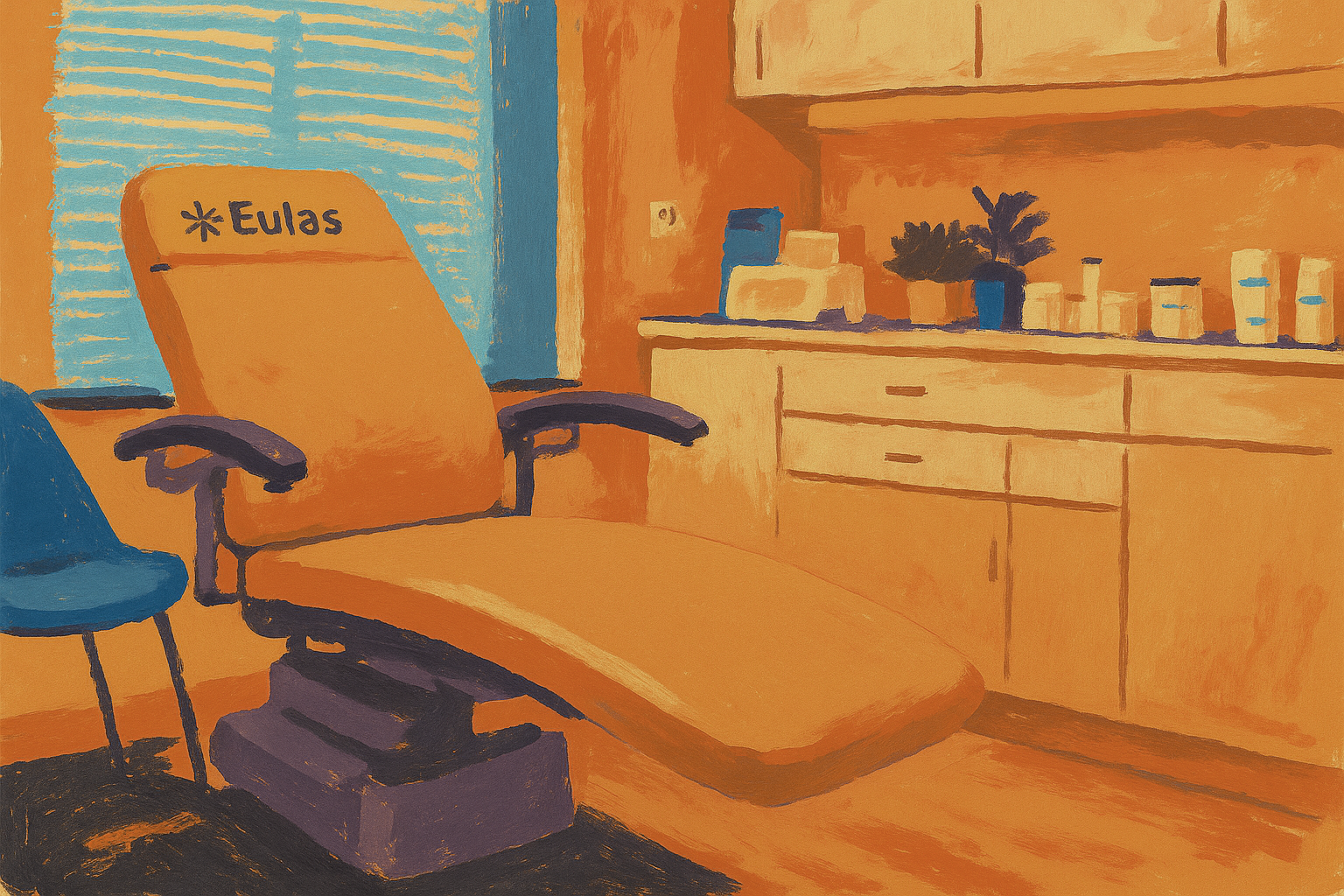
Inspired by a family journey of recovery from alcohol dependency, Eulas Clinics is working to support people’s wellness through off-label ketamine therapy.
Based in Hamilton, Scotland, Eulas Clinics uses a psychedelic-informed approach1 to support people on their own journeys. Founded by Sean Gillen, the clinic incorporates psychotherapy as part of its treatment plans, including pre- and post- treatment integration therapy, breathwork and meditation.
“Our core mission is simple, we want people to get better,” says Gillen.

Ketamine-Assisted Therapy in the UK
Ketamine therapy is growing in mainstream acceptance as a treatment for depression in the UK, due to research suggesting it may provide benefits as a fast-acting anti-depressant2.
Research into ketamine for mental health conditions and its long-term outcomes is still being studied, but results suggest that it may provide relief by blocking activity of NMDA receptors3 and enhancing neuroplasticity.
In the UK, ketamine is only licensed for use as an anesthetic and analgesic, and is not a licensed treatment for depression. However, it can be prescribed off-label by a qualified prescriber for people with mental health conditions if they are not responding to conventional therapies.
Ketamine-assisted psychotherapy combines treatment sessions with the psychedelic compound ketamine, supported by pre- and post-treatment psychotherapy that focuses on integrating the experience.


Ketamine clinics are operating legally in countries around the world. Many of them, like Eulas, are harnessing the principles of this approach, combining psychotherapy sessions with ketamine treatment protocols.
Theories suggest that the enhanced neuroplasticity induced in the brain by the ketamine treatment may facilitate emotional learning4, personal insight, new perspectives and help to reframe negative thought patterns.
The theories further suggest that combining this window of time where the mind is in a “neuroplastic state” with psychotherapy may improve long term outcomes.
“We give psychotherapy sessions to prepare people before the first infusion,” says Gillen.
“That’s really important. So, they’re getting prepared to handle the experience if it’s challenging, and that’s all part of it.”
Ketamine can have effects such as dissociation, mood changes and perceptual changes, including hallucinations, and can come with side effects such as vomiting, confusion, impaired co-ordination and blood pressure changes.
Choose the Type of Support That Matches Your Need

 London, United Kingdom
Ketamine-assisted therapy for treatment-resistant mental health and addiction
 United Kingdom
 Consultant‑led clinic providing psychedelic‑therapy using ketamine infusions.
The Eulas Treatment Program
Gillen explains that Eulas has developed a treatment protocol that is adapted to a patient’s individual needs.
Prioritising psychotherapy alongside ketamine treatments, the typical program at Eulas includes 12 psychotherapy sessions and four ketamine doses. The doses are decided by body weight, “so it’s not a random dose,” says Gillen.
“The first dose is actually 50% to see how the person responds, and the dose is administered by a consultant anesthetist. The dose they get here is significantly less than a surgical dose.”
“Our nurse, who also supports our anesthetist, is a specialist in anesthesia recovery as well, and has psychotherapy training.”
During the first week of the program, an initial assessment is carried out followed by two preparation sessions, where patients will work with a psychotherapist to set treatment goals and expectations.
In the following two to six weeks, patients receive a further four assisted-psychotherapy sessions alongside integration sessions to help patients understand insights they may have gained during treatment.
Gillen explains that these sessions are also preceded by mindfulness practices to promote relaxation, and says that the clinic aims to help its patients achieve lasting recovery, with the program spanning eight months in a supportive, clinical environment.
Ketamine Therapy & Patient Safety
With expert staff on-site, Gillen also emphasises that the clinic, which is regulated by Healthcare Improvement Scotland (HIS), carries out rigorous and thorough screening before an individual is accepted onto the program.
“We do a pre-assessment, we do a psychiatric assessment, and we get the patient’s medical summary report,” explains Gillen.
“Our doctors make sure that the person is safe to go ahead with the treatment.”
The clinic will refuse to treat a patient if they do not meet the qualifying criteria, for example, if a person’s body mass index is too high, or if they have schizophrenia or a history of psychosis, mania or hypomania.
The clinic has strict procedures in place and equipment to prevent and handle any medical emergencies including oxygen, a defibrillator, and emergency medicines for anxiety, high blood pressure, high heart rate, low heart rate, and allergic reactions.
“The one drug we use for side effects is for nausea, which is the most common side effect from a ketamine infusion,” explains Gillen.


“That is used in around 30% of people. We also ask that participants in the treatment don’t eat any food for four hours before the infusion. If they’re a sickly person, we might give them the medication to prevent nausea.
Ketamine is sometimes used as a street drug, with some people becoming dependent on the substance, which can cause side effects such as irreversible damage5 to the urinary tract.
Although research6 has underscored the relative safety of ketamine treatment for adult patients with depression, a meta-analysis of studies has emphasised the importance of medically supervised administration, vigilant monitoring and sensible dosing.
“We do more psychotherapy than we do ketamine. After the programme, patients will work for six months with a psychology assistant helping them. So, they’re here for the long haul, for eight months,” says Gillen.
“The people who respond best to this treatment are the people who are looking at wellness,” explains Gillen.
“They’re looking at the big picture. They’re taking psychotherapy and are serious about changing and about growth. People who are looking for a quick fix and looking for a medicine to make them feel better overnight — those people will not get better.”
Working to Break Stigma Around Ketamine Therapy
People living with treatment-resistant depression face many challenges including lack of treatments that work, stigma around mental health, and stigma7 in seeking out alternative treatments.
Gillen says there is an urgent need to challenge this stigma which holds back access to innovative treatments.
“There’s all sorts of stigma surrounding this, and that’s something that we need to break down,” says Gillen.
“Fortunately, a lot of people who come to us are well read when it comes to their mental health and treatments for it, so they don’t have as much stigma, and that’s a good thing.”
Having worked in rehabilitation for the last 15 years, Gillen says that when patients are able to gain relief from their mental health symptoms, their life can become more manageable and provide mental stability.


“There’s a small group of people who have come here who haven’t responded, and they are unlucky,” adds Gillen. “What I’m seeing in the rehab business is that a lot of people who do rehab go back to drinking and drugs. But the outcomes here have been really good.”
Gillen says the main goal at Eulas is to provide a service that people will not have to return to.
“We’ve got a mindset here, and our mindset is that these illnesses are very sinister and complicated. We understand that there is no fast way to just get better from this and, for the majority of people, most of their recovery is after they’ve done all the infusions,” says Gillen.
“They will improve if they keep making changes in their life and in their behavior.”
While ketamine therapy is now presenting an alternative option for people living with treatment-resistant mental health conditions, the Royal College of Psychiatrists has emphasized that, while studies show rapid improvement following treatment, further research is needed to understand treatment protocols and the effectiveness of long-term use and that mental health practitioners should “proceed with caution” when treating patients with ketamine.
We are still in the early stages of psychedelic-assisted therapies entering the mainstream medical community. And as with any paradigm shift, several considerations are operating at the same time. Health authorities are exercising caution as the systems process the facts of these new treatments; while providers like Eulas advocate and innovate, hoping to increase access to potentially helpful treatments.
 Expert Board Member
Depression is increasingly recognized as a complex, multifactorial illness that involves disrupted brain-circuit function and reduced brain flexibility — neuroplasticity — and not just a simple “chemical imbalance.” Ketamine is promising because it seems to act on core neuroplasticity mechanisms, potentially creating a short window of plasticity where the brain is more able to update old patterns, and psychotherapy can help turn that shift into longer-term change. This article captures both the potential and the limits of ketamine treatment.