Reading Navigation


This content is grounded in peer-reviewed research, clinical guidelines, and established best practices. Claims are reviewed for accuracy and transparency. Learn more about our evidence standards
What to Know About Ketamine Therapy for Chronic Pain Management

Chronic pain affects a substantial proportion of adults and can be debilitating. Despite the scope of chronic pain – and the medications and therapies to manage it – many patients remain untreated for the condition. Part of the reason is that opioids are one of the most common prescriptions for chronic pain, but these can have their own side effects, create dependency, and are not effective for all people experiencing chronic pain.
Ketamine is a specialist treatment that may help selected patients with refractory chronic pain, particularly some neuropathic pain conditions. However, evidence varies by diagnosis, route, protocol, and study design, so it should not be seen as a universal solution.
Below, we look at how ketamine can be a tool in complex chronic pain care, as well as the risks and decision criteria people with chronic pain should apply before exploring ketamine therapy.

How Ketamine Works for Chronic Pain
Opioids and ketamine work differently. Opioids act on opioid receptors in the brain, spinal cord, and peripheral tissues to alter pain transmission and pain perception. Ketamine mainly acts by antagonising (blocking) N-methyl-D-aspartate receptor (NMDA) receptors. This is a fundamentally different mechanism than opioids and other treatments for chronic pain, including NSAIDs and nerve blocks.
NMDA receptors are a protein located in the central nervous system. These receptors enhance pain signals to the brain, so when blocked, the brain receives fewer pain signals.
Ketamine may reduce central sensitisation, a process in which the nervous system becomes more responsive to pain signals. Researchers have also explored whether ketamine influences neuroplasticity, but these mechanisms are still being studied and should not be presented as a guaranteed ‘reset’ of the nervous system.
Explore Progressive Treatments for Chronic Pain



 Vilnius, Lithuania
 The first specialised ketamine and EMDR therapy clinic in the Baltics, offering ketamine-assisted therapy (KAP), ketamine therapy, EMDR therapy and evidence-based psychotherapy
Chronic Pain Conditions Where Ketamine May Help
Chronic pain is varied. The effectiveness of ketamine therapy depends on the type of chronic pain, as well as the volume and depth of research that has been carried out regarding the specific therapy.
The chronic conditions that have some evidence to suggest ketamine therapy may help include:
- Complex Regional Pain Syndrome (CRPS)
- Selected refractory neuropathic pain syndromes
Other conditions that have mixed or limited evidence are:
- Fibromyalgia
- Migraine/refractory headache
- Trigeminal neuropathic pain
- Postherpetic neuralgia
- Some post-surgical pain states
It’s important to note that ketamine therapy is not a universally effective treatment for chronic pain and cannot be used to manage all pain conditions. Ketamine is usually considered only after standard evidence-based treatments have been tried and have not provided sufficient relief or acceptable function.
One study states that ketamine therapy is best used for refractory chronic pain, which is a condition where pain persists despite rounds of standard treatment.
Other research shows that ketamine therapy is especially effective for neuropathic pain. Neuropathic pain results from damage or dysfunction to the nerves, spinal cord or brain (the central nervous system), which can be caused by injury or disease. The damaged nerves send wrong signals to pain centres in the body, often causing chronic pain. Persistent shoulder pain after a stroke is an example of neuropathic pain.
Ketamine is generally considered more relevant where neuropathic mechanisms or central sensitisation are suspected than in common nociceptive pain states.
Ketamine Treatment Approaches for Chronic Pain
Protocols vary widely with ketamine therapy, and no single dosing schedule has been universally adopted. Evidence is not equally strong across all routes of administration, with IV (intravenous) ketamine being the route most commonly studied in chronic pain.
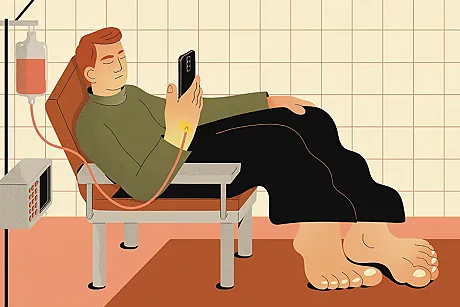
Most ketamine therapy options are administered under medical supervision in either a hospital or a pain clinic. With the IV option, patients sit or lie down and receive a very low dose of ketamine slowly into the bloodstream for a set time over a number of days.
While there is no standardised dose or frequency for ketamine infusion treatment, one trial followed a protocol of 0.5 mg/kg of ketamine infused over 40 minutes for five consecutive days.
Other (non-invasive) ways to administer ketamine include oral (capsules or liquid), intranasal (nasal sprays), and topical (skin creams). These options are less common than IV delivery and tend to be used in context-specific chronic pain management cases.
Whatever way ketamine is administered, it’s typically given as part of a multimodal approach – combining other treatments or therapies at the same time.

Effectiveness and Patient Outcomes
Some studies suggest that ketamine can reduce pain and improve related symptoms in selected patients with refractory chronic pain. However, response rates vary, study protocols are heterogeneous, and benefits are often temporary. In many patients, any improvement may last days to weeks, and in some cases longer, but durable long-term benefit is not well established.
One clinical study gave 1,034 patients a standardised ketamine infusion, and 20 to 40% saw a meaningful improvement in their pain management.
Another study found that some patients experienced pain relief lasting up to three months, although duration varies widely depending on the pain condition, route of administration, and other clinical factors.
One set of randomised controlled trials found no clear evidence that ketamine – administered intravenously, orally or topically – reduced pain intensity in the immediate term for adults with chronic pain. The trials also showed that intravenous ketamine therapy may increase the risk of side effects. Oral and topical administration did not carry the same risk.
Like many emerging treatments and trials, the outcomes of ketamine therapy are diverse. Some of the factors that can influence results include:
- How long the person has suffered from chronic pain
- The degree of central sensitisation
- Pre-existing conditions like depression
Pain outcomes should be assessed alongside function, sleep, mood, and quality of life.
Still, the evidence base is mixed. While some studies report clinically meaningful benefits in selected patients, others have found no clear short-term reduction in pain intensity, and adverse effects may be more common with IV treatment.
Find Your Next-Gen Therapy Provider

 London, United Kingdom
 Private Harley Street psychiatrist offering medically supervised ketamine treatments and specialist psychiatric care in London.
 United Kingdom
 Patricia Taddei is a psychotherapist offering Core Process Psychotherapy.
Risks, Side Effects, and Contraindications
Ketamine therapy should always take place with continuous monitoring from medical professionals to ensure that treatment is safe and to observe possible side effects. Most studies show that patients with chronic pain tolerate ketamine therapy well. However, there can still be side effects, and one report suggests that more than one in three patients may experience these.
Possible side effects include:
- Dizziness
- Blurred vision
- Vertigo
- Hallucinations
- Nausea/vomiting
- Nightmares or vivid dreams
- Impaired motor function
- Memory deficits
- Dissociation
- Transient increases in blood pressure and heart rate
- Perceptual disturbance
- Possible urinary and liver-related complications with repeated/prolonged exposure
Extra caution or specialist assessment may be needed in people with uncontrolled cardiovascular disease, psychotic disorders, significant cognitive impairment, active substance misuse, significant hepatic or renal disease, and during pregnancy.
Ketamine has a different adverse-effect profile from opioids. It is generally less associated with respiratory depression at therapeutic doses, but it can still cause important adverse effects and requires appropriate monitoring. Rather than being universally ‘safer,’ it is better thought of as a different option that may suit some patients better than others.
Legal, Regulatory, and Insurance Considerations
Ketamine’s regulatory status for chronic pain varies by country, indication, and route of administration. In many settings, ketamine use for chronic pain is off-label. Patients should confirm local licensing, prescribing standards, informed consent requirements, and insurance coverage in their own jurisdiction.
Many health insurance companies consider ketamine therapy to be ‘off-label’ and may not cover it as part of a medical policy.
Combining Ketamine with Other Pain Management Strategies
When used, ketamine is typically considered as one part of a broader pain management plan, which may also include medication review, physical rehabilitation, psychological support, and condition-specific interventions
Neuromodulation or interventional procedures may also be applied. These are electrical, chemical or magnetic stimulations that can change brain activity.
The Role of the Pain Specialist
Ketamine is a powerful psychoactive substance, and should only be given by qualified pain specialists or other medical professionals trained in its use. Those who administer it should understand how it works and the risks it entails. They are also responsible for giving the correct dose (often determined by the patients’ physical health, pain severity, and treatment goals).
Additionally, specialists administering ketamine should:
- Assess psychiatric and substance-use risk
- Set realistic goals
- Track function, sleep, mood, and quality of life, not pain alone


Is Ketamine Therapy Right for You?
If you’re considering using ketamine therapy for chronic pain, you should first consider the following questions:
- What type of pain do I have? Is there evidence to support this pain being treated with ketamine therapy?
- What outcomes are realistic for me?
- What risks are involved for me? Do I have any contraindications?
If you’re ready to start looking into ketamine clinics, make sure you apply certain criteria to your search. Safe, credible clinics will offer the following:
- Certified medical staff: doctors, nurses, and mental health specialists with experience in ketamine therapy
- A full initial evaluation, including a medical history review, mental health screening, goal-setting, and informed consent
- Transparent information about the treatment approach and success rates
- Pain management strategies supported by current research
- An accessible team for questions before, during, and after treatment
- Clear timeline of treatment and proposed outcomes
- Policies around treatment eligibility and contraindications
- Clean, medical-grade quality equipment and environments
- Appropriate monitoring during and after treatment
- A clear plan for what happens if treatment does not help or causes side effects
Ketamine is a specialised tool, not a universal solution
Ketamine is a specialist option for selected patients with refractory chronic pain, not a universal solution. It may help some people, particularly where neuropathic mechanisms are involved, but evidence is mixed, and the benefits vary.
The best approach to ketamine therapy is to get an individualised assessment given by an experienced clinician, and to only consider ketamine as part of a broader evidence-based pain management plan.
FAQ
 Expert Board Member
This article offers a helpful introduction to ketamine therapy for chronic pain and explains a complex topic in language that is easy for patients to follow. Its main value is in showing where ketamine may have a role, while also making clear that it is not a universal solution and should only be considered in carefully selected cases under specialist supervision.





 Gozo, Malta
 Berlin, Germany