Reading Navigation
This content is grounded in peer-reviewed research, clinical guidelines, and established best practices. Claims are reviewed for accuracy and transparency. Learn more about our evidence standards
Recovering from Trauma & CPTSD: Turning Toward The Tiger
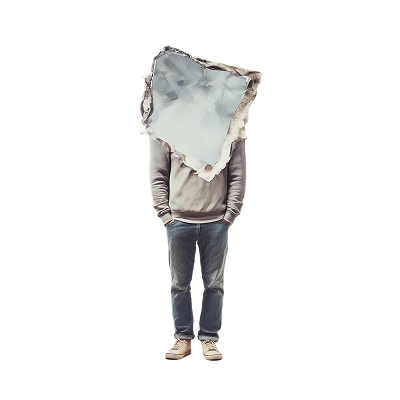
Trauma is an epidemic. It´s all around us, yet we are largely blind to it. Like a fish in water — if you tell a fish it is in water, it will not understand. That´s how trauma shows up in our society. But once you become aware of it, you can suddenly see it bleed into every aspect of life. It is in how we treat the planet, each other, and ourselves. It is in how we eat, speak, love, live, and move. As a society, we are largely unequipped to deal with trauma.
And neither was I.
I suffered from Complex PTSD (CPTSD)1 for the majority of my life. Unlike PTSD, which mostly develops after a single traumatic event, CPTSD typically forms through long-term, repeated trauma, often beginning and continuing across early formative years. For me, it began early and continued to build throughout adulthood. CPTSD is an invisible disability, which was only revealed to me in my late twenties.
CPTSD, or Complex Post-Traumatic Stress Disorder, is a condition arising from prolonged, repeated trauma. It includes typical PTSD symptoms (flashbacks, avoidance) plus extra challenges in emotional regulation, negative self-perception, and relationships.
The mind and the body are incredibly intelligent in hiding trauma from our awareness; it is their survival function. But it functions like an un-integrated file on a hard drive: it keeps running in the background, quietly shaping everything. For me, the symptoms have been there all along, but even when I first realized the extent of what I was carrying, I was not emotionally ready to grasp and accept what it meant for my life.
Living with CPTSD is living with an invisible disability. It shows up in nightmares, the inability to break out of the repeating patterns, constant hypervigilance, anxiety, low self-esteem, poor boundaries, and eventually health issues, because chronically elevated stress levels eventually affect our immune functioning2.
I learned at an early age to compensate and hide. Like many women, I over-functioned. On the outside, I was successful. I made sure I looked polished, happy, and confident. I thought, and society often suggests this, that if I just reach x, y and z — then I’d be ok. I was not.
There is a beautiful quote by Jim Carrey that says, “I think everybody should do everything they ever dreamed of so they can see that that’s not the answer.” I was always trying to solve my “problems”, but I did not yet have the tools, knowledge, awareness or inner strength.
Find Support That Matches Your Need
 United Kingdom
 London-based transpersonal and integrative psychotherapist offering trauma-focused therapy, psychedelic integration support (no substances) and online sessions from Brentford (TW8).
 United Kingdom
 Art Psychotherapist and clinical supervisor in London offering integrative, trauma-informed and EMDR-informed therapy with art-based and Jungian-informed approaches; offers in-person and online and p
Searching For Healing
CPTSD rewires the brain and nervous system. My brain never learned a baseline of safety. My body never understood what calm was. An analogy I like to use is a fire alarm: For CPTSD survivors, the alarm went off and never turned off again. Our bodies and minds get stuck in past memories, times when we were helpless. And now the alarm goes off at the slightest reminder: Someone speaks to you in a tone that reminds you of the past? Triggered. A smell or situation evokes an old memory? Triggered. It´s automated, often entirely unconscious.
For me, most of my life was stuck between flight, freeze and fawn. Often, with CPTSD you wake up already triggered, already in a flashback, and so your day starts in this mode. My life felt like I was constantly running from a tiger: When I ate, when I worked, when I slept, when I laughed and when I talked.
Flight manifested as chronic busyness, perfectionism, and an attempt to assert control by looking “put together”. Shame is often at the core for CPTSD survivors.
Freeze came as a reaction from my body to the overdrive of my flight response and chronic nervous system exhaustion. Hours scrolling, zoning out and distracting myself.
Fawn is a heartbreaking response, in which a person goes along with whatever and whoever is in front of them, even if that means self-abandonment, even if that means letting people mistreat them or not setting boundaries.
At the core of CPTSD is a chronic sense of unsafety: in yourself, in your body, with others and in the world.
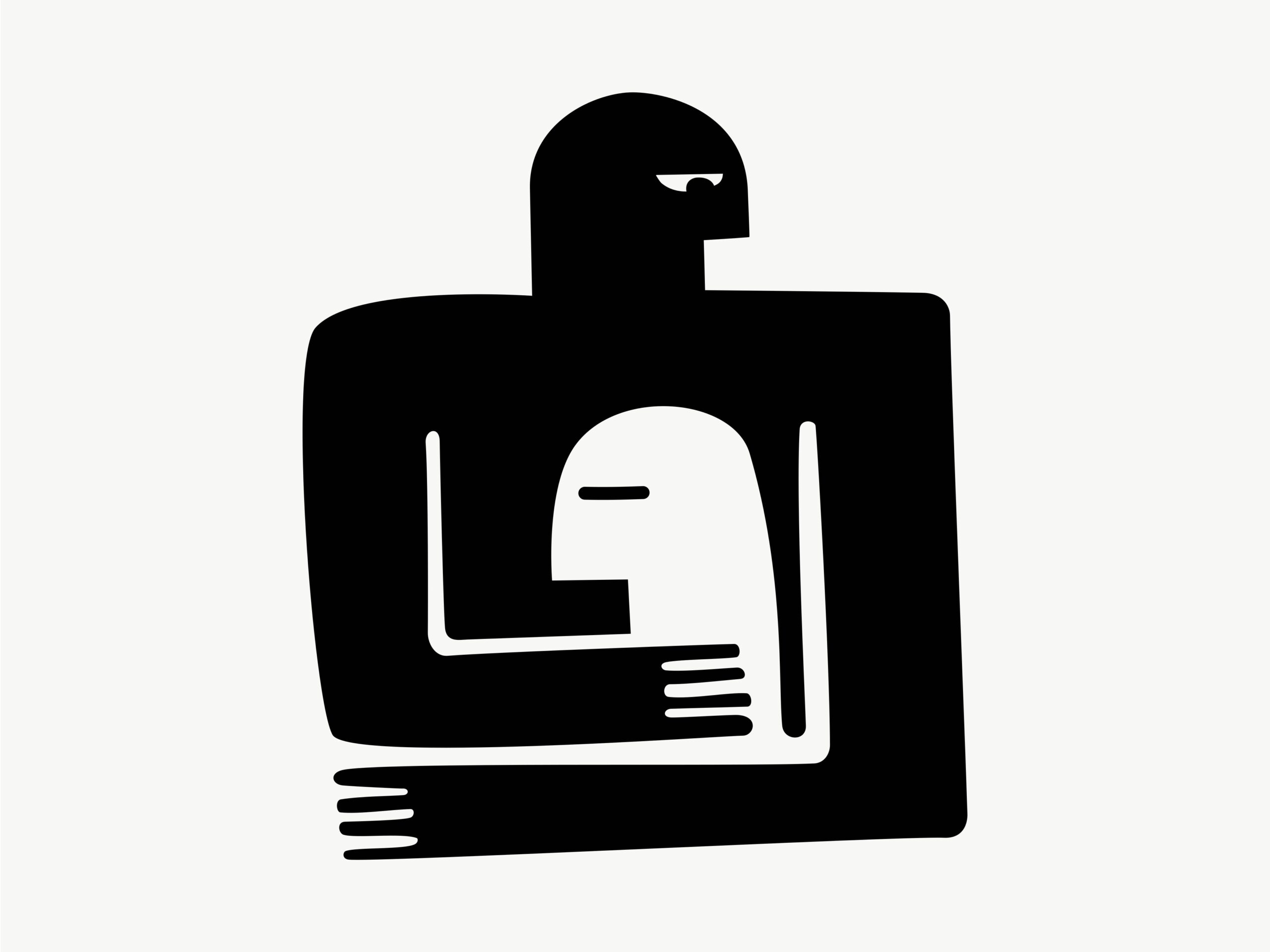
I started healing the same way I approached everything else: by over-functioning. I thought, “I’ll do 6 months in and out, sign me up, let´s heal.” I treated it as a problem to solve, rather than a compassionate inquiry. I read “The Body Keeps The Score” and dove into every modality. I did EMDR, Neurofeedback, Trauma-Informed Therapy, IFS, Somatics, massages. You name it — I did it.
In 2022, psilocybin found its way to me. During my first journey, I repeated for 6 hours straight, “I am so exhausted from a lifetime of trauma.” That exhaustion finally started making its way into my awareness. Those journeys were a beautiful way to reconnect with myself and come out of deep denial for the first time. At the same time, many of those journeys were overwhelming and too intense as I understand now. I did not have enough inner safety and nervous system regulation to hold what was revealed. Further, I understand now that psychedelics are a powerful tool, not a fix.
Over the years, each modality served a beautiful purpose. I had a profound awakening to the reality of what I had been carrying. I grew emotionally, spiritually and psychologically. But I was still dealing with strong symptoms: nightmares, the chronic feeling of being “on” (I often described it as a permanent buzzing), deep fear, control, and always performing and functioning at 200%.
I worked constantly, worked out excessively, pushed my body, controlled my diet — coping mechanisms society rewards. In the eyes of society, on the outside, I was living the life of success, but on the inside, I was hardly functioning. I was suffering in silence, like so many CPTSD survivors.
MDMA Therapy As Tool For Trauma
What I did not know then was that years later, MDMA-assisted therapy would become a turning point in that journey. Not as a miracle solution, but as something that finally allowed me to feel safe enough to truly heal.
A few years ago, I had a near-death experience, a life-altering wake-up call. My body finally said no. I could no longer function in the old ways. Around that time, I had also done a psilocybin journey that opened too much, too quickly, without sufficient inner safety. The exhaustion had to break into my awareness. Something had to give. Eventually my body did.
I finally started to wake up to the most important part of healing: feeling, grieving, and slowing down. Realizing I would not die if I felt my feelings and met all my parts. I could stay with myself. For me, this became the core of CPTSD recovery. Many modalities struggle to fulfill their purpose when the brain is in chronic amygdala overdrive. Most things simply do not land.
Imagine trying to learn while an alarm bell is going off inside. Sounds impossible? It is.
A year later, MDMA-assisted therapy came into my life. At this point, I described my nervous system as always 200 km/h ahead of me. I had awareness. I had recovery work behind me. But I could not quite get “in there”. I do not discredit anything I did beforehand — all of it was vital and built the foundation for what came next. But I also believe most people with CPTSD are white-knuckling recovery, beating themselves up for not improving fast enough.
Meanwhile, there is this medicine that has the ability to set healing in motion. And yet it is illegal in most countries, despite the compelling results3 of the clinical trials.

Nothing has moved the needle for me quite like MDMA-assisted therapy. It gave me something fundamental. For the first time, I had inner safety. And access to the memories and frozen parts of myself. In MDMA-assisted sessions, the amygdala, the fear centre, quiets down, and the prefrontal cortex becomes more engaged. This allows a state where people can recall traumatic memories with less fear, more regulation, and more capacity to process what previously felt overwhelming.
For me, this created a blueprint of safety inside my nervous system. This kind of work absolutely requires the right support and careful integration. It is deep work, not something to approach casually. MDMA is a tool; it does not do the work for us. It shines a light and opens the door, but we still have to walk through it.
Recovery is an ongoing journey, but I finally feel I am turning this around. I feel deeply fortunate that this journey has brought me into contact with such a raw layer of humanness, and that, through so much hardship, I have developed a profound spiritual connection. And finally, it feels real.
Today, I am a voice and contributor in this field, committed to advocacy, education, and trauma-informed guidance, I see a need to connect lived experiences with science, vulnerability, compassion and integrity. Especially in the areas of trauma awareness and MDMA-assisted healing. I hope to contribute to removing stigma through sharing embodied experiences with our communities and professional spaces. My goal is to support others in their healing journey through trauma-informed coaching and guidance.
Trauma affects all of us, and much like an epidemic, we pass it on to each other. While not everyone is affected by CPTSD, most of us carry trauma that shapes how we move through the world. Awareness is the first step.
And finally I would like to add: Healing was never about running from the tiger. It was about turning toward it, embracing it, and realizing it was never a beast at all, but frightened young parts of me wearing a tiger costume as a shield — longing to be seen, held, loved and set free.


 Oslo, Norway
 Expert Board Member
Treating C-PTSD is challenging because of the profound impact it leaves on a person's nervous system. As this article outlines, a person with C-PTSD constantly fluctuates between fight, flight, and freeze, making it difficult to find the internal safety required to work through traumatic material. MDMA is one of the best psychedelic medicines available to create profound and lasting change at this nervous system level. I am optimistic these medicines will soon be made legal across much of the world.