
This content is grounded in peer-reviewed research, clinical guidelines, and established best practices. Claims are reviewed for accuracy and transparency. Learn more about our evidence standards
Healing Yourself Before Helping Others: A Therapist’s Personal Journey

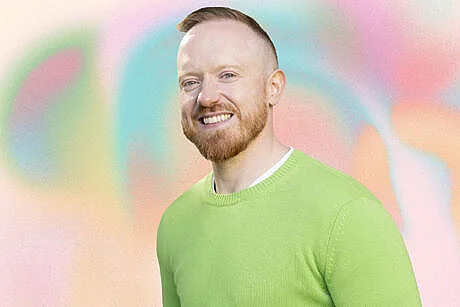
London-based psychotherapist Gemma Autumn began her career as a journalist — but after journeying through personal struggles, she now practices as a psychotherapist and psychedelic integration therapist. She speaks to States of Mind about her journey and practice.
Transitioning from the corporate ladder to becoming a therapist, Gemma’s career switch was influenced by her own personal struggles.
Using a wide range of approaches to deliver therapy — from wild therapy1 and mindfulness, to talk therapy and embodied coaching — Gemma’s approach to her work has been informed by her own journey and experiences.
After working as a journalist for years, Gemma decided it was time to make a change and wanted a career where she could help others.
With this in mind, Gemma pursued a five-year, Foundation Certificate in psychotherapy.
Gemma speaks to States of Mind about her life as a therapist, emphasizing personal therapy and self-reflection, and discusses the importance of empowering her clients.

What First Inspired You To Become A Therapist?
“Being a therapist was definitely not my first career. When I’d reached the top of the corporate ladder … it didn’t really feel as satisfying or meaningful as I had hoped.
“I was drawn to helping professions as I previously had really struggled, and so, I sought therapy. I found it really helpful, so I decided to begin my own training in that area.
“I was always drawn to working with adults, but as I was exploring the different therapeutic schools, there was one that really stood out. It felt really creative.
“The course was working with children. I felt that the first year of the course was really intuitive, with lots of different Jungian work on dreams and a transpersonal element. I work with adults now, but I feel like it was such a great place to start because much of what we work with is the wounds of the inner child in those early years.
“It was a five-year training, but it’s important for training to take that long, because there is so much personal therapy and self-reflection to do before you sit in a room with someone else.”

What Moved You To Specialize In Your Areas Of Expertise, Such As Psychedelic Integration?
“People come to therapy in so many different ways. Regarding psychedelic integration, I had read everything that I could about people who were microdosing and what it was like to be on psychedelics.
“I decided to do an intentional year of research and did a retreat with what was then known as the UK Psychedelic Society.
“Interestingly, I’d actually been in my training then, and had been finding it really tough being on placement with children who were suicidal, or who were living in abusive environments. I think I was feeling quite overwhelmed and burned out as a trainee in that context.
“I went to a retreat in the Netherlands, where psilocybin truffles are legal, and it was a really positive experience.”
How Does Your Choice Of Specialities Reflect Your Approach To Your Work?
“During the COVID-19 lockdown, the question came up of what it means to practice therapy when you cannot practice indoors.
The most important conversations shaping the future of psychedelics, delivered weekly.
From thought-provoking podcasts and original stories to research breakthroughs and industry news, stay connected to the conversations that matter.


Joined by 12,000+ readers
“I think a seed had been planted with my experiences with mushrooms and the context in which I journeyed with them. It was very nature-based, and it really tuned me in to nature — I was able to see myself more clearly in this system.
“My wild therapy (nature-based therapy), for example, really takes that into consideration. It takes into consideration that we are not just humans in a room with jobs; it’s much bigger than that — we are part of nature.
“The idea is to treat nature almost as a co-therapist. Noticing all the synchronicities — and the wilder the environment we work in, the richer those synchronicities can be.
“For example, sitting with a client outside when a spider comes down between you, and there seems to be a link with what you’ve just been discussing. It feels very magical, the way that these kinds of meaningful coincidences can happen.
“This is quite psychedelic in itself”

How Has Your Experience With Psychedelics Informed Your Approach To Your Therapy?
How are we defining well-being? Is it to get someone back into the workplace as quickly as possible, to help them regulate? These are completely valid.
“I think there’s also a more soulful approach, which is about holding space for grief and loss and shame, which are all really normal, but hard parts of the human experience, and which often don’t come with an answer.
“At the heart of all my approaches — whether it’s talking therapy in a room or being held in a wild environment, or processing a psychedelic experience — is the idea that the client really is the expert on themselves.
“We often want someone or something to be an answer, to be that external guru.
“In my experience, holding that space of not knowing which, which can be so hard to do, people, time and time again, come up with their own wisdom, their own answers, their own way through.
“I think wellness is to constantly try and give autonomy and power back to clients. To do that, we need to try and offer as safe a container as possible so they can go to those really painful, vulnerable places.”
How Do You Support Your Own Well-Being While Supporting Others?
“Like anyone, some days I absolutely love my job and think it’s the biggest privilege in the world. At other times, I think: what am I doing? What am I doing having these deep, meaningful experiences with people on a regular basis?
“This work is just you and another person. In that way, it is inherently a bit lonely. I try to balance that with peer supervision groups, and sit with others with colleagues and do a lot of training, which gives me a sense of community.
“One of the biggest lessons from my mushroom experience was about making this work sustainable for myself without burning out. I think that’s what I was doing.
“As a trainee, working with these really vulnerable young people, I was psychologically trying to fix all their pain.
“I find it important to give myself permission to not fix, to not be that external solution, but to be with people and let them have their own process.”
 Expert Board Member
This article describes one therapist’s personal journey from a career in journalism to psychotherapy. She has explored several different modalities, from nature therapy to psychedelic integration, allowing her to understand her client’s struggles and the different treatment options that may help them. She emphasizes client autonomy and believes that self-reflection is more important to a successful approach than prescriptive therapy.