
It’s Not Just About the Trip. How-to-Guide and Tools for Psychedelic Therapy

One of the most common misconceptions about psychedelic-assisted therapy is that the experience itself (the substance, the dose, the journey) is what matters most. Fair assumption. The psychedelic state is dramatic and unfamiliar, and most books and movies zoom in almost entirely on the trip.
But ask anyone who actually works in this space — clinicians, therapists, researchers, harm reduction specialists — and you’ll notice something different. The experience is rarely where the real transformational work happens1. What you do before shapes what’s possible during. What you do after decides whether the insights actually take root.
And that’s exactly why we built the Psychedelic Therapy Tools & Resources library: to fill in the picture that often gets skipped, and to explain psychedelic-assisted therapy (or simply PAT) as a full-scale process rather than a single event on a dosing day. States of Mind asked three practitioners to share how they think about preparation, integration, and harm reduction, paired with the free tools in our library that can help you put each stage into practice.
Step 1 — Preparation. Building capacity to meet what arises
Preparation often gets treated as a pre-session checklist. Do some self-research, set your intentions, plan logistics, done. But the more important work is quieter and purely internal: getting your mind and body to a place where you can actually meet whatever shows up. Laurin Angemeier, psychedelic integration practitioner and co-founder of inLighten Berlin, highlights:
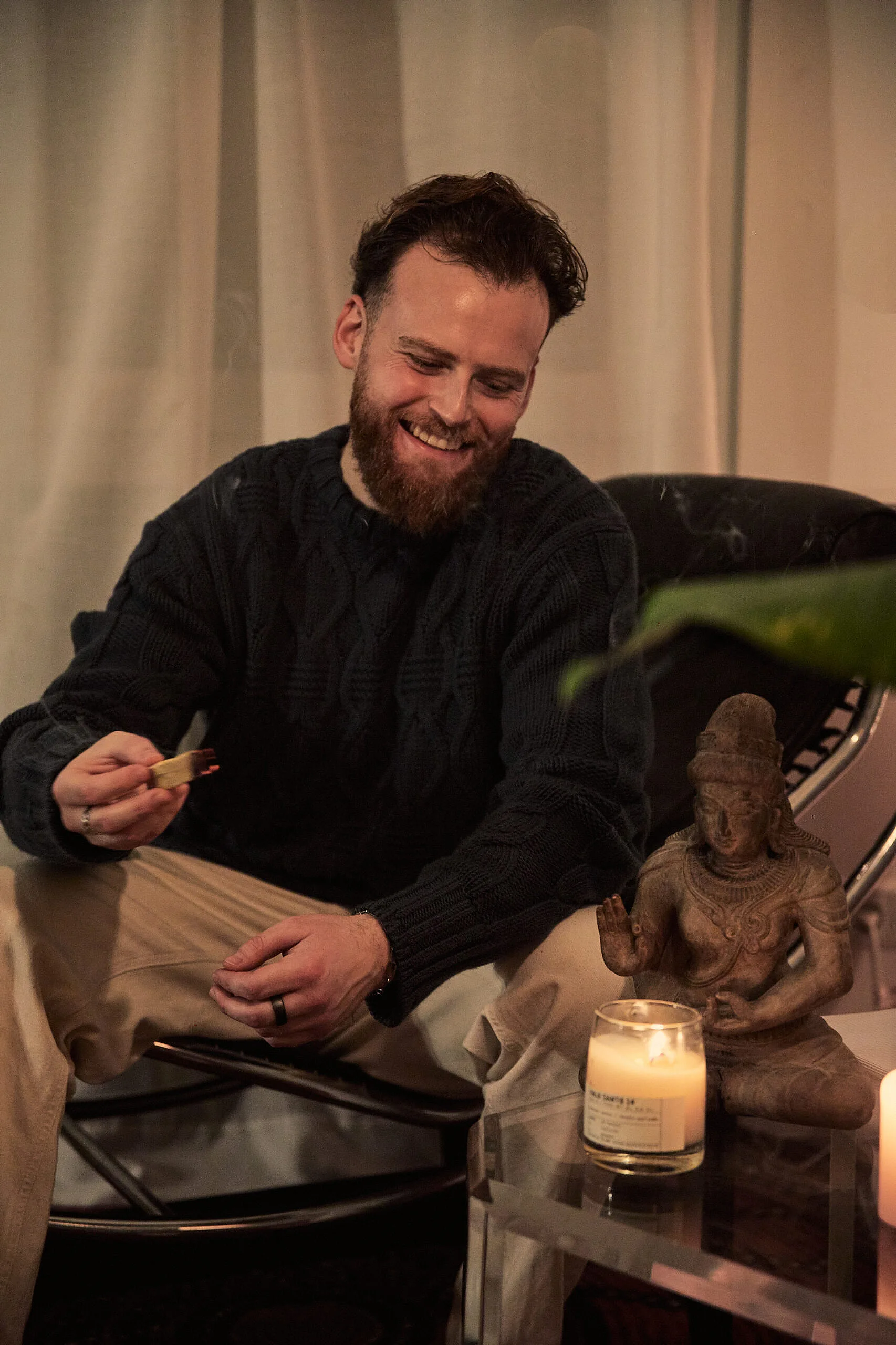
Preparation isn’t about controlling the experience. It’s about increasing your capacity to meet whatever arises. The nervous system doesn’t suddenly become more resourced because you took a substance, and unacknowledged emotions don’t disappear; they get amplified. Before a first experience, I’d suggest at minimum 2 to 4 weeks of intentional groundwork: clarifying intention, building somatic awareness through practices like conscious connected breathwork or body scan meditation, and honestly mapping your current emotional terrain.
Laurin also points out that prep work looks really different from person to person. “Someone with an established body-based practice needs something different than someone who’s never slowed down enough to notice their own activation states.”
In his experience, preparation quality is one of the strongest signals of whether a session turns into lasting change — or something you’re still trying to make sense of years later.
What you’ll find in our Tools for your preparation
This page is built around exactly the kind of groundwork Laurin describes: simple and practical instruments that help you do the inner homework before the session.
- Browse our substance-specific guides to learn what to expect, how dosing works, and which contraindications to watch for across psilocybin, LSD, MDMA, and ketamine.
- Work through the Psychedelic Preparation Workbook to clarify your intention, take stock of where you are emotionally, and reconnect with your core values.
- Save the Set & Setting Checklist to get grounded in one of the most important principles of psychedelic preparation.
- Take the Psychedelic Therapy Self-Check for an honest look at where you stand on mental health, medications, support, and experience level.
Step 2 — Session Day. The experience itself
The day of the psychedelic experience is when all that preparation actually gets to do its job. At first glance, the core ingredients of the day sound simple: a safe and comfortable setting, a calming playlist and soft lighting, water and snacks always available, trusted support or a trip sitter nearby, and the willingness to let go instead of steering. All these things are much easier to put in place when you’ve mapped them out in advance.
What you’ll find in our Tools for your session day
The online library gives you a few simple anchors for the day itself. The kind of thing you want handy and ready, not improvised on the fly.
- Follow the Session Day Checklist to walk through the simple morning routines, set up your environment, and ease through the comedown.
- Listen to the Curated Psychedelic Playlists by Multidisciplinary Association for Psychedelic Studies (MAPS), therapists, and DJs — here you can find the same tracks used in clinical psilocybin trials at Johns Hopkins University!
- Watch the educational videos featuring leading researchers and authors in the field: Rick Doblin, Michael Pollan, Matthew Johnson, and others.


Step 3 — Integration. Shaping the lasting change
Once a psychedelic session ends, is the work done? No, it’s only just beginning! In practice, the days, weeks, and months that follow are where insights either take root or quietly slip away. Gisel Romero, who works in microdosing guidance and psychedelic integration, describes what’s actually going on during this “window” of change:

After a psychedelic experience, there is a short window where the nervous system is more open and less locked into its usual patterns. It’s not just “less thinking”. It’s a temporary state where emotional reactions, memory links, and perception itself are more flexible. In that window, old patterns don’t hold as strongly, which creates a real opportunity for change.
But if nothing is done with it, the system naturally goes back to what it already knows, and the experience loses most of its impact. Integration is what makes the difference, it’s the process of working with what came up so it actually becomes part of how you live, not just something you remember.
Gisel highlights that integration isn’t linear and there is no fixed timeline for the progress. “Initial stabilization can take weeks, but deeper integration often unfolds over months or even longer, depending on the depth of the experience and the person’s life context. The process is very personal.”
The most important conversations shaping the future of psychedelics, delivered weekly.
From thought-provoking podcasts and original stories to research breakthroughs and industry news, stay connected to the conversations that matter.


Joined by 12,000+ readers
The signs that psychedelic integration is working tend to show up step by step, quietly: you can notice less reactivity, more clarity when you’re making decisions, a greater sense of coherence between what you think and what you actually do. “It is about noticing sustainable changes in how a person relates to themselves and their patterns,” Gisel says.


It’s worth saying that difficult psychedelic experiences, often called “bad trips”, are an essential part of psychedelic therapy too. Working through them in the integration phase is arguably where some of the most meaningful change can happen. Gisel explains:
Actually, difficult experiences often carry some of the most valuable material. If they are processed with care and support, they can reveal underlying patterns and create significant long-term growth. The key is not the intensity of the experience, but the quality of the integration that follows.
What you’ll find in our Tools for your integration
Because the “transformation window” is real but limited, the library focuses on tools that help you actually use it in days and weeks after the psychedelic experience. Start small, but stay consistent. With regular practice, you’ll likely notice shifts within a few weeks.
- Read the “Coming Home to Yourself” Workbook for prompts that help you capture first reflections, name the central insight, and practice gratitude.
- Sign up for the 30-Day Integration Program to get daily newsletters with reflection prompts and simple tasks delivered at key moments after your session.
- Explore the Integration Meditation Library for guided practices from teachers like Tara Brach and Sharon Salzberg.


Step 4 — Harm Reduction. Knowing how to stay safe
Harm reduction sometimes gets read as a necessity only for recreational contexts. However, it belongs just as much in therapeutic settings. Minimizing risk comes down to knowledge, awareness, and readiness. Tali Avron, a harm reduction advocate and clinical trial manager in psychedelic research, frames it this way:

Before any psychedelic experience, clinical or not, start with curiosity and preparation. Knowledge is a form of safety. Ask yourself: what is my intention, and what kind of environment would actually support me? What do I know about how this substance interacts with my body, my mental health history, or any medications I’m taking? What are the potential risks? And just as importantly: which of those risks can I actually mitigate?
And remember the body isn’t separate from the experience — sleep, nourishment, and even where you are in your cycle can all shape what unfolds.
Tali also warns that a “good, comfortable” psychedelic experience is never something you can 100% guarantee. What you can shape is how ready you are for whatever shows up, including the challenging, confusing, or emotionally intense moments.
Preparation doesn’t eliminate difficulty, but it does two important things:
1. It can reduce the likelihood of overwhelming or destabilizing experiences.
2. It creates the conditions for integration, making it more likely that whatever comes up can be processed and meaningfully woven into daily life, rather than lingering as a prolonged or distressing mental state.That’s why support matters. Having access to a therapist, space holder, trip sitter, or trusted person, especially after the experience, can make the difference between something that stays unresolved and something that becomes part of growth.
If you’d like a deeper dive into preparation and harm reduction, Tali has put together a list of recommendations for participants and guides in psychedelic spaces — you can find it here2.
What you’ll find in our Tools for harm reduction
Knowledge is a form of safety, absolutely. Our free resources are designed to help you understand the risks, prepare for the challenging moments, and know what to do if things get difficult.
- Read Core Safety Principles to learn more about the basics, testing substances, dangerous drug combinations, and trusted harm reduction organizations like The Fireside Project or Zendo.
- Check out the Trip Sitter Guide if you’re holding space as a responsible trip sitter for someone else through a session.
- Save Difficult Moments Cards so you have practical steps ready for any overwhelming or looping experiences.
What actually matters in PAT?
Psychedelic-assisted therapy isn’t a single moment, session, or day. It’s a process that starts before the psychedelic trip and continues long after — sometimes months and years.
The more seriously you take the bookends, the more likely the experience itself becomes something that actually changes how you live. Rather than something you keep trying to translate or make sense of. Our Psychedelic Therapy Tools & Resources are here to support that fuller picture of PAT — and we hope they’ll be a meaningful companion wherever you are in your own journey.