Reading Navigation


This content is grounded in peer-reviewed research, clinical guidelines, and established best practices. Claims are reviewed for accuracy and transparency. Learn more about our evidence standards
Sex, Masculinity, and Men’s Silent Struggle
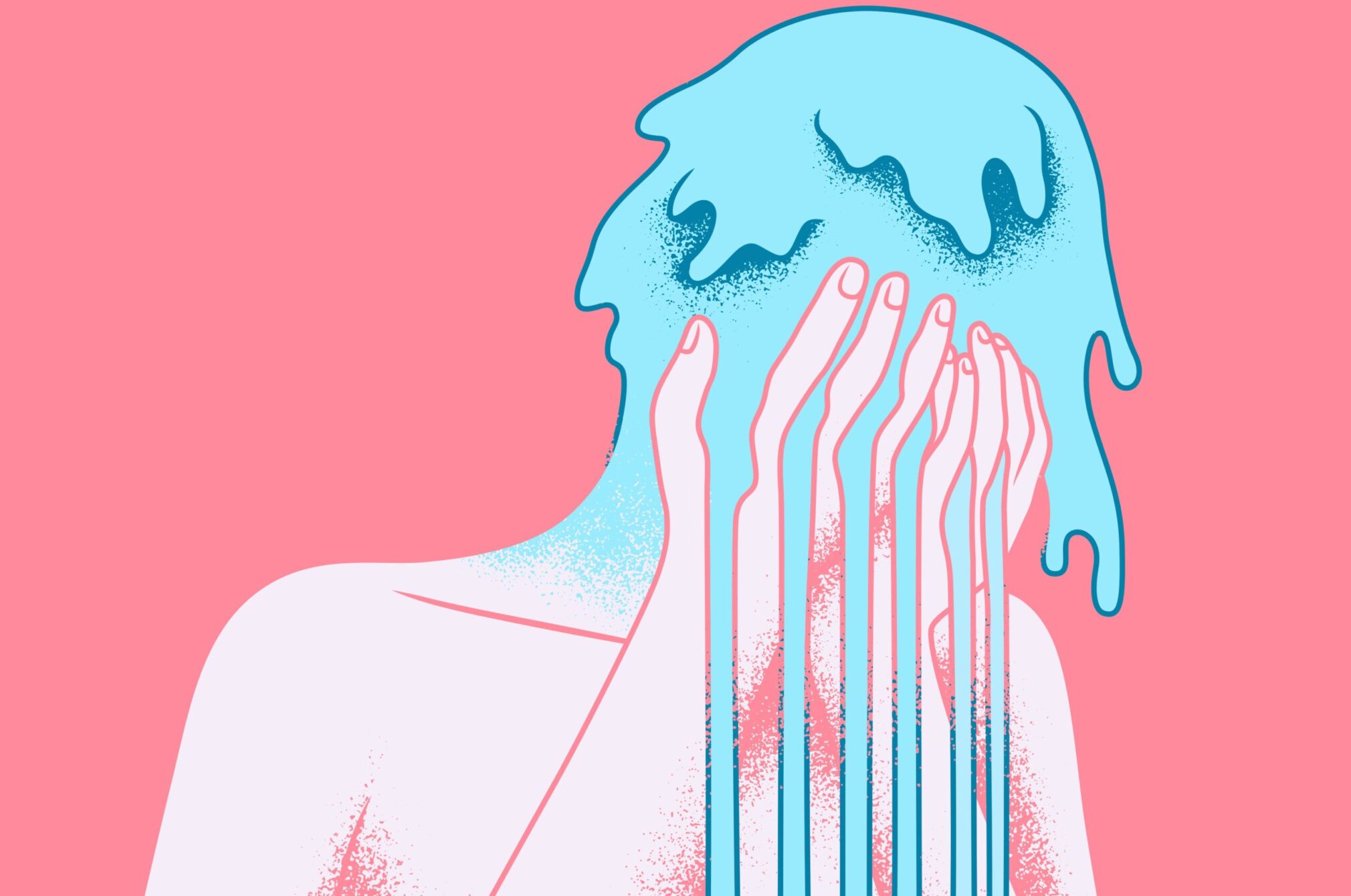
Issues related to sex — from sexual frustration to sexual dysfunction1 – can affect anyone’s mental health, regardless of gender. However, sex and gender intersect in unique ways, too. For many men, sex and sexual function are deeply tied to their sense of self-confidence and self-esteem. This is often due to pervasive narratives surrounding masculinity, which create unhealthy or unrealistic expectations for how men relate to sex and their sexual health.
One sexual problem men struggle with, in ways that feel like an affront to their masculine identity, is “dry spells” – those periods, sometimes quite prolonged, without sexual intimacy with a partner. It’s common to go through dry spells, even ones that last for years (including within a marriage). Irrespective of gender, dry spells can affect someone’s confidence4 and self-esteem. Yet, expectations around masculinity can shape the way that men interpret their dry spells.
George Bell, the author of the forthcoming book Be a Man About It: Building a healthier idea of masculinity (to be published by Capstone in January 2026), told me:
“The reality is that many men chase meaning and self-worth in external acts, and sex is one of them. It can quite easily become a vice or an addiction, where a man finds validation in sex with others, while avoiding confronting what he’s actually searching for or feeling on the inside.”
But what happens when validation through sex can’t be gained? At the extreme end of the spectrum, a long-lasting dry spell leads some men to seek out solace and support in the “manosphere” and incel (‘involuntary celibate’) spaces, which don’t actually help to ease men’s emotional distress. They harm the mental health of men who participate in these online communities2. Moreover, through their promotion of toxic misogyny and influence on real-world attitudes, these online spaces also negatively impact men’s ability to build healthy relationships with women.
Masculinity is a concept, one that is subjective and has different meanings to different people.
But what happens when validation through sex can’t be gained? At the extreme end of the spectrum, a long-lasting dry spell leads some men to seek out solace and support in the ‘manosphere’ and incel (‘involuntary celibate’) spaces, which don’t actually help to ease men’s emotional distress. They harm the mental health of men who participate in these online communities2. Moreover, through their promotion of misogyny, these online spaces also negatively impact men’s ability to build healthy relationships with women.
Not having sex as a man doesn’t have to be emasculating or lead one to these dark corners of the internet. As Bell points out:
“Using the time [during a dry spell] to self-develop, to work on yourself, to get comfortable with yourself, can be invaluable. And it’s no surprise that when someone is in a good balance with themselves, they exude that energy out to the world around them, and it often leads to opportunities coming back their way.”
A dry spell also doesn’t have to mean a lack of intimacy. The Belgian psychotherapist Esther Perel writes, “We can live without sex, but we can’t live without touch.” Unfortunately, many men are extremely starved of touch, as non-sexual touch between men — contrasting to touch between women – can be seen as ‘gay’, ‘effeminate’, or overstepping a boundary, and so many men avoid it. Importantly, masculine norms are not universal; they are culturally constructed and vary widely across societies, communities, and historical periods. The impact of dry spells on men’s mental health could, therefore, be lessened if men felt more comfortable both giving and receiving touch and showing affection towards male friends, which used to be normal in the 19th and early 20th centuries.


The Masculinity Trap: When Sex Becomes a Measure of Self‑Worth
Related to dry spells, men’s relationship to masturbation and sex toys often differs from women’s relationship to them. Some men may find it shameful or embarrassing to rely on masturbation for their sexual needs when they’re not sexually active, and male sex toys certainly carry a stigma not seen with female sex toys. To admit to using a male sex toy could be seen as emasculating – an admission of an inability to find a sexual partner, thereby making one ‘less of a man’ or a ‘loser’.
However, the male sex toy industry is financially flourishing, but men generally don’t talk about using these toys (often for fear of being judged or laughed at). In contrast, the use of female sex toys doesn’t seem to carry such a strong implication of one’s ‘womanhood’ or ‘femininity’ being lost.
The Conformity to Masculine Norms Inventory (CMNI)3, which measures the extent to which a man conforms to dominant masculinity norms in the US, includes ‘Playboy’ as a distinct masculine norm. (This norm refers to engaging in casual sex.) Having sex, and having sex often, is often tied to men’s masculine identity. And this expectation has been exacerbated through the manosphere, with online influencers promoting the idea that part of being a successful man means either having lots of sex or having lots of sexual partners. Researchers have found that strongly identifying with the ‘Playboy’ norm — along with the ‘Self-reliance’ norm4 — predicts negative mental health outcomes in men5.
The trouble comes when we start to try to fit other people’s expectations or definitions of being a man.
The NoFap movement, which promotes abstaining from masturbation, is seen by many men as empowering, freeing them from the shackles of porn addiction. However, the movement isn’t just about unhealthy relationships to porn (although it’s a core aspect of it). It also makes claims about how masturbation robs men of their masculinity, through unsupported claims about how ‘semen retention (i.e. not ejaculating) is beneficial for testosterone levels and overall well-being. In contrast, there is robust evidence supporting the benefits of masturbation for sexual function, stress levels, sleep, and mood. (This is assuming masturbation isn’t compulsive or part of a porn addiction.)
Masturbation can negatively affect men’s mental health when it’s tied to feelings of guilt and shame, such as having ‘relapsed’ and failed one’s commitment to NoFap. Many men would benefit without feeling shame surrounding masturbation and instead see it as a healthy and completely normal outlet for self-pleasure and stress reduction. Bell told me:
“If a man isn’t sexually active, masturbates regularly, and is happy with all of that, and has a healthy relationship with it and not an addictive one, then that isn’t a problem. As long as we are happy fulfilling the expectations that we have set ourselves, then our life is in balance. The trouble comes when we start to try to fit other people’s expectations or definitions of being a man, e.g trying to find a sexual partner just so we can tick a box that says “masculine”, even if we don’t really want to have sex with that person. It’s unhealthy for us, and it’s unfair to the other person involved.”
Explore Your Path to Mental Clarity

 London, United Kingdom
London-based psychotherapist offering integrative psychodynamic and DBT-informed therapy for anxiety, depression and life transitions; sessions from £60.

 Netherlands
 Tom Marshall is a psychological and psychosomatic counsellor based in Rotterdam.
Performance Pressure and Sexual Anxiety
Many men also tie their sense of masculine identity and self-esteem to sexual performance. This means that issues like erectile dysfunction (ED)6 — difficulty getting and maintaining an erection — and premature ejaculation (PE)7 — ejaculating sooner than the man or his partner would like during sexual activity — can lead to a lot of anxiety and shame. Dr Hilary Jones, a British GP and broadcaster, writes in The Independent:
“There have been cases where men are tortured by their perceived failure to maintain erection, they feel emasculated. Some men find this very difficult to deal with or talk about. ED is eminently treatable — it is not something you need to suffer with in silence.”
This isn’t to say that many men (and their partners) don’t experience ED or PE as a problem. It may lead to sexual dissatisfaction in the relationship. But it doesn’t have to. A lot of the distress associated with sexual dysfunction results from the pressure men put on themselves. And this is counterproductive. Dr Abraham Morgentaler, Associate Clinical Professor of Urology at Harvard Medical School, writes that the trouble with viewing sex as a performance activity is that “sex is one of the few endeavors in human life where trying harder doesn’t work!”


Sometimes, the cause of sexual dysfunction is physical, and sometimes it’s psychological – or it’s a combination of both. Whether inside or outside of therapy, what often helps issues like ED and PE is reframing them so that they become less serious and troubling. Partners can be involved in this process too. As Bell notes:
“For partners, have open conversations. Never shame, blame, or laugh. Have open conversations, bring this stuff out of the shadows, and encourage. Let a man know you’re here for him, and you’ll work through this together. Sometimes, that alone can fix things, as it puts a brake on the anxiety the man feels to ‘get it right’.”
A lot of the anxiety around sexual performance relates to needing to perform penetrative sex on demand, for a certain amount of time, or a particular number of times. However, Dr Claudia Ressel-Hodan, Psy.D., a Florida-based cognitive and behavioural therapist working with men and couples, says that when sexual activity is expanded beyond penetrative sex and the penis, “The anxiety is then decreased because the fear of not meeting an expectation that was unrealistic is gone.”
A common thread that runs through these discussions on sex and men’s mental health is that many standards about being ‘manly enough’ are unhelpful. But these expectations are, fortunately, amenable to interpretation and change. This is a point that Bell emphasizes:
“Masculinity is a concept, one that is subjective and has different meanings to different people. So to be honest, I worry about any message that says ‘do this if you want to be more of a man’. Nothing is that black and white when it comes to masculinity.”
 Expert Board Member
Men's mental health often suffers when sexual concerns intersect with rigid masculine norms, leading to frustration, anxiety and embarrassment. Dry spells, sexual dysfunction, and masturbation shame can trigger anxiety and isolation, particularly when men seek validation through sexual performance. Reframing masculinity as flexible rather than fixed, expanding intimacy beyond penetration, and fostering open communication with partners and friends are important in reducing distress and promoting well-being.