Reading Navigation


This content is grounded in peer-reviewed research, clinical guidelines, and established best practices. Claims are reviewed for accuracy and transparency. Learn more about our evidence standards
ADHD Morning Routine: Simple Steps for a Productive Day

- ADHD is associated with dysregulation of dopamine and noradrenaline (neurotransmitters that help send messages within the brain) signalling in the brain's prefrontal cortex, which is responsible for planning, organizing, focusing, decision-making, motivation, and reward. This makes boring and mundane tasks difficult to start and complete especially in the mornings.
- An ADHD morning routine supports brain biology by using tools, gadgets, and processes that reduce mental load and increase dopamine levels. External tools such as visual timers can make mornings more productive.
- ADHD has symptoms that are similar to those of anxiety, depression, and sleep disorders. Hence, professional evaluation may be needed to manage worsening morning struggles as it could be pointing to other co-existing conditions.
Picture two different scenarios. Scenario one: You wake up in the morning, open the curtains to let in natural light, and you start engaging in gentle movements while listening to calm music. After this, you take a shower, put on a pre-arranged outfit, and start working on your most important tasks. Your morning is off to a great start, and you end the day productive and satisfied.
Scenario two: You reach over and snooze your alarm at least thrice before waking. While still in bed, you pick up your phone, scroll through the internet, and boom, 3 hours are gone. Next, you’re anxious about the day’s tasks, and you feel the need to rush through them, which makes you start the day already overwhelmed.
Most people think scenario one is the default for everyone, that following morning routines and executing tasks should come naturally. For most adults living with Attention Deficit Hyperactivity Disorder (ADHD), mornings can feel like the hardest part of the day.
The Centers for Disease Control and Prevention (CDC) reports that 15.5 million American adults1, about 6% of the population, currently live with ADHD. In people living with ADHD, a neurodevelopmental condition2, there are lower-than-normal levels of dopamine and noradrenaline in the brain’s prefrontal cortex, which makes it difficult to engage in everyday routine tasks.
Due to this difference in brain biology, mornings can be particularly frustrating for adults with ADHD. The morning pictured in scenario one can be hard, but not impossible to follow. A lack of understanding of brain biology often results in the incorrect labeling of people with ADHD as “lazy” and “lacking discipline.”
You can have productive mornings by adopting an ADHD-friendly morning routine that reduces overwhelm, supports your brain biology, and makes starting your mornings easier.

Why Are Mornings Especially Hard for People Living with ADHD?
The prefrontal cortex (PFC) is like the chief executive officer of your brain. It is responsible for high executive functions3 that help you plan your day, make decisions, remember task sequences, focus on activities, stop activities that are not adding value, and control impulses. In ADHD, maturation delay, impairment in the PFC, and low dopamine activity lead to symptoms of inattention, hyperactivity, and impulsivity4.
When you wake up in the morning, you don’t feel immediately alert; instead, you feel groggy. This is known as sleep inertia5. Dopamine levels are lower, and executive functions are slowest during the transition from sleep to wakefulness. When you couple sleep inertia with already low levels of dopamine in ADHD, it becomes harder to activate the executive system and handle tasks that aren’t instantly gratifying.
Routine tasks that aren’t urgent, novel, or interesting, such as bathing, doing chores, and making breakfast, can be difficult to initiate due to this brain difference. It also explains why activities involving many steps can be hard to remember, and why transitioning from a more interesting activity to a less interesting one can be difficult.
Your circadian rhythm6 (your body’s internal clock that controls when you wake and sleep) is regulated by a hormone called melatonin. In people with ADHD, melatonin release is delayed, which makes falling asleep early difficult. ADHD is also associated with conditions7 like restless legs syndrome and obstructive sleep apnea which may affect the quality of your sleep. All these contribute to why mornings can be especially hard for you if you live with ADHD.
Dopamine and Morning Motivation
Dopamine8 is a neurotransmitter (a chemical that sends messages within the brain) responsible for reward and motivation. When you finish a task and feel satisfied or pleased about it, your brain releases dopamine, contributing to the reinforcement of the behaviour, and makes you want to do it again.
Certain activities make your brain release more dopamine than others. Activities that are immediately satisfying, urgent, new, or interesting stimulate or release more dopamine compared to boring and mundane activities that lack urgency and novelty.
Low-stimulation activities like house chores are associated with low activation of the PFC and task avoidance. High-stimulation activities, such as gaming or scrolling through your phone, can release high levels of dopamine, which makes it harder to switch from that activity and leads to hyperfocusing, losing track of time, and rushing through tasks.
What Makes an ADHD-friendly Morning Routine Different?
Productivity tips or hacks often assume that everyone has the same level of motivation, energy, and executive function. Routines built on this assumption are more difficult to follow for people living with ADHD.
Morning routines for adults with ADHD should focus on:
- Minimal decision-making: Routines that reduce mental load by pre-planning things such as outfits or meals and prioritizing tasks to make mornings easier by reducing the morning decision-making load on the PFC.
- External structure: The executive functions of the PFC9, such as focusing attention, avoiding distraction, and controlling impulses, can be externalized by using visual timers, body doubling10, sticky notes, etc.
- Low emotional pressure: When you are faced with a deadline, you may find it easier to focus. This is because urgency increases dopamine release. To optimize your brain biology for productivity, external pressure and urgency can be induced using timers and having accountability partners.
- Flexible sequencing: Your PFC helps you remember the sequence of a task. Using external structures like task lists and step-by-step instructions can prevent stalling and help with task completion.
- Built-in stimulation3: Maintaining optimal dopamine levels through activities that support nervous system regulation and motivation, such as listening to gentle music, yoga, mindfulness, and exercising, can help increase alertness and regulate your nervous system.
ADHD morning routines that involve sensory regulation, mental load reduction, and predictability are more helpful.
Find Mental Health Support You Need

 United Kingdom
Gemma Autumn is an integrative psychotherapeutic counsellor based in London who offers adult and adolescent psychotherapy using a flexible, person-centred approach.

 Netherlands
 Paul Menze provides psychedelic coaching that includes preparation sessions to clarify intentions and mindset before a psychedelic experience.
Key Elements of an ADHD Morning Routine
- Sensory regulation: Regulating your nervous system is a core component of a good routine. Exposure to natural light and engaging in activities11 such as mindfulness, grounding, exercising, and yoga are ways to help regulate your nervous system. Sensory regulation should be followed by use of your methylphenidate or amphetamine-based stimulants12 early in the morning. These stimulants may be beneficial in managing symptoms by improving levels of dopamine and noradrenaline in the brain.
- Task sequencing: Having step-by-step instructions support working memory. You can sequence your task as below:
- Sit up in bed
- Place your feet firmly on the floor
- Draw the curtains
- Do gentle movements
- Take a shower
- Use your methylphenidate or amphetamine-based stimulant
- Pre-designed environment: Having an environment that supports ADHD helps your brain function better. You should prioritize sensory support, externalize executive functions, minimize distractions, reduce clutter, and optimize your workspace. For example, you can use smart curtains that let light in immediately when you wake up. You can also have stress balls for sensory support on your work desk.
- Managing decision fatigue: This can take the form of laying out your outfit the night before, arranging the contents of your bag, or making a simple to-do list and placing it in a visible place the night before. A useful example is to have pre-arranged uniform outfits to reduce the PFC’s mental load on choosing the color, type, and exact pieces to wear. All these help reduce decision-making, which is slower after waking5.
- Adding enjoyment to routine: Your brain biology responds better to interest, so add activities that excite you to your routine. Spending time with your pet, playing your favourite music, and scheduling timed phone breaks can make a big difference in your routine.

Low Dopamine vs. Stimulation Mornings
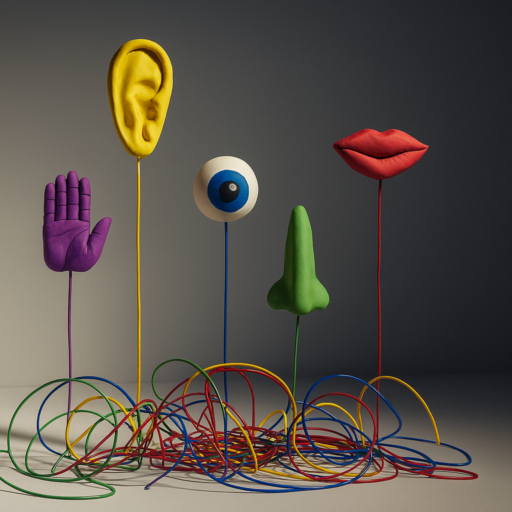
When Dr. Cameron Sepah coined the term ‘dopamine fasting13’, he probably didn’t envisage how it could be easily misunderstood and turned into a fad. At its core, dopamine fasting was developed to help manage impulsive behaviour by replacing it with healthier behaviour.
Dopamine occurs naturally in the brain, and the brain needs it for reward and motivation. It is impossible to literally fast from dopamine. In taking dopamine fasting out of context, some people have embarked on routines that allow little to no stimulation13 of dopamine, going as far as stopping exercise, eating, and sensory stimulation deprivation.
This misunderstanding can have a more damaging effect on the ADHD brain. Low stimulation can lead to paralysis in starting the day and task avoidance. The actual practice of dopamine fasting involves replacing unhealthy behaviour associated with dopamine spikes, such as scrolling through your phone, with an important task you would like to accomplish.
Sample ADHD Morning Routine
You can explore and adopt the three sample ADHD morning routines below for different kinds of mornings.
Option A (You can adopt this for a low-energy morning)
| Time | Task |
| 0—2 minutes | Sit up, open the curtains to let light in |
| 2—7 minutes | Take a shower |
| 7—9 minutes | Drink water |
| 9—11 minutes | Put on a pre-arranged outfit |
| 11—14 minutes | Do 3 minutes of gentle movements |
| 14—15 minutes | Start the day |
Option B (You can adopt this for a full workday morning)
| Time | Task |
| 0—3 minutes | Let light in and play music to stimulate the nervous system |
| 3—13 minutes | Take a shower |
| 13—15 minutes | Wear a pre-selected outfit |
| 15—23 minutes | Have a simple pre-made breakfast |
| 23—30 minutes | Buffer time |
| 30—40 minutes | Review the top three priority tasks for the day |
Adding a buffer time to your routine makes task transitions easier without overwhelming the brain.
Option C (You can adopt this for a work-from-home morning)
| Time | Task |
| 0—2 minutes | Put on comfortable clothing |
| 2—5 minutes | Make your bed |
| 5—10 minutes | Do 5 minutes of light movements to improve alertness |
| 10—15 minutes | Check in with your body double partner and review work tasks |
| 15—40 minutes | Do one Pomodoro sprint using a visual timer |
The Pomodoro technique14 helps you improve focus and manage your time by alternating short periods (25 minutes) of focused work with scheduled 5-minute breaks.
Enhance Your Routines with Experienced Therapists

 Germany
 Counseling and coaching for deep thinkers, creatives, and unconventional people embracing their uniqueness
 Netherlands
 Psychotherapeutic practitioner and somatic guide working with mindfulness-based somatic psychotherapy (Hakomi) and psychedelic-informed preparation and integration.
Tools That Make Routine Stick
You can reduce the mental load on the PFC by using supportive tools. Such tools include:
- Visual Timers: ADHD affects how you perceive time. As a result, time awareness and estimation of how long tasks will take might be harder for you. Timers make time visible and help you track time spent on activities. Using a visual timer with the Pomodoro technique can improve focus and productivity.
- Physical checklists: As part of designing your environment to support ADHD, physical checklists that support task memory and sequencing can be placed in visible locations such as bathroom mirrors, closet doors, bedroom walls, and whiteboards.
- Habit Stacking: Attaching or anchoring new habits to old ones can help your routine stick. For instance, you can attach a new medication usage to eating breakfast. This reduces the memory load on the PFC.
- Body Doubling10: This works through co-regulation, accountability, and social facilitation. The presence of another person working on their task can enhance focus and productivity. Accountability partners, studying alongside pre-recorded study videos, and having a co-working partner are forms this can take.
- Low-function backup plan: This is a simplified backup routine for days when you are experiencing low energy and following routines becomes more challenging. It instead focuses on just 3 essential tasks for the day. A practical task sequence is: eat, shower, and complete one major task for the day.
Having low-energy days does not mean your routine has failed or that you have to start over. Having a backup plan helps you sustain momentum.
When Morning Struggles Signal a Bigger Issue
ADHD often occurs15 alongside other conditions such as anxiety, depression, and sleep disorders. Some symptoms of anxiety may overlap with ADHD symptoms. This can also be seen in both depression and sleep disorders.
Worsening morning struggle may also be caused by conditions aside from ADHD. It may be necessary to seek the support of a trusted psychiatrist or clinical psychologist who may conduct:
- Professional evaluation: You may be evaluated for ADHD if you’ve never been assessed before, or assessed for co-occurring conditions such as sleep disorders16, anxiety, etc.
- Therapy: Cognitive behavioural therapy may be recommended to help you develop strategies to manage inattentive and impulsive behaviours.
- Coaching: Your psychiatrist may recommend coaching from an ADHD-friendly provider.
- Medication Review: Medications like methylphenidate and amphetamine-based12 stimulants may be reviewed to ensure that you are getting optimal doses. Early research is exploring the potential use of psilocybin-assisted therapy in the management of ADHD (though evidence is still in early stages).


Following a morning routine can be especially frustrating if you live with ADHD. Adopting ADHD morning routine strategies that support your brain biology can help improve productivity. To find the best routine for you, experiment with different ADHD-friendly morning routines.
As you experiment with these routines, lead with self-compassion rather than self-criticism, especially when the routine fails to stick. When you find a routine that works for you, focus on gradual progress rather than perfection. Your small, consistent wins can build up over time. You may explore any of the three morning routine options mentioned above to improve your productivity.
FAQ
 Expert Board Member
Mornings can be the worst for people with ADHD, not because of laziness or poor discipline, but because their brain function struggles most during the sleep-to-wake transition. This article reframes morning struggles as a neurobiological challenge rather than a character flaw, and offers practical morning routine strategies that work with ADHD brain biology rather than against it.