

This content is grounded in peer-reviewed research, clinical guidelines, and established best practices. Claims are reviewed for accuracy and transparency. Learn more about our evidence standards
CBT Therapists on What Cognitive Behavioural Therapy Can Offer

Cognitive behavioural therapy (CBT)1 is one of the more widely used and well-known forms of talk therapy focused on the relationships between thoughts, emotions, and behaviors — but how exactly does CBT work? And what makes it different from other modes of therapy?
To help understand what CBT actually looks like in the therapy room, and how it might benefit patients, States of Mind spoke with two CBT practitioners, clinical psychologist Dr. Madeleine Vieira and psychotherapist Tati Silva.

Helping patients know themselves, with clarity
The therapists we spoke to have somewhat different backgrounds, and their own experiences and education, yet give similar descriptions of CBT. The general description is often one of a model that can help people better understand themselves, with tools and perspectives that can help patients work towards clarity using structured tools and actions.
Dr. Madeleine Vieira explains:
CBT is empowering, offering something deeply useful: psychological literacy. Clients are not just talking about their difficulties; they’re learning how their mind works. How their patterns might form and how change can become possible.
The structure of CBT is important. Clear structure, collaboration, and skills that can be practised between sessions — all which can give clients a sense of agency and control over their lives, rather than dependency. Therapy becomes something that happens with them, not to them.
CBT can provide transferability. Clients leave with tools they can apply across different contexts of their lives: relationships, work, parenting, health. In this sense, CBT is less about symptom removal and more about building long-term psychological competence.
Tati Silva highlights a similar sense of direction and movement:
From my experience working with CBT, I find that this form of therapy offers clients clarity and momentum. It’s structured and also collaborative, allowing clients to identify what’s happening with their internal experiences and, most importantly, what they can do about it. What actions can positively influence those experiences.
Together we build a process, a collective map of how thoughts, feelings, behaviours, and at times physical sensations interact. Many of my clients report feeling a reduction in their distress just as a result of the awareness they develop, an awareness of the patterns present in themselves.
CBT has a goal-oriented approach, one that can provide a sense of empowerment. This type of therapy is not experienced in the abstract, instead CBT therapists can offer clients clear directions to reach their therapeutic goals. And they develop a greater understanding of their own distress.
When using CBT as part of my integrative practice, I see CBT as an effective method to achieve positive change, by giving people a structured approach while also honouring each client’s unique story.

Is CBT too structured? Too focused on thoughts?
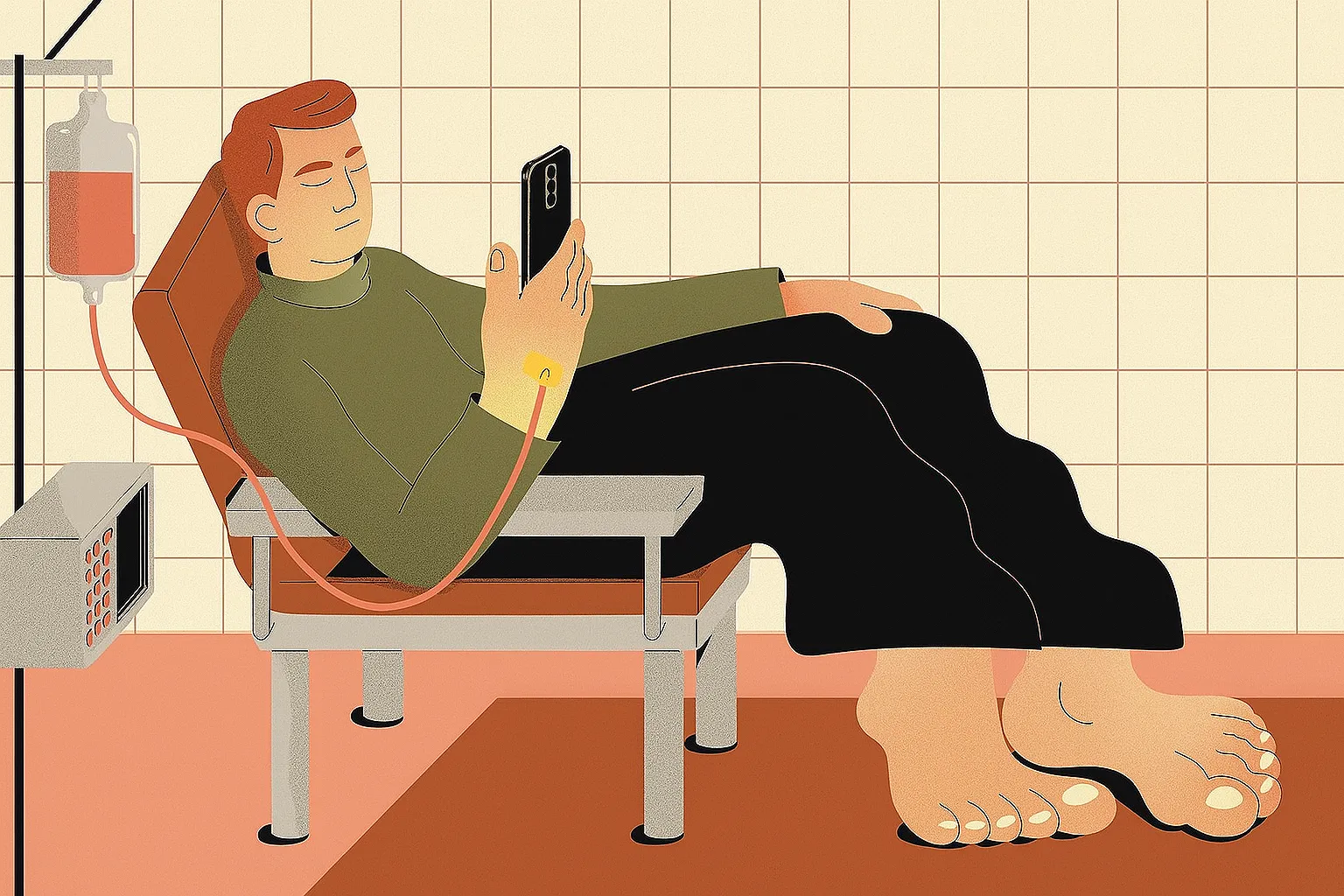
One of the more consistent stereotypes that people have about CBT is that its structured approach to therapy can ignore a person’s feeling or reduce therapy to something basic like “positive thinking.” Both clinicians we spoke with say this is an outdated view of the model.
Dr. Vieira:
These kinds of concerns usually come from a misunderstanding of contemporary CBT, rather than a full view of the actual CBT model. A person’s thoughts, emotions, body, and behaviour are considered to be an interconnected system, not to be treated as separate.
Emotions are often the starting point, not the afterthought. CBT practitioners work with what’s felt in the body, what’s triggered relationally. Because this gives a sense of the given person’s history and context. Compassion is not optional in CBT. Without it, cognitive work becomes brittle. And often ineffective.
CBT doesn’t ask clients to invalidate their feelings. It asks why a response developed when it was once might have been protective, and, importantly, whether it still serves them now. It’s inherently respectful of a person’s lived experience.
Silva agrees, adding that modern CBT also prioritises safety, and compassion:
I see where these worries could be coming from; as it seems that many people have heard about older, less complex versions of CBT.
Emotions play an integral role in CBT. People’s thoughts don’t live independently of their lived experiences, their attachment styles, or their traumas, etc. Trauma-informed CBT works with individuals, finding a pace that feels emotionally safe for them. We assess not only what someone is thinking and feeling, but how those thoughts and feelings might have developed in the first place.
Trauma-informed CBT has evolved, forming into various “waves” that include: acceptance, value work, self-compassion, and mindfulness. A person doesn’t need to be critical of themselves for having a particular thought in order to challenge that thought. They just need to gently ask themselves if that thought is serving them in the same way as it did in the past.
Compassion and emotional safety are always the first priorities in my sessions. The structure of a session will support emotional presence, not replace it.
The most important conversations shaping the future of psychedelics, delivered weekly.
From thought-provoking podcasts and original stories to research breakthroughs and industry news, stay connected to the conversations that matter.


Joined by 12,000+ readers
Who can benefit from CBT?
CBT can be highly effective for some conditions, such as anxiety disorders and depression, but both therapists highlight that a client’s fit for the therapy is key.
Dr. Vieira says:
CBT tends to work particularly well for clients who are looking for clarity, and direction, and practical strategies. People who might be curious about themselves and motivated to practise skills between their sessions. It can be especially effective for anxiety, and mood disorders, as well as perfectionism, health anxiety, and stress.
But CBT isn’t always the first step for people. When someone is traumatised, or severely dissociated, or feels like they’re lacking basic emotional safety — then stabilisation and relational work may need to come before beginning. CBT is at its most powerful when a person’s nervous system is regulated enough to engage with what the therapy can offer.
I don’t believe that therapy is about loyalty to a model. It’s about client fit and the therapist’s clinical judgment. CBT is a great tool, but it works best when used flexibly and humanely, trying to be in attunement with the person sitting in front of you.
CBT for Anxiety & ADHD
Silva highlights the practical value CBT for specific challenges like anxiety and ADHD:
CBT can be very effective for people with anxiety because it teaches you how to stop your “anxiety cycle”. This is a cycle of thoughts and body symptoms, avoiding things that may trigger your anxiety (which therefore reinforces your fears). It’s a constant loop that gets stuck in the same pattern over and over again.
Once you become aware of this cycle, you can learn new ways to think about and react to your anxiety. You can develop greater confidence and the ability to tolerate uncomfortable situations. By using techniques like behavioural experiments, and gradual exposure to things that previously might have made you feel anxious.
For individuals with ADHD, CBT can provide structure. Helpful in assisting with their daily activities and ADHD’s effects on the brain.
Many individuals with ADHD experience significant problems with executive function (like planning, organisation, time management). CBT can provide them with an opportunity to work through these problems, with a structured format. CBT also addresses the emotional realities of living with ADHD. Feelings of guilt, shame, and frustration — which are often unaddressed in other treatment models.
CBT won’t affect the biological characteristics of ADHD, but it can help people develop better coping mechanisms, hopefully increasing their overall resilience to dealing with ADHD.
CBT exercises
CBT is often described as skills-based, and that practical element is part of what makes change measurable and transferable into your daily life.
Tati Silva gives us some useful CBT exercises that are often used in CBT therapy:
- Thought records: Identifying automatic thoughts, examining evidence for and against them, and developing more balanced alternatives.
- Behavioral experiments: Testing predictions in real-life situations to gather new evidence.
- Exposure exercises: Gradually facing feared situations to reduce avoidance and build tolerance.
- Behavioral activation: Scheduling meaningful or mood-enhancing activities to counteract low mood.
- Formulation mapping: Visually mapping the interaction between thoughts, feelings, behaviours, and physical sensations.
The experts we spoke with both see CBT as a collaborative process, not a rigid protocol or structured model. Something that helps people understand their patterns, regulate their emotions, and build skills that can hopefully last beyond the therapy session.
 Expert Board Member
Cognitive behavioural therapy is a well‑established, evidence‑based model, but contemporary CBT has expanded far beyond its ‘thought‑focused’ roots. This article clearly illustrates how modern practice integrates context, emotion, and trauma‑informed principles, offering readers an accurate picture of CBT as a flexible, collaborative approach rather than a rigid set of cognitive techniques.