Reading Navigation


This content is grounded in peer-reviewed research, clinical guidelines, and established best practices. Claims are reviewed for accuracy and transparency. Learn more about our evidence standards
The Psychedelic DJ: How Matt Xavier is Turning Music into Medicine
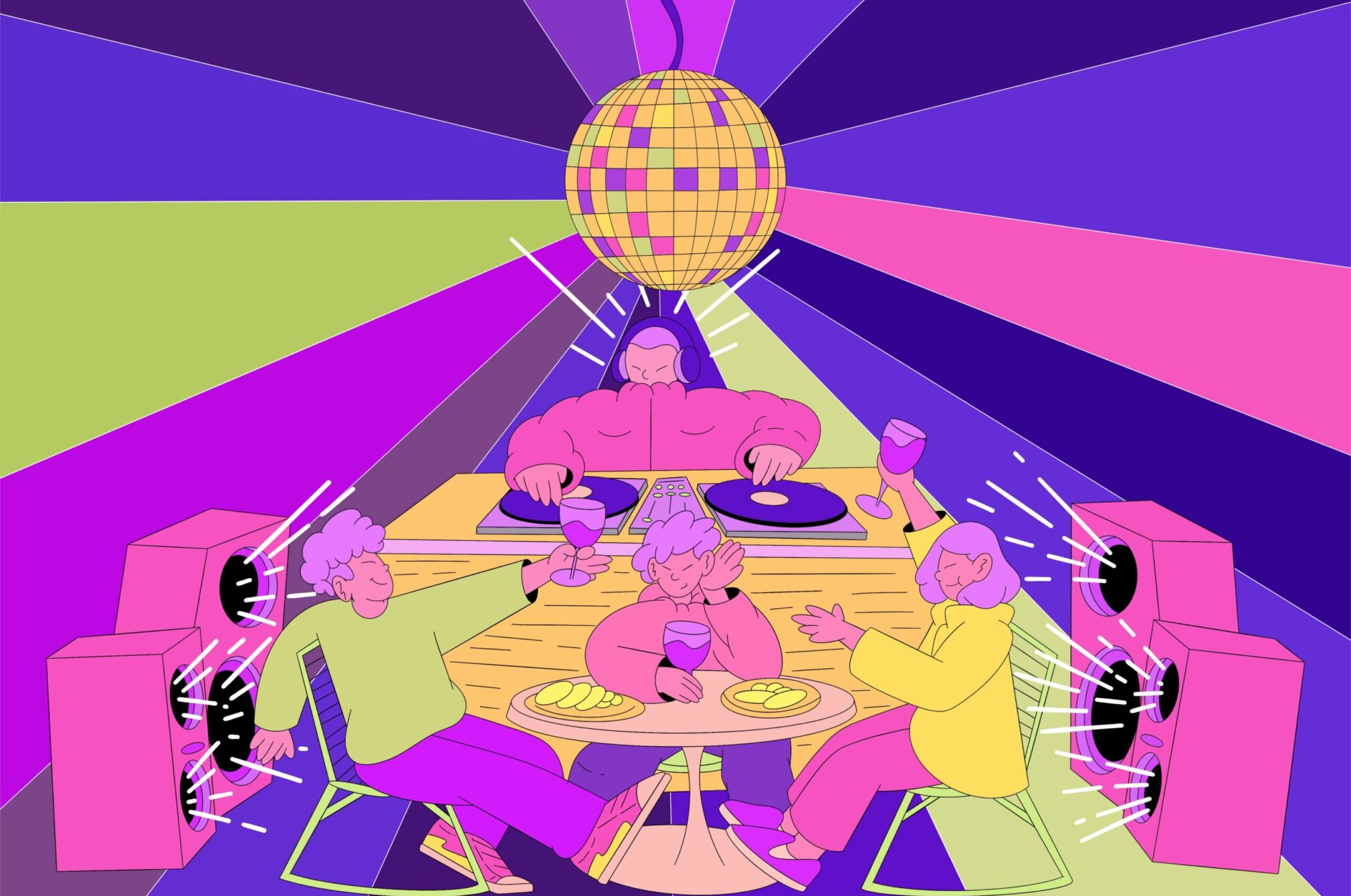
From New York’s rave scene to therapy sessions, Matt Xavier has spent decades exploring how music moves us — first on the dance floor, then deep within the mind. His book, The Psychedelic DJ: A Practical Guide to Therapeutic Music Curation and Psilocybin-Assisted Therapy, brings together a multi-dimensional life’s journey to help others along their own path.
States of Mind spoke with the author about his work and how music and DJ techniques can be an essential therapeutic tool in psychedelic therapy.
From Rave to Recovery
Matt Xavier’s story begins in the heart of 1990s New York City. It was 1993, and an entirely new reality was about to be discovered.
“I walked into my first rave at an underground nightclub called NASA in downtown New York. And once I walked in, I didn’t even understand what I was listening to. I didn’t even know that there was music like that. But I was immediately hooked.”
Soon, Xavier was throwing underground parties, co-founding a record label, and spinning psychedelic trance sets across the world. But by the year 2000, the music stopped feeling right. “I hit bottom. I quit playing that music. I stopped all drug use for three years.”
That pivot led him into another mysterious world: mental health. Xavier returned to school to become an addiction counselor, where he trained in Gestalt therapy under therapist Dr. Allen Berger. For the next decade, he worked on the frontlines of the opioid crisis.
“I continued doing addiction counseling work for 10 years. But eventually, I burned out during the Oxycontin and heroin epidemic. Fentanyl was just coming on the scene. We were losing a lot of people, and it was really having a lot of stress on me.”
Life was leading him toward psychedelics once again, but this time from a healing perspective.
The Birth of Therapeutic DJ’ing
It was around this next transition moment that Matt reached out to a friend who was an MDMA therapist working on advanced MDMA research.
“She recommended that I go to an integration community circle down in Los Angeles. And when I walked in there — my whole history with psychedelics in the 90s, my counseling history, and my work as a group therapist — all kind of came together, and I said: ‘I could totally run these groups. I could do this really well.’ So then I started an integration counseling practice.”
“I was able to use the music as a co-therapist—to instigate or amplify thoughts and feelings, to provide a soundtrack throughout the journey.”
He got himself trained in psychedelic-assistant therapy and then went home and started practicing. “I’ve been working with a minimum of one client per week for the last six years.” And as this happened, music began to naturally re-enter the picture.
“My wife said, ‘I thought you quit DJ’ing. But now you’re DJ’ing for clients.’ She nailed it. I was DJ’ing for an audience of one.”

Music as Co-Therapist
That realization launched a new concept: Therapeutic DJ’ing — a custom musical framework that uses real-time DJ skills to guide clients through psilocybin experiences, tailored to each stage of the psychedelic journey.
In Xavier’s methodology, music is more than a background element. It’s an active participant in the healing process.
“I focused my energy on developing these audio protocols using various tracks and aligning them to the first four stages of the psilocybin mushroom journey. I prepared music that would work for each one of those stages and paired that music while the client was laying in a session.
“I was preparing the sound system in a way that was totally immersive, creating a whole beautiful setting to support all of that counseling work that we would do before and after. And giving them that extra support during the session, I was able to use the music as a co-therapist to help support their experience, to instigate or amplify thoughts and feelings. To provide them support and a soundtrack throughout the journey.”
DJ’ing for Healing: Live Soundtracking
Unlike static playlists, Xavier’s therapeutic music curation is dynamic, built in real time, in direct response to the client’s inner experience.
“Though I walk in with a record box, the client’s reactions help me decide what to play next. It’s not just a playlist, it’s a live set.”
This responsive method, a type of psychedelic soundtracking, involves observing the client’s emotional state and adjusting the music accordingly. Using DJ tools like harmonic mixing and key detection, you blend tracks seamlessly to maintain continuity while steering the therapeutic arc.
“It’s technically DJ’ing. It just happens to be in a clinical setting rather than a club.”
This isn’t psychedelic therapy. It’s therapy with psychedelics. We help the client plant the seeds, ignite the fire, and then support them as they water the changes into real life.”
Over time, he developed a four-stage musical protocol corresponding to the natural arc of a psilocybin session:
- Hike (Onset): Soft, slow, welcoming tracks using major or gentle minor chords
- Climb (Ascent): Rhythmic, emotional music to support the rising effects
- Summit (Peak): Expansive, minimal tracks that leave space for imagination
- Descent (Return): Nostalgic, memory-triggering pieces that support reflection and grounding
“For example, in the onset stage, right as we’re beginning. I like to do a meditation with just some very light, simple, bold music. Just to kind of hypnotize and get them out of their head and into their body with some breath work.
“But then, when they get to that top stage, they’re at the very peak of the medicine, and you can be overwhelmed. It’s a very strong experience. And so you’re up at the top, as if you just climbed a mountain. You’re at the vista. What would you want to see or experience when you’re up there? Would you want pounding music? Or settle down after that big climb and enjoy the view.
“That’s when I’d make the music more expansive, something that provides me some support and a little bit of sizzle.”
“I often say: music is psychedelic. And psychedelics amplify music. When combined, they dance with each other.”
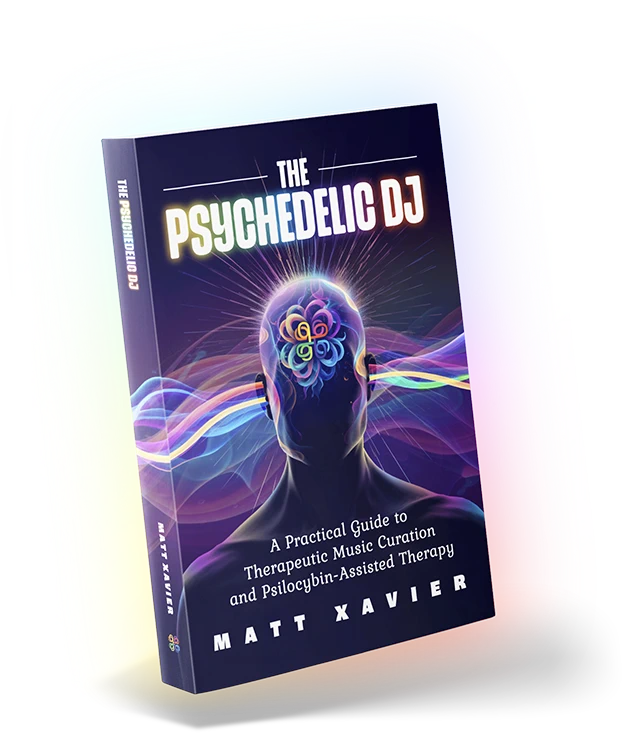
The Book: A Practical Guide for Practitioners
Years of notes from sessions and hikes in nature evolved into The Psychedelic DJ: A Practical Guide to Therapeutic Music Curation and Psilocybin-Assisted Therapy. It’s the first comprehensive guide to integrating DJ techniques within psychedelic therapy.
“The book isn’t just about music. It’s about good clinical practice: screening, intake, intention-setting, integration. Music is part of a full therapeutic arc.”
Inside the book, readers will find:
- A breakdown of the four-stage musical arc
- Embedded music recommendations hidden throughout the chapters
- QR codes linking to curated DJ mixes with complete tracklists
- Tips on how to read client energy and adapt in real time
- Ethical considerations for psychedelic therapy practitioners
Matt also emphasizes the need to know your patient and their specific situation and needs. “Screening is absolutely essential to psychedelic therapy. This book is not just about music, it’s about the importance of understanding psychedelic therapy and actually following some of the essential practices.
“We have to know who is a good candidate for this work before we dive in and do it. It is incredibly vulnerable work. We are being entrusted, to guide and provide support into their subconscious.”
Xavier emphasizes that music selection should never be random. The process begins with screening and intake. Using insights from the client’s history, preferences, and intentions, Xavier builds personalized playlists, each one as unique as the individual it supports.
“I usually guide clients through screening, mental, physical, find out what their experience and psychedelics are, and then look at what their intentions are for the journey. I can then make musical selections based on this.
“For example, if I know they’re new to the therapy, it’s going to be better to lean more into major chords and easier pieces of music with less activation. And then as they come back and they gain more experience with psychedelics and the therapy, then we can start to dial things into more challenging pieces, increasing the energy at certain points. So you do have to know your client.”
“This isn’t psychedelic therapy. It’s therapy with psychedelics. We help the client plant the seeds, ignite the fire, and then support them as they water the changes into real life.”
“We’re not here to heal people with music or with psychedelics alone. We’re here to create the conditions where healing becomes possible.”
But music helps in the healing?
“Yeah, absolutely. Music is medicine.”


The Psychedelic DJ: A Practical Guide to Therapeutic Music Curation and Psilocybin-Assisted Therapy
Includes curated mixes, music theory insights, clinical guidance, and practical tools for psychedelic facilitators and therapists. More info available here.
 Expert Board Member
Music is an integral pillar of set and setting. Most practitioners find that a curated soundscape does more than just enhance the experience — it dynamically guides the journey itself, maximizing the transformative power of the medicine.






 Paola, Malta

 Netherlands