Reading Navigation

This content is grounded in peer-reviewed research, clinical guidelines, and established best practices. Claims are reviewed for accuracy and transparency. Learn more about our evidence standards
Living With OCD: How ERP Therapy Transformed Life For Entrepreneur Mother

Despite being in therapy since she was 12 years old, Sarah didn’t receive her diagnosis of OCD until she was 28 and became pregnant.
Working as a nurse and successful entrepreneur — and selling her business for $1 million — Sarah lived with severe OCD for years while dealing with serious family health issues. Until she finally found an approach that helped to calm her symptoms.
She shares her story with States of Mind.
Raising Awareness of OCD
“My daughter was born with four congenital heart defects, which was a catalyst to my mental health journey. It definitely was not a new journey for me.
“I was a nurse practitioner, but I had no idea I had OCD because of my own connotations and perceptions of what OCD is.”
Sarah is not alone in this long battle, with many people waiting up to 17 years to receive a diagnosis.
Sarah is now a passionate advocate of mental health, working to raise awareness of the condition. She highlights that there are many misconceptions about OCD. While it is often seen as being about cleanliness and order, a core feature of the condition is about looking for reassurance and certainty.
“OCD is an intolerance of uncertainty. When someone is doing an action — such as washing their hands multiple times — what they are actually looking for in that moment is the absolute certainty that they don’t have germs on their hands and they are not going to get sick.”
These thoughts, or internal compulsions1, can sometimes turn to darker ideas and worries about the health and safety of ourselves or loved ones, Sarah says, having a significant impact on mental health, such as causing severe anxiety.
What is Exposure and Response Prevention (ERP)? The exposure part of ERP is confronting the thoughts, objects, and situations that provoke obsessions or anxieties. The response portion is making an active choice not to do the compulsive behavior once the obsession has been triggered.
Support To Match Your Needs
 Germany
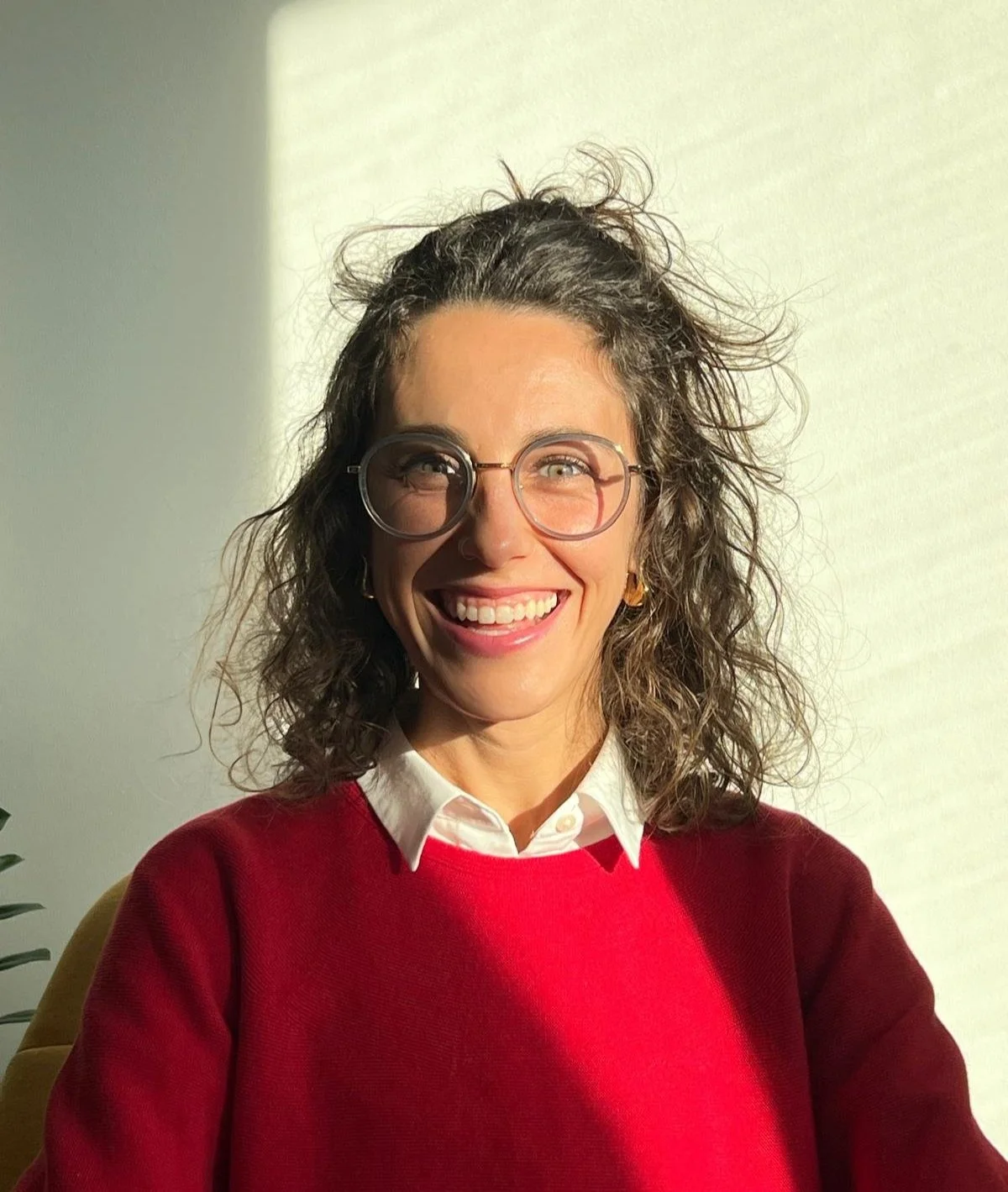
Francieli Favarim is a licensed psychologist based in Berlin offering integrative psychotherapy and depth-oriented support
 Berlin, Germany
 Integrative medical practice in Berlin offering evidence-based and holistic treatments combining Western and Eastern medicine
Treating OCD With ERP Therapy
Trying different approaches, including methods such as cognitive behavioral therapy (CBT), it wasn’t until Sarah found ERP therapy that she was able to manage her symptoms and progress on her journey to recovery.
“OCD can involve intrusive thoughts all the time, such as ‘what if I hurt someone? What if I fall down the stairs?’
“With OCD, we often get in this loop. The hard part of the OCD treatment is sitting in that uncertainty and discomfort. But the more that you face your fears head on, you realise that you don’t die in the process, and the easier it becomes.”
For Sarah, this fear extended into the safety of her daughter’s life, worrying that if she threw a baby shower, something bad might happen to the baby.
We made a tombstone for my daughter and put the death date for the end of the year, which was so scary and overwhelming.
“We thought we were having a healthy baby, and then all of a sudden, a week after a surprise baby shower, I found out that I was having a baby with four heart defects, and that she has to have heart surgery her first week of life.
“In my OCD brain, I thought that I caused that. But the heart formed at six weeks old, it’s not something that magically happened overnight. Unfortunately, you cannot logic your way out of this thinking.”
Sarah’s experience of these fears were made more difficult by the major heart surgeries her daughter had to undergo — almost dying during one of the surgeries.

To help expose herself to her fears, Sarah conducted an ERP exercise where she challenged this magical thinking by crafting a tombstone for her baby. While ERP generally uses smaller exposure exercises, Sarah’s situation led her to a more intense incarnation.
“We made a tombstone for my daughter and put the death date for the end of the year, which was so scary and overwhelming. It was an exercise to show that, every time that you do something that hard, you realise the big bad thing doesn’t happen.”
This makes the compulsive loops easier to break, Sarah explains, noting that following the six-week intensive ERP programme her OCD scoring dropped significantly.
The programme consisted of four to five hours of therapy every day for six weeks, working with four therapists on different exposure therapies “rewiring and reworking my brain.”
Supporting The Journey To Recovery
While the therapy is not a cure for OCD, Sarah says it has had a life-changing impact on her road to recovery.
“I have a lot less of these thoughts now because I have more tools. I can spend less than 10 minutes a day doing compulsions compared to when I started, when I would spend up to six or eight hours a day.
“It was completely and utterly life changing, it was pivotal in managing my OCD.”
The more I give myself self compassion, but also give compassion to those around me, and it makes it easier to operate in the world.
For some, therapy such as CBT can inadvertently feed the cycle of OCD, as it provides reassurance.
“To be able to work with someone who is trained to not give me reassurance, to not let me avoid and not let me do compulsions was life changing.”
Now, Sarah takes part in an ERP session once a month to continue working on her OCD and practicing exposure when she feels compulsion urges, explaining that she is now a different person from three years ago and “much more at peace”.
Advocating For Our Own Mental Health
Sarah is currently Chief Nursing Officer at Blueprint Test Prep, board member for Conquering CHD, Committee Chair member for Children’s Heart Foundation Annual Cincinnati Walk, and also hosts her own podcast called Cosmic Chat.
Working in demanding, high pressure roles, Sarah now applies the skills she learned in her work, highlighting one specific skill that has helped her in her recovery — self compassion.
“I think one of the best OCD skills that I have, that anyone could use not just for OCD behaviours, but in everyday life, is simply the tool of self compassion.
“I feel the more I give myself self compassion, but also give compassion to those around me, and it makes it easier to operate in the world.”
Speaking on the long road to her diagnosis, Sarah highlights two challenges: lack of education and misdiagnosis, encouraging anyone who thinks they may have OCD to advocate for themselves and seek out a licensed professional who has experience treating the condition.
“I’ve been diagnosed with generalized anxiety disorder (GAD) and with PTSD, pretty much my entire life.
“When you have the wrong diagnosis, you feel it and you know it. So, even though I did not want to get an OCD diagnosis, it was such a relief for me to know what I’m up against, and this is what I have.
“When you are incorrectly diagnosed, you feel kind of crazy because the symptoms are so extreme in comparison to (symptoms of) generalized anxiety disorder, for example.
“Therapy is kind of like speed dating in a way — you have got to find the right person that works for you. Just because you sign up for an appointment and meet with someone doesn’t mean they’re going to be your human or you’re going to be their human.”
Cases like Sarah’s show the complexities of OCD and the importance of an accurate diagnosis. When your condition is properly understood, you can access the right support instead of cycling through treatments that don’t fit. The path is getting clearer, but still needs work.
Find Support To Match Your Needs
 United Kingdom
 Integrative counselling and psychotherapy offering online and in-person sessions in Exeter for anxiety, depression, stress, and relationship issues.
 United Kingdom
 Gemma Autumn is an integrative psychotherapeutic counsellor based in London who offers adult and adolescent psychotherapy using a flexible, person-centred approach.
 Expert Board Member
Obsessive compulsive disorder (OCD) is an often-misunderstood mental health condition, and its varying presentations mean people often struggle for years before receiving an accurate diagnosis. Although it affects up to 2.3% of the population, it is considered underdiagnosed and underestimated. Better education and awareness are essential. This article explores a less commonly recognized presentation of OCD through Sarah’s story.






 Portugal
 Paola, Malta