Reading Navigation
This content is grounded in peer-reviewed research, clinical guidelines, and established best practices. Claims are reviewed for accuracy and transparency. Learn more about our evidence standards
“I Wish I’d Done It Sooner”: How Ketamine Changed My Life

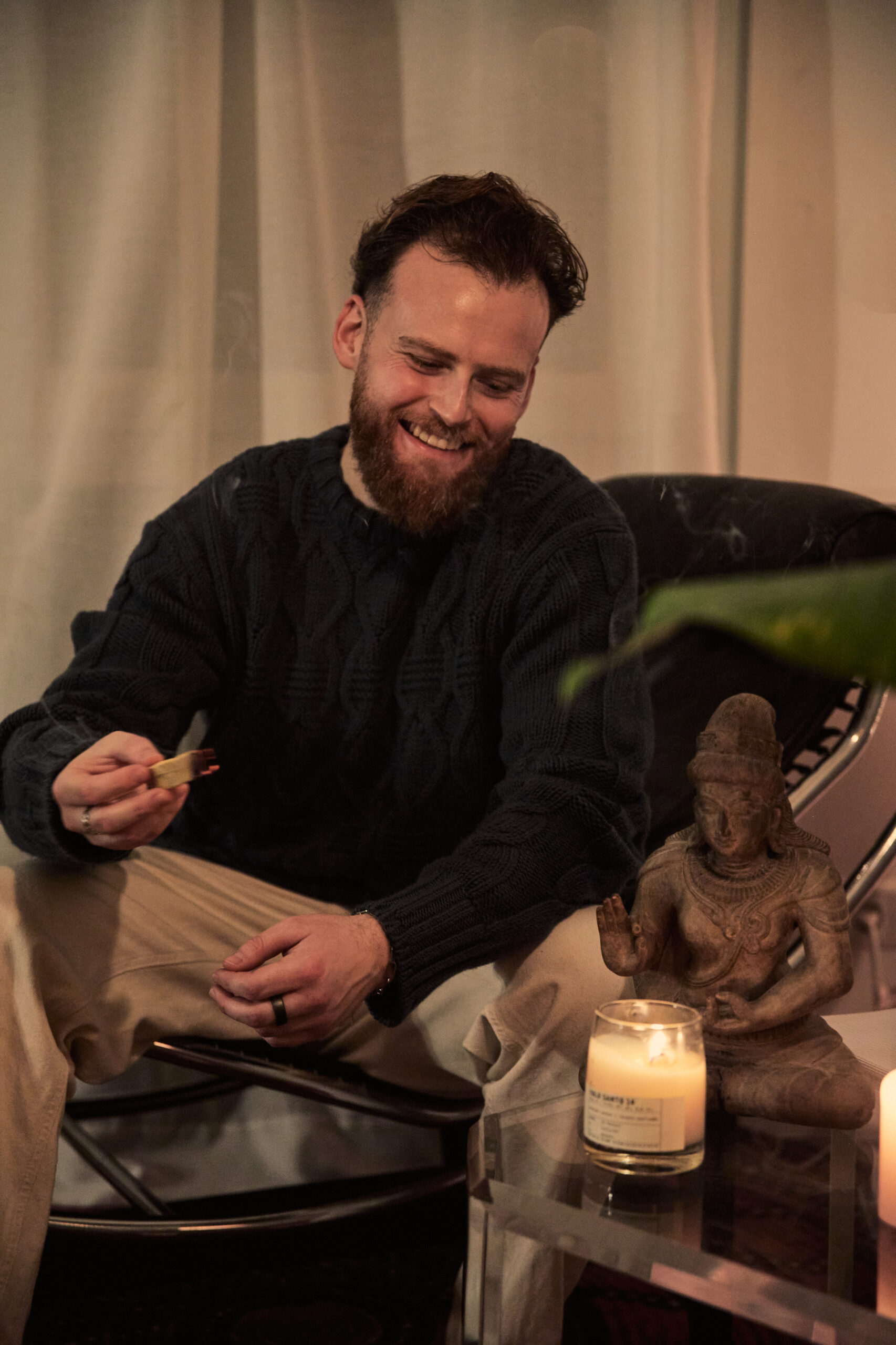
“I didn’t really know what my problem was,” says Matt Thierfelder, a retired firefighter.
After giving 30 years working for the city of Vancouver, Washington, he tried psychedelics “as a way to deal with [his] mental health issues and PTSD.”
“When Oregon legalized psilocybin with Measure 109, I thought it might be a way to find purpose and figure out what I was going to do after retirement, because I didn’t know what I was going to do. I went to school to be a psilocybin facilitator.”
Thierfelder then pursued psychedelic therapy, both as a patient and as a practitioner, taking a facilitator training program. But he was told, in no uncertain terms, that he couldn’t really do this training program unless he did his “own work.” Which was one of the reasons he ended up trying ketamine therapy. “I already tried that (psychedelics), and it didn’t really work,” he said. “But I already paid tuition.”
And so Thierfelder began his journey towards self-discovery with ketamine, differently than he had ever worked with the substance before.
Before using ketamine therapeutically, Thierfelder came with a bias: he hadn’t heard of “any good outcomes of somebody doing ketamine,” having only known it as a form of emergency medicine: “We use it in emergency settings for people that were traumatically injured as a way to manipulate them, because it’s a really good dissociative, and if you give somebody enough ketamine, you can manipulate their body, and that’s pretty painless for them.”
In recent years, ketamine-assisted therapy has been studied for treatment-resistant depression and PTSD, with research demonstrating rapid symptom relief in some patients when delivered in medically supervised settings and combined with psychotherapy. Outcomes vary, and ketamine is not a cure, but it may temporarily increase psychological flexibility and support trauma-focused work.
Find Support For Your Needs

 Netherlands
For people with little time who want a private all-round solution to return to aliveness.

 Gozo, Malta
 Evidence‑based ketamine‑assisted psychotherapy retreat Hive Bio on Malta.
He had also had his own experience during a traumatic injury, after a ceiling collapsed on him at work. In the back of the ambulance, when staff asked if he wanted painkillers, Thierfelder refused, but was given fentanyl, which wasn’t doing anything. He was then given ketamine, which ended up being, he says, probably “the deepest psychedelic experience that [he’s] had to date.”
The experience left him fascinated with ketamine, and Thierfelder fell into a deep dive researching it, its history, its use throughout the world, including as an anesthetic and in Vietnam, its effects and dissociation — but, he said, he didn’t know anyone else in his circle who was using it for mental health.
After thinking it over, he decided it was time to go for it. Thierfelder took a month off work, went to Cascade Psychedelic Medicine, and connected with a therapist who did EMDR with firefighters the day after IV ketamine sessions. But still, he was “ashamed” and “embarrassed.”
“I didn’t tell anyone what I was doing.”
The first session was unremarkable. It made him pause, question himself, whether this whole thing was even worth it.
But then “the second session was super impactful.”
“I remember […] coming out of it thinking, like, that’s just probably one of the best days of my life. And I realized, […] everything’s okay. I’m okay. Everything’s exactly the way it’s supposed to be […] I one thought that, you know, like, Man, if I died right now, it would be perfect […] Nothing could be any better than that.”
A seasoned journeyer, Thierfelder has experienced ibogaine, 5-MeO-DMT, and psilocybin, and to him, those two ketamine sessions were “probably in the best top ten days of [his] life.”
The ketamine sessions helped Thierfelder make a significant decision: Finally realizing he was ready to retire.
“I stepped away from the ketamine experience and went back to work. That first shift back to work […] I decided, Yeah, I’m ready to retire, which was huge for me, because I didn’t know when I was going to leave or what I was going to do.”
Thierfelder credits ketamine with helping him “see things as they were.”
“I’ve done talk therapy and EMDR before, but I was never really open enough.”
His career, spanning 30 years in firefighting, 10 as a fighter, 20 as a captain, and then as a battalion chief, took its toll on him. As the responsibility went up, so did his work, and his worries.
“Constantly being hypervigilant and worried about everything doesn’t actually make anything safer,” he says. “It just kind of fries you after a while.”


Firefighters and other first responders are known to1 experience significantly higher rates of PTSD and chronic hypervigilance compared to the general population, due to repeated exposure to traumatic events.
His anxiety reached a breaking point: “If a motorcycle passed me on the freeway, I would instantly picture what his body was going to look like when he horrifically killed himself.”
The thoughts would spiral – he would worry about what the station would do when they received the call, what if he was the first to approach him, what they would have to do to his body, how to get him into ambulance, and, at worst case, telling the imaginary victim’s family that he had passed. And this, he says, was every time a motorcycle passed him on the freeway. It wasn’t sustainable, and it wasn’t normal.
“I was constantly worried about the worst thing happening all the time. I’d be at a concert. Everybody would watch the music, and I’d be thinking about how packed the auditorium was. And, what if there was a fire, a stampede. I just couldn’t relax. I couldn’t be in the moment. I was never anywhere. And, you know, ketamine really helps.”
Now, Thierfelder believes he’s partially broken the cycle.
“I think if I could go back and give myself advice, if I would listen, and probably wouldn’t, I would have done the IV ketamine protocol, the six sessions with EMDR before I did any classic psychedelics like psilocybin.”
Many clinics follow structured protocols involving a series of IV infusions over several weeks, often paired with trauma-focused psychotherapy to consolidate insights.
Thierfelder’s last treatment was October 2025.
Research suggests2 that ketamine’s effects can be rapid but may diminish over time without ongoing support, which is why follow-up care and integration are considered important parts of treatment.
How does he feel now?
“Well, here’s a great little secret about psychedelics,” he says, chuckling.
“None of them rewire your brain or fix you. You know, there’s no before and after where anything lasts forever. And for me, I know the work will never end.”
The work, being, of course, the integration, the lifestyle changes that have to come along psychedelic journeys and mental health treatments. Integration often includes psychotherapy, behavioral changes, and nervous system regulation practices that help translate insights into sustained change.
“I think if you just went and did it and then went about your life, drinking, smoking weed, clothing, unhealthy, not exercising, eating shitty, you’ll end up right back where you were.”
Learning that, he says, was a disappointment — possibly one many journeyers early on their path can relate to — but it was true. His life now, he says, has changed, from retirement to learning more about psychedelics and his outlook on life, nowhere near as intense and rigid as it used to be.
“I wish I’d done it sooner,” he says.
“I wish I thought it was okay for me to do it.”
Support to Match Your Needs
 United Kingdom
 Depth‑psychology‑oriented shadow work therapist offering long‑form experiential sessions, group workshops and psychedelic integration support in person and online.
 Germany
 Francieli Favarim is a licensed psychologist based in Berlin offering integrative psychotherapy and depth-oriented support
 Expert Board Member
This article offers a compelling lived-experience account of ketamine-assisted therapy in a first responder navigating PTSD and chronic hypervigilance. The narrative is emotionally authentic while appropriately highlighting the importance of integration and lifestyle change. With the added contextual framing and safety clarifications, it balances storytelling with evidence-informed perspective and responsible clinical communication.