Reading Navigation
This content is grounded in peer-reviewed research, clinical guidelines, and established best practices. Claims are reviewed for accuracy and transparency. Learn more about our evidence standards
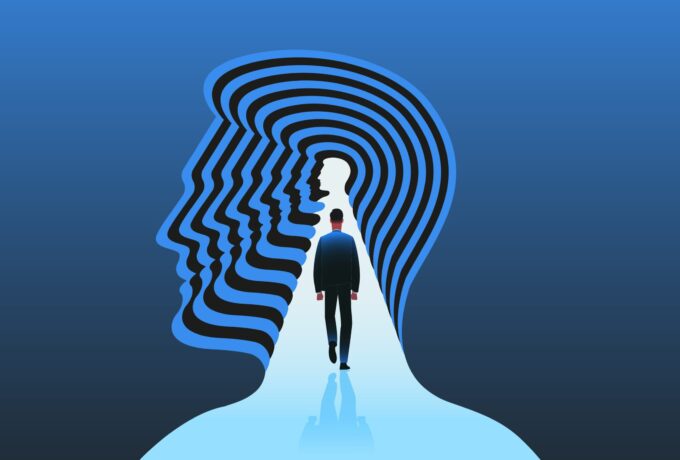
Do Difficult Psychedelic Experiences Hurt or Heal You? Inside The World’s Bad Trip Debate
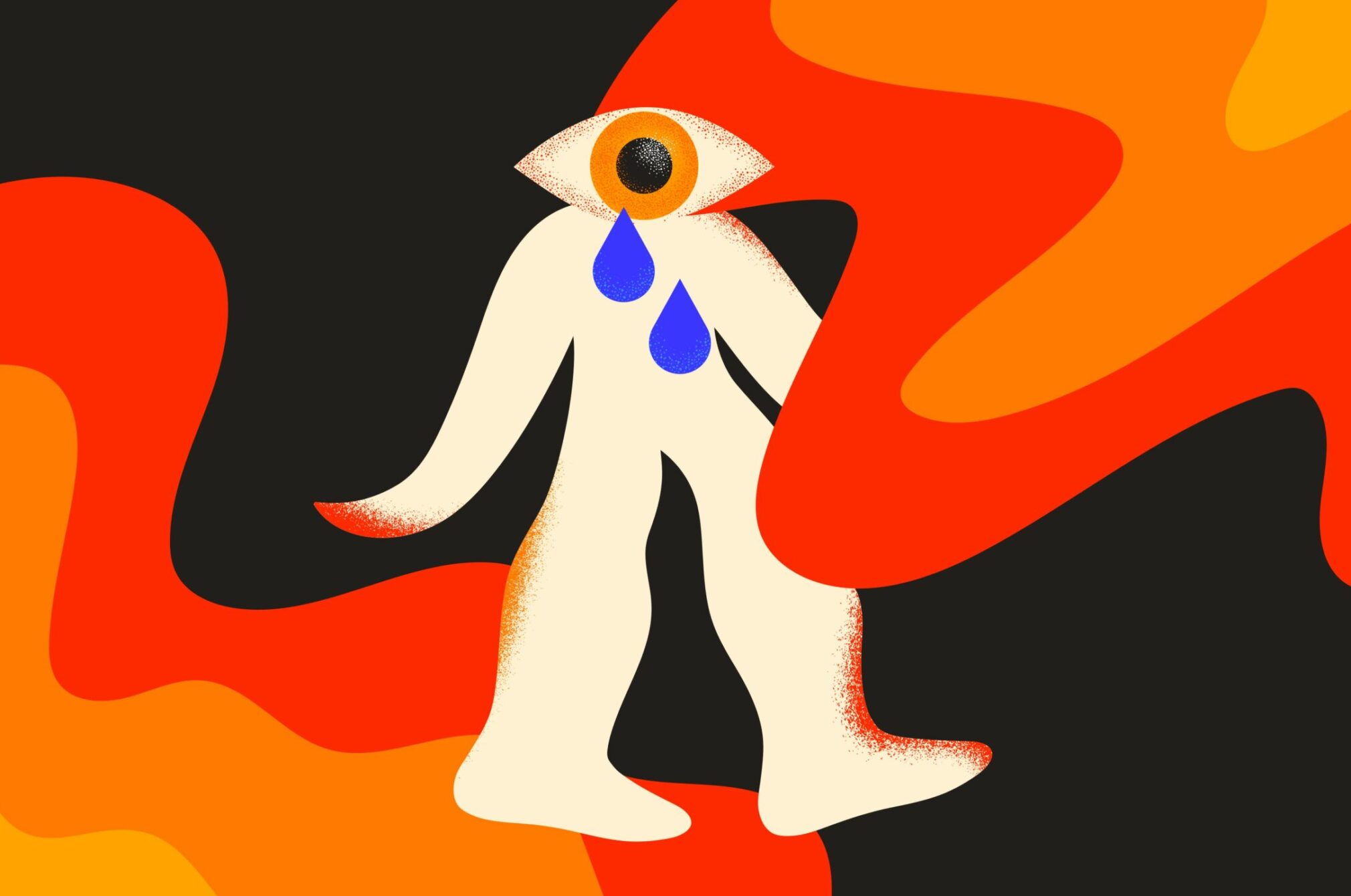
Jules Evans was convinced he was dreaming — and it was a bad dream. After drinking ayahuasca five times within nine days at a retreat center in the Peruvian Amazon in October 2017, where he had an “utterly heart-opening” experience, he embarked upon a two-day journey to the Galapagos Islands, where he intended to rest and digest. En route, however, he became agonizingly disoriented and unmoored from reality.
“I felt like I was in a computer game, and the next level wouldn’t load because the game was stuck in a glitch,” he later wrote in Holiday From Self. “I thought, I’m going to be stuck here forever, stuck between the levels.” As his despair and confusion deepened, “I decided I was not in a dream … I was dead, and in some ghastly afterlife.”
Whether it be post-trip difficulties like Evans’ or bad trips that spoil the psychedelic experience itself, some people do not get what they bargained for from taking mushrooms, LSD or ayahuasca. Perhaps for good reason: To trip is to give up control, to blissfully enjoy whenever possible, and to dissolve the ego. But certain issues may hinder that course, requiring the endurance of a challenging yet ultimately therapeutic experience (something the tripper, at the time, might consider as “bad”).
Doubtless, sometimes this discomfort is an integral part of the trip and the healing process. But by sugar coating bad trips in such fashion, do we risk painting too rosy a picture on the potential reality of a horrendous psychedelic experience?
Find Support To Match Your Needs


 Hamilton, United Kingdom
 Don’t Bad Trip On Our Psychedelic Parade
This dispute is currently playing out within the psychedelic community, between figures who suggest there is no such thing as a bad trip, that there are only “difficult or challenging trips” — and others who say a trip can indeed be traumatizing and profoundly lack value.
“The majority of people feel that they ultimately benefited from challenging psychedelic experiences, but in surveys1 between 20-40% of people felt that no good came from the experience,” says Evans, who exited his fugue state after a couple of weeks, with the support of friends and family, and went on to found the Challenging Psychedelic Experiences Project, a research body investigating post-psychedelic difficulties.
The entire multi-billion-dollar psychedelic renaissance has been powered by glowing testimonials, with hardly any stories of harm reported in mainstream media.
In a 2023 study, almost three-in-five of 613 respondents had never had a challenging experience while tripping — but 9% reported functional impairment that lasted longer than one day and 2.6% said they had such distressing experiences they sought medical, psychiatric, or psychological assistance.
Editor’s note: A 2023 study led by Otto Simonsson found that while nearly 60% of 613 lifetime users had never had a challenging experience, 2.6% sought medical or psychiatric assistance following a trip. Meanwhile, separate research co-authored by Evans focused on those who did experience harm, analyzing 608 individuals who reported 'extended difficulties.' In Evans' sample, these difficulties often persisted for weeks or months, characterized by existential struggle and social disconnection.
“The idea that only stories of harm get amplified while stories of benefit don’t is just absurd,” he says. “The Netflix documentary How to Change Your Mind suggests stories of bad trips are 60s propaganda, and it only contains stories of good trips. The entire multi-billion-dollar psychedelic renaissance has been powered by glowing testimonials, with hardly any stories of harm reported in mainstream media.”
Bad trips may be frightening and anxiety-ridden experiences, which can include the return of repressed memories that leave people dissociated and disoriented. In cases like Evans’ — where trips went fairly well — repetitive thought loops can occur, dominated by spiraling paranoid fears, or even suicidal ideations. Others may have such mind-blowing experiences that shake up the infrastructure of the mind to such an extent they are left destabilized and unmoored from reality for far longer than Evans, some for even more than a year.
The fact that people may feel they have grown through suffering does not mean that suffering “is a necessary or essential part of the healing process,” adds Evans, who is also the author of The Art of Losing Control, and editor of the Ecstatic Integration Substack page, which investigates the dark side of the psychedelics industry.
“Most young adults who get cancer feel they experienced personal growth from it,” he says. “That doesn’t mean you want more young adults to get cancer. What suffering is essential to the healing process in psychedelic medicine, and what is not essential, unnecessary, avoidable and harmful?”
But Joshua White, founder of the Fireside Project, a harm reduction organization which operates a 24/7 psychedelic support line, says that true bad trips are few and far between. “If a person has latent psychosis and has a psychedelic experience that activates psychotic episodes, it may be fair to say that’s a bad trip,” he says. “But I think generally speaking, bad trips are extremely, extremely rare, and that the better practice is to shift how we talk about bad trips into difficult trips.”
Editor’s note: If a person has an underlying vulnerability to psychosis — often referred to as being at 'clinical high risk'— a psychedelic experience can act as a stressor that precipitates a psychotic episode. In these cases, the term 'bad trip' may be clinically appropriate.
People less experienced with psychedelics regularly contact Fireside’s support line to ask what to do while they are suffering what they might consider to be a bad trip, he says, with many ready to flee from the experience. “So much of our work at the Fireside Project is to help reframe that experience and say that psychedelics amplify what’s within us and create an opportunity to work with parts of ourselves that may not be available in ordinary consciousness,” says White.
Experts have also warned that when people’s trips can take a turn for the worst if they resist observing anxiety-inducing thoughts and feelings during a psychedelic trip, and reacting rather than simply observing the mind. But the rationale behind this notion assumes that all psychedelic facilitators, or shamans, create ideal circumstances for the ideal trip, when that sometimes could not be further from the truth.
In certain underground psychedelic circles, it may even be considered taboo to share about bad trips, a tendency that has sometimes percolated upwards to inform high-level discussions about psychedelics that have an overwhelming focus on the wholly positive aspects, partly to convince regulators to end the war on drugs and reform.
“Regardless of one’s view about what is a bad trip and when is that label appropriate, there are definitely bad facilitators,” says White. “If a person has a very challenging journey and then in the aftermath there’s no container [for processing the experience], it can make the process of healing and transformation difficult, if not impossible. And of course, can be traumatizing in and of itself.”
The retreat operators where Evans drank ayahuasca suggested to him that his intense de-realization experience may have been a “soul recovery”, which was helping him to recover from traumas earlier in his life, and White says that there is a dearth of understanding about the idea of spiritual emergence, and of how one psychedelic experience can still ripple months later. “What worries me is that once we start to add these potentially pejorative and heavy labels to a trip, that can become a self fulfilling prophecy,” he says, eschewing the term “bad trip”.
Evans and those warning about the prevalence of bad trips and post-psychedelic difficulties are sometimes accused of echoing prohibitionist language. “The obsession with risk reflects something deeper: a fear of losing control,” wrote Bia Labate, co-founder of the non-profit Chacruna Institute for Psychedelic Plant Medicines, in Lucid News.
“But control is not the same as safety. And, sometimes, fear of risk is just another way of maintaining outdated systems of authority.” A lack of “cultural humility,” she added, could be at the root of a fixation with “diabolical and pathological entities”; that is, weird and unsettling visions that might be experienced during a trip.


Indeed, there is the possibility that a bad trip could be a largely Western phenomenon — even though indigenous Spanish-speaking shamans may talk of “mal viajes”— as it plays into a binary way of thinking which is stripped from spiritual understandings of the psychedelic experience. Evans, for his part, claims that the psychedelic industry has “an entity dilemma”, in that the dominant scientific method fails to fully explain the nature of sometimes terrifying encounters with seemingly otherworldly beings.
“Ultimately, if the psychedelic community (and this is vast and sprawling) is not willing to embrace its own shadows then it cannot really shine brightly either, and any rug we choose to sweep our dirt under will get pulled out from under us,” David Luke, an associate professor in psychology at the University of Greenwich, wrote on LinkedIn in response to Labate’s article.
… If you ask them a year later, when they’ve integrated what they’ve learned and moved in the direction of a more authentic life, they may say that the trip and the period that followed was the most fertile opportunity for growth and transformation that they’ve ever had.
Still, seemingly bad trips may nevertheless have surprising benefits, as detailed in a recent article in Salon, and a deep-seated belief in the mysterious and perhaps even magical ability of psychedelics to aid people’s mental health could be behind the optimism certain figures have. “One may realize that many aspects of their life and worldview are inauthentic to who they are and who they want to be,” says White. “That type of realization can create a massive possibility for someone to realign their life.”
Someone even a few months after their epiphany-inducing trip may regard it as “bad” and are yet to fully return to their lives — but this could be part of a strenuous process of upheaval to make big changes like leaving a partner, moving cities, or switching professions — that could herald life-changing benefits.
“They may say that trip was so profoundly destabilizing and that life feels really hard right now,” White says, “but if you ask them a year later, when they’ve integrated what they’ve learned and moved in the direction of a more authentic life, they may say that the trip and the period that followed was the most fertile opportunity for growth and transformation that they’ve ever had.”
Looking back on his grueling episode, Evans says he does not feel traumatized by it and that in hindsight there were even elements where he enjoyed the experience. “I hope it helped me become slightly kinder and wiser,” he wrote, “and that it strengthened my faith in a deeper spiritual reality, and gave me energy to continue the journey.”
Support To Match Your Needs

 Gozo, Malta
 Evidence‑based ketamine‑assisted psychotherapy retreat Hive Bio on Malta.

 Netherlands
 For people with little time who want a private all-round solution to return to aliveness.
 Expert Board Member
This article provides a timely and necessary counter-narrative to the unbridled optimism of the "psychedelic renaissance," offering a compelling critique of how the field navigates adverse events. By anchoring abstract risks in Jules Evans’ lived experience and research, the piece effectively humanizes the distinction between "bad trips" and "challenging experiences," making it highly valuable for readers seeking a balanced perspective on safety.



 Spain
Spain 
 Portugal