The FDA Just Held Its First Hearing on Psychedelic Medicine
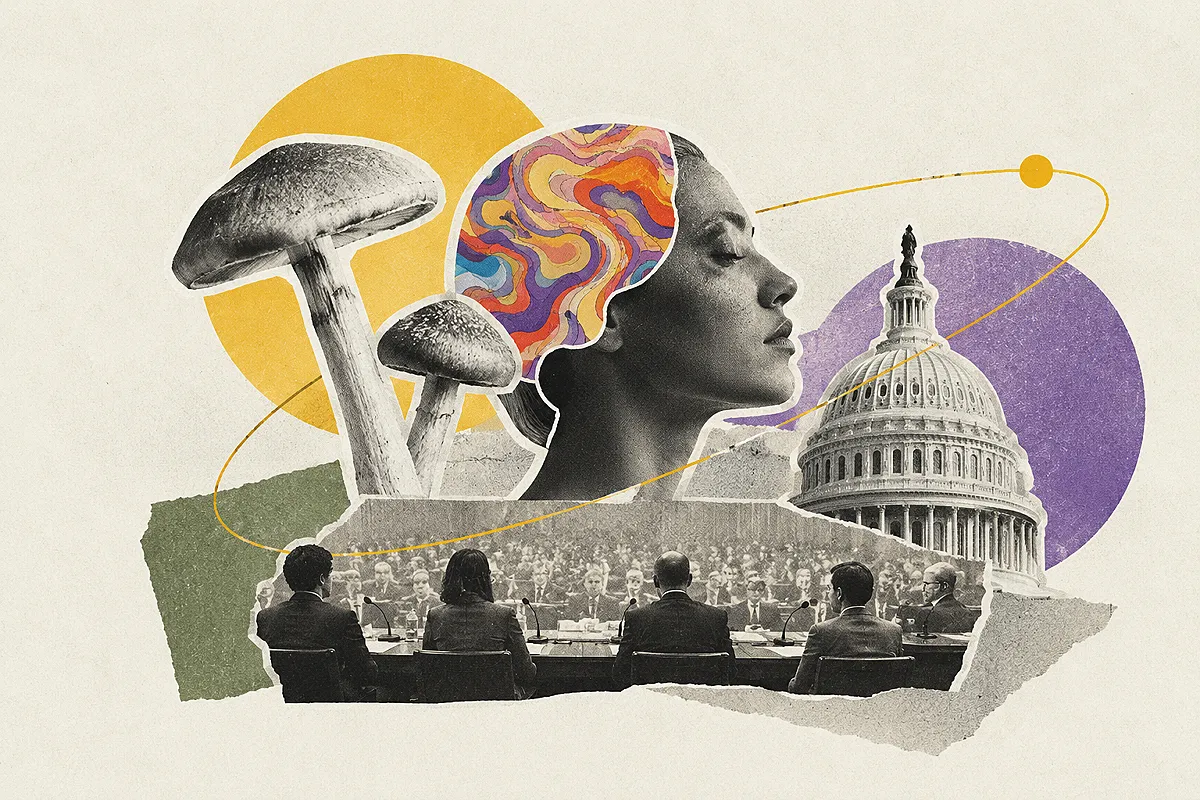
On September 14, 2026, the US Food and Drug Administration convened a public hearing on the future therapeutic use of psychedelic drugs. It ran four hours, streamed live on the agency’s YouTube channel, and drew testimony from researchers, drug developers, veterans, and clinicians. On paper, it was a procedural event. In practice, it was the clearest signal yet that the United States is preparing to approve its first psychedelic medicine, and a preview of the fight that comes next.

What actually happened
The hearing was convened under Executive Order 14401, the April 2026 directive instructing federal agencies to accelerate research and review of psychedelic treatments for serious mental illness. It followed the FDA’s first-ever final guidance for running psychedelic clinical trials, published in July.
Notably, the agency drew firm boundaries around what it would and wouldn’t discuss. It was not seeking comment on any pending application, on drug scheduling, or on legalisation and state programs. What it wanted feedback on was narrower and more revealing: how these drugs should be administered, monitored, and studied in the real world if any are approved.
In other words, the question on the table was no longer whether psychedelics work. After two positive Phase 3 trials for psilocybin in treatment-resistant depression, that argument is largely settled in regulators’ eyes. The question was who gets to give these drugs to patients, and whether patients will actually be able to reach them. Speaker after speaker pressed the FDA to keep access as wide as possible. A few raised safety concerns, but the centre of gravity was access, not efficacy.

The part most coverage will miss
Six days before the hearing, on September 8, the FDA quietly made Michael Davis the permanent director of the Center for Drug Evaluation and Research, the office that oversees whether drugs get approved in the United States. Between 2022 and 2025, Davis served as chief medical officer at Usona Institute, a nonprofit developing psilocybin and 5-MeO-DMT for depression.
Read that again. The person now running America’s drug-approval apparatus came directly from inside the psychedelics field. It is difficult to overstate how unusual that is, and most reporting on the hearing will not connect the two events. Taken together, they suggest the federal machinery isn’t just open to psychedelic medicine, but it is increasingly staffed by people who have spent their careers advancing it.
That is a genuine turning point, and it deserves to be reported as one, without slipping into hype. An appointment is not an approval, and enthusiasm inside an agency does not guarantee good policy. But, the direction of travel is unmistakable.
The most important conversations shaping the future of psychedelics, delivered weekly.
From thought-provoking podcasts and original stories to research breakthroughs and industry news, stay connected to the conversations that matter.


Joined by 12,000+ readers
Why this matters for Europe
For a European audience, the temptation is to treat all of this as American news, but it isn’t. What the US decides about access will shape the global template, and Europe has a specific, hard-won reason to pay attention: it already learned that approval and access are not the same thing.
The Czech Republic became the first EU country to create a legal route to prescribe psilocybin for treatment-resistant depression, effective January 1, 2026. Months on, the framework exists but the treatment barely does, hampered by the medical-grade supply and infrastructure that a law alone can’t conjure. Germany has opened a compassionate-use pathway. Switzerland has quietly treated hundreds of patients through a limited-access program for over a decade. France is running the first European Phase 3 trial of a classic psychedelic. The European Medicines Agency, meanwhile, remains cautious, flagging the same trial-design problems, especially the difficulty of blinding, that dog the field everywhere.
The through-line across all of it is the phrase now echoing through European psychedelic policy: approval is not access. A country can legalise a medicine and still fail to deliver it to a single ordinary patient. That is the trap Europe is trying to avoid, and it is exactly the question the FDA spent four hours circling. When the US wrestles publicly with who can administer these drugs and how they’ll be paid for, it is doing Europe’s homework in the open.
Our angle
Most outlets will cover this hearing as a milestone on the road to approval. That framing is not wrong, but it’s incomplete, and it’s the same story everyone else will run.
The more useful story is this: the psychedelic conversation has quietly moved past the question of whether these drugs are medicine and into the far harder question of how a society actually delivers them. Approval is the headline, but access is the reality, and access is where every country, on both sides of the Atlantic, keeps getting stuck.
Who is allowed to sit in the room during a dosing session? Who pays for a treatment that takes a full day and two trained clinicians? What happens to the thousands already using these substances outside any clinic while the official system builds itself one patient at a time?
The FDA hearing didn’t answer those questions. What it did was make them official. For the first time, the US government sat down and admitted, on the record, that getting a psychedelic approved is the easy part. Everything that matters comes after.
That’s the part worth watching, and it’s the part we’ll keep reporting, because the countries that get access right will matter far more than the ones that simply get to approval first.
Related reading