5-MeO-DMT for Mental Health and Transformation
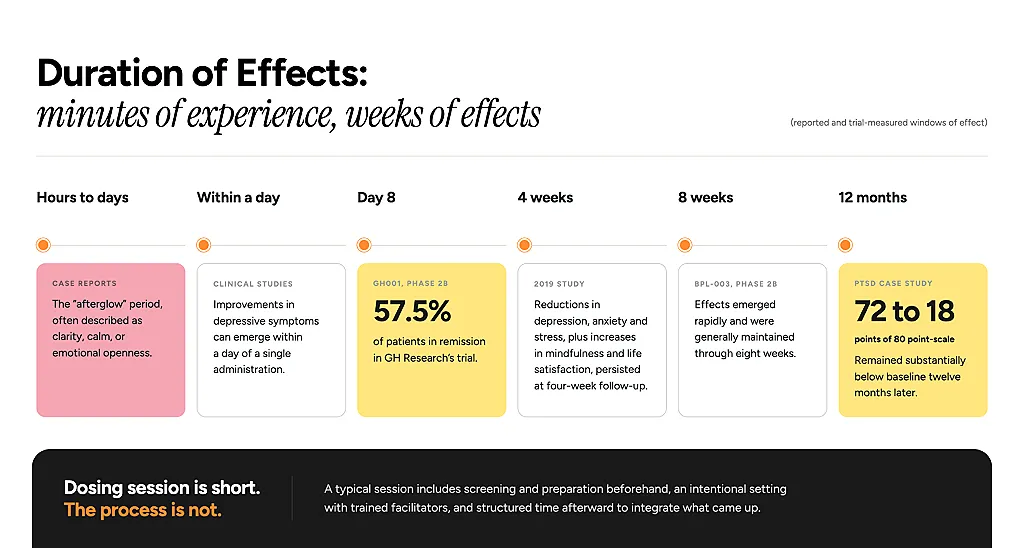
5-MeO-DMT is attracting growing interest from both psychedelic researchers and retreat participants because it combines an unusually profound alteration of consciousness with a remarkably short duration of action. Scientifically, researchers are investigating its potential as a rapid-acting treatment1 for conditions such as treatment-resistant depression, with recent clinical studies reporting improvements in depressive symptoms that can emerge within a day of a single administration2 and, in some studies, persist for weeks. Its short 15 to 30 minute acute experience also makes it potentially more practical and scalable in clinical settings than psychedelics requiring many hours of supervised care. At the same time, its distinctive activity at serotonin receptors3, particularly 5-HT1A and 5-HT2A, is generating interest in understanding new mechanisms for treating neuropsychiatric conditions.
Outside clinical research, retreat participants are increasingly drawn to 5-MeO-DMT for its capacity to produce profound experiences4 of ego dissolution, non-dual awareness, interconnectedness, emotional breakthrough, and personal meaning. Research across psychedelics suggests that experiences of this kind can be associated5 with subsequent improvements in well-being and mental health, although much remains to be understood about how these experiences translate into lasting therapeutic change. Together, this combination of emerging clinical potential, short duration, unique pharmacology, and capacity for deeply transformative subjective experiences has positioned 5-MeO-DMT as an increasingly important area of both psychedelic medicine and intentional retreat work.

What Is 5-MeO-DMT?
5-MeO-DMT (5-methoxy-N,N-dimethyltryptamine) is a naturally occurring and lab-synthesizable tryptamine known for producing one of the fastest, most complete experiences6 of ego dissolution of any psychoactive compound. Sometimes called “the God molecule,” it is found in certain plants and in the secretion of the Sonoran Desert toad6 (Incilius alvarius), and it can also be made synthetically in a lab.
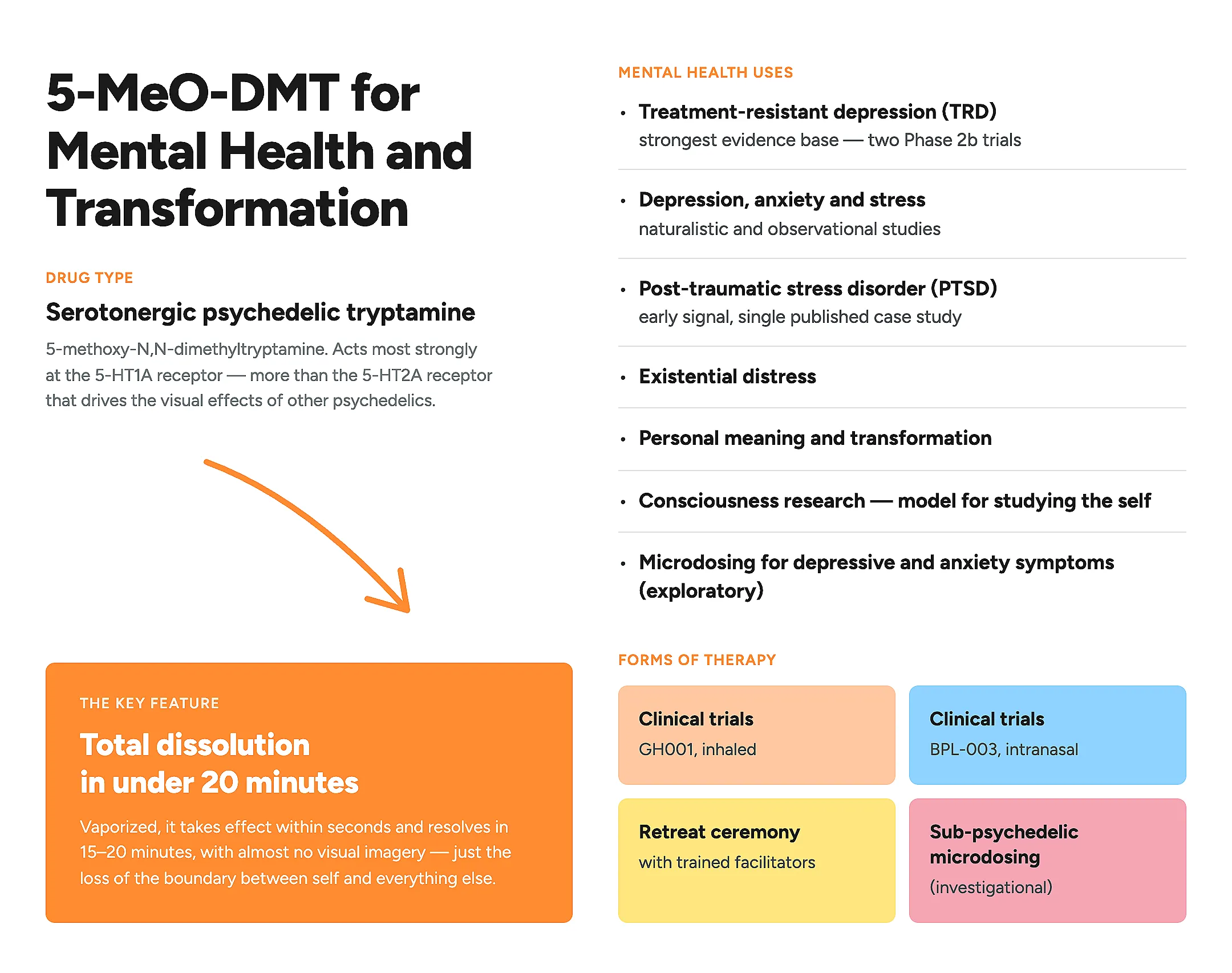
In therapeutic and retreat settings, a single dose, often lasting under 20 minutes7, can produce a profound sense of unity, non-duality, and connection to something larger than the self. That intensity, combined with its short duration, is what makes 5-MeO-DMT distinct from other classic psychedelics like psilocybin or LSD, and why it has drawn growing interest from both researchers and people seeking healing from depression, anxiety, trauma, and existential distress7.
A Short History
5-MeO-DMT is often described as an ancient sacrament, but the historical record tells a different story. Tryptamine-rich plant snuffs, such as yopo and cohoba made from Anadenanthera seeds, have documented use by Indigenous groups8 in the Caribbean and South America dating back centuries, recorded as early as 1496 by Spanish chroniclers.
The toad, however, is a different story. There is no confirmed historical or archaeological evidence that any Indigenous culture ceremonially used Bufo alvarius secretion before the 20th century. What we now recognize as toad-based 5-MeO-DMT use is a modern practice, one that took shape in the United States starting in the 1970s and 80s.
The term “Bufo” has also come to be used to refer to toad-derived 5-MeO-DMT by many. It comes from Bufo alvarius, the former scientific name of the Sonoran Desert toad, now classified as Incilius alvarius, and is commonly used to describe the toad or its dried glandular secretion. What makes the toad distinctive is that it is the only animal currently known to secrete high concentrations of 5-MeO-DMT9. Experientially speaking, synthesized 5-MeO-DMT and the secretion from the toad are one in the same, though sustainability, safety, and accuracy are some of the main reasons most practitioners choose to work with synthesized material.
The compound was first synthesized in a lab in 19366 and later confirmed in the toad’s secretions in 1967. In 1971, the Church of the Tree of Life in California began distributing it6 as a legal sacrament, a window that closed as drug law tightened. Albert Most’s 1984 pamphlet on “milking” the Sonoran Desert toad helped popularize the practice underground, and decades later, Hamilton Morris’s documentary work brought it into mainstream psychedelic culture, alongside growing concern for the toad’s wellbeing. The federal government placed 5-MeO-DMT into Schedule I in 2011. More recently, two pharmaceutical programs, GH Research’s GH001 and Beckley Psytech’s (now AtaiBeckley) BPL-003, have pushed synthetic 5-MeO-DMT into formal FDA drug trials, with BPL-003 earning Breakthrough Therapy Designation in October 2025 for treatment-resistant depression.
How It Works: Pharmacology and Mechanism
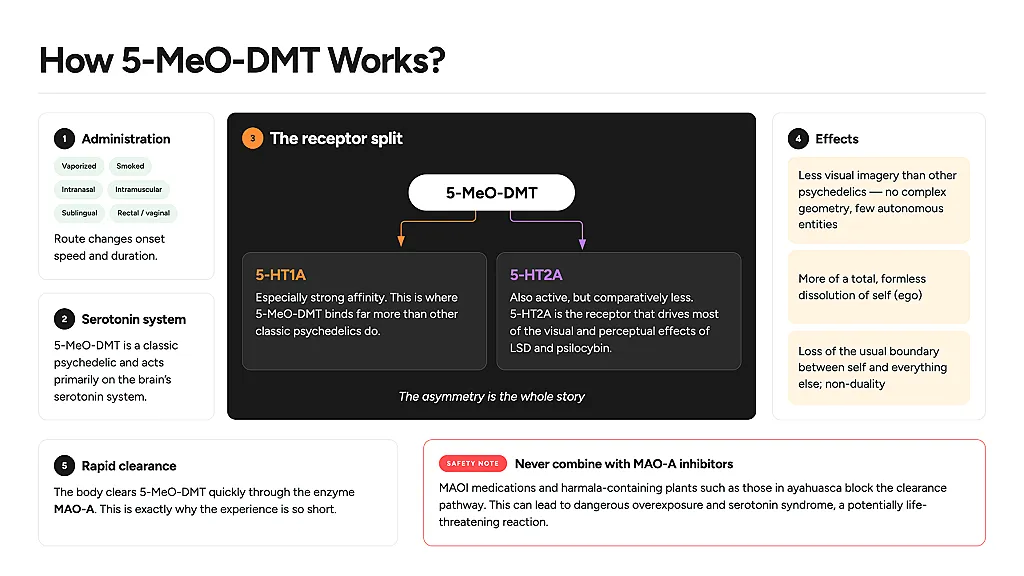
5-MeO-DMT is considered a classic psychedelic, inferring that it acts primarily on the brain’s serotonin system10, with especially strong affinity for the 5-HT1A receptor, more so than the 5-HT2A receptor that drives most of the visual and perceptual effects11 of classic psychedelics like LSD and psilocybin. This is part of why the 5-MeO-DMT experience tends to involve less visual imagery and more of a total, formless dissolution of self. The body clears it quickly through an enzyme called MAO-A10, which is exactly why the experience is so short. It also explains one of the most important safety rules in this field: combining 5-MeO-DMT with anything that inhibits MAO-A, including MAOI medications or harmala-containing plants like those in ayahuasca, blocks that clearance pathway12 and can lead to dangerous overexposure.
Therapeutic Uses and Outcomes
Depression, anxiety, stress
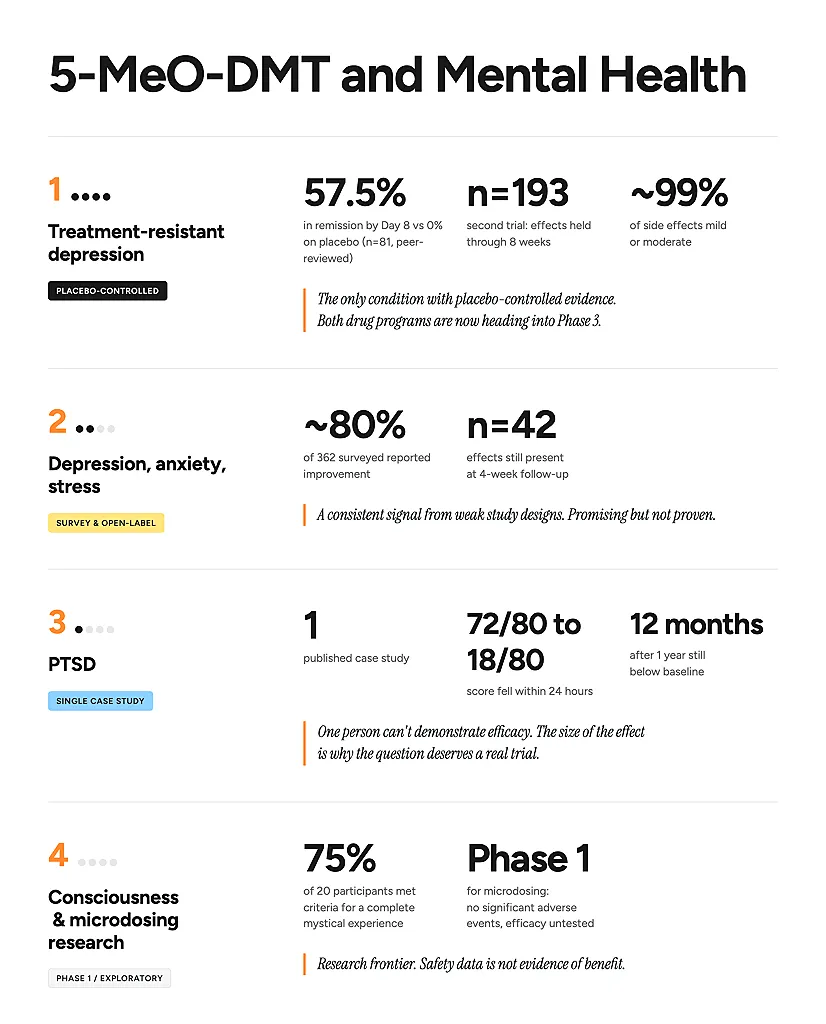
Most of what is known about 5-MeO-DMT’s therapeutic potential has historically come from small, naturalistic studies, but that picture is beginning to change as controlled pharmaceutical trials move further into clinical development. A survey of 362 people13 who had used 5-MeO-DMT, primarily in structured group settings, found that among participants reporting depression or anxiety, approximately 80 percent reported improvements in those conditions afterward. Importantly, greater improvements were associated with greater intensity of the mystical experience and with participants attributing greater personal meaning and spiritual significance to the experience.
A 2019 prospective study of 42 participants14 similarly found reductions in depression, anxiety, and stress following a single experience with vaporized toad secretion containing 5-MeO-DMT, alongside increases in mindfulness and life satisfaction that persisted at the four-week follow-up. Participants who experienced greater ego dissolution or “oceanic boundlessness” also tended to report greater improvements in life satisfaction and lower depression and stress, adding to early evidence that the character and intensity of the subjective experience may be related to subsequent psychological outcomes.
PTSD
There are also early signals outside depression. A longitudinal case study published in Frontiers in Psychiatry15 followed an individual with severe, chronic PTSD for a year after a single naturalistic 5-MeO-DMT experience. Her PTSD score fell from 72 out of 80 before the experience to 18 after 24 hours and remained substantially below baseline 12 months later. As a single-person case study, it cannot demonstrate that 5-MeO-DMT is an effective treatment for PTSD, but the magnitude and durability of the change provide a rationale for more rigorous investigation. The participant also experienced acute nausea, an overwhelming subjective experience, and later night terrors, reinforcing the importance of studying both benefits and risks.
Transformation
The unusual intensity of the 5-MeO-DMT experience itself has also attracted scientific attention. A 2018 study using the Mystical Experience Questionnaire16 found that 75 percent of 20 participants met the researchers’ criteria for a “complete mystical experience.” The intensity was comparable to that reported with a high dose of psilocybin in an earlier laboratory study, despite 5-MeO-DMT having a dramatically shorter duration of action.
More recently, researchers have begun studying 5-MeO-DMT not only as a potential therapeutic, but as a tool for understanding consciousness itself. A 2025 study published in Neuroscience of Consciousness17 combined detailed phenomenological interviews with EEG recordings and found that 5-MeO-DMT could produce states in which the normal sense of self, body, thought, and subject-object distinction were profoundly reduced or temporarily absent. EEG measurements showed global reductions in alpha activity and reductions in posterior beta activity, leading researchers to propose 5-MeO-DMT as a potentially unique pharmacological model for studying what remains of conscious awareness when many of its ordinary structures and contents are stripped away.
Another emerging research direction challenges the assumption that the full psychedelic experience is necessarily required for symptom reduction. A 2025 randomized, double-blind, placebo-controlled Phase I study18 investigated weekly sublingual sub-psychedelic doses (microdoses) of 5-MeO-DMT in adults reporting moderate to high levels of depression and/or anxiety symptoms. Repeated doses were generally well tolerated, with no significant adverse events, organ toxicity, or drug accumulation, while EEG measurements showed dose-dependent changes in brain activity without full psychedelic effects. The study was designed primarily to assess safety and tolerability rather than therapeutic efficacy, so it does not establish that 5-MeO-DMT microdosing treats depression or anxiety, but it opens another avenue for clinical research.
Treatment-resistant depression
The strongest evidence to date is now emerging from pharmaceutical development for treatment-resistant depression. GH Research’s inhaled 5-MeO-DMT formulation, GH001, has produced particularly notable results in a randomized, placebo-controlled Phase 2b trial involving 81 patients. In the peer-reviewed study published in JAMA Psychiatry1, 57.5 percent of patients receiving GH001 were in remission at Day 8 compared with 0 percent receiving placebo, with a large placebo-adjusted improvement in depression scores and no severe or serious adverse events during the controlled portion of the study. GH Research subsequently reported that 73 percent of participants who completed the six-month open-label extension were in remission at six months, although that longer-term figure comes from the open-label extension and should not be interpreted as a six-month placebo-controlled remission rate.
A second pharmaceutical program is producing encouraging results through a different delivery system. Beckley Psytech and AtaiBeckley’s BPL-003 is an intranasal formulation of 5-MeO-DMT benzoate designed around a relatively short in-clinic treatment window. A peer-reviewed Phase 2a study19 found rapid and sustained reductions in depressive symptoms following a single administration in people with treatment-resistant depression, although the study was small and open-label.
This was followed by a much larger randomized, quadruple-masked Phase 2b trial involving 193 treated participants. According to company-reported Phase 2b results, both the 8 mg and 12 mg doses produced statistically significant reductions in depression compared with a 0.3 mg low-dose active control, with effects emerging rapidly and generally maintained through eight weeks. Approximately 99 percent of treatment-emergent adverse events were mild or moderate, and most participants met discharge-readiness criteria around 90 minutes after dosing. Unlike the Phase 2a results, the complete Phase 2b findings have not yet been independently peer-reviewed.


The BPL-003 program has since advanced further. The FDA granted the treatment Breakthrough Therapy designation, and following an End-of-Phase 2 meeting with the agency, AtaiBeckley has moved the program toward Phase 3 development. This progression, alongside GH001, marks an important transition for the field: 5-MeO-DMT is moving from predominantly observational and naturalistic evidence into larger controlled clinical development programs.
None of this amounts to proof that 5-MeO-DMT treats every condition for which benefits have been reported, and the strength of the evidence varies substantially between depression, anxiety, PTSD, and other proposed applications. What is becoming clearer, however, is that several independent lines of research now point toward a distinctive combination of rapid pharmacological action, profound alterations in consciousness, and potentially meaningful psychological effects. Newer pharmaceutical trials are beginning to test whether clinically significant benefits can be reproduced under controlled conditions. Together, these findings help explain why 5-MeO-DMT has become an increasingly important subject in psychedelic medicine, neuroscience, and consciousness research, while also underscoring the need for careful screening, preparation, safety protocols, integration, and substantially more research.
The Experience: Process, Duration, and Highlights
There is no single standardized medical protocol for 5-MeO-DMT outside of clinical trials, but a typical retreat-based session follows a consistent shape: screening and preparation beforehand, an intentional setting with trained facilitators, the dose itself, and structured time afterward to integrate what came up.
The acute experience is famously brief. Vaporized or smoked 5-MeO-DMT takes effect within a few seconds, peaking almost immediately, and generally resolves within 15 to 20 minutes20. Other routes, such as intramuscular administration used in some clinical and retreat settings, have a gentler onset and can last up to an hour, which some people and facilitators prefer for a less abrupt experience.
What happens inside that window is often described as a complete dissolution of the sense of being a separate self, a merging with something people variously call source, unity, or simply “everything.” Visual imagery tends to be minimal compared to other psychedelics. Many people describe white light, a total loss of the subject-object boundary, and a sense of timelessness. Some describe it as the most significant experience of their lives; others encounter fear, resistance, or confusion before or during the dissolution. Both are considered part of the process, which is why integration support afterward matters so much.
Effects on the Body
- Temporary increases in blood pressure, heart rate, and body temperature
- Nausea, one of the most commonly reported side effects
- Changes in motor coordination and muscle tone during the acute window
- Flushing or sweating
In studies with medically screened participants, these changes are generally described as transient and clinically insignificant20, though real for individuals with underlying cardiovascular conditions.
Effects on the Mind
- Rapid and often complete ego dissolution, faster in onset than most other psychedelics
- A sense of non-duality or unity, frequently described in spiritual or mystical terms
- Loss of the usual boundary between self and everything else
- Emotional release, ranging from euphoria to grief to fear
- An “afterglow” period in the hours and days following, often described as clarity, calm, or emotional openness
- A meaningful minority of people, roughly a third in the largest naturalistic survey, report a genuinely challenging experience21 involving fear or panic during the session itself
Side Effects, Risks, and Contraindications
The most serious and well-established risk is combining 5-MeO-DMT with MAOIs or MAOI-containing substances, including ayahuasca and certain antidepressants, which can cause serotonin syndrome22, a potentially life-threatening reaction. Cardiovascular strain during the acute window is a real consideration for anyone with an underlying heart condition, which is why medical screening beforehand matters.
A history of psychosis or bipolar disorder is commonly treated as a contraindication or a condition requiring careful individual evaluation, given the broader, well-documented risk that serotonergic psychedelics can trigger manic or psychotic episodes in vulnerable individuals. Pregnancy is excluded as a standard precaution, though dedicated research here is essentially absent. No confirmed human death has been attributed to 5-MeO-DMT alone in the peer-reviewed literature. The fatalities on record involved dangerous drug combinations or underlying unscreened medical conditions, which is why screening and trained facilitation truly matter.
One more important consideration: the conservation status of the Sonoran Desert toad. Its official “Least Concern” listing dates to 200423 and does not reflect current demand pressure from the growth of ceremonial use. Synthetic 5-MeO-DMT is chemically identical to the natural compound and produces comparably high rates of mystical-type experience in the naturalistic research available, which is a meaningful reason many practitioners, Tandava included, now favor synthetic sourcing over toad secretion.
The most important conversations shaping the future of psychedelics, delivered weekly.
From thought-provoking podcasts and original stories to research breakthroughs and industry news, stay connected to the conversations that matter.


Joined by 12,000+ readers
Dosage Standards and Routes of Administration
5-MeO-DMT is commonly found in freebase form, but can also be found in salt forms24 such as HCL, fumarate, and citrate. There is a molecular weight difference with this so conversion ratios are a needed factor to consider.
There is no single, medically standardized dose of 5-MeO-DMT outside of clinical trials, and dosing varies significantly by route of administration.
IMPORTANT: These dosage guidelines are very loose as sensitivity with 5-MeO-DMT varies greatly due to genetic factors as well as emotional processing capabilities of the nervous system.
- Smoked / vaporized (freebase): Handshake 1-3 mg, Hug 4-7 mg, Full Release 8-15 mg
- Intranasal (HCL, fumarate, or citrate*): Handshake 3-5 mg, Hug 6-15 mg, Full Release 10-25 mg
- Intramuscular (HCL, fumarate, or citrate): Handshake 3-5 mg, Hug 6-15 mg, Full Release 10-25 mg
- Sublingual (HCL, fumarate, or citrate): Handshake 3-5 mg, Hug 6-15 mg, Full Release 10-25 mg
- Rectal/Vaginal (HCL, fumarate, or citrate): Handshake 3-5 mg, Hug 6-15 mg, Full Release 10-25 mg
HCl (hydrochloride): 5-MeO-DMT combined with hydrochloric acid to create a stable salt. It is generally water-soluble and easier to accurately weigh and formulate than freebase.
Fumarate: 5-MeO-DMT combined with fumaric acid. It is also a relatively stable salt and has commonly been used for storage and research/formulation purposes.
Citrate: 5-MeO-DMT combined with citric acid. This produces another salt form with different physical characteristics, such as molecular weight, solubility, and stability.
The important point is that the active component is still 5-MeO-DMT. The counter-ion (HCl, fumarate, or citrate) changes properties such as molecular weight, solubility, stability, and formulation behavior, not the fundamental identity of 5-MeO-DMT. Because the salts have different molecular weights, 10 mg of one salt does not necessarily contain the same amount of actual 5-MeO-DMT as 10 mg of another. This distinction is particularly important in pharmaceutical research and clinical formulation.
In GH Research’s Phase 1 clinical trial25, vaporized doses of 2, 6, 12, and 18 mg were tested under medical supervision with a favorable safety profile at all levels. These clinical figures should not be confused with informal, unregulated retreat or harm-reduction dosing, which varies more widely and is not standardized. In practice, conservative titration, starting low and adjusting based on response, is the most consistently recommended approach across both clinical and retreat settings.
Pop magazines about 5-MeO
Community Stories
It was the most profound and frightening experience of my life. I saw bright colors. I was connected to all things. I disappeared into space. I smiled for the first time in a long time. I cried and screamed. I forgot about my pain and trauma, then relived it. My body had permission to heal. I moved on… feeling everything and nothing at once. But it allowed me to view my trauma in a different way. Like a superpower.
From a 23-year-old woman with PTSD, quoted in a Frontiers in Psychiatry case study15 on 5-MeO-DMT treatment.
Terrifying: I fell into what I can best describe as pure intensity. There was no self, nothing to separate me from the sensation. It was overwhelming, unstoppable, uncontrollable, and after the first few moments, horrifying… All I could feel was fear. I was essentially reduced to an animal in pain.
From “Pure Horror,” an Erowid experience report by a user known as HexagonSun.
Becoming one with that love force, and kind of leaving all the dualities behind… this sense of this brilliant light brighter than a million stars… all of this happening in an infinite realm that was overflowing with unconditional love.
From a 5-MeO-DMT account given by “Nikoli” in a peer-reviewed case study27 published in Frontiers in Psychology.
Tandava Guests Experiences
Tandava Retreats is a leading center dedicated to the responsible, intentional, and integrative use of 5-MeO-DMT. Based in Tepoztlán, Mexico, Tandava was created around the belief that a psychedelic experience should never be separated from the preparation, environment, safety protocols, and integration that surround it.
The mission of Tandava is to create a new standard for psychedelic retreat care by bringing together rigorous screening and safety practices, experienced facilitation, preparation and integration, contemplative traditions, and modern approaches to human development. Rather than viewing 5-MeO-DMT as a standalone experience, Tandava approaches it as one component of a much broader process of personal growth and transformation.
Over the years, Tandava has evolved from a pioneering 5-MeO-DMT retreat center into an established real-world environment for understanding how this molecule can be approached responsibly. The experience of supporting hundreds of retreat guests has contributed not only to Tandava’s model of care, but also to the educational and research work developed through F.I.V.E.
Tommy Bettin:
“I want to share this from a really honest place. I came to Tandava Retreats carrying some hesitation. I’d had a rough first experience with Bufo in the past, and because of that, I wasn’t sure if this kind of retreat would actually be good for me or if it might stir things up in a way I wasn’t ready for. I didn’t come in fearless. I came in discerning, cautious, super scared, and listening to my body.
What I experienced was something very different. It was an awakening. Through the movement, the stillness, the breath, and the shared presence, layers began to release that I didn’t even realize I was carrying.
What stood out most to me was the integrity of the container. I felt supported without being managed, seen without being analyzed, and trusted to know my own timing. That level of care is rare, and it mattered deeply given where I was coming from.
I’m genuinely grateful that I trusted myself enough to say yes to this retreat. I left feeling more embodied, more grounded, and more connected to myself, to others, and to something much larger than my thoughts. And the effects didn’t end when the retreat did; they’re still unfolding in how I lead, relate, and live.”
Catherine:
“Exactly what I needed. I attended the retreat to help with PTSD symptoms and other mental health issues. I am a military woman veteran, and ordinary treatment does not work for me. I am what they would call treatment-resistant. I have delved into ayahuasca many times before, which helped a lot with some aspects of my traumas and was very helpful, but I was called to this medicine (retreat) because I knew there were some parts of me that were just very prominent in my everyday life such as my identity — ego.
Joel and Victoria (facilitators) were a key point to my success during the retreat, they both are very knowledgeable but above that, they ensure that you do the work, they guide you when in times of crisis but do not try to input their experience or push their opinions of you. They just say it like it is, as it is an individual journey.
The space was very clean, with a small group of three candidates. The space was perfect for this kind of experience. For myself, unlike everything I have read, my experience with the medicine was extremely difficult. I did not experience the blissfulness as often described during the ceremony. I experienced exactly what my soul needed me to experience. I was dying over and over again, but the facilitators were present and kept a safe space for me, with both feminine and masculine energy.”
Practitioner Perspectives
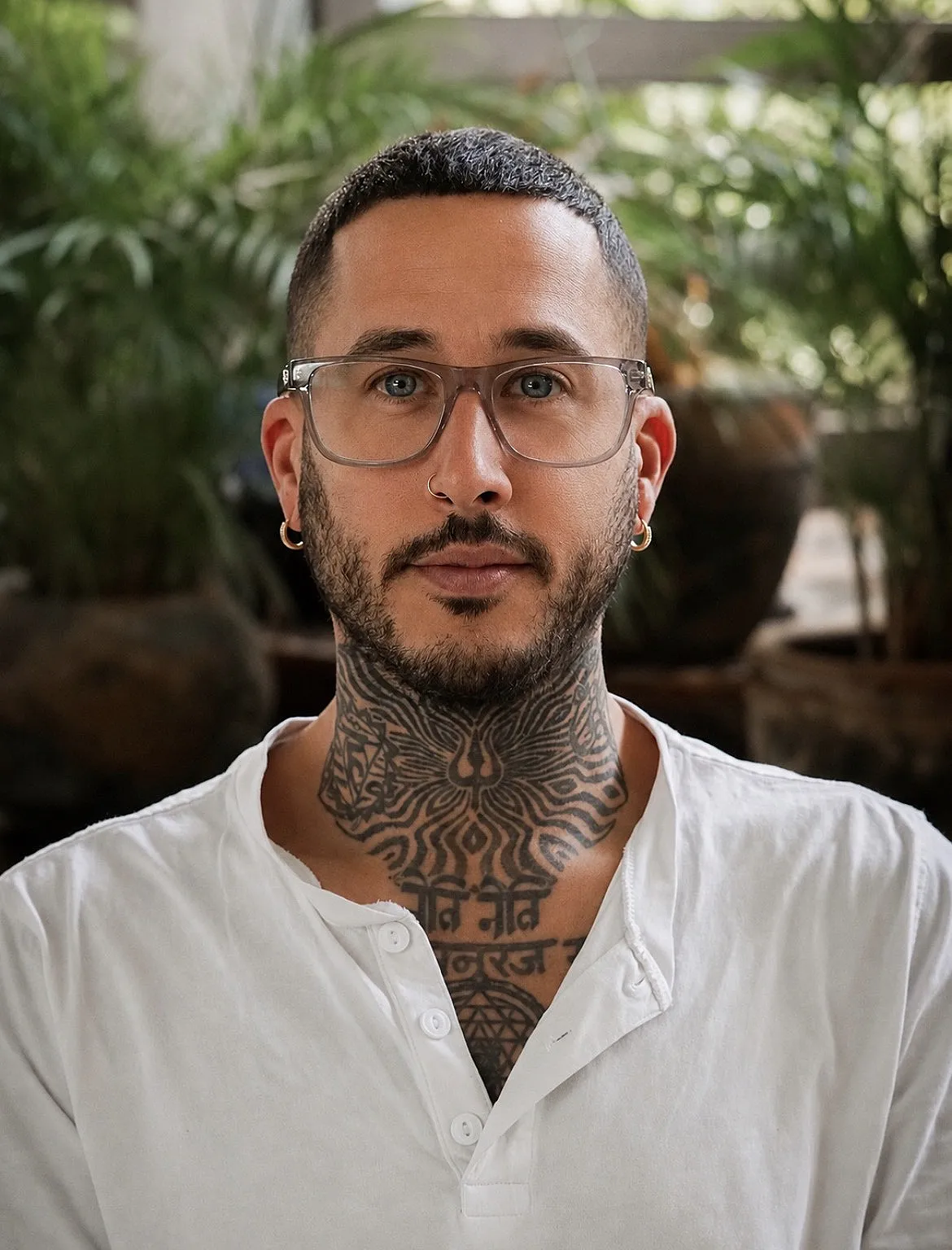
What makes [5-MeO-DMT] stand out is that ineffability, that sense that there is not an individual self. Our entire sense of egoic identity dissolves away. It’s the crown jewel of the entheogenic kingdom.
Sometimes we’ll have the bliss experience, but sometimes it’s grueling, absolutely grueling on the mat. It’s challenging. It’s terrifying. That can be because in that moment we are coming into direct contact with something we’ve been running away from our whole life.
Victoria Wueschner, F.I.V.E. Co-Founder & President
The result might be to see a person who thought their life had no meaning, come back from a 15 minute experience with a revelation. When they realize their traumas, or whatever that wasn’t letting them move on, are pointless. This is the most beautiful feeling.
Yannina Thomassini, Founder of Sabiduría Psicodélica
About F.I.V.E. — a platform connecting practitioners, researchers, and the 5-MeO community
F.I.V.E., 5-MeO-DMT Information & Vital Education, grew out of the recognition that the rapidly expanding interest in 5-MeO-DMT was not being matched by adequate education, professional standards, research, or harm-reduction resources.
Its mission is centered on human advancement through the responsible understanding of 5-MeO-DMT. F.I.V.E. brings together neuroscience, real-world evidence, experienced practitioners, ethical frameworks, and integrative approaches to develop education, training, protocols, and resources for participants, facilitators, and healthcare professionals.
F.I.V.E. has developed into a comprehensive education and training ecosystem around 5-MeO-DMT, including publicly accessible education, professional facilitator training, harm-reduction resources, expert collaboration, and research-informed curriculum. Its work is informed by more than 1,000 participant outcomes and an international network of specialists spanning neuroscience, psychology, psychopharmacology, facilitation, integration, and psychedelic research.
At a high level, the work has helped move 5-MeO-DMT from a relatively obscure and poorly understood psychedelic toward a field with increasingly sophisticated education, training, safety practices, real-world evidence, and professional dialogue. Tandava Retreats provides the experiential foundation, while F.I.V.E. works to translate those lessons into knowledge and standards that can extend far beyond a single retreat center.


Global Legal Status
5-MeO-DMT’s legal status varies widely and is often misunderstood. Confusion is often based on misinterpreting a grey area or decriminalization of personal possession as legal. A short region-by-region snapshot:
- United States: Schedule I federally since January 2011, and not covered by state psychedelic reforms in Oregon or Colorado.
- Mexico: Not explicitly scheduled under national drug law, creating a regulatory gray zone rather than clear legality. This ambiguity is why most retreats, including Tandava, operate there.
- Netherlands: Not listed under the Opium Act28 — unlike DMT, which is. The Dutch national drug information service classifies 5-MeO-DMT under the Commodities Act28 rather than drug law. The well-known “truffle loophole” applies only to psilocybin truffles and not to 5-MeO-DMT.
- Costa Rica: Personal use is not a crime — national law targets trafficking, not consumption. But controlled substances are defined by the UN conventions, which don’t list 5-MeO-DMT, so retreats operate with no oversight rather than under clear legal permission.
- Canada: Not listed under the Controlled Drugs and Substances Act — unlike DMT and psilocybin, which are Schedule III. Personal use and possession are legal29, though importing, selling, or marketing it as a treatment are not.
- United Kingdom: Class A under the Misuse of Drugs Act 1971 — the most restrictive category — captured by the Act’s generic tryptamine clause rather than by name. Research requires a Home Office licence.
- Australia: A Schedule 9 prohibited substance. The TGA’s 2023 prescribing pathway covers only MDMA for PTSD and psilocybin for treatment-resistant depression
Across nearly every jurisdiction, “retreats operate openly” reflects an enforcement or regulatory gap, not confirmed legality. That distinction matters for anyone considering this work.
Research, Market, and Where This Is Headed
Culture
The rapid growth in interest in 5-MeO-DMT has created consequences extending well beyond the welfare of individual Sonoran Desert toads. Increased collection adds pressure to a species already facing habitat degradation, drought, climate change, disease, road mortality, and other environmental stresses, while capturing, transporting, repeatedly handling, and releasing wild animals can introduce additional stress and disease risks into local ecosystems. Recent conservation research23 has raised increasingly serious concerns about collection pressure and localized population declines, making the availability of synthetic 5-MeO-DMT especially important. Because the active molecule can be produced without harvesting an animal, there is little ecological justification for increasing wild collection simply to meet a growing international market.
The cultural impact is equally complex. As 5-MeO-DMT has moved from a relatively obscure psychedelic into international retreat, wellness, and spiritual communities, “Bufo” has increasingly been presented as an ancient Indigenous sacrament or shamanic tradition. Newer scholarship challenges this narrative, finding little evidence for an ancient tradition of smoking Sonoran Desert toad secretion and tracing the modern practice largely to the late twentieth century30. This has created an unusual form of psychedelic globalization in which a contemporary practice can acquire31 the language, ceremony, clothing, authority structures, and claims of “ancestral medicine” within only a few decades. The resulting tourism can bring income to communities, but it can also commercialize Indigenous identity, create disputes over who has cultural authority to administer the substance, and reduce communities such as the Comcaac to their association with “toad medicine.” The growth of synthetic 5-MeO-DMT therefore represents more than a conservation alternative. It also creates an opportunity to separate the molecule’s emerging therapeutic potential from potentially fabricated claims of ancestry31 and from the ecological and cultural extraction associated with the international toad trade.
Research
Clinical research on 5-MeO-DMT has moved quickly over the past two years. Two separate pharmaceutical programs, GH Research’s GH001 and AtaiBeckley’s BPL-003 (in the process of being acquired by Eli Lilly for $3.8B), are now advancing synthetic 5-MeO-DMT through FDA trials for treatment-resistant depression, with BPL-003 holding Breakthrough Therapy Designation as of October 2025 and GH001 cleared by the FDA in January 2026 to begin a global Phase 3 program. These are two distinct compounds from two different companies.
It is still early. Nearly all of the therapeutic outcome data available today comes from small, uncontrolled, self-selected samples rather than large randomized trials that eventually define medical consensus.
Our view at F.I.V.E. is that the field’s credibility will be built the same way trust is built in any individual session: through careful screening, transparent risk communication, properly trained facilitation, and a refusal to overpromise what a single experience, however profound, can guarantee. As the pharmaceutical trials mature and the regulatory picture becomes clearer, we expect the conversation to shift from whether 5-MeO-DMT has therapeutic value to how it should be responsibly delivered, at scale, without losing the depth of what makes it meaningful in the first place.


FAQ
Although their names sound similar, 5-MeO-DMT and N,N-DMT are different molecules that generally produce distinctly different experiences. When people refer simply to “DMT,” they are usually referring to N,N-DMT,32 one of the primary psychoactive compounds associated with ayahuasca. N,N-DMT experiences are often highly visual and may involve complex geometry, vivid colors, elaborate environments, and experiences of seemingly autonomous beings or entities.
5-MeO-DMT is generally much less visual. Instead, one of its defining characteristics is the potential for profound ego dissolution or non-dual states of consciousness. At sufficient intensity, the ordinary distinction between the individual and the surrounding world may temporarily disappear.
One way of understanding the distinction is that N,N-DMT frequently produces an experience of something, while 5-MeO-DMT can produce an experience in which the ordinary distinction between the experiencer and the experience itself dissolves.
The compounds also have different pharmacological profiles. Both interact with the serotonin system, but 5-MeO-DMT has particularly significant activity at the 5-HT1A receptor33, in addition to activity at 5-HT2A and other serotonin receptors.
The nickname emerged largely because of the types of experiences frequently reported following high-intensity 5-MeO-DMT administration. People may describe experiences of oneness, infinity, universal consciousness, complete unity, “Source,” or God. In less spiritual terminology, similar experiences may be described as profound ego dissolution or non-dual consciousness.
These experiences do not establish any particular religious or metaphysical interpretation. Their meaning is highly individual and can be understood through spiritual, psychological, philosophical, neuroscientific, or other frameworks.
The nickname therefore describes the extraordinary nature of some reported experiences rather than representing a scientific claim about what 5-MeO-DMT is or proves.
5-MeO-DMT carries real physical and psychological risks34 and should not be described as inherently safe.
Early controlled human research has reported a relatively favorable short-term safety profile25 among carefully screened participants. However, the clinical evidence base remains relatively small, and results obtained under controlled research conditions should not automatically be generalized to unsupervised use.
During an experience, individuals may temporarily lose awareness of their surroundings, move unpredictably, vocalize, experience nausea or vomiting, or undergo temporary changes2 in heart rate and blood pressure. The intensity of ego dissolution can also produce fear, panic, confusion, or psychological overwhelm.
Potential risks extend beyond the acute experience. Some individuals report reactivations, sleep disturbances, anxiety, derealization, emotional instability, or other psychological difficulties following an experience. Medication and substance interactions can present additional risks, particularly with drugs affecting serotonin or monoamine oxidase.
Risk reduction therefore involves much more than the substance itself. Important considerations include:
- Appropriate medical and psychological screening
- Accurate and controlled dosing
- Evaluation of medications and potential drug interactions
- A physically safe environment
- Trained and experienced supervision
- Emergency preparedness
- Preparation before the experience
- Appropriate integration and follow-up afterward
The available evidence suggests that 5-MeO-DMT may be administered with a favorable safety profile in appropriately screened individuals under controlled conditions, but it remains an extremely powerful psychoactive substance with meaningful risks.
There is currently insufficient clinical evidence to establish the safety or therapeutic benefit of repeatedly microdosing 5-MeO-DMT. The conventional idea of psychedelic microdosing generally involves taking a dose low enough that significant alterations in consciousness do not occur. Applying that model to 5-MeO-DMT presents particular challenges because the compound can have a steep dose-response relationship. Relatively small differences in the amount delivered may sometimes produce substantially different subjective effects. This is especially important with vaporization devices. The amount actually absorbed can vary according to concentration, device temperature, inhalation volume, inhalation technique, and individual physiology.
Controlled low-dose administration is an area of legitimate scientific and pharmaceutical research. However, this is different from assuming that repeated self-administered microdosing has been demonstrated to be safe or effective. At present, there is not enough evidence to recommend 5-MeO-DMT microdosing as an established therapeutic practice.
The safety depends on the specific medication, dose, individual medical history, and other substances being used. 5-MeO-DMT acts strongly within the serotonergic system. Combining serotonergic substances can potentially alter the effects of 5-MeO-DMT and, in certain circumstances, increase the risk35 of adverse reactions, including serotonin toxicity. Monoamine oxidase inhibitors (MAOIs) require particular caution. Inhibiting monoamine oxidase can substantially alter36 the metabolism of 5-MeO-DMT and may increase toxicity risks.
Research concerning antidepressants and psychedelics more broadly is evolving, and some studies involving other psychedelics suggest that certain combinations may be better tolerated37 than previously assumed. However, evidence involving compounds such as psilocybin should not automatically be extrapolated to 5-MeO-DMT.
It is also important not to abruptly discontinue antidepressant medication in order to take a psychedelic. Antidepressant discontinuation can itself cause significant symptoms and, depending on the underlying condition, may increase the risk of psychiatric destabilization. Medication use should therefore be evaluated individually by an appropriately qualified medical professional familiar with the person’s complete medication and health history.
5-MeO-DMT can be produced synthetically or obtained from the defensive secretion of the Sonoran Desert toad, Incilius alvarius, historically known as Bufo alvarius. The 5-MeO-DMT molecule itself is chemically the same regardless of its origin. However, toad secretion is not pure 5-MeO-DMT. It is a biological material containing a mixture of compounds, and its composition and concentration can vary.
Properly manufactured and analytically verified synthetic 5-MeO-DMT offers several potential advantages: dose consistency, purity and standardization, and applicability for research and clinical uses.
Synthetic production eliminates the need to capture, handle, or repeatedly stress wild toads. For these reasons, synthetic 5-MeO-DMT is generally preferable from a clinical, standardization, and conservation perspective, assuming it has been appropriately manufactured and tested. Claims that toad-derived material necessarily provides a more powerful, authentic, or therapeutically valuable experience have not been established scientifically.
5-MeO-DMT occurs naturally in several plant species and is not unique to the Sonoran Desert toad.
It has been reported in species belonging to genera including Virola and Anadenanthera. Virola theiodora is one frequently cited example, while Anadenanthera peregrina has historically been associated with psychoactive snuff preparations such as yopo or cohoba. 5-MeO-DMT has also been reported in additional plant species across several botanical families.
However, the presence of 5-MeO-DMT in a plant does not necessarily mean that the plant contains a significant or consistent concentration of the compound. Alkaloid profiles can vary according to species, genetics, geography, growing conditions, plant tissue, and analytical methodology. Some of these plants also contain N,N-DMT, bufotenine, and other alkaloids, meaning plant materials should not be considered equivalent to isolated 5-MeO-DMT.
The legal status of 5-MeO-DMT varies substantially between countries and can change over time. 5-MeO-DMT is not specifically scheduled under the United Nations Convention on Psychotropic Substances, meaning there is no single international legal status governing the substance. Individual countries regulate it according to their own national laws.
In the United States, 5-MeO-DMT is a federally controlled Schedule I substance. The United Kingdom and a number of other jurisdictions also control 5-MeO-DMT, either explicitly or through broader legislation covering tryptamines or psychoactive substances.
The situation in Mexico is more nuanced. Mexican controlled-substance legislation explicitly identifies N,N-DMT, while 5-MeO-DMT is a chemically distinct substance and has historically occupied a different regulatory position. However, this should not be interpreted as meaning that all possession, manufacture, importation, distribution, clinical administration, or commercial activity involving 5-MeO-DMT is necessarily unrestricted or lawful. Pharmaceutical, health, customs, and criminal regulations may apply depending on the circumstances.
Yes. 5-MeO-DMT can produce extremely challenging, frightening, or psychologically overwhelming experiences. The phrase “bad trip” can sometimes oversimplify what occurs. A psychologically difficult experience does not necessarily result in lasting harm, just as an enjoyable or transcendent experience does not guarantee a positive outcome afterward. At sufficient intensity, 5-MeO-DMT may temporarily disrupt an individual’s ordinary sense of identity, body, time, and environment. Ego dissolution can sometimes be interpreted as dying, disappearing, losing control, or becoming permanently detached from reality. It is therefore useful to distinguish between a difficult acute experience and an adverse outcome.
An individual can experience an extremely challenging session and subsequently integrate it successfully. Conversely, someone can experience a seemingly positive session and later develop difficulties such as anxiety, insomnia, derealization, emotional instability, or reactivations.
No responsible provider can guarantee that every psychedelic experience will be comfortable or positive. The objective of an appropriate safety framework is instead to reduce preventable harm, identify individuals for whom 5-MeO-DMT may be inappropriate, respond effectively if complications occur, and provide appropriate support afterward.