
This content is grounded in peer-reviewed research, clinical guidelines, and established best practices. Claims are reviewed for accuracy and transparency. Learn more about our evidence standards
DMT Study Offers Hope In Fight Against Depression
More than 300 million people in the world are affected by major depressive disorder, and many of these are resistant to traditional therapies. This leaves a huge unmet need for new and effective treatments.
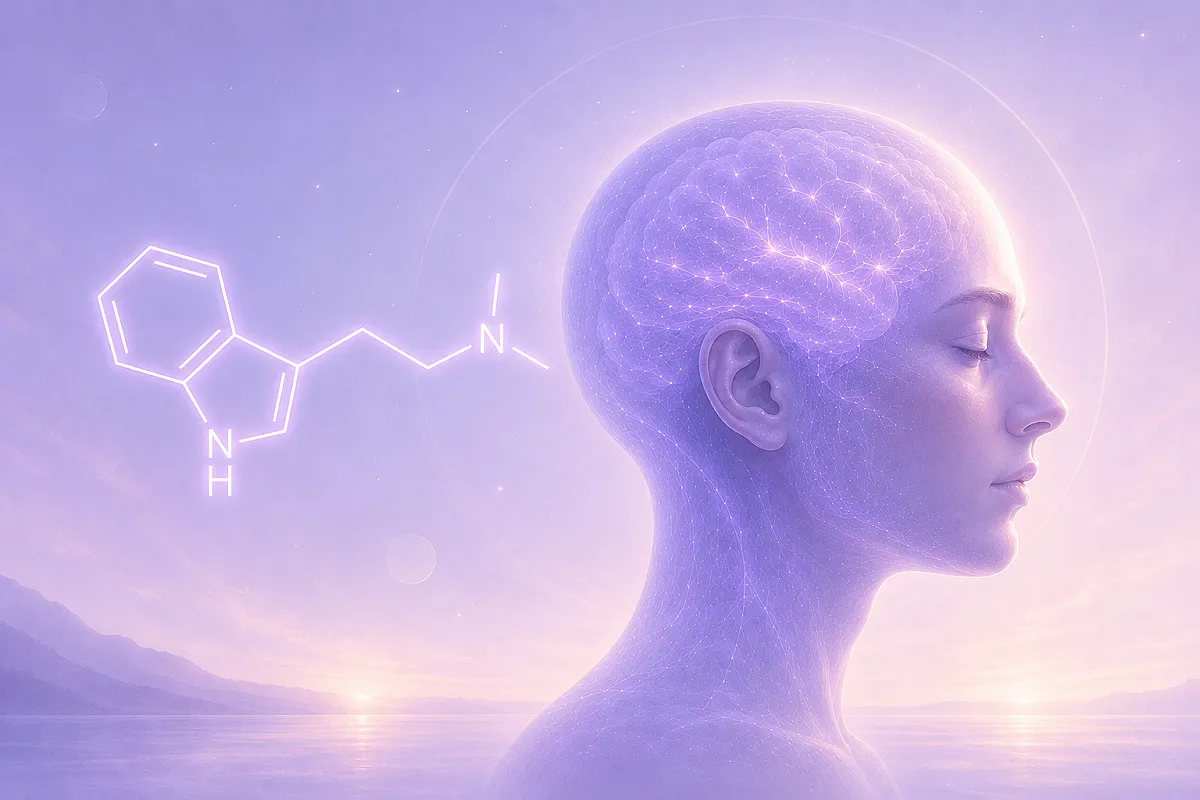
DMT — N,N-Dimethyltryptamine, a key psychoactive ingredient in the traditional ayahuasca brew — is gaining interest as a potential therapy for the treatment of depression.
In previous research, results have suggested that a single dose of DMT alongside psychotherapeutic support caused a significant reduction in depressive symptoms.
Now, a new, pilot Phase 2, placebo-controlled clinical trial has explored the safety and efficacy of DMT for major depressive disorder.

Reductions In Depression Symptoms Following DMT
The study, carried out by researchers at Imperial College London, found that participants treated with a single dose of DMT saw greater reductions in depressive symptoms than the placebo group.
The treatment, which was delivered in combination psychotherapy, demonstrated sustained reductions in symptoms for up to three months, along with positive safety results and no serious adverse events.
“These findings suggest that DMT could represent a different model of psychedelic therapy,” Tommaso Barba, study researcher at Imperial College London, told States of Mind.
Barba explains that, unlike longer-acting compounds such as psilocybin, DMT produces an extremely short but intense experience (DMT therapies can be completed in under an hour; while psilocybin experiences can last several hours), “and yet we still see rapid and clinically meaningful reductions in depressive symptoms”.
“This raises an important possibility: that therapeutic effects do not necessarily depend on long sessions, but on the quality and intensity of the experience,” says Barba.

The intervention was generally well-tolerated, with no serious adverse events. Common side effects were mild to moderate, primarily consisting of infusion site pain, transient nausea, and acute anxiety during drug onset that resolved quickly. However, because the trial excluded patients with a history of severe suicide attempts or cardiovascular instability, further research is required to establish safety parameters across higher-risk MDD populations.
New Possibilities For The Future Of Psychedelic Therapy
Barba highlights the significance of these results for the future of psychedelic-assisted psychotherapies.
“If replicated, this could make psychedelic therapy more scalable and easier to integrate into healthcare systems,” he says.
Psilocybin has also shown positive results in the treatment of mental health conditions such as depression and anxiety.
Compared to DMT however, psilocybin’s effects can last up to six hours, making its scalability into healthcare systems a bigger challenge than for a shorter-acting psychedelic.
Integration into traditional health systems is one of the major hurdles for psychedelic therapies, as Barba highlights, as longer-session times will require greater workforce and time resources due to “the duration and cost of sessions”.
“The field is at a point where efficacy is becoming clearer, but questions of implementation are becoming more pressing,” says Barba.
“A compound like DMT directly addresses this issue. Demonstrating that a 20 to 30 minute intervention can produce sustained improvements shifts the conversation from “does this work?” to “how can we realistically deliver this at scale?”
“It also strengthens the broader evidence that acute psychedelic experiences, particularly those involving ego dissolution and emotional breakthrough, are closely linked to therapeutic outcomes.”

The Blinding Hurdle
The most important conversations shaping the future of psychedelics, delivered weekly.
From thought-provoking podcasts and original stories to research breakthroughs and industry news, stay connected to the conversations that matter.


Joined by 12,000+ readers
This study is one of the limited placebo controlled trials on DMT. It involved two-phases, one placebo-controlled and one open-label, with 34 participants. Of the participants, 17 received two doses of DMT and 17 received one dose of placebo and one dose of DMT.
The researchers report that during the placebo controlled phase, participants that received DMT reported significantly greater reductions in depressive symptoms at 2-weeks post-treatment than the placebo group. During the placebo-controlled phase, the DMT cohort demonstrated a rapid and statistically significant reduction in depression severity. Symptom relief was robustly evident within just one week, and by the primary two-week endpoint, 35% of DMT-treated patients achieved a formal clinical response, with 29% reaching full clinical remission, compared to just 12% in the placebo group.
Researchers have noted that effective blinding — which is a method of preventing participants and researchers from knowing whether a subject is in the placebo or active group — is especially challenging in randomized controlled trials of psychedelics due to the “inherent alterations in consciousness that these compounds induce”.
This Phase IIa trial utilized a sophisticated two-stage design involving 34 adults with moderate-to-severe depression. In the initial 2-week double-blind phase, 17 participants received a single intravenous dose of DMT, while 17 received a placebo. Following the primary efficacy assessment, an open-label extension allowed the placebo group to receive their first active dose of DMT, while the initial active group was offered an optional second dose.
Professor of Clinical Pharmacy at Aston University, Ian Maidment, who was not involved with the study, highlights that the researchers did not assess blinding integrity, therefore “a placebo effect cannot be excluded”.
“Based on the number of people treated, the risk of a placebo effect and because phase 2 studies aren’t designed to definitively test whether the drug works, it is premature to conclude that DMT is an effective treatment for depression,” says Maidment.
“Therefore, overall DMT should not be taken outside of a controlled clinical trial for depression.”
Because psychedelics induce profound perceptual shifts, trials are highly susceptible to ‘functional unblinding,’ where up to 95% of patients immediately deduce their treatment assignment. This compromises blinding integrityand massively amplifies expectancy bias, making it difficult to separate true pharmacological efficacy from the placebo effect — a methodological vulnerability driving the field to explore novel active placebos.
Dr James Rucker, Consultant Psychiatrist and Senior Clinical Lecturer at the NHS Foundation Trust and King’s College London, says that the nature of a psychedelic drug means that “blinding participants to whether they received the drug is impossible.”
“So the improvements seen here are likely a reflection both of a drug effect and an expectancy effect,” says Rucker.
“This is a common issue of interpretation seen in other drug trials, as well as in trials examining non-drug interventions like psychotherapy and surgery.”
Rucker says that while this trial is small in scale and therefore not a definite test of whether DMT is effective, it supports the development of further, larger trials that would better address the question.
Research is Early, But There Is Hope
More research will be needed before DMT becomes an approved treatment for the condition, however, highlights Dr Liliana Galindo, Affiliate Assistant Professor at University of Cambridge.
Dr. Galindo, who was also not involved with the study, says that the findings highlight the potential of a valuable new treatment for people who have not found relief through existing options.
“This promising trial offers a welcome glimmer of hope in the fight against depression, suggesting that DMT — similar to other psychedelic compounds — may bring a rapid reduction in symptoms within just a week, alongside clear improvements in response and remission rates that in many cases lasted for months,” says Dr. Galindo.
“The treatment was well tolerated, with no serious safety concerns linked to the drug, and because its effects are so short in duration, it could offer a more practical and time-efficient option than other therapies.”


Barba says the next step in this research is clear: larger, well-powered trials to confirm efficacy and better characterize durability and safety.
Alongside refining protocols — especially around preparation and integration — which Barba says remain central to outcomes even with short-acting compounds, he notes that another key direction is understanding mechanisms of action.
“Both at the neurobiological level and at the level of subjective experience,” says Barba.
“Identifying what aspects of the experience drive change will be critical for optimizing treatment.
“My hope is that this line of research leads to treatments that are not only effective, but also accessible, without losing the depth of the therapeutic process.”
 Expert Board Member
This article provides a highly accessible overview of a landmark Phase IIa trial investigating intravenous DMT for major depressive disorder. It successfully highlights the paradigm-shifting potential of short-acting psychedelics, translating complex clinical data into an engaging format. By exploring both the rapid efficacy and future scalability of this novel treatment, the piece offers immense value for readers tracking the evolution of mental health care.