
This content is grounded in peer-reviewed research, clinical guidelines, and established best practices. Claims are reviewed for accuracy and transparency. Learn more about our evidence standards
Does CBD Help With Sleep? What Science Says
- Cannabidiol (CBD) is a prominent cannabinoid derived from the hemp plant. It’s non-intoxicating and does not produce a euphoric 'high.' However, it is classified as psychoactive because it interacts with the central nervous system.
- Research suggests that low to moderate doses of CBD may modestly improve sleep quality. Other research suggests that CBD has no effect on sleep quality.
- Studies around CBD for sleep are limited. Many use small sample sizes, are conducted over short time periods, don’t use standardized doses of CBD, and administer different forms of CBD.
- CBD may indirectly benefit sleep by reducing anxiety.
- CBD should be considered as treatment for sleep disorders only after evidence-based solutions.
Insomnia affects more than 16% of adults worldwide — around 850 million people. Insomnia is a sleep disorder where people regularly struggle to fall, or stay, asleep. No matter how severe, poor sleep can impact mental health and negatively affect overall quality of life.
An increasingly popular option for sleep support is Cannabidiol,1 commonly known as CBD, which is an active ingredient in cannabis, derived from the hemp plant. A number2 of studies3 suggest that CBD may be effective for improving sleep quality. Other trials4 show that CBD may extend non-REM sleep.
Nowadays, CBD is readily available in locations worldwide, and is often marketed as a sleep aid. However, scientific evidence is still emerging around the relationship between CBD and sleep. Below is a science-backed breakdown of how CBD can influence sleep and potentially help with sleep disruption.

What Is CBD? Understanding the Compound
CBD is Cannabidiol, which is a cannabinoid (compound) found in hemp plants called ‘Cannabis sativa’. This plant contains trace amounts of intoxicating compounds (typically 0.3 percent or less by dry weight). Unlike its intoxicating counterparts (THC), CBD is generally non-intoxicating because it does not produce a euphoric ‘high’.
CBD is psychoactive though, because it interacts with the central nervous system and produces calming, anti-anxiety, and anti-inflammatory effects.
CBD vs THC: Key Differences
CBD and THC for sleep are talked about interchangeably, but they are different compounds and have a number of key differences.
| Point | CBD | THC |
| Full name | Cannabidiol | Tetrahydrocannabinol |
| Intoxication and psychoactivity | CBD is non-intoxicating – it doesn’t alter brain activity nor cause a ‘high’. It is psychoactive because it interacts with the central nervous system. | THC is both intoxicating and psychoactive – it changes brain activity causing a ‘high’ that can alter mood and perception. |
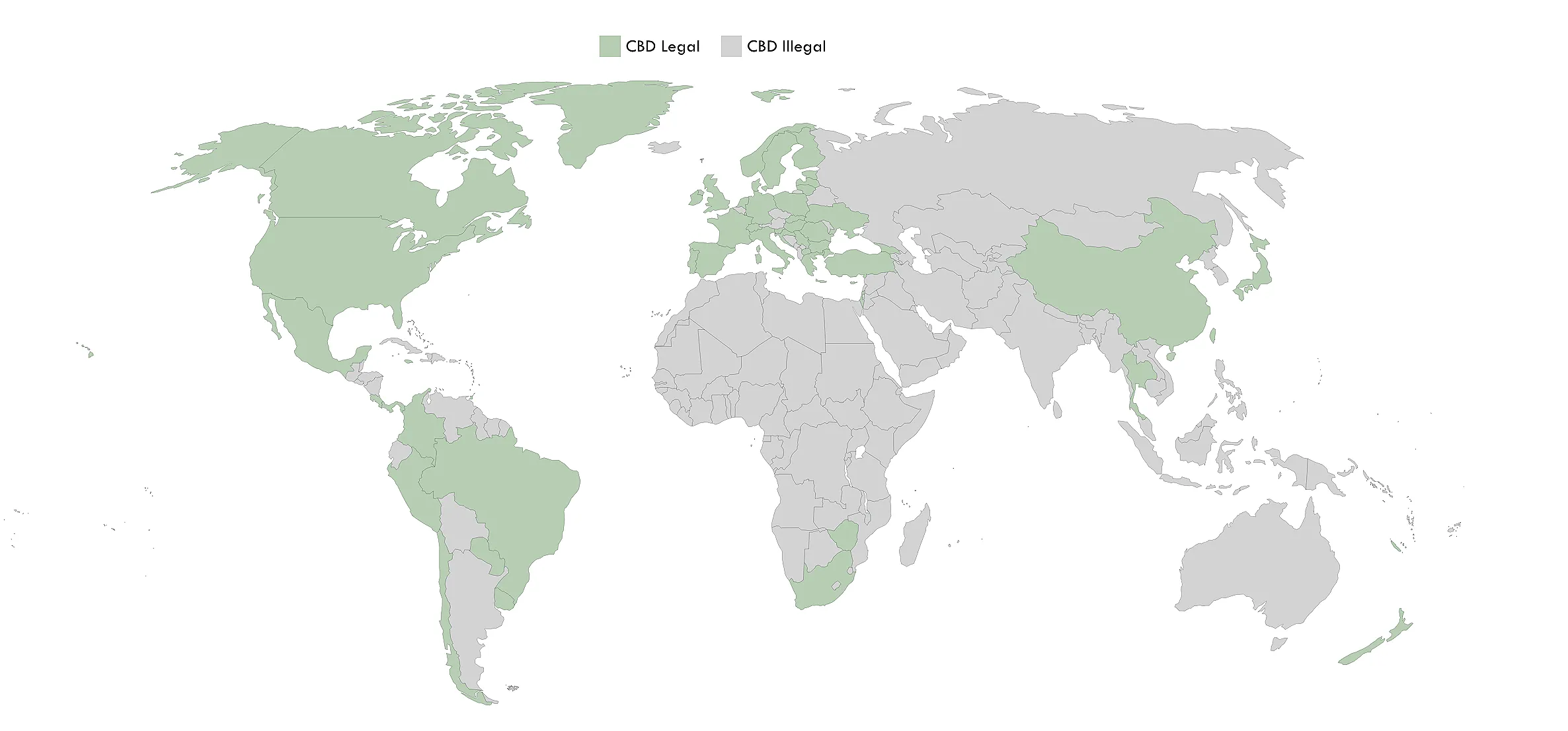
| Legality | CBD is legal (to varying degrees) in the US, Canada, most of Europe, parts of South America, Australia, New Zealand, and South Africa. | The legality of THC depends on the location. Some places allow medicinal use, while others have concentration limits that determine whether it’s legal. |
| Method of consumption | CBD can be smoked but is most commonly available as oils, capsules, and creams for sleep disorders. | THC typically comes in the form of herbs or flowers, hash/hashish, and hash oil. |
| Potential wellness properties | CBD has been shown5 to reduce anxiety behaviors in disorders like PTSD and OCD. A widely cited 2015 review6 found strong preclinical support for CBD across a range of anxiety conditions, but that evidence came from animal models. Studies7 highlight that CBD can reduce stress in people suffering from stress and depression. CBD has anti-inflammatory and antioxidant properties8. It also belongs to a group of compounds9 with antidepressant, antipsychotic, and anticonvulsant properties. | Research suggests that THC decreases anxiety at lower doses and increases anxiety at higher doses. THC is linked10 to reduced perceptions of stress, but also alters multiple stress response systems. Long-term use can lead to significant changes that promote dependency11 and have an overall adverse effect on the stress response system. THC has anti-inflammatory effects12. |
| Market scope | CBD is increasingly used in commercial wellness products. The global CBD market was worth roughly $16.5 billion in 2025. Longer-range projections vary enormously depending on who is doing the projecting, and should be treated as industry estimates rather than forecasts. Surveys put the share of US adults who have ever used CBD at more than a third13 — around 35 percent in a recent nationally representative sample. | Statistics show that 21% of all Americans between the ages of 18-64 use THC flower/buds. |
| Top reported reasons for use | Self-reported stress Sleep problems Overall improvement in well-being Improved mood Anxiety relief Source14 | Relaxation Enjoyment Social reasons Coping Medical reasons Sleep Source15 |

Legal Status and Regulation
The legal status of CBD differs depending on the location and other factors.
In the US, CBD products are currently sold over the counter — but that is about to change. In November 2025, Congress redefined what counts as hemp, with the new rules taking effect on 12 November 2026. Two things change. Products will be measured by their total THC content, including THCA and related cannabinoids, rather than delta-9 THC alone. And finished products will be capped at 0.4 mg of total THC per container.
That cap is low enough that many products now on shelves would not meet it — full-spectrum CBD oils in particular, since they contain trace THC by design. Products that fail the new limit revert to being federally controlled substances. Non-intoxicating CBD does not appear to have been the target of the rule, and there has been pressure on Congress to amend the language before it takes effect, but as of August 2026 nothing has been changed. If you buy CBD in the US, it is worth knowing that the product you find today may not be on sale in December.
In the UK, CBD is sold widely in shops and online, but the regulatory position is unusual. CBD extracts have been classed as “novel foods” since 201916, meaning they need authorization before they can legally be sold — and to date no CBD extract or isolate has actually been authorized. Products on the market are there because they appear on a public list of pending applications, which is a grey area rather than an approval.
There is one number worth knowing. In October 2023 the Food Standards Agency cut its recommended daily maximum from 70 mg to 10 mg — roughly a sevenfold reduction — citing evidence on cumulative effects on the liver and thyroid. That is well below the doses used in most sleep research, which is a tension worth being aware of if you are considering higher doses.
Across the majority of Europe, CBD products are legal but the percentage allowance limits vary greatly per country.
CBD is legal in Australia, New Zealand, South Africa, and some nations in South America.
While CBD products are legal in these places and more, it’s important to check the regulations around CBD in each country, as the amount, concentration, and usage of products may vary. For example, the FDA does not allow CBD to be sold as a dietary supplement17 or added to food sold across state lines, because CBD is the active ingredient in an approved prescription drug. In January 2023 the agency went further, concluding that the existing rules for foods and supplements are not a good fit for CBD at all and asking Congress to create a new framework. Congress has not done so, which is why the consumer CBD market has operated for years without one.
CBD is strictly prohibited in Russia, China, the UAE, Singapore, and Belarus.
There’s a lack of standardized regulation for CBD products around the world, which can affect safety testing, ingredient transparency, and health claims. Research18 shows that inconsistent labeling across CBD products means products can have lower amounts of CBD than advertised and contain elements of THC, resulting in unpredictable dosing for consumers.
To use commercial CBD products in the safest way, look for products that have a Certificate Of Analysis (COA) from an accredited laboratory, clearly list ingredients in milligrams, and have easily-accessible information about where the hemp is sourced. Always read the customer reviews before buying.
Types of CBD Products Used for Sleep
A range of CBD products are available to support sleep. The most common include:
- CBD oils/extracts
- Gummies and edibles
- Capsules
- Sublingual (under the tongue) sprays
CBD vapes and topicals (creams) are also available but these aren’t recommended to help improve sleep.
The time for CBD to take effect depends on the type of delivery method, as well as other factors. The table below lists the average onset time and duration19 for different methods.
| Delivery method | Typical onset time | Average duration |
| Pulmonary inhalation (smoking/vaping) | 5 – 10 minutes | 2 – 4 hours |
| Sublingual mucosal (sprays) | 15 – 45 minutes | 6 – 8 hours |
| Oral gastrointestinal (edibles) | 1 – 3 hours | 6 – 8 hours |
What Research Says About CBD and Sleep
Research around CBD and sleep draws different conclusions. And the most recent evidence draws an uncomfortable line.
A 2025 meta-analysis20 pooling six randomized trials and 1,077 participants found that cannabinoids overall did improve subjective sleep quality — but when the researchers separated them out, the effect belonged to THC and other non-CBD cannabinoids. CBD on its own showed no significant effect at all.
That finding sits at the center of this question, and it is worth stating plainly rather than working around: the cannabinoid research that looks most promising for sleep has mostly not been research on CBD.
Others have found a positive correlation between CBD and a reduction in the symptoms of insomnia.
A 2022 trial21 demonstrated that a specific prescription of medicinal cannabis oil effectively improved subjective sleep metrics among adults with chronic insomnia. After two weeks of nightly administration, 60% of participants no longer met the clinical criteria for insomnia. However, it is critical to note that the study utilized a combination of 10mg/mL THC and 15mg/mL CBD. In such pharmaceutical formulations, the intoxicating THC acts as the primary sedative to initiate sleep, while the CBD is included to modulate psychoactive side effects.
The most important conversations shaping the future of psychedelics, delivered weekly.
From thought-provoking podcasts and original stories to research breakthroughs and industry news, stay connected to the conversations that matter.


Joined by 12,000+ readers
Elsewhere, this systematic review22 of sleep studies using CBD to manage insomnia found that CBD alone or with equal quantities of THC may be beneficial in alleviating insomnia symptoms.
On the other hand, one study23 found that a single combined oral dose of 10mg of intoxicating cannabinoids and 200 mg of non-intoxicating cannabinoids significantly reduced total sleep time and heavily suppressed rapid eye movement (REM) sleep. This suppression of the REM stage is a widely recognized pharmacological response to intoxicating cannabinoids like THC, demonstrating that combined formulations can yield mixed or detrimental outcomes on objective sleep architecture.
A systematic review24 concluded that non-CBD cannabinoids can improve sleep quality. And this study25 showed that nightly supplementations of CBD did not benefit daytime cognitive performance in people with insomnia. A pilot trial of 30 people taking 150 mg of CBD nightly for two weeks found daytime cognitive performance was unaffected. The researchers framed this as reassuring rather than disappointing — the point was to check that nightly use did not leave people foggy the next day, and it did not.
Long-term use of CBD for sleep disorders and insomnia remains unclear. A retrospective review of 72 patient records26 at a psychiatric clinic found that sleep scores improved within the first month in about two thirds of patients taking CBD, typically at 25 mg a day — but then fluctuated. Over the full three months, sleep scores showed no sustained improvement, unlike anxiety scores in the same group. There was no control group and patients were taking other medications at the same time.
The largest study to date27 randomized 1,793 people across six different formulations for four weeks, and all of them improved. But there was no placebo group — every participant received an active product — so the comparison is between products rather than against nothing. The authors noted that none of the cannabinoid formulations outperformed 5 mg of melatonin, and that adding other cannabinoids to CBD made no difference. The trial was run by a research company using product supplied by a manufacturer.


CBD and Anxiety-Related Sleep Problems
CBD may aid better sleep by reducing anxiety. A 2024 meta-analysis of 316 patients diagnosed with generalized anxiety disorder, social anxiety disorder or PTSD found CBD reduced anxiety symptoms — though the confidence interval came close to zero, and the authors caution that the sample is small. A separate review of preclinical and clinical evidence28 covering both healthy volunteers and people with social anxiety disorder describes the human evidence as preliminary, and notes that effective doses and long-term efficacy have not been established.
Anxiety and sleep are closely connected. High levels of anxiety can influence poor quality sleep, and poor quality sleep can worsen anxiety. CBD can potentially break this cycle by having a calming effect29 on the central nervous system and improve sleep indirectly by lowering anxiety.
In this instance, any improvement in sleep comes from reduced anxiety, not direct effects of CBD.
Limitations of Current Research
Research for CBD and sleep is ongoing. Currently, many studies use small sample sizes, are conducted over short time periods, don’t use standardized doses of CBD, and administer different forms of CBD. There’s also the challenge of measuring sleep quality in an objective way.
Similarly, much of the research examines the effects of CBD in tandem with THC or other therapies, so there’s no definitive evidence about the singular impact of CBD on sleep.
Not to mention, there remains a gap around the long-term use of CBD for sleep purposes. Possible adverse effects and dependency of continued use are yet to be clarified in trials.
How CBD Might Improve Sleep
Sleep is regulated by the brain, and cannabinoids like CBD can influence the frequency and phases of chemical activities30 that happen in the brain.
While intoxicating cannabinoids initiate sleep by directly binding to and activating the brain’s primary cannabinoid receptors, non-intoxicating variants like CBD work through an entirely different and highly indirect set of neuropharmacological pathways.
CBD actually has a very low binding affinity for primary cannabinoid receptors. Instead, it interacts with the broader central nervous system by activating serotonin receptors31 and positively modulating GABA receptors32, which are the brain’s primary inhibitory pathways. By enhancing these calming neurotransmitter systems, central nervous system hyperarousal is reduced, the stress hormone cortisol is lowered, and pre-sleep rumination is mitigated, thereby indirectly facilitating a physiological state highly conducive to natural sleep onset.
One study33 reveals that CBD may cause mental sedation, helping reduce anxiety, racing thoughts, stress, and pre-sleep rumination. It may also support nervous system regulation – this study34 found that CBD contributed to normalizing abnormal stress responses in patients.
Plus, CBD has anti-inflammatory properties8, which may not only reduce the sensation of pain, but also influence how pain is signaled to the brain. People with chronic pain have indicated pain reduction ranging from 42% – 66%35 with CBD alone. The more calm and in control people feel, the more likely they are to fall asleep easily and deeply.
Dosage and Safety Considerations
There is currently no universally standardized dose for CBD as a treatment for sleep disorders. Sleep trials have used doses from 15 mg to around 175 mg a day. Anxiety trials have gone considerably higher — single oral doses of 150 to 900 mg, with most of the evidence clustering in the 300 to 600 mg range.
Whether CBD’s effect on alertness depends on dose is often asserted and rests on thinner ground than it appears. The idea traces largely to a 2004 crossover study in eight healthy volunteers36, in which 15 mg of CBD increased wakefulness during sleep and offset the residual sedation of THC. CBD was never given on its own — it was always paired with THC — so the alerting effect was inferred by comparing the combination against THC alone. What a 2023 review of low-dose CBD37 concluded is narrower and more useful: therapeutic effects become clearly evident only at doses of 300 mg and above, and benefits below that threshold remain unconfirmed. Trials of 150 mg nightly for insomnia have found no difference from placebo38 on insomnia severity, sleep onset, sleep efficiency or waking during the night.
Factors that can impact the effects of CBD include:
- Body weight
- Metabolism
- Severity of sleep condition
- CBD administration method (e.g. oil, edible, spray)
Possible Side Effects
CBD is generally well-tolerated39 among people using it for sleep disorders but it does have possible side effects. Possible side effects40 of short-term CBD use include:
- Fatigue
- Dry mouth
- Diarrhea
- Reduced appetite
- Drowsiness
Longer-term side effect data comes almost entirely from epilepsy trials41 using pharmaceutical CBD at 10 to 20 mg per kilogram of body weight — roughly 700 to 1,400 mg a day, an order of magnitude above the doses discussed here, and in patients taking other anticonvulsants. In that setting, drowsiness, reduced appetite and diarrhea were common, and raised liver enzymes appeared mainly in patients also taking valproate. How much of this transfers to someone taking 25 mg for sleep is unknown — which cuts both ways, since it also means long-term consumer-dose safety has not been established.
Is CBD Worth Trying for Sleep?
There is some research that indicates CBD might be a useful aid for sleep, especially among people with insomnia and sleep disorders related to anxiety, pain, and stress. But, there’s no definitive evidence that CBD improves sleep. At the same time, the dose and quality of CBD products are big variables in the possible impact that CBD may have on sleep.
Further research is needed to wholly state that CBD helps with sleep.
Before using CBD to help with sleep problems, it’s best to speak with a healthcare professional and try sleep strategies with stronger evidence of success.
FAQ
The safety of using CBD every night is still unclear. One study suggests that a regular low dose of CBD can improve initial sleep quality, but has fluctuating results on long-term sleep quality. Before using CBD for sleep (every night or more sporadically) consult a healthcare professional.
CBD should only be considered as a treatment for insomnia after evidence-based solutions have been explored. These include Cognitive Behavioral Therapy for Insomnia (CBT-I), melatonin, magnesium, and relaxation practices.
There’s a higher volume of research that confirms the positive effects of melatonin on sleep, compared to research around CBD for sleep. Melatonin is generally considered to be an evidence-based solution for sleep. Research around CBD for sleep is smaller and more limited in scope.
Non-intoxicating CBD extracts have a highly favorable safety profile. The primary documented side effects of high-dose, long-term extract use are generally mild and include somnolence, gastrointestinal distress (such as diarrhea), reduced appetite, and potential drug-drug interactions that can elevate liver enzymes.
The side effects of long-term heavy use of psychoactive, intoxicating THC compounds and the physical inhalation of combustible marijuana smoke can include anhedonia, cognitive impairment, an increased risk of psychotic illness, and respiratory damage.
Based on the possible side effects of CBD, people with pre-existing cognitive, respiratory, and mental health conditions should avoid or be cautious about using CBD. Anyone considering using CBD for sleep should consult a healthcare professional first.
The Food Standards Agency advises no more than 10 mg of CBD a day from food products, which is below almost every dose used in the research described above. That gap between what regulators advise and what trials test is one of the clearer signs that this field is still unsettled.
 Expert Board Member
I frequently encounter patients struggling with sleep who are curious about using CBD, making this article an incredibly timely and relevant resource. It provides the exact kind of accessible, evidence-based guidance I strive to offer them — effectively clarifying complex mechanisms, distinguishing between pure CBD and THC combinations, and rightly emphasizing the need to prioritize established clinical treatments first. This piece serves as a scientifically rigorous educational tool that I would confidently share with those under my care to help them make safe, informed decisions.