Can Psilocybin Change How We Treat Anorexia?
A participant in a clinical trial investigating psilocybin for the treatment of anorexia nervosa has had their legal aid appeal upheld. The woman was seeking legal aid to submit an “unprecedented” application to the UK Home Office for a licence that would allow her legal access to psilocybin as a treatment for her condition.
The court documents explain that the woman has suffered from anorexia nervosa since she was a teenager and has been unable to find relief with currently available treatment options.
Having a debilitating impact on both her physical and mental health, the trial participant explains that the psilocybin assisted-psychotherapy she received as part of a clinical trial at Imperial College London in 2022 had a significant positive impact on her condition, and that she wants to continue the treatment beyond the trial, which has now come to an end.
She plans to submit an application for a licence under the Misuse of Drugs Act 1971 to be administered the treatment by a registered healthcare professional.
The planned submission highlights a major barrier in psychedelic access in the UK. Unlike countries such as Canada and Australia, where special access programmes are available for authorised patients to receive psychedelic therapy, the UK has no such access programme available.
Often, individuals taking part in psychedelic clinical research are doing so as they have found no relief from traditional options for their conditions. This means that psychedelic clinical trial participants who see improvements during these trials find themselves unable to access a treatment that works for them once a trial is over.
This is particularly important for conditions such as anorexia. Anorexia nervosa has one of the highest mortality rates of psychiatric conditions. Emerging research and clinical trials such as the Imperial College pilot trial suggest that psychedelics such as psilocybin may offer hope as a new treatment option.



Anorexia: Current Challenges
While many individuals with anorexia nervosa find successful recovery with traditional treatments and therapies, up to 30% develop long-term illness that fails to respond to these options. Research also suggests that between 5 and 10% of individuals with the condition die within a decade of developing the condition, highlighting a desperate need for alternative options.
Increasing research suggests that psychedelics may hold potential benefits for treating eating disorders such as anorexia nervosa, potentially offering hope for alternative therapy options in the future.
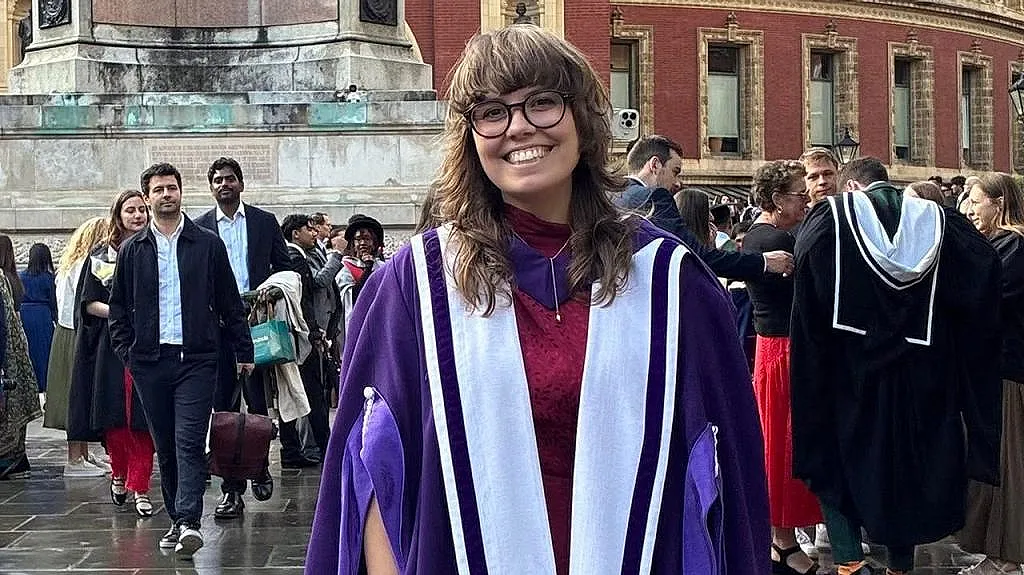
The pilot trial was led by Dr Hannah Douglass, Postdoctoral Fellow at the University of Auckland, while completing her PhD at Imperial College. Speaking to States of Mind, Dr Douglass explains that she led the study from a lived-experience perspective.
“I’ve actually been through that whole process myself of receiving treatment in the NHS. I think the people who work in that area care so deeply and try the best they can, but I think generally it’s often limited by what funding is available and what capacity there is.”
Because of this, Douglass highlights, the waitlists are extremely long and end up catching people much later than they should.
I think there’s quite a strong focus on nutritional rehabilitation, which is about getting people’s weight back up, and which is definitely important in terms of recovery. However, it isn’t a long-term solution without also focusing on the psychological aspect.
This can leave a lot of unresolved feelings, especially not “digging into what is underlying the condition”, explains Douglass, meaning the condition can either present again, or it can present as another psychiatric condition.
“What we found in our study, and what is generally found in eating disorders, is that focusing on motivation is important. At the moment, it isn’t targeted that much by current treatments.”
Importantly, mental health support for people living with anorexia can also face long waiting lists, sometimes as long as 18 months, and is merged with traditional mental health care for non-inpatients.
Systemic psychotherapist and eating disorders specialist, Jennifer Danby, who was the lead therapist on the trial, told States of Mind that current treatments vary significantly by age and focus heavily on weight and behavioural markers rather than addressing the underlying identity, emotional coping mechanisms or the “protective nature” of the disorder.
Equally, Danby highlights that people with anorexia can have a profound disconnection from their body, struggling to identify hunger cues, temperature or exhaustion.
“I think a huge part that is missing from treatment is the body,” says Danby.
“Usually, we don’t work somatically, typically, and yet there’s so much information in the body, and it’s such a huge part of recovery. Not cognitively thinking about it, but thinking about like how do you feel connected to it. That’s where psychedelics can have a huge role where conventional treatments do not.”
The most important conversations shaping the future of psychedelics, delivered weekly.
From thought-provoking podcasts and original stories to research breakthroughs and industry news, stay connected to the conversations that matter.


Joined by 12,000+ readers
The Pilot Trial
The pilot study of 21 women with anorexia nervosa, at Imperial College London, investigated the efficacy and safety of psilocybin combined with psychotherapy for the disorder.
Results showed that 18 of the participants saw improvements in symptoms at two-weeks follow up, and that 48% of participants had scores “comparable to someone without an eating disorder” at three months follow up.
Douglass highlights that the psilocybin-assisted therapy is an adjunct therapy, and that the pilot study found that this was associated with improvements in motivation and recovery.
“People were also receiving treatment from the NHS or privately throughout the study,” says Douglass. “It was very much being studied as something to add on or accelerate existing treatment.”
The study examined the impact of neuroplasticity on outcomes, the theory behind how psychedelics work. It is believed that the compounds can enhance plasticity in the brain, allowing people to break harmful thinking and behaviour and develop new neural pathways that can form healthier ones.
Triggering that enhancement in neuroplasticity, so the brain becoming more malleable, we did find that when people came out of their dosing sessions, there seemed to be new perspectives, seeing things in a different way, and more openness where there wasn’t as much openness before.
The study also focused on interoception — which is connecting to bodily signals — self-compassion, and emotion-focused family therapy, where family members were involved in the therapy process.
“I see this being quite a long way from a realistic treatment. This is only the second study in the world looking at psilocybin and anorexia [note: the first study was conducted in 2023 and involved 10 women], and only 31 females have been given this as a treatment. So it is really fresh. We need a lot more research,” says Douglass.
This includes determining the most effective therapeutic models for anorexia regarding the optimal number of doses required for treatment, the ideal interval time between treatments, identifying which compounds yield the best clinical results, which cohorts of patients will benefit the most, and understanding the biological mechanisms that are being targeted in the brain to optimise efficacy.
While both researchers emphasise that more research needs to be done until psychedelic-assisted therapies might become part of treatment for the condition, Lisa George, founder of Talk Tribeca Psychiatry in New York City and a dual board-certified NP in Psychiatry and Family Health, says that the research offers hope for the future.
“I work with teens as well as adults with eating disorders, and unfortunately I’m the one people see after body image concerns have already spiralled into something much more serious,” says George.
It’s one of the toughest conditions we treat, as we don’t have medication that “fixes” it or that directly treats anorexia nervosa. We use medications off-label to treat co-occurring conditions like anxiety, depression, or OCD, but they’re honestly not very effective at restoring weight or treating the core illness.
George says that, regardless of the diagnosis, medication is rarely the entire treatment, and that recovery can be slow, complicated, and often requires psychotherapy, nutritional rehabilitation, medical monitoring, and close collaboration among multiple providers.
“While we don’t have a medication that treats anorexia directly, the way we have medications for many other psychiatric conditions, we are seeing promising research into treatments like transcranial magnetic stimulation (TMS) and other brain-based therapies.”
“I’m particularly excited about the research on psychedelics, especially psilocybin, because they may help address some of the rigid thinking and cognitive inflexibility we see in anorexia.”
“That said, the research is still early, and these treatments are not yet standard of care. Right now, early identification and getting patients connected to an experienced multidisciplinary team are the most effective tools we have.”